
Heavy Equipment Electrical Components Guide 2026
Heavy equipment electrical components explained: common failures, maintenance steps, buying tips, and pricing.
Loading article…
Article Not Found
The article you're looking for doesn't exist or may have been removed.
Back to BlogHeavy equipment electrical components are the batteries, alternators, starter motors, wiring harnesses, and sensors that convert mechanical energy into the electrical power machinery needs to run. Without them, an excavator or crane simply won't start.
Key Takeaways
- electrical components include batteries, alternators, starter motors, wiring harnesses, and sensors, each with a distinct job in the power chain.
- A dead battery remains the most frequent electrical failure operators report, according to industry field data.
- Routine inspections every 100 hours of operation can catch failing this type of components before they cause a shutdown.
- Alternator and starter motor failures often show early warning signs, dimming lights, clicking sounds, slow cranking, that are easy to miss under deadline pressure.
- Compatibility with OEM part numbers matters more than price when sourcing replacement this kind of electrical components.
- Electric-drive machinery requires far less routine electrical maintenance than diesel equipment, but demands specialized high-voltage safety training.
"The electrical system in heavy equipment is crucial for operational efficiency. Regular inspections and maintenance can significantly reduce downtime and repair costs." - Heavy Equipment Specialist
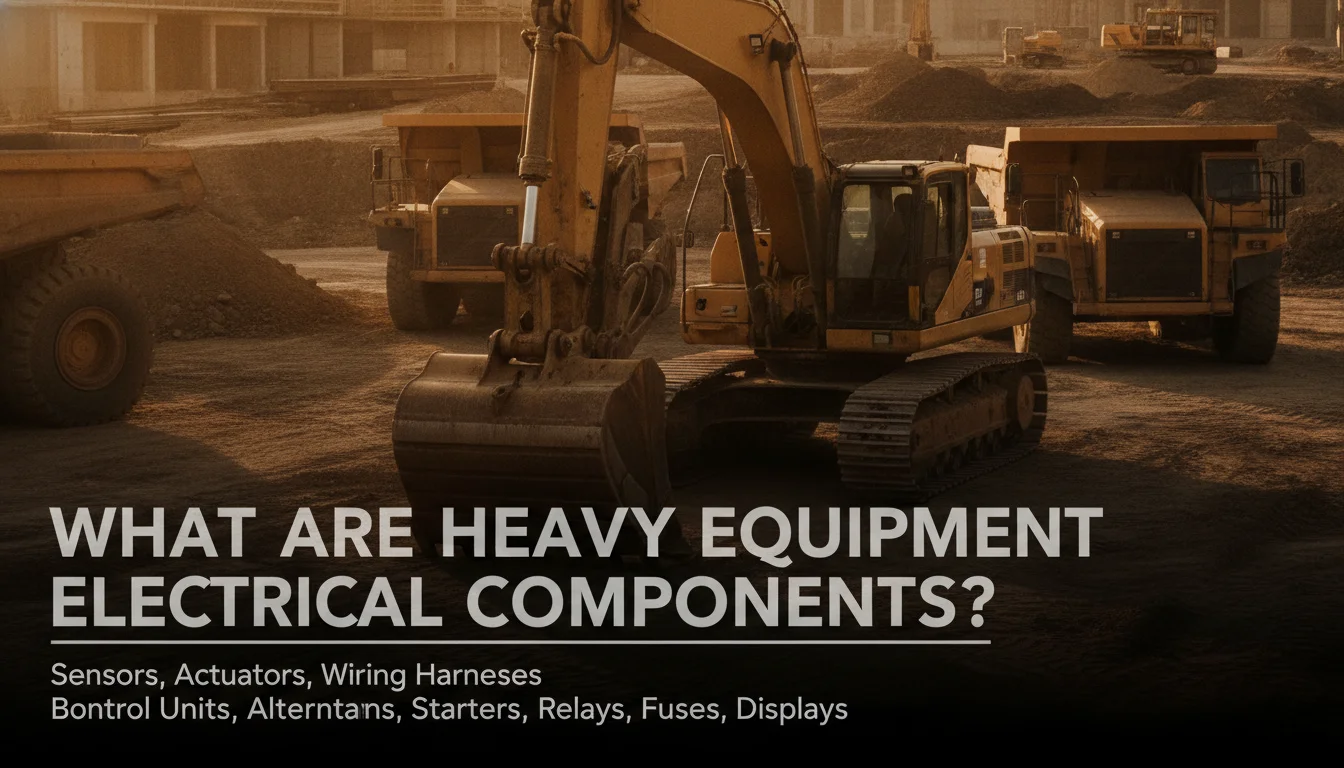
What Are Heavy Equipment Electrical Components?
the equipment electrical components are the parts, batteries, alternators, starter motors, wiring harnesses, relays, and sensors, that generate, store, and distribute electrical power throughout excavators, bulldozers, cranes, and other diesel or electric machinery. Each part performs a specific function in converting mechanical energy into usable electrical energy, and a failure in any single one can shut down an entire jobsite.
We've supplied replacement electrical parts for Caterpillar, Komatsu, Volvo, and dozens of other brands for years, and the pattern rarely changes. Operators notice a dim dashboard light or a slow crank, assume it's minor, and keep working. Then the machine won't start at all.
Key Components
- Batteries: Store electrical energy and provide power to start the engine and run onboard electrical systems.
- Alternators: Convert mechanical energy from the engine into electrical energy, charging the battery and powering electrical loads while the engine runs.
- Starter Motors: Draw power from the battery to crank the engine and initiate combustion.
- Wiring Harnesses: Act as the central nervous system of the machine, routing electrical signals to every subsystem.
- Sensors: Monitor operating parameters and feed data back to control systems for safe, efficient performance.
Why the Electrical System Matters
The electrical system is vital for starting the engine, powering onboard systems, and keeping safety features functioning correctly, according to industry maintenance data. A malfunctioning electrical system doesn't just stall a machine. It drives up repair costs, disrupts project timelines, and creates real safety hazards for operators working around inoperative lights, alarms, or hydraulic interlocks.
Common Electrical Issues in Heavy Equipment
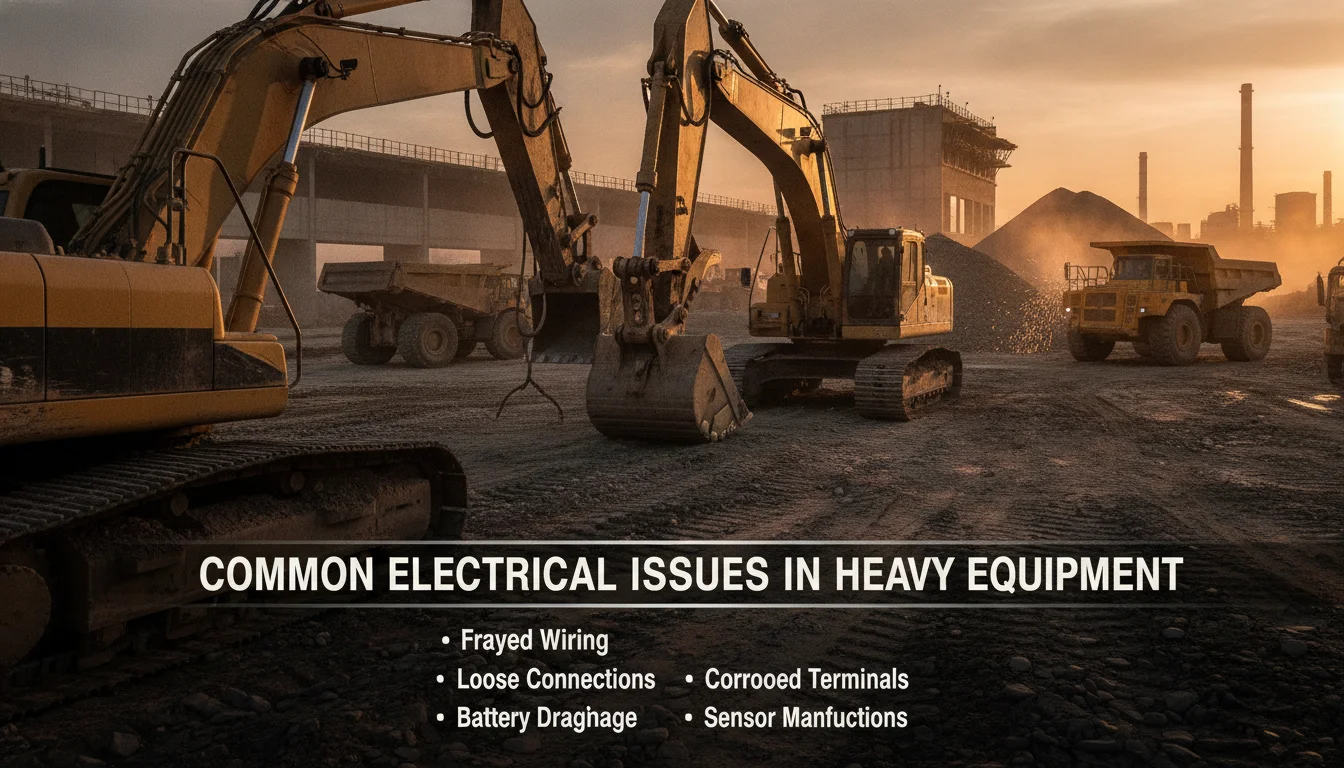
The most common electrical issues in heavy equipment are dead batteries, faulty alternators, and failing starter motors, each with distinct warning signs operators can catch early. Recognizing these symptoms before total failure saves both money and downtime.
Dead Batteries
A dead battery is one of the most frequent issues faced by heavy equipment operators, and it's rarely a surprise when you trace the cause. Common culprits include:
- Leaving lights on when the machine is not in use.
- Improper storage or maintenance of the battery.
- Age-related degradation.
Faulty Alternators
Alternators fail due to wear, electrical shorts, or belt issues that prevent them from charging properly. Watch for these symptoms:
- Warning lights on the dashboard.
- Dim or flickering lights.
- Inability to start the engine.
Bad Starter Motors
A malfunctioning starter motor prevents the engine from cranking at all, or causes it to crank abnormally slow. Signs of a bad starter include:
- Clicking sounds when attempting to start.
- Slow cranking of the engine.
- Burning smells during startup attempts.
Left unaddressed, these issues compound. One failed connection can cascade into a burned-out alternator or a fried wiring harness, turning a $150 fix into a $1,500 one.
How to Maintain Heavy Equipment Electrical Components
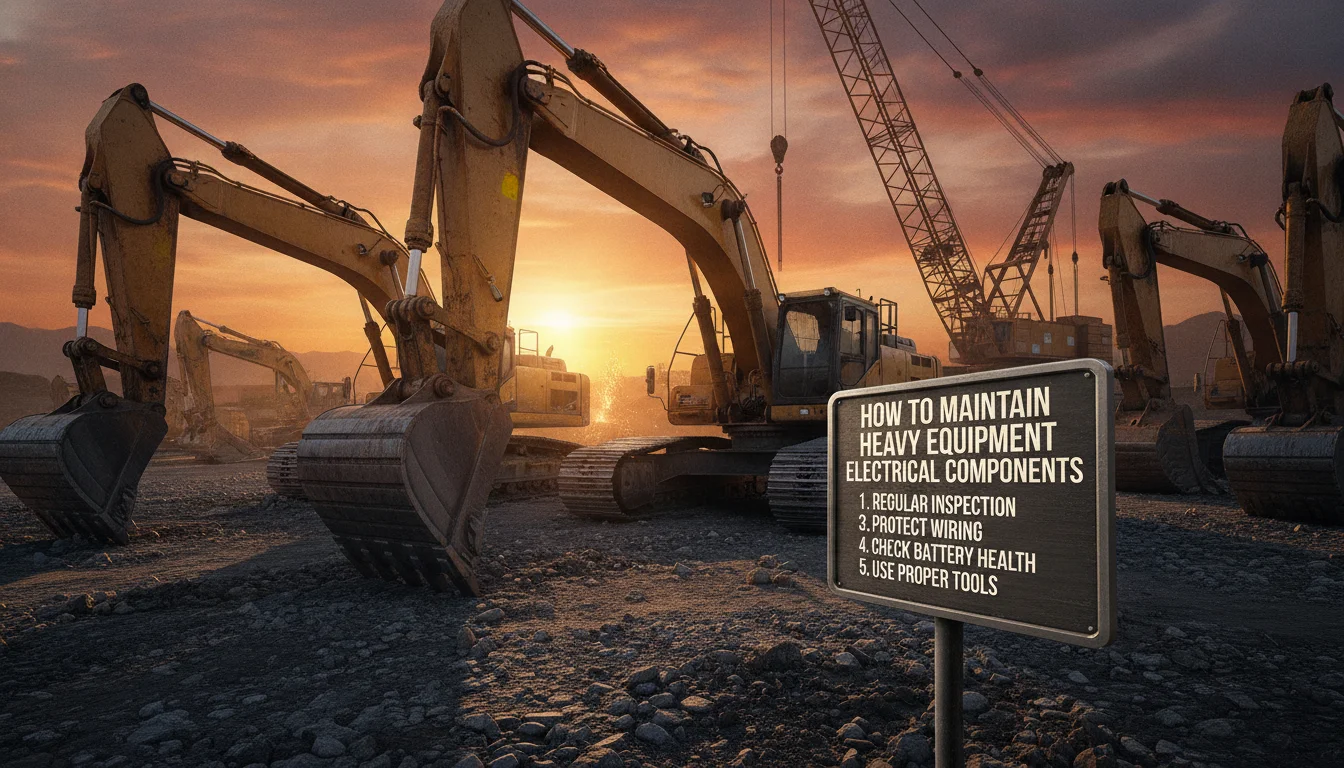
You maintain components through routine inspections, a documented preventive maintenance schedule, and properly trained technicians. Skipping any one of these three creates blind spots that eventually surface as unplanned downtime.
Step 1: Conduct Routine Inspections
Inspect all electrical components regularly, checking for wear, corrosion, or physical damage. Pay close attention to:
- Battery terminals and connections.
- Wiring harnesses for fraying or exposed conductors.
- Alternator and starter motor functionality.
Pro Tip: Electrical components should be inspected regularly, ideally every 100 hours of operation or as part of a scheduled maintenance program. Build this into your existing service intervals rather than treating it as a separate task, and it won't get skipped when the crew is busy.
Step 2: Follow a Preventive Maintenance Schedule
Build a preventive maintenance routine that includes:
- Cleaning battery terminals and ensuring tight, corrosion-free connections.
- Testing alternator output regularly with a multimeter or diagnostic tool.
- Replacing worn components before they fail in the field.
Step 3: Train Technicians on Electrical Safety
Ensure technicians are properly trained to handle high-voltage components safely, especially as more fleets add electric-drive machinery alongside diesel units. Training should cover:
- Understanding electrical schematics.
- Safety protocols for working with live electrical systems.
- Proper disconnection procedures for high-voltage components.
"Electric components like the lithium-ion battery, inverter, AC to DC power converter, battery management unit, and charging plug just need visual and functional inspections. Any components not working would be replaced rather than repaired." - Volvo CE field engineering perspective
Electric vs. Diesel: Maintenance Demands Compared
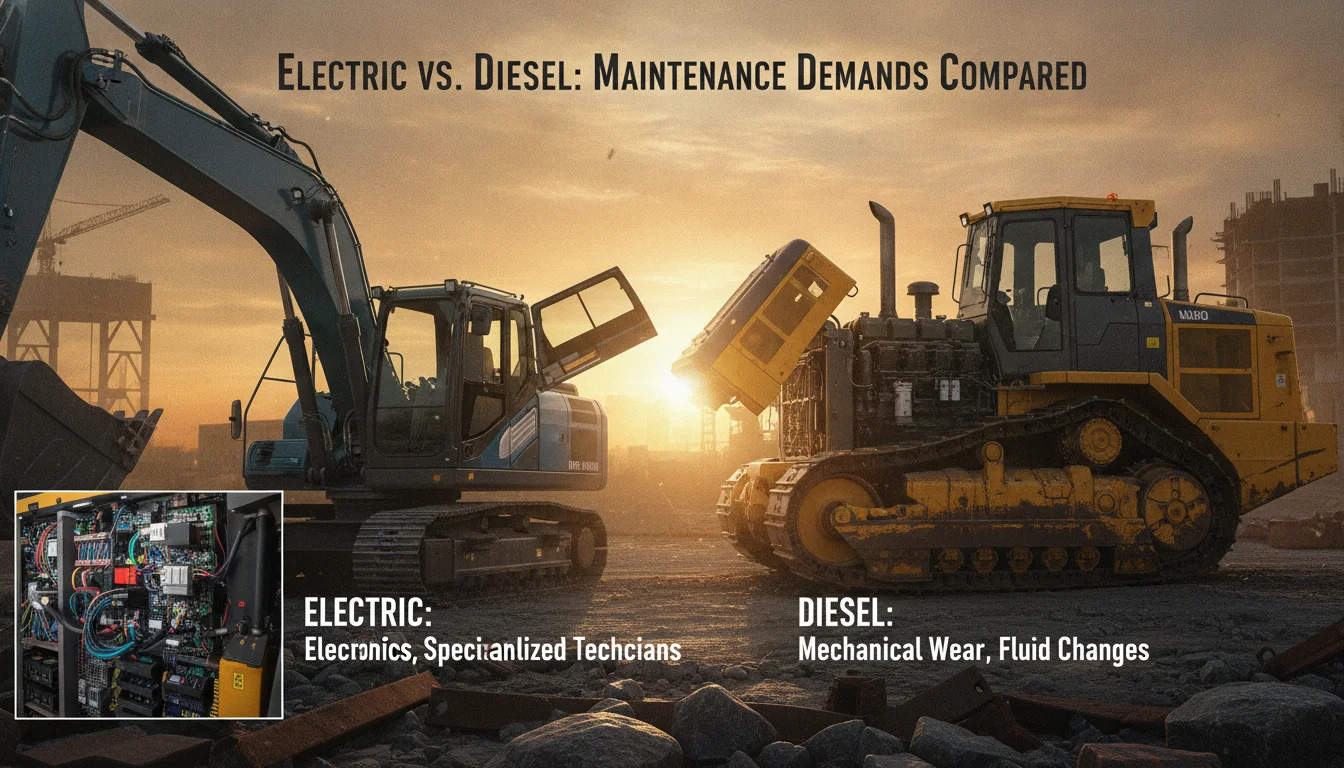
Electric heavy equipment requires substantially less routine electrical maintenance than diesel machinery because it eliminates fuel filters, DEF systems, and daily fluid checks entirely. On an electric machine, the core components, lithium-ion battery, inverter, AC-to-DC converter, battery management unit, and charging plug, mainly need visual and functional inspection rather than the cyclical fluid and filter work diesel units demand.
That said, electric machinery isn't maintenance-free. Sealed, high-voltage components require technicians trained specifically in disconnection procedures before any part is removed. Fleet operators shifting toward electric equipment should budget for this training even as day-to-day wrench time drops.
What to Look For When Buying Heavy Equipment Electrical Components
When buying heavy equipment, prioritize material quality, OEM compatibility, and a price point that matches your equipment's duty cycle, not just the lowest sticker price. Cutting corners on any of these three factors tends to cost more in the long run.
Material Quality
Choose components built from corrosion-resistant materials, especially for wiring, connectors, and terminals exposed to moisture, dust, and vibration on active jobsites.
Compatibility
Verify that electrical components match your specific machine model before ordering. Check OEM part numbers and specifications closely. A mismatched alternator or wiring harness can damage other systems or simply fail to fit.
Price Range
Electrical component pricing varies significantly by category and machine class. General ranges to expect:
- Budget: $50 - $150 for basic components like fuses and relays.
- Mid-range: $150 - $500 for alternators and starter motors.
- Premium: $500 - $1,500 for high-end batteries and specialized sensors.
Comparison of Electrical Components
| Component Type | Function | Typical Cost | Common Issues |
|---|---|---|---|
| Batteries | Store electrical energy | $100 - $300 | Dead cells, corrosion |
| Alternators | Convert mechanical to electrical energy | $200 - $600 | Electrical shorts, failure to charge |
| Starter Motors | Crank the engine | $150 - $400 | Failure to engage, slow cranking |
| Wiring Harnesses | Route electrical signals | $100 - $500 | Fraying, poor connections |
| Sensors | Monitor system parameters | $50 - $300 | Malfunction, inaccurate readings |
Pros and Cons
Pros
- Modern heavy equipment electrical components allow precise diagnostics through CAN bus and telematics, catching problems before catastrophic failure.
- Replacement parts for common failure points (batteries, alternators, starters) are widely available across most major brands.
- Preventive maintenance on electrical systems is inexpensive compared to the downtime cost of an unplanned failure.
- Aftermarket options can match OEM performance at a lower price point when sourced from a verified supplier.
Cons
- Diagnosing intermittent electrical faults can be time-consuming without proper schematics and diagnostic tools.
- Mismatched or low-quality aftermarket parts can damage adjacent systems if compatibility isn't verified first.
- High-voltage electric-drive components require specialized technician training that not every shop has in-house yet.
- Global sourcing delays for OEM parts can extend downtime if you're not working with a supplier that stocks common failure-point components.
Frequently Asked Questions
What are the basic electrical components in heavy equipment?
The basic heavy equipment electrical components include batteries, alternators, starter motors, wiring harnesses, and sensors. Each plays a distinct role, from storing power to converting mechanical energy into electricity to routing signals across the machine.
How often should I inspect electrical components?
Electrical components should be inspected regularly, ideally every 100 hours of operation or as part of a scheduled maintenance program. Building this into existing service intervals prevents it from being overlooked during busy periods.
What are the signs of a failing alternator?
Signs of a failing alternator include dimming or flickering lights, warning lights on the dashboard, and difficulty starting the engine. If left unaddressed, a failing alternator will eventually drain the battery completely.
Can I replace electrical components myself?
Experienced operators can replace some basic components, but we recommend consulting a trained technician for alternators, starter motors, and any high-voltage work. Improper installation risks both equipment damage and operator safety.
What is the average lifespan of heavy equipment batteries?
Heavy equipment batteries typically last between 3 to 5 years, depending on usage patterns and maintenance practices. Batteries stored improperly or exposed to extreme temperatures tend to fail well before that range.
Are aftermarket electrical components reliable?
Aftermarket heavy equipment electrical components can be just as reliable as OEM parts, provided you source them from a reputable supplier and verify compatibility with your equipment's exact model and part number. Cutting corners on verification, not on the aftermarket category itself, is where most failures originate.
As of 2026, fleet managers juggling both diesel and electric-drive machinery need suppliers who stock heavy equipment electrical components across both platforms, with the OEM specs and lead times to back it up. We stock batteries, alternators, starter motors, wiring harnesses, and sensors for Caterpillar, Komatsu, Volvo, Atlas Copco, and 40+ other brands, with global 5-day delivery built around minimizing your downtime. Shop OEM-quality spare parts with global 5-day delivery at 3genexport.com.