
Heavy Equipment Maintenance Tips for Longevity
Heavy equipment maintenance tips for longevity: reduce downtime, cut costs, and extend machine life with OEM parts and proven PM strategies.
Loading article…
Article Not Found
The article you're looking for doesn't exist or may have been removed.
Back to BlogHeavy equipment maintenance tips for longevity are the structured practices that keep construction, mining, and energy machinery running at peak efficiency across thousands of operating hours. Follow them consistently and you protect your capital investment. Skip them and you pay in unplanned downtime, accelerated wear, and premature replacement costs.
Key Takeaways
- Implement a structured preventive maintenance schedule tied to manufacturer-specified hour intervals, not just calendar months.
- Conduct daily pre-shift walkarounds to catch fluid leaks, worn tracks, and loose components before they escalate.
- Use OEM-quality lubricants, filters, and replacement parts to ensure compatibility and reduce the risk of premature failure.
- Train operators continuously: the person behind the controls has the single greatest influence on machine longevity.
- Run fluid analysis on engine oil and hydraulic fluid regularly to detect wear metals and contaminants before they cause catastrophic damage.
- Keep telematics data active in 2026: modern systems track idle time, fuel consumption, and service intervals automatically.
"Investing in proper maintenance not only extends the lifespan of heavy equipment but also enhances operational efficiency and safety on the job site." - Industry Maintenance Expert
Why Heavy Equipment Maintenance Tips for Longevity Matter
Heavy equipment maintenance tips for longevity matter because unplanned downtime is one of the most expensive events in heavy industry operations. According to industry maintenance data, a significant majority of companies have experienced unplanned equipment outages, with each incident averaging several hours of lost production. Every hour a machine sits idle, your project timeline slips and your cost-per-hour investment climbs.
The business case is straightforward. Preventive maintenance costs a fraction of reactive repair. Replacing a bearing caught early through fluid analysis is a scheduled half-day job. Replacing a seized axle after catastrophic failure can ground a machine for weeks and require a full drivetrain rebuild. The math always favors prevention.
Well-maintained machinery also retains higher resale value, operates more fuel-efficiently, and creates a safer job site. Employers carry legal responsibility for equipment safety, and a documented maintenance program is your first line of defense against liability claims.
Understanding Heavy Equipment Maintenance
What is Heavy Equipment Maintenance?
Heavy equipment maintenance is the process of ensuring that machinery operates efficiently and safely through regular inspections, repairs, and servicing. This includes both routine maintenance and preventive maintenance, and the distinction between the two determines how much unplanned downtime your fleet experiences.
Routine vs. Preventive Maintenance
Routine maintenance involves scheduled tasks like oil changes and lubrication checks. In contrast, preventive maintenance anticipates potential issues and addresses them before they escalate into major problems. Most top-performing fleets run both in parallel: routine tasks keep the machine functional day-to-day, while preventive work extends total service life.
Importance of Maintenance
Regular maintenance is the foundation for extending the lifespan of heavy equipment. Well-maintained machinery operates more efficiently, experiences less wear and tear, and is far less likely to break down unexpectedly. The result: reduced operational costs, higher equipment availability, and a safer work environment for your crew.
How Heavy Equipment Wear Actually Works: The Mechanics Behind Maintenance
Understanding the underlying wear mechanisms helps you prioritize the right maintenance tasks at the right intervals. Heavy equipment components degrade through four primary processes, and each one responds to a different maintenance intervention.
Friction and Abrasive Wear
Metal-to-metal contact between moving parts generates heat and removes microscopic material from surfaces. Over thousands of operating hours, this abrasive wear changes component tolerances, reduces efficiency, and eventually causes failure. Proper lubrication creates a film barrier between surfaces, dramatically slowing this process. According to manufacturer specifications, using the correct viscosity grade lubricant for your operating temperature range is as important as the lubrication interval itself.
Contamination Damage
Dirt, water, and combustion byproducts entering engine oil, hydraulic fluid, or coolant act as abrasive slurry inside precision components. A single compromised seal or a clogged air filter that allows unfiltered air into the intake can introduce enough particulate to accelerate wear by a significant multiple compared to clean-fluid operation. This is why filter replacement intervals are non-negotiable, not suggestions.
Thermal Stress
Repeated heating and cooling cycles stress metal components, seals, and hoses. Engines running low on coolant, hydraulic systems operating above their rated temperature range, and machines pushed hard without warm-up periods all accumulate thermal fatigue faster than properly managed equipment. Checking coolant levels and hydraulic fluid temperature during operation is a direct countermeasure to thermal degradation.
Fatigue and Overloading
Operating a machine beyond its rated capacity accelerates structural fatigue in frames, booms, and undercarriage components. As Volvo CE notes in their maintenance guidance, a machine that is undersized for the job may be chronically overstressed, while an oversized machine wastes fuel through excessive idling and risks cylinder wash-down from incomplete combustion. Matching machine to application is a maintenance decision, not just an operational one.
Establishing a Maintenance Schedule
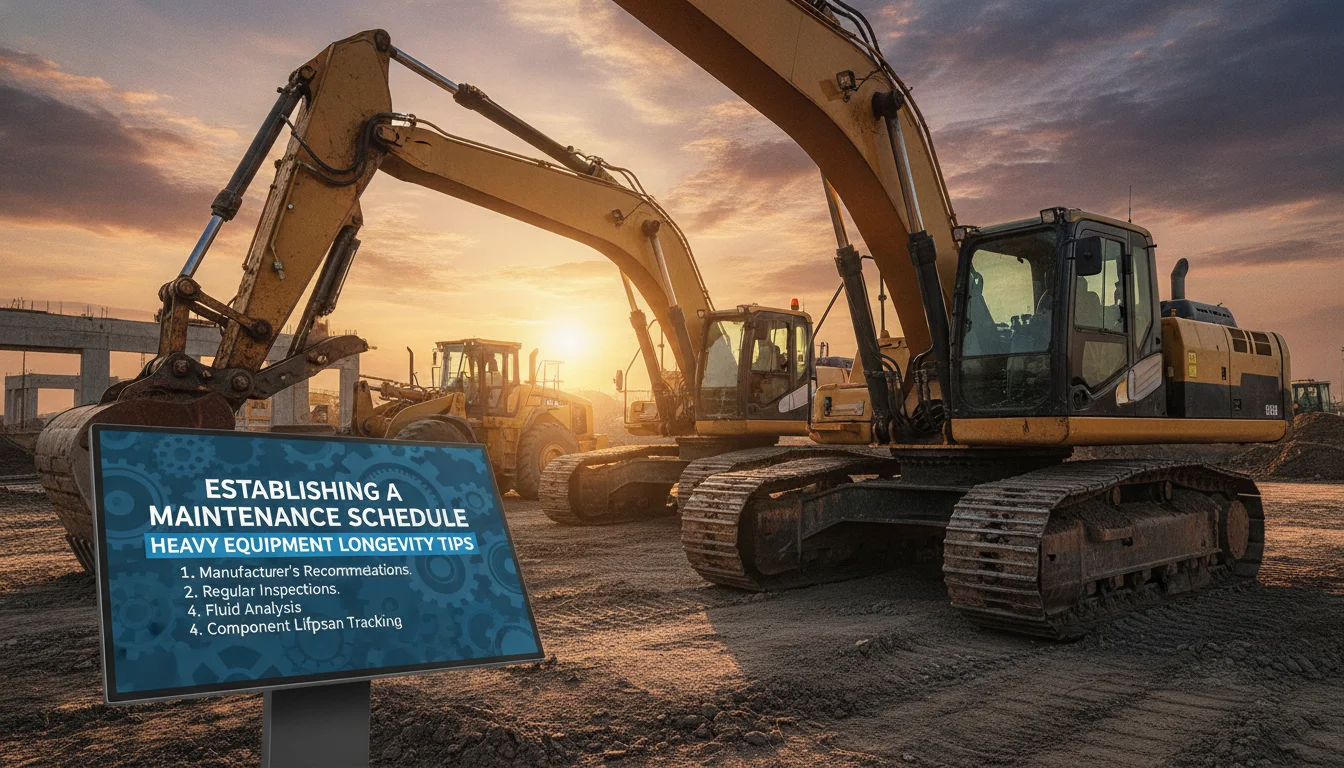
Creating a Preventive Maintenance Plan
To ensure longevity, establish a formal preventive maintenance plan that adheres to the manufacturer's recommendations. This plan should include a detailed schedule for inspections, fluid changes, and component replacements. Critically, schedule intervals must be based on operating hours, not calendar months. A machine running two shifts per day accumulates hours far faster than one used occasionally, and a calendar-based schedule will miss critical service windows.
Documenting Maintenance Activities
Keep detailed records of all maintenance activities, including dates, tasks performed, and any parts replaced. This documentation tracks the equipment's health, ensures compliance with manufacturer guidelines, and provides verifiable service history that protects resale value. Digital maintenance logs and fleet management apps make this easier than ever in 2026, with some platforms automatically flagging overdue service intervals.
Utilizing Checklists
Implement tiered checklists for daily, weekly, and monthly maintenance tasks. Industry maintenance data supports a tiered approach: daily checks, 250-hour service intervals, and 500-hour major service intervals cover the full spectrum of wear patterns across most heavy equipment categories. This systematic approach ensures no critical tasks are overlooked and maintains a consistent maintenance routine across your entire fleet.
Daily Inspections: The First Line of Defense
Conducting Pre-Shift Walkarounds
Before each shift, operators should perform a thorough walkaround inspection of the equipment. Look for leaks, loose components, and signs of wear and tear. This quick check can prevent minor issues from escalating into major failures. If you spot a hydraulic leak at a hose fitting, tagging and fixing that machine before the shift starts takes an hour. Ignoring it and running the machine risks contaminating the hydraulic system and destroying a pump that costs many times more to replace.
Checking Fluid Levels
Always check fluid levels, including engine oil, coolant, and hydraulic fluid, before starting the machine. Low fluid levels can lead to overheating and severe damage to engine components. This takes less than five minutes and is the single highest-return activity in any daily inspection routine.
Inspecting Tires and Undercarriage
Pay special attention to the condition of tires and the undercarriage. Improper tire pressure or wear can lead to reduced stability and increased fuel consumption, while a neglected undercarriage can result in costly repairs. For tracked machines, check track tension, idler condition, and sprocket wear at every inspection. Undercarriage components are among the most expensive to replace on excavators and dozers, and they wear fastest when tension is incorrect.
How to Apply These Heavy Equipment Maintenance Tips for Longevity: A Step-by-Step Approach
Knowing the principles is one thing. Executing them consistently across a working fleet is another. Here is a practical framework your maintenance team can implement starting this week.
Step 1: Audit Your Current Fleet Documentation
Pull the operator's manual for every machine in your fleet. Identify the manufacturer-specified service intervals for oil changes, filter replacements, lubrication points, and major component inspections. If manuals are missing, contact the OEM or your parts supplier for digital copies. You cannot build a credible maintenance schedule without this baseline.
Step 2: Build Hour-Based Service Cards for Each Machine
Create a service card for each unit that lists every maintenance task and its interval in operating hours. Post a physical copy in the cab and enter the data into your fleet management system. When the machine hits the hour threshold, the system flags it automatically. This removes the human memory element from interval tracking.
Step 3: Train Operators on the Daily Inspection Protocol
Run a hands-on session with every operator covering the pre-shift walkaround. Walk through each check point physically on the machine: fluid dipsticks, coolant reservoir, hydraulic sight glass, undercarriage tension, tire pressure, and all grease points. Operators who understand why each check matters are far more likely to perform it consistently.
Step 4: Establish a Fluid Analysis Program
Partner with a laboratory that provides oil and hydraulic fluid analysis. Collect samples at each oil change interval and submit them for testing. Review the results with your maintenance supervisor. When wear metal levels rise or contaminants appear, act on the findings immediately rather than waiting for the next scheduled service.
Step 5: Source OEM-Quality Parts Before You Need Them
Identify the high-wear consumables for each machine in your fleet: filters, seals, belts, hoses, and undercarriage components. Maintain a small stock of the most critical items so that when a part fails or a service interval arrives, you are not waiting on a two-week international shipment. Working with a global parts supplier like 3GEN Export gives you access to OEM-standard components for Caterpillar, Komatsu, Volvo, Atlas Copco, and 40+ other brands with fast worldwide delivery.
Step 6: Review and Adjust Quarterly
Every three months, review your maintenance records and downtime logs. Identify which machines are generating the most unplanned repair events. Cross-reference with inspection records to find patterns. Adjust your PM schedule accordingly. A maintenance program that never changes is not being managed; it is just being followed.
Utilizing Quality Parts and Fluids
Importance of OEM Parts
Using OEM (Original Equipment Manufacturer) parts ensures compatibility and reliability. OEM parts are designed to meet strict quality standards, reducing the risk of breakdowns and extending the life of the equipment. Aftermarket alternatives vary widely in quality. Some meet or approach OEM specifications; others fall significantly short. For critical components like hydraulic seals, fuel injectors, and engine bearings, the cost difference between OEM and a substandard aftermarket part is trivial compared to the cost of a premature failure.
Choosing High-Quality Fluids
Investing in high-quality lubricants and fluids is a direct investment in machine longevity. Premium oils reduce friction and wear, while quality hydraulic fluids help maintain optimal performance under various operating conditions. According to Volvo CE's maintenance guidance, quality oils are specially formulated to protect engine parts against breakdown, reduce friction, and increase flow efficiency. Some premium lubricants also extend the interval between oil changes, reducing both downtime and total fluid cost over the machine's life.
Regular Filter Replacements
Filters play a critical role in maintaining the health of heavy equipment. Regularly replace oil, air, and hydraulic filters to prevent contaminants from damaging engine components. OEM filters, such as those produced by Volvo for their equipment line, are designed to last up to 1,000 hours and meet strict quality standards. A bypassed or clogged filter allows abrasive particles to circulate through precision components, grinding away internal surfaces with every operating hour.
Maintenance Approach Comparison: Reactive vs. Preventive vs. Predictive
Not all maintenance strategies deliver equal results. The table below compares the three primary approaches used across heavy equipment fleets worldwide.
| Approach | How It Works | Cost Profile | Downtime Risk | Best For |
|---|---|---|---|---|
| Reactive Maintenance | Fix equipment after it fails | High: emergency labor, expedited parts, collateral damage | Very High: unplanned, unpredictable | Non-critical, easily replaced equipment |
| Preventive Maintenance | Scheduled service at fixed hour or calendar intervals per OEM specs | Moderate: predictable, budgetable | Low: planned downtime windows | Most heavy equipment fleets |
| Predictive Maintenance | Fluid analysis, telematics, and sensor data trigger service when actual wear is detected | Moderate-High upfront (technology investment), lower long-term | Very Low: intervene before failure | High-value machines, large fleets with telematics |
For most B2B fleets operating Caterpillar, Komatsu, or Volvo equipment, a preventive maintenance program with fluid analysis elements delivers the best balance of cost control and reliability. Pure reactive maintenance is the most expensive approach in the long run, as industry maintenance data consistently shows.
Operator Training and Best Practices
Investing in Operator Training
Proper training for operators is essential for maximizing equipment longevity. Skilled operators are more likely to operate machinery efficiently and recognize early signs of potential issues. The person behind the controls has the single greatest influence on machine life. Mechanical abuse, operating outside design limits, excessive RPMs, and chronic over-idling are all preventable causes of premature component failure.
Promoting Safe Operating Practices
Encourage operators to follow safe operating practices, such as avoiding excessive idling and adhering to load limits. These practices help minimize wear and tear on the machinery. As Volvo CE's operational guidance notes, when fuel is not burned properly during extended idling, it can wash oil from cylinder walls and create additional wear. Educating operators on this specific mechanism makes the rule feel less arbitrary and more likely to be followed.
Utilizing Technology for Monitoring
Implement telematics systems to monitor equipment performance and usage. These systems provide valuable data on fuel consumption, idle times, and maintenance schedules, helping optimize operations and extend equipment life. As of 2026, telematics platforms have become standard on most new heavy equipment from major OEMs, and retrofit solutions are available for older machines. Operators who know their machine data is being tracked also tend to develop better operating habits over time.
Cleaning and Maintaining Equipment
Regular Cleaning Practices
Keeping heavy equipment clean is vital for preventing dirt and debris from causing damage. Regularly wash the exterior and interior of machines to remove contaminants that can lead to overheating and mechanical failures. Pay particular attention to radiator cores and cooling fins: blocked cooling surfaces force engines to run hotter, accelerating wear on every temperature-sensitive component in the system.
Addressing Corrosion and Rust
Inspect for signs of corrosion and rust, especially in areas exposed to moisture. Promptly address any corrosion issues to prevent structural damage and maintain the integrity of the equipment. In coastal or high-humidity environments, this inspection frequency should increase. Structural corrosion on a boom or frame is not just a maintenance problem; it is a safety hazard.
Seasonal Maintenance Considerations
Adjust maintenance practices based on seasonal conditions. In colder climates, use winter-grade fuels and lubricants to prevent gelling and ensure optimal performance. According to Volvo CE's operational guidance, northern operations often require special diesel blends to maintain fuel flow in extreme cold. In hot, dusty environments, increase air filter inspection frequency and monitor hydraulic fluid temperature more closely during peak operating hours.
Fluid Analysis: A Diagnostic Tool
Understanding Fluid Analysis
Fluid analysis is a health check for your machinery. Regular testing of engine oil and hydraulic fluids reveals critical information about the internal condition of components without requiring disassembly. Think of it as a blood test: the fluid carries markers of what is happening inside the machine.
Identifying Contaminants and Wear Metals
Fluid analysis can detect contaminants such as water, fuel, or dirt, as well as wear metals that indicate specific component degradation. Elevated iron levels point to cylinder or gear wear. Elevated copper suggests bearing or bushing deterioration. Chromium in the sample may indicate piston ring wear. Early detection allows for timely interventions before catastrophic failures occur. As Scott Equipment's maintenance guidance illustrates, catching an increase in metal content in axle oil might lead to a simple bearing replacement rather than replacing the entire axle.
Implementing Findings into Maintenance Plans
Use the insights gained from fluid analysis to adjust maintenance plans accordingly. If wear metals are detected, schedule a component inspection or replacement at the next planned downtime window. If contamination is found, trace the source: a failed seal, a compromised breather, or an ingress point that needs sealing. The analysis result is only valuable if it drives a specific action.
Common Mistakes That Shorten Equipment Life
Even experienced maintenance teams fall into patterns that quietly accelerate wear. Recognizing these mistakes is the first step to eliminating them from your operation.
Skipping Intervals Under Production Pressure
The most common mistake in heavy equipment maintenance is deferring a scheduled service because the machine is needed on-site. One skipped oil change rarely causes immediate failure, but the habit compounds. Contaminants accumulate, wear metals build up, and the next interval arrives with the machine already in a degraded state. Production pressure is real, but a planned four-hour service window is always cheaper than an unplanned multi-day breakdown.
Using Non-Specified Fluids or Filters
Substituting a cheaper, non-OEM filter or an off-spec lubricant to save a small amount per service is a false economy. Non-specified filters may have lower filtration efficiency or shorter service life, allowing contaminants to reach precision components. Off-spec lubricants may lack the additive packages required to protect your specific engine or hydraulic system under load. Always reference the operator's manual for approved fluid specifications.
Ignoring Telematics Alerts
As of 2026, most modern heavy equipment generates real-time alerts for abnormal operating conditions: high coolant temperature, low hydraulic pressure, excessive idle time, and approaching service intervals. Operators and supervisors who dismiss or silence these alerts without investigating the root cause are discarding the most valuable early-warning system available. Treat every telematics alert as a maintenance task, not a nuisance.
Overlooking Grease Points
Greasing is unglamorous work, but neglected grease points on pins, bushings, and joints cause metal-to-metal contact that accelerates wear dramatically. Industry practitioners consistently identify greasing as one of the highest-return maintenance activities per minute of labor invested. Establish a greasing map for each machine and verify completion as part of the daily inspection sign-off.
Matching the Wrong Machine to the Job
Running an undersized machine at maximum capacity for extended periods stresses every component beyond its design envelope. Running an oversized machine on light work generates excessive idle time and cylinder wash-down from incomplete combustion. Neither scenario is good for longevity. Match machine capacity to application requirements, and your maintenance intervals will stretch further and your repair costs will fall.
Pros and Cons of a Structured Preventive Maintenance Program
Pros
- Predictable costs: Scheduled service intervals make maintenance budgeting straightforward and eliminate surprise repair invoices.
- Extended machine life: Consistent PM programs keep components within specification longer, delaying major rebuilds and replacements.
- Higher equipment availability: Planned downtime windows are shorter and less disruptive than unplanned breakdowns.
- Better safety record: Well-maintained equipment is less likely to fail in ways that injure operators or damage job sites.
- Stronger resale value: Documented service history is a tangible asset when selling or trading used equipment.
Cons
- Upfront time investment: Building a proper PM program requires auditing every machine, sourcing manuals, and training staff before the first benefit is realized.
- Parts inventory carrying cost: Maintaining a stock of critical consumables ties up working capital, even if it prevents costly delays.
- Operator resistance: Some operators view daily inspection requirements as administrative burden rather than genuine protection for the machine they rely on.
- Over-maintenance risk: Replacing components before they reach end-of-life wastes parts and labor if intervals are set too conservatively without data to support them.
A Realistic Scenario: What Good Maintenance Looks Like in Practice
Consider a mid-size construction contractor running a fleet of five excavators on a 12-month infrastructure project in a hot, dusty environment. At project start, the maintenance supervisor audits all five machines, pulls OEM service manuals, and builds hour-based service cards for each unit. Operators receive a hands-on walkaround training session covering fluid checks, undercarriage inspection, and grease point locations.
At the 250-hour mark on the lead excavator, a fluid analysis sample shows elevated iron content in the hydraulic fluid. The supervisor schedules a hydraulic filter replacement and a seal inspection during the next planned weekend downtime. The seal inspection reveals a worn rod seal on one cylinder. Replacing the seal costs a fraction of what a full cylinder rebuild would cost after a catastrophic leak. The machine returns to service Monday morning without a single unplanned downtime event.
By contrast, a competitor on the same project runs a reactive maintenance approach. Three months in, one of their excavators suffers a hydraulic pump failure traced to contaminated fluid from a bypassed filter. The machine is grounded for 11 days while a replacement pump is sourced internationally. The project delay costs far more than the entire annual maintenance budget for the first contractor's fleet.
This scenario plays out across heavy equipment fleets worldwide. The heavy equipment maintenance tips for longevity described in this guide are not theoretical. They are the difference between a machine that hits its full service life and one that becomes a liability before its time.
The 2026 Outlook: Where Heavy Equipment Maintenance Is Heading
As of 2026, several trends are reshaping how maintenance teams approach equipment longevity. Understanding them helps you stay ahead of the curve rather than reacting to changes after they arrive.
Telematics integration has moved from optional to standard on new equipment across major OEM lines. Real-time data on engine hours, fault codes, fuel consumption, and idle time is now accessible from mobile devices, allowing maintenance supervisors to monitor entire fleets remotely. This year, predictive maintenance platforms that use machine learning to flag components approaching failure are becoming accessible to mid-size fleets, not just large enterprise operations.
OEM parts availability through global suppliers has also improved significantly. Fast international shipping networks mean that a procurement manager in Southeast Asia or West Africa can source OEM-standard Caterpillar or Komatsu components and receive them within days rather than weeks. This reduces the temptation to install substandard local alternatives under production pressure.
Operator training programs are also evolving. Simulation-based training for heavy equipment operators is increasingly common, allowing new operators to build machine-awareness skills before they ever sit in a real cab. Experienced operators are using telematics dashboards to self-monitor their operating habits and compare performance against fleet benchmarks.
"The shift from reactive to preventive maintenance is not a technology problem. It is a discipline problem. The tools exist. The question is whether your organization has the commitment to use them consistently." - Heavy Equipment Fleet Management Specialist
Frequently Asked Questions
What is the 80/20 rule in maintenance?
The 80/20 rule in maintenance suggests that 80% of maintenance issues can be attributed to 20% of the equipment or components in a fleet. Focusing attention and resources on that critical 20% delivers the greatest improvement in overall equipment reliability and uptime. Identifying your highest-risk machines through maintenance records and fluid analysis data is the practical starting point.
What is the 10 rule in maintenance?
The 10 rule in maintenance is a general guideline suggesting that the cost of preventive maintenance is roughly one-tenth the cost of reactive repair for the same component failure. While the exact ratio varies by equipment type and failure mode, the principle holds consistently: investing in scheduled upkeep is far cheaper than paying for emergency repairs, expedited parts shipping, and lost production time.
What are the 7 elements of maintenance?
The seven elements commonly referenced in heavy equipment maintenance programs are: inspection, lubrication, adjustment, cleaning, repair, replacement, and documentation. A complete maintenance program addresses all seven systematically. Skipping any one element creates gaps that eventually surface as unplanned failures.
How often should I perform maintenance on heavy equipment?
Maintenance frequency depends on the equipment type, operating environment, and usage intensity. The baseline is always the manufacturer's recommended intervals, which are specified in operating hours rather than calendar time. Daily inspections are non-negotiable regardless of machine age or condition. More extensive service tasks follow the tiered schedule: typically 250-hour, 500-hour, and 1,000-hour intervals for most major equipment categories.
What are the benefits of using OEM parts?
OEM parts are engineered specifically for your equipment model, ensuring dimensional compatibility, material specification compliance, and performance within the machine's design parameters. They typically offer better durability and more predictable service life compared to unverified aftermarket alternatives. For procurement managers, OEM-quality parts also simplify warranty management and reduce the risk of collateral damage from a failed non-spec component.
How can operator training impact equipment longevity?
Proper operator training ensures that machinery is used within its design limits, reducing the risk of mechanical abuse that causes premature wear and component failure. Trained operators also recognize early warning signs, such as unusual sounds, vibrations, or instrument readings, and report them before they escalate. According to industry maintenance data, operator behavior is consistently identified as one of the leading preventable causes of shortened equipment life cycles.
What is the role of fluid analysis in maintenance?
Fluid analysis identifies contaminants and wear metals in engine oil and hydraulic fluids, providing a window into the internal health of major components without disassembly. It allows maintenance teams to detect developing problems, such as bearing wear or seal failure, weeks or months before a catastrophic breakdown occurs. The findings should feed directly into your maintenance schedule, triggering targeted inspections or part replacements at the next planned service window.
Ready to put these heavy equipment maintenance tips for longevity into practice? Start with the parts that matter most. Shop OEM-quality spare parts for Caterpillar, Komatsu, Volvo, Atlas Copco, and 40+ brands with global 5-day delivery at 3genexport.com.