
Heavy Equipment Parts Supplier: 2026 Buyer's Guide
Compare top heavy equipment parts supplier options by catalog depth, pricing tiers, and shipping terms.
Loading article…
Article Not Found
The article you're looking for doesn't exist or may have been removed.
Back to BlogKey Takeaways
- Heavy equipment parts supplier options break into new OEM, aftermarket, used, and rebuilt tiers; each tier changes price, lead time, and risk.
- Fitment verification is the most important buying step: cross-reference machine serial number, original part number, and application before placing an order.
- Major suppliers such as AMS Parts, TVH, H&R Parts, and EquipmentShare compete on catalog depth, support, and shipping speed, not list price alone.
- Freight costs vary widely: EquipmentShare offers free shipping over $149.99, while Boltz Equipment Parts uses flat-rate LTL tiers from $175 to $500.
- Live price examples range from a $3.80 Skyjack scissor arm bumper to an $89.16 JCB diesel filler cap; final drives, transmissions, and complete engines cost far more.
- As of 2026, global buyers increasingly compare suppliers on total landed cost, not just unit price, since freight and downtime often outweigh the sticker price.
A heavy equipment parts supplier is a distributor that sources and sells replacement components for excavators, dozers, loaders, and other off-highway machines. We compare new OEM, aftermarket, used, and rebuilt options from AMS Parts, TVH, H&R, and EquipmentShare so you can choose with confidence.
What to Look For in a Heavy Equipment Parts Supplier
A dependable parts supplier does more than ship boxes. It publishes or can verify fitment data, offers multiple condition tiers, and states total landed cost before you sign the purchase order. The following criteria separate transactional warehouses from parts partners that keep fleets running.
"Construction equipment such as small earth-movers, mobile elevating work platforms, and telehandlers must be properly maintained to ensure optimum performance. Getting the right parts at the right time is vital to save time and money," according to TVH's construction equipment parts guidance.
Part Condition Tiers Explained
A heavy equipment parts supplier typically sells parts in four condition tiers. New OEM parts come from the original equipment manufacturer and preserve original performance. Aftermarket parts are produced by third-party manufacturers to OEM specifications, usually at lower prices. Used parts are salvaged from machines and sold as-tested or as-is. Rebuilt parts are disassembled, cleaned, machined, and reassembled with new seals, bearings, and wear surfaces. AMS Parts describes its inventory as new, used, rebuilt, and salvage parts, while H&R Parts specializes in rebuilt transmissions and new final drives.
Catalog Depth and Machine Coverage
Catalog depth is a strong signal of sourcing capability. AMS Parts lists 933,823 parts across makes including Bobcat, Case, Caterpillar, Komatsu, Volvo, Hitachi, John Deere, and Yanmar. TVH maintains over 8 million known references for construction equipment. A larger catalog doesn't guarantee your specific fitment, but a supplier with deep references is more likely to locate a compatible condition tier. Always ask for the exact machine serial number prefix coverage, because final drives, cylinders, and undercarriage components often have serial-break variations.
Shipping, Freight, and Lead Time
Freight is a hidden cost in heavy equipment parts buying. Boltz Equipment Parts publishes flat-rate LTL semi-truck shipping tiers: $175 on orders up to $500, $250 up to $1,500, $300 up to $2,500, $350 up to $3,500, $450 up to $4,500, and $500 up to $5,500. It also offers free USA shipping on standard rubber tracks and most orders over $5,500. EquipmentShare offers free shipping on orders $149.99 or more through its Parts Rewards Program. Skidsteers.com promotes free shipping on select items in the Lower 48 states, with a sale ending August 15, 2026. Ask the supplier to confirm whether your delivery address is commercial or residential, because residential LTL delivery often adds a liftgate or ground-unload fee that commercial zoning avoids entirely.
Pro Tip: Before you finalize an order, ask for the freight class in writing. A final drive or transmission shipped as freight class 85 versus class 125 can shift your landed cost by hundreds of dollars, and that difference rarely shows up on the initial quote.
Types of Heavy Equipment Parts and Replacement Options
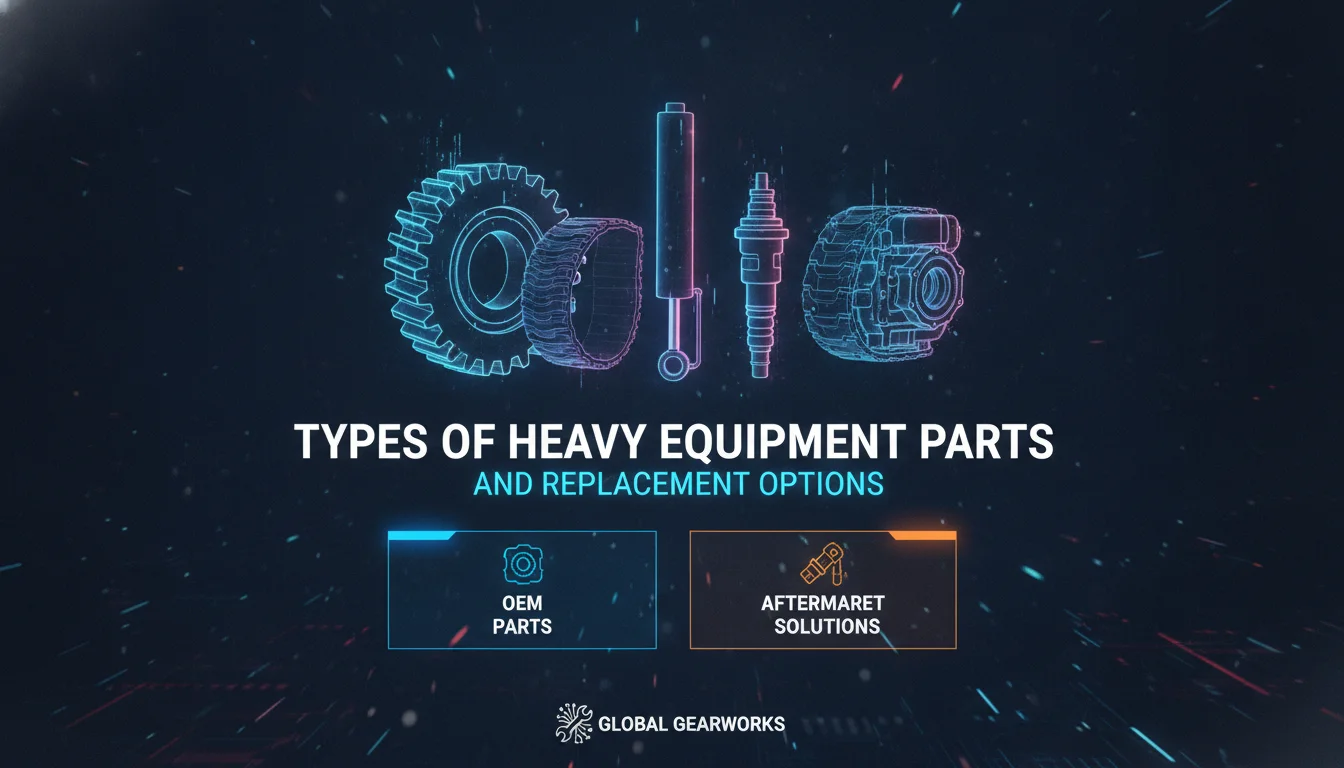
Heavy equipment parts span undercarriage, hydraulics, drivetrain, engine, filtration, and ground-engaging tools. A broad-line supplier can consolidate these categories, but some buyers prefer specialists for high-wear or high-cost assemblies.
Undercarriage and Track Components
Undercarriage is the collective term for track chains, rollers, idlers, sprockets, track frames, and rubber track systems. Allied Heavy Equipment Parts lists undercarriage, G.E.T., engine parts, rubber track chains, and track frames among its core product range for Caterpillar, Case, Komatsu, Deere, and Hitachi machines. Skidsteers.com also carries CTL tracks, excavator tracks, dozer tracks, paver tracks, and over-the-tire tracks. Track wear is application-dependent, so a serial-number-specific quote is essential before ordering.
Hydraulic and Drivetrain Components
Final drives, hydraulic pumps, hydraulic cylinders, swing gearboxes, transmissions, and axles are some of the most expensive assemblies on a machine. A final drive is the planetary gearbox and motor assembly that transfers hydraulic power to a track or wheel. AMS Parts lists final drive assemblies for Hitachi ZX600, ZX450-3, ZX200LC, and other specific models, with weights ranging from 600.00 to 1371.00. H&R Parts positions itself as a final drive expert and also offers rebuilt transmissions. Machinery Parts Warehouse carries final drives, pumps, slewing rings, swing drives, torque converters, differentials, and transmissions for Caterpillar, John Deere, Komatsu, Case, Volvo, and dozens of other brands. When comparing options for final drives, confirm whether the unit is new, rebuilt, or used and whether a core charge applies.
Engine, Cooling, and Filtration
Engine parts, radiators, oil coolers, and filters are frequent purchases because they follow maintenance intervals. TVH includes electrical parts, cabin parts, windshields, and filtration in its construction equipment range. EquipmentShare lists aftermarket JCB filters from $15.03 to $89.16, while a Baldwin spin-on lube filter B228 is listed at $8.61. Radiators from AMS Parts fit machines such as the Case W30. Replacing a clogged radiator or a failed filter is usually far cheaper than the damage caused by overheating or contaminated oil.
Wear Parts and Ground Engaging Tools (G.E.T.)
Ground-engaging tools are the bucket teeth, pins, bushings, and cutting edges that contact soil, rock, and abrasive material. AMS Parts lists a tooth part #X156 with a weight of 2.60, and multiple pins and bushings for Deere 450D, 450E, 550B, and 690A models. Allied Heavy Equipment Parts explicitly names G.E.T. as a product category. Skidsteers.com notes that even one worn-out bolt or pin can cause a serious failure. Budget for wear parts as a consumable, not a one-time purchase.
| Supplier Model | Example | Catalog Scope | Price/Shipping Notes | Support Signal |
|---|---|---|---|---|
| High-volume aftermarket catalog | AMS Parts | 933,823 listed parts; 19 machine makes | Up to 70% off new aftermarket, used | Phone 1-800-255-6253, Middletown OH |
| Global OEM/aftermarket hybrid | TVH | Over 8 million known references | Competitive aftermarket pricing; worldwide delivery | In-house experts via email, phone, online shop |
| Rebuilt/final drive specialist | H&R Parts | Final drives, transmissions, axles, cooling, cylinders | Competitive pricing on new and used | 1-800-333-0650; over 50,000 customers since 1984 |
| OEM/aftermarket e-commerce | EquipmentShare | Select makes: Skyjack, Sany, Club Car, JCB, Genie, JLG | Free shipping over $149.99; parts from $2.11 to $113.71 | Parts Rewards Program, online search by make/model |
How to Choose the Right Heavy Equipment Parts Supplier
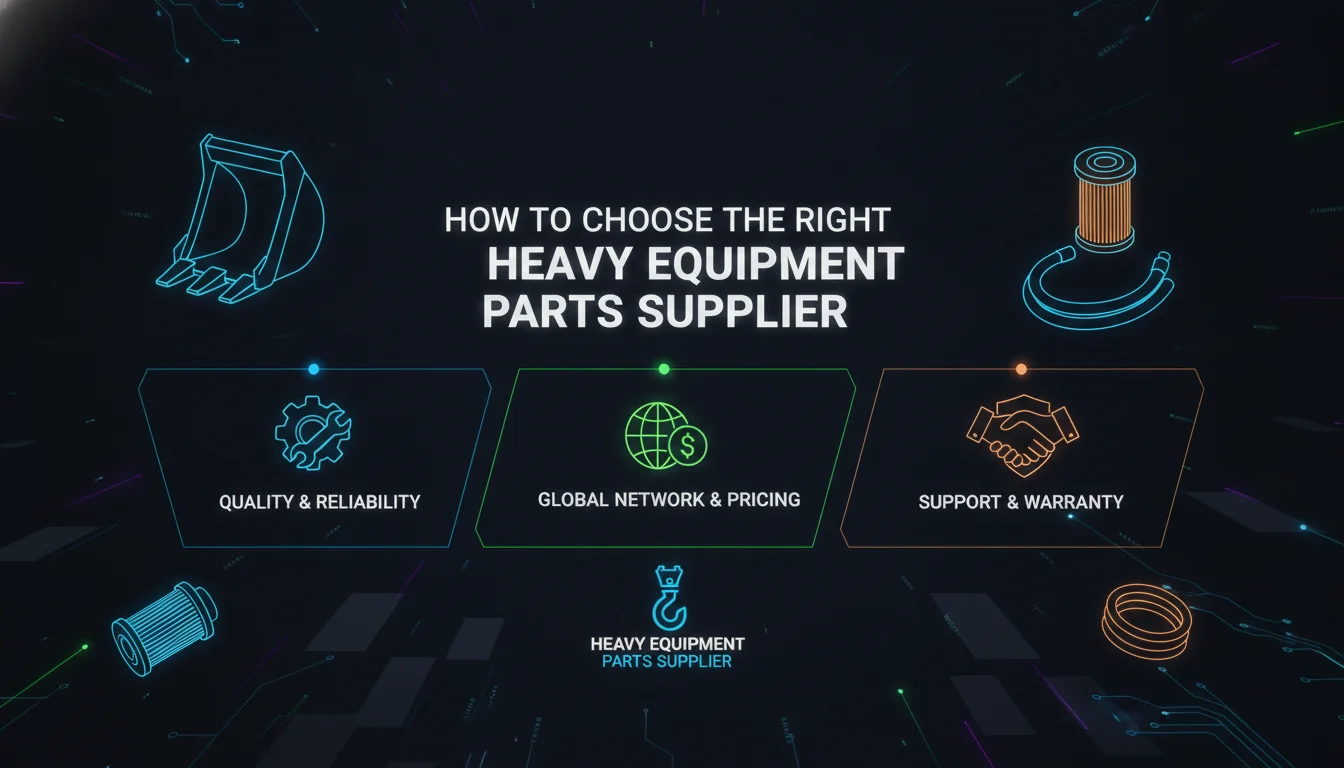
Choosing a heavy equipment parts supplier is a process, not a one-click decision. The following steps reduce the risk of ordering a part that looks right in a photo but doesn't fit on the machine.
Step 1: Record the Machine Make, Model, and Serial Number
Serial breaks often change a component even when the model number stays the same, so pull the full serial prefix off the data plate before you call anyone.
Step 2: Identify the Original Part Number
Find the number from the parts book, the failed component itself, or a dealer lookup. This single step prevents most fitment disputes down the line.
Step 3: Submit the Same Quote Request to Multiple Suppliers
Include photos of the old part, the data plate, and the machine hour meter if available. Sending identical information to two or three vendors makes it easy to compare apples to apples.
Step 4: Confirm Condition Tier and Warranty in Writing
Ask whether the part is new OEM, aftermarket, used, or rebuilt, and get the warranty terms in the same email or order confirmation, not just verbally over the phone.
Step 5: Compare Total Landed Cost
Add freight, liftgate fees, tax, and expected downtime to the unit price rather than comparing list prices alone.
Evaluate Technical Support and Responsiveness
A high-quality heavy equipment parts supplier answers fitment questions confidently. Allied Heavy Equipment Parts emphasizes technical expertise from professionals with years in the construction industry and personalized service, treating every order as mission-critical. H&R Parts says its parts specialists are there to help. AMS Parts invites buyers to call a parts expert directly at 1-800-255-6253. A supplier that picks up the phone and confirms serial breaks is worth more than a marginal price difference.
Based on our work sourcing parts across dozens of brands, the suppliers who ask for a serial number before quoting a price are almost always the ones who get the fitment right the first time.
Balance Price Against Downtime Cost
TVH reports that more than 30,000 businesses bought parts for construction equipment from TVH last year, and one rental company customer noted that most orders ship within 24 hours. H&R Parts has served over 50,000 customers since 1984. Downtime often costs more than the part itself; a supplier that can ship from stock may justify a higher unit price. Use price examples from EquipmentShare as a reference: a $3.80 Skyjack scissor arm bumper or a $26.93 Sany filter is inexpensive, but if a missing part shuts down a rental fleet, the true cost shows up in lost revenue, not the invoice.
Price Ranges and Value Tiers for Heavy Equipment Parts
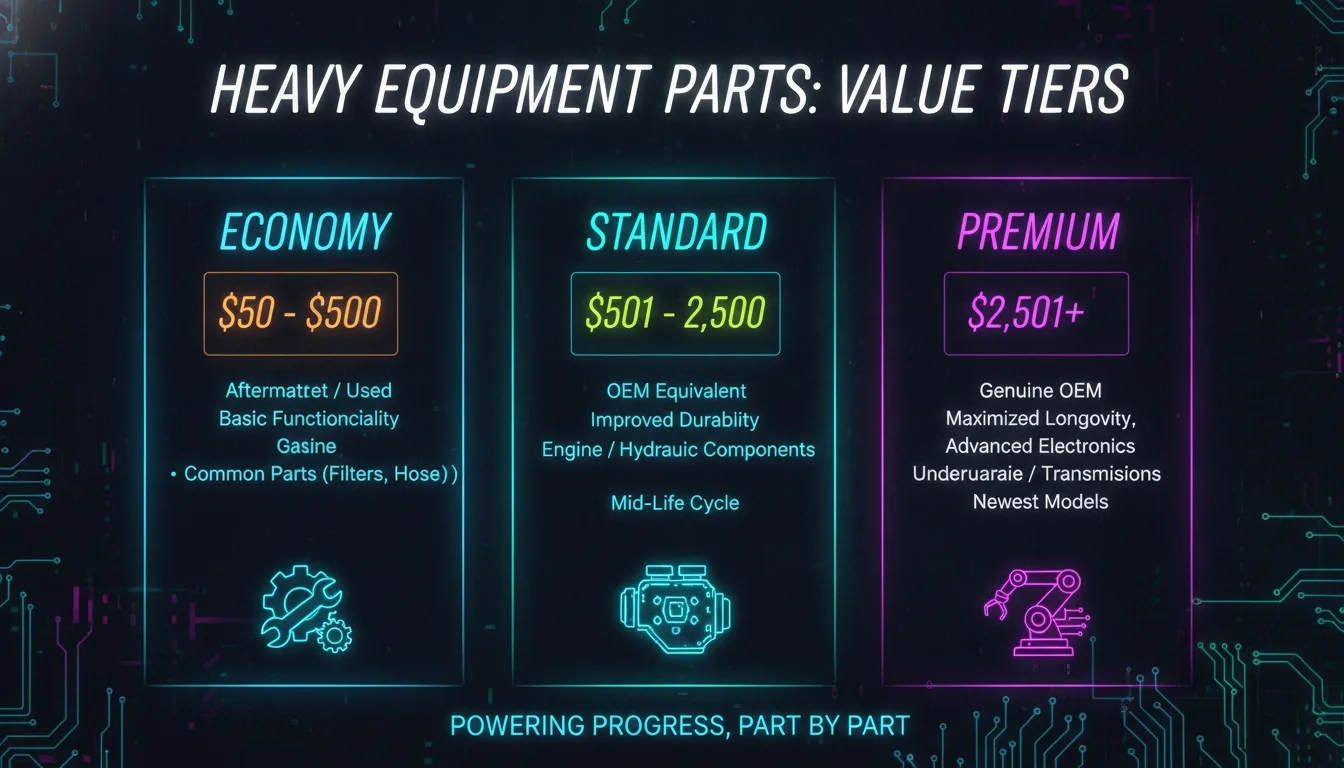
Heavy equipment parts pricing spans three broad tiers. Knowing which tier your component falls into helps you spot fair value instead of overpaying for a commodity item.
Budget Tier: Wear Items, Filters, and Small Hardware
Budget parts are high-volume consumables. EquipmentShare lists a Skyjack scissor arm bumper at $3.80, a Club Car lower arm bushing at $4.29, a Club Car lug stud at $2.11, and a Baldwin spin-on lube filter at $8.61. Skidsteers.com offers select items at up to 25% off with free shipping in the Lower 48 through August 15, 2026. These parts are often stocked and ship quickly.
Mid-Range Tier: Aftermarket Kits, Filters, and Hydraulic Components
Mid-range parts include aftermarket kits and branded filtration. EquipmentShare lists JCB aftermarket air and fuel filters from $15.03 to $89.16. TVH aftermarket kits are made to OEM specifications and sold through EquipmentShare. Seal kits, hydraulic cylinders, and smaller drivetrain components often fall in this tier. One consistent pattern we see: aftermarket savings on filters and seals can be meaningful, but the trade-off is usually warranty length, not basic fit.
Premium Tier: Final Drives, Transmissions, and Complete Engines
Premium components are low-volume, high-cost, and often serial-number-specific. AMS Parts lists a transmission complete for a Komatsu WA600-6 with a weight of 4576.00 and final drives for Hitachi models with weights from 600.00 to 1371.00. H&R Parts focuses on rebuilt transmissions and new final drives as a high-value alternative to dealer pricing. For premium parts, always get a written quote, confirm freight class, and ask about core charges or return policies.
Warranty Terms, Returns, and Financing Considerations
Warranty coverage and return policy vary considerably by supplier and condition tier, so this is a section to read before you pay, not after a part fails. New OEM parts typically carry manufacturer-backed warranty terms, while used and salvage parts are often sold as-tested with limited or no return window. Rebuilt components from specialists like H&R Parts generally include a warranty period tied to the rebuild, since new seals, bearings, and wear surfaces are installed during the process. Some suppliers, including Boltz Equipment Parts, offer installment payment options such as Affirm at checkout, which can help spread out the cost of a premium-tier purchase like a final drive or transmission. Always ask directly: what's covered, for how long, and who pays return freight if the part doesn't fit.
Pros and Cons
Pros
- Multiple condition tiers (new OEM, aftermarket, used, rebuilt) let buyers match spend to machine age and criticality.
- Large catalogs from suppliers like AMS Parts and TVH increase the odds of finding a serial-specific match without a custom order.
- Competitive freight programs, such as EquipmentShare's threshold-based free shipping, can meaningfully lower total landed cost on smaller orders.
- Specialist suppliers for final drives and transmissions often deliver dealer-comparable quality at a lower price point.
Cons
- Freight on large components like final drives or transmissions can add hundreds of dollars, and residential delivery fees are easy to miss until checkout.
- Used and salvage parts often carry limited or no warranty, shifting risk back onto the buyer.
- Catalog depth doesn't guarantee your exact serial-break fitment, so verification calls are still necessary even with a large supplier.
- Comparing suppliers purely on unit price can hide the real cost difference once freight, core charges, and downtime are factored in.
Care and Maintenance of Heavy Equipment Components
Maintenance is the highest-leverage way to reduce parts spend. A heavy equipment parts supplier may sell you the part, but your maintenance schedule determines how quickly that part wears again.
Preventive Maintenance for Longer Component Life
TVH states that construction equipment such as small earth-movers, mobile elevating work platforms, and telehandlers must be properly maintained to ensure optimum performance. For hydraulic systems, that means scheduled oil sampling, filter changes, and keeping cylinders clean and dry. For undercarriage, track tension, roller inspection, and pin-and-bushing wear measurement are critical. Following OEM maintenance intervals is the most direct way to extend the life of final drives, pumps, and engines.
Storage and Handling of Replacement Parts
How you store a replacement part before installation affects its service life. Keep hydraulic components sealed until installation to prevent contamination. Store filters indoors and away from moisture. Radiators and coolers should be protected from impact and stored with ports capped. If you buy used or rebuilt parts, ask the supplier how the component was cleaned and tested before crating.
When Used or Rebuilt Parts Make Sense
Used and rebuilt parts are viable options for older machines, low-hour backup fleets, or emergency repairs. AMS Parts promotes savings of up to 70% on new aftermarket and used items. H&R Parts supplies rebuilt transmissions and new final drives as a cost-controlled alternative to dealer pricing. The key is to buy used or rebuilt components only from a heavy equipment parts supplier that provides a condition report, warranty, and fitment confirmation.
The right heavy equipment parts supplier combines catalog depth, honest condition grading, serial-number fitment support, and transparent freight. Use the comparison table and price examples above to request quotes from at least two suppliers before making a final decision. For buyers sourcing globally, 3GEN Export ships OEM-quality components for Caterpillar, Komatsu, Volvo, Atlas Copco, and 40+ other brands with 5-day delivery worldwide.
Frequently Asked Questions
What is a heavy equipment parts supplier?
A heavy equipment parts supplier is a distributor that sources and sells replacement components for excavators, dozers, loaders, backhoes, skid steers, and other off-highway machines. Suppliers offer new OEM, aftermarket, used, and rebuilt parts and often provide fitment support.
How do I know if an aftermarket part will fit my machine?
Confirm the part number against your machine's make, model, and serial number prefix. Submit photos and original part numbers to supplier parts specialists; AMS Parts, TVH, and H&R Parts all provide cross-reference support.
What is the difference between OEM and aftermarket parts?
OEM parts are made by the original equipment manufacturer and typically cost more. Aftermarket parts are produced by third parties to OEM specifications and are usually priced lower while offering comparable quality.
What should I expect to pay for heavy equipment parts?
Budget wear items can cost under $10, such as a $3.80 Skyjack bumper or an $8.61 Baldwin filter, while aftermarket JCB filters run roughly $58 to $89. Final drives, transmissions, and complete engines are significantly more expensive and usually require a written quote.
How long does heavy equipment parts shipping take?
Shipping times vary by supplier and location. TVH states most orders ship within 24 hours, while Boltz and Skidsteers.com publish flat-rate LTL and free-shipping promotions with delivery windows shown at checkout.
Is buying used or rebuilt heavy equipment parts safe?
Yes, when purchased from a reputable heavy equipment parts supplier that inspects and tests components. Rebuilt units from H&R Parts or AMS Parts include new wear items and are usually a safer mid-cost alternative than as-is used parts.