
Heavy Equipment Starter Motor Price Guide 2026
Compare heavy equipment starter motor price ranges by brand, type & condition. OEM-quality units with global 5-day delivery at 3genexport.com.
Loading article…
Article Not Found
The article you're looking for doesn't exist or may have been removed.
Back to BlogKey Takeaways
- Heavy equipment starter motor price varies significantly based on brand, motor type, voltage, and whether the unit is new, remanufactured, or used.
- Prices range from roughly $95 for used units to over $1,397 for new OEM-grade 24V gear reduction starters.
- Matching the OEM part number to your specific engine is the single most important step before purchasing.
- Remanufactured units from reputable suppliers offer a practical middle ground between cost and reliability.
- Installation labor, core charges, and warranty coverage all affect total cost of ownership.
- Regular battery and connection maintenance directly extends starter motor service life.
Heavy Equipment Starter Motor Price: A Complete Buying Guide for 2026
Heavy equipment starter motor price is the total cost of acquiring a starter motor for construction, mining, or agricultural machinery, covering new, remanufactured, and used units across voltage ratings and brands. Prices span from under $100 for used cores to over $1,397 for new OEM 24V units.
Why Starter Motor Pricing Matters for Fleet Procurement
A failed starter motor stops production. On a mining site or active construction project, every hour of unplanned downtime translates directly into lost revenue and schedule pressure. Knowing the real heavy equipment starter motor price range before you need a replacement puts your procurement team in control rather than at the mercy of emergency markups.
As of 2026, global supply chain conditions have stabilized compared to the disruptions of prior years, but lead times for specialty 24V starters and OEM-branded units can still stretch to two weeks or more if you order from the wrong channel. Sourcing from a stocked global supplier with verified inventory is the fastest path back to uptime.
"In heavy-duty diesel applications, the starter motor is one of the highest-stress electrical components on the machine. Specifying the correct voltage, torque rating, and pinion configuration from the start prevents costly comebacks." - Industry service bulletin guidance, per OEM technical documentation standards
Factors Influencing Heavy Equipment Starter Motor Prices
1. Type of Starter Motor
Starter motor type is the primary engineering variable that drives price. Gear reduction starters are generally more expensive than direct-drive units because they deliver higher torque at lower current draw, which is critical for large-displacement diesel engines in excavators, dozers, and haul trucks. Permanent magnet designs are lighter and suited to smaller equipment. Series wound starters handle extreme cold-start loads but are heavier and typically cost more to manufacture. High-torque aftermarket units from brands like IMI occupy a niche between OEM performance and aftermarket pricing.
2. Brand and Manufacturer
Brand reputation is directly priced into every unit. Delco Remy, Mitsubishi (Melco), Mahle, Denso, Iskra, Road Choice, and Automann each occupy distinct price bands. According to competitor market data, a Delco Remy 50MT 24V starter lists at $1,397.02, while a Road Choice 39MT unit for similar applications sells in the $437 to $481 range. Mahle OEM starters for Deutz agricultural and industrial engines run from roughly $520 to $1,350 depending on the specific application. The price gap between top-tier OEM brands and quality aftermarket alternatives can be significant, and for many fleet operators, the aftermarket option delivers acceptable service life at a lower acquisition cost.
3. New vs. Remanufactured vs. Used
Condition is the second-biggest price driver after brand. New OEM starter motors generally carry a higher price tag, ranging from $600 to over $1,300 for 24V heavy-duty units. Remanufactured units offer meaningful savings, typically priced between $300 and $800 depending on the model and the remanufacturer's standards. Used cores pulled from retired equipment can be found for as little as $95, as seen with used Volvo D13 and International Maxxforce DT 39MT starters, but these carry no warranty and require inspection before installation. For critical equipment, remanufactured units from a reputable supplier are usually the better risk-adjusted choice.
4. Voltage Rating
Voltage specification directly affects price and compatibility. Most heavy equipment diesel engines use either 12V or 24V starter systems. The 24V systems are standard on larger machines: large excavators, mining trucks, and high-horsepower dozers. A 24V 39MT or 50MT starter will consistently price higher than a 12V equivalent because the components are heavier-duty and the production volumes are lower. Always confirm your machine's system voltage before ordering.
5. Pinion Configuration and Mounting Type
Pinion tooth count (10T, 11T, 12T) and mounting type (SAE 1, SAE 3) must match the ring gear and bell housing of your specific engine. A mismatched pinion destroys both the starter and the flywheel ring gear. These specifications are listed in the OEM service manual and on the original starter's data plate. Getting this wrong is an expensive mistake that no price saving justifies.
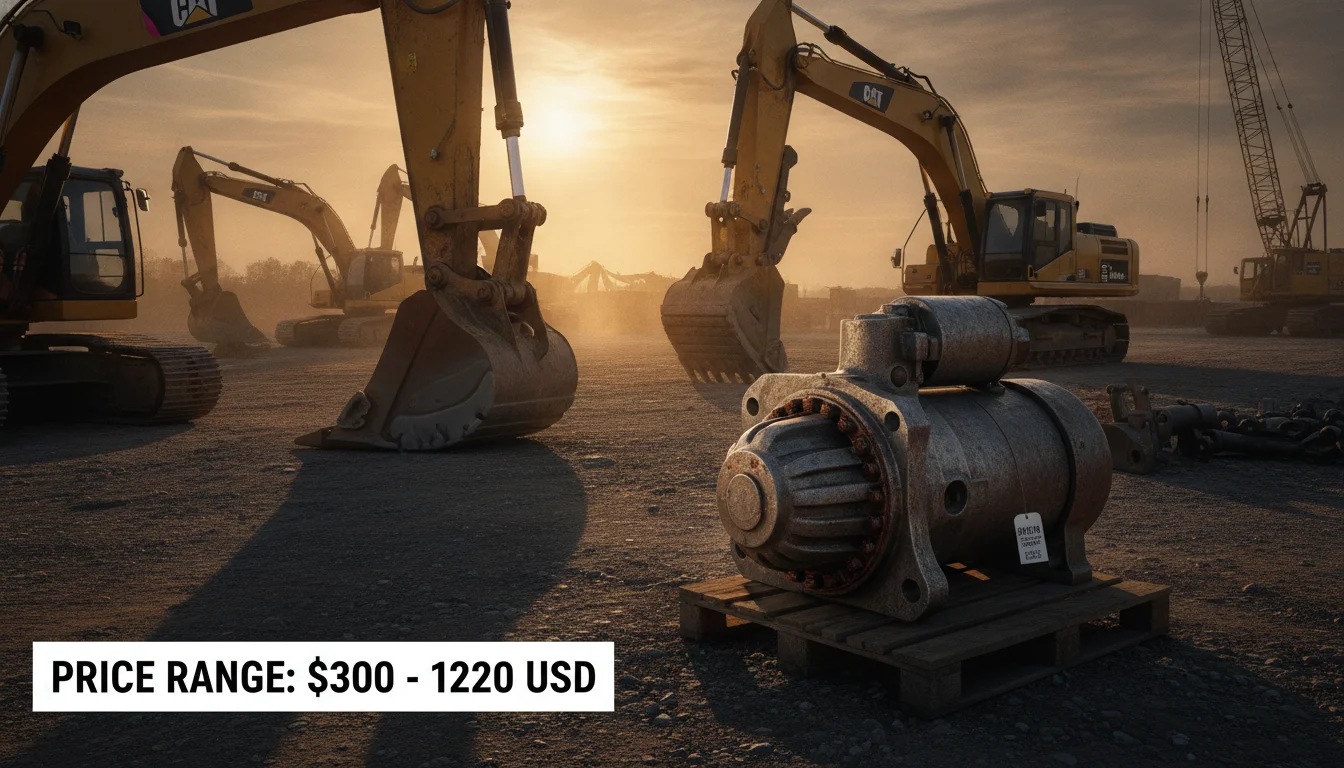
Price Range Expectations
Budget Options: Used and Entry-Level Remanufactured
Budget-tier heavy equipment starter motor price starts at roughly $95 to $310 for used or basic remanufactured units. At this price point, you are looking at pulled units from salvage yards or entry-level reman starters for older, lower-demand applications. Examples from competitor market data include used 39MT starters for Volvo D13 and International engines at $95, and entry-level remanufactured units such as the Delco Remy 10465239 2MT reman at $309.03. These options suit older equipment where the cost of a premium starter exceeds the machine's remaining value.
Mid-Range Options: Quality Aftermarket and Standard Reman
Mid-range heavy equipment starter motor price falls between roughly $370 and $650. This is the most active segment of the market. Units here include Road Choice 39MT starters ($437 to $481), IMI high-torque starters ($350 to $590), Denso PowerEdge 39PE units ($469 to $490), and Mahle OEM starters for John Deere, JCB, Perkins, and Case applications ($490 to $570). These units typically come with a manufacturer warranty and are built to OEM specifications. For fleet operators running mixed brands, this tier offers the best balance of cost and reliability.
Premium Options: OEM and High-Specification Units
Premium heavy equipment starter motor price exceeds $650 and can reach $1,397 for top-specification units. This tier covers new OEM Delco Remy 50MT and 39MT starters, Mahle 24V OEM units for Deutz and Mercedes-Benz applications, Mitsubishi starters for Volvo and Cummins engines, and specialty units like the Iskra 24V starter for MAN and Daewoo Marine applications. For equipment operating in high-cycle environments such as mining or quarrying, the premium tier is often the correct specification choice. The higher acquisition cost is offset by longer service intervals and lower risk of mid-shift failure.
Comparison of Popular Heavy Equipment Starter Motors
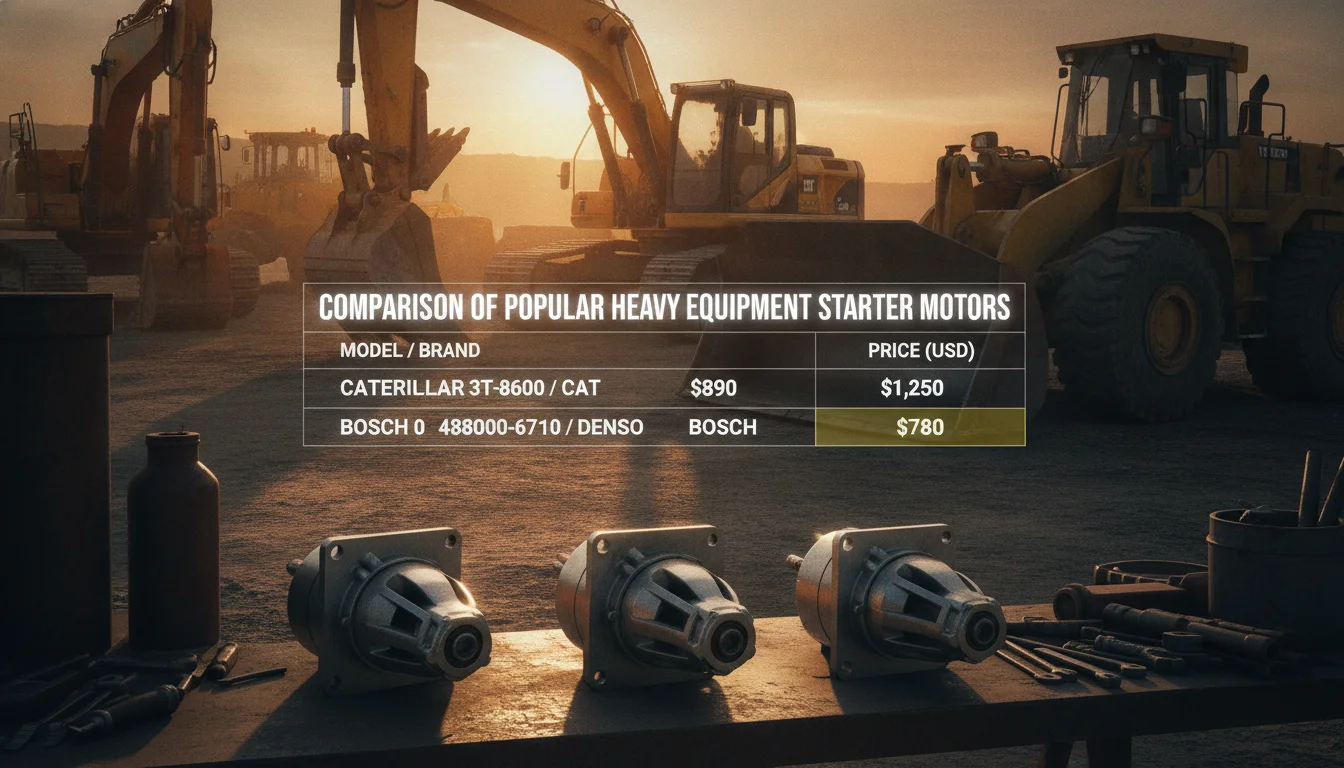
| Brand | Model / Part Number | Type | Voltage | Application | Price (USD) |
|---|---|---|---|---|---|
| Delco Remy | 10479327 / 50MT | Gear Reduction | 24V | Heavy-duty diesel, general | $1,397.02 |
| Mahle | MS452 (IS1209) | OEM | 24V | Deutz agricultural | $1,349.95 |
| Mitsubishi (Melco) | MK0077 | Standard | 12V | Heavy-duty truck | $909.73 / $590.33 sale |
| Mitsubishi (Melco) | VV2079 | Standard | 12V | Volvo D13 | $786.98 / $550.66 sale |
| Delco Remy | 8200308 / 39MT | Standard | 24V | CAT, Cummins ISM/ISX, Detroit S60, Mack E7 | $599.95 |
| Delco Remy | 8200330 / 39MT | Standard | 24V | Heavy-duty general | $461.69 to $599.95 |
| Road Choice | STA6919 / 39MT | Standard | 24V | Heavy-duty truck | $480.77 |
| Mahle | MS94 (IS1063) | OEM | 12V | John Deere 310/315G Backhoe | $529.95 |
| IMI | IMI122-004 | High Torque | 12V | Lift truck, Cummins Type A 2300 | $589.95 |
| Delco Remy | 19011400 / 29MT | Standard | 12V | Light-duty heavy equipment | $336.66 |
| Volvo D13 (Used) | 61003775 / 39MT | Standard | 12V | Volvo D13 | $95.00 |
What to Look For When Buying a Heavy Equipment Starter Motor
The right heavy equipment starter motor purchase starts with four non-negotiable criteria: correct OEM part number, matching voltage, correct pinion configuration, and a verifiable warranty. Get all four right and you avoid the most common and costly procurement mistakes.
1. OEM Part Number Compatibility
Cross-reference the OEM part number stamped on your existing starter or listed in the machine's service manual before ordering anything. Many starters look physically similar but differ in pinion tooth count, rotation direction (clockwise vs. counterclockwise), or solenoid configuration. A Delco Remy 39MT, for example, comes in 11-tooth and 12-tooth pinion variants, 12V and 24V versions, and multiple mounting configurations. The part number is the only reliable way to confirm you are ordering the correct unit. Suppliers like 3GEN Export cross-reference OEM numbers across 40-plus brands to confirm fitment before shipping.
2. New, Remanufactured, or Used: Choosing the Right Condition
Match the condition of the part to the criticality of the application. For a primary production excavator running two shifts per day, a new or OEM-remanufactured unit is the correct choice. For a backup machine or older equipment approaching end of service life, a quality remanufactured or inspected used unit may be entirely appropriate. The key question is: what does one additional failure cost you in downtime? If the answer is significant, buy up in quality.
3. Warranty and Return Policy
A warranty is not just a marketing feature. It is a signal of the manufacturer's confidence in their product. Warranty periods for starter motors typically range from one to three years depending on the brand and unit type. Equally important is the supplier's return policy. A good return policy is essential in case the part does not fit or arrives damaged. Confirm both before placing a large order, especially for international shipments where return logistics add cost and time.
4. Supplier Inventory and Lead Time
A starter motor that takes three weeks to arrive is not a solution. Confirm that your supplier holds the unit in stock and can commit to a specific ship date. As of 2026, the best global suppliers maintain stocked warehouses and can ship within 24 to 48 hours of order confirmation, with international delivery in five to seven business days. This is the standard 3GEN Export holds itself to across all 40-plus brands in our catalog.
5. Installation Requirements
Consider whether your maintenance team will install the starter motor in-house or whether you need a certified technician. On large equipment, starter motor access can require partial disassembly of surrounding components, adding labor time. Factor installation cost into your total budget. For remote sites, sourcing a unit that arrives ready to install with all mounting hardware included saves additional downtime.
How to Choose the Right Starter Motor for Your Equipment
Choosing the correct heavy equipment starter motor comes down to matching three variables: your engine's electrical system, your operating environment, and your total cost tolerance. Here is how to work through each one systematically.
Step 1: Identify Your Engine and Electrical System
Start with the engine model and the system voltage. Large diesel engines in Caterpillar, Komatsu, Volvo, and Cummins-powered equipment typically run 24V systems. Smaller machines and some older equipment run 12V. Pull the OEM service manual or check the existing starter's data plate for voltage, pinion teeth, and rotation direction. For Caterpillar C11, C13, and C15 engines, for example, the 428000-4420 12V offset gear reduction starter is a documented fit per competitor market data.
Step 2: Match the Starter Series to the Application Load
Heavy-duty diesel engines with high compression ratios need starters with sufficient torque output to crank reliably in cold conditions. The 39MT and 50MT series from Delco Remy are the most widely used in heavy equipment applications, covering engines from Caterpillar, Cummins, Detroit Diesel, Mack, and Volvo. The 38MT series covers mid-range applications such as the CAT 3116. For lift trucks and sweepers running Cummins Type A 2300 engines, the IMI122-004 high-torque unit is a documented fit.
Step 3: Evaluate Total Cost, Not Just Unit Price
The heavy equipment starter motor price you see on a product listing is only part of the total cost. Add installation labor, any core charge for remanufactured units, shipping cost and lead time, and the cost of downtime if the unit fails prematurely. A $150 saving on a budget remanufactured unit that fails in six months costs far more than the difference when you factor in emergency sourcing and lost production time.
Step 4: Confirm Supplier Credentials
Order from suppliers who can provide documentation: OEM part number cross-references, warranty certificates, and country of origin. For international procurement, confirm that the supplier has experience with customs documentation and export compliance. 3GEN Export ships OEM-quality spare parts to over 60 countries with full documentation support.
"For mining and quarry applications, starter motor selection should account for duty cycle, not just engine displacement. A machine starting 40-plus times per shift needs a starter rated for high-cycle operation, not just high torque." - Per Prestolite Electric technical guidance for mining and quarry applications
Brand-by-Brand Overview: What You Need to Know
Understanding the major brands helps procurement teams make faster, more confident decisions when evaluating heavy equipment starter motor price against performance expectations.
Delco Remy
Delco Remy is the most widely specified starter brand in North American heavy equipment. The 39MT and 50MT series cover the broadest range of diesel applications, from Caterpillar and Cummins to Detroit Diesel and Mack. New OEM units price from roughly $460 to $1,397 depending on the specific model. The 39MT is available in 12V and 24V configurations with multiple pinion options, making it one of the most versatile starters in the market. Road Choice and Automann both offer 39MT-compatible units at lower price points for operators seeking aftermarket alternatives.
Mitsubishi (Melco)
Mitsubishi starters are the standard fit for Volvo, Cummins, and many Asian-origin diesel engines. The VV2079 for the Volvo D13 and the MELVV0776 for Volvo and Cummins applications are among the most commonly sourced units. Pricing for new Mitsubishi starters ranges from roughly $475 to $975 at list price, with sale pricing often 25-30% lower. These units are known for reliable performance in demanding long-haul and construction environments.
Mahle (Letrika / Iskra)
Mahle, which absorbed the Letrika and Iskra brands, supplies OEM starters for a wide range of agricultural and industrial equipment: John Deere, Case, JCB, Perkins, Deutz, Hatz, and Ford-New Holland among them. Mahle starters are particularly relevant for mixed fleets that include agricultural machinery alongside construction equipment. Pricing runs from roughly $460 to $1,350 depending on voltage and application.
IMI (International Manufacturing Inc.)
IMI high-torque starters are a well-regarded aftermarket option for older equipment and specialty applications including Massey Ferguson tractors, International Harvester machines, and Ford industrial engines. Pricing typically falls between $330 and $590, making IMI units a cost-effective choice for older fleets where OEM starters are no longer readily available.
Denso
Denso PowerEdge starters, including the 39PE series, are a strong option for operators who prefer Japanese-origin engineering. The 39PE units price in the $470 to $490 range and are compatible with a range of heavy-duty diesel applications. Denso's quality control standards are well-regarded across the industry.
Care and Maintenance of Starter Motors
Proper maintenance of your starter motor system extends service life and reduces the frequency of unplanned replacements, directly lowering your long-term heavy equipment starter motor price burden.
1. Regular Inspections
Inspect the starter motor and its electrical connections at every scheduled service interval. Look for corrosion on the terminal posts, frayed wiring, loose mounting bolts, and signs of heat damage on the solenoid. Catching a loose ground connection early costs nothing. Ignoring it until the starter fails costs a full replacement plus downtime.
2. Keep Connections Clean and Tight
Starter motor terminals are exposed to vibration, moisture, and temperature cycling. Clean terminal posts with a wire brush and apply a dielectric grease to prevent corrosion. Torque all mounting bolts to the OEM specification. A starter that is not properly grounded will draw excessive current and fail prematurely, regardless of its original quality.
3. Battery System Maintenance
The starter motor is only as reliable as the battery system feeding it. A weak or sulfated battery forces the starter to work harder on every crank cycle, generating excess heat and accelerating wear on the brushes and commutator. Test battery capacity at regular intervals, not just voltage. A battery showing 12.6V at rest can still fail to deliver adequate cranking amps under load. Per manufacturer specifications, always replace batteries in matched pairs on 24V series systems.
4. Monitor Cranking Performance
Slow cranking is an early warning sign, not a minor inconvenience. If an engine that previously cranked in under two seconds now takes four or five seconds to fire, investigate before the starter fails completely. The cause could be the starter itself, the battery, the cables, or the solenoid. A systematic electrical test takes less than 30 minutes and can prevent a multi-day downtime event.
5. Protect Against Environmental Exposure
Starter motors on equipment operating in wet, muddy, or dusty environments are exposed to conditions that accelerate wear. Where possible, ensure the starter's protective boot or shield is in place and undamaged. Water intrusion into the starter housing causes rapid corrosion of internal components. On equipment operating in extreme cold, consider a block heater to reduce cold-start strain on the starter motor.
Pro Tip: When replacing a starter motor, also inspect the flywheel ring gear for worn or chipped teeth. A damaged ring gear will destroy a new starter within weeks. The ring gear inspection adds 15 minutes to the job and can save you the cost of a second starter replacement.Pros and Cons of New vs. Remanufactured Starter Motors
Pros
- New OEM units: Full manufacturer warranty, zero accumulated wear, predictable service life, and direct OEM part number match.
- Remanufactured units: Significant cost savings versus new, often rebuilt to OEM specifications, typically carry a one-year warranty, and are widely available for common applications.
- Used units: Lowest acquisition cost, suitable for low-criticality or backup equipment, and immediately available from salvage inventory.
Cons
- New OEM units: Highest acquisition cost, and lead times for specialty 24V units can extend to two weeks or more if not in stock.
- Remanufactured units: Quality varies significantly between remanufacturers. A poorly rebuilt unit can fail earlier than expected, negating the cost saving.
- Used units: No warranty, unknown service history, and the risk of receiving a unit that is close to end of life. Not recommended for primary production equipment.
Total Cost of Ownership: Beyond the Sticker Price
The heavy equipment starter motor price on a product listing is the starting point, not the full picture. Fleet procurement teams who evaluate total cost of ownership make better decisions than those who optimize for unit price alone.
Consider these additional cost elements:
- Core charges: Many remanufactured starter suppliers charge a core deposit, typically $50 to $150, refunded when you return the old unit. Factor this into your initial outlay.
- Installation labor: On large equipment, starter motor replacement can take two to four hours of technician time depending on access. At typical shop rates, this adds meaningfully to the total cost.
- Downtime cost: This is the largest variable and the one most often ignored in procurement decisions. A machine sitting idle for two days waiting for a starter motor costs far more than the difference between a budget and a premium unit.
- Warranty value: A three-year warranty on a premium starter versus a one-year warranty on a budget unit is a real financial difference if you are running the machine hard.
- Shipping and logistics: For international procurement, freight cost, import duties, and customs clearance time all affect the true landed cost. Working with a supplier who handles export documentation reduces this friction significantly.
Frequently Asked Questions
How much does a starter motor usually cost for heavy equipment?
Heavy equipment starter motor price ranges from roughly $95 for used units to over $1,397 for new OEM 24V gear reduction starters. The most common mid-range units for 39MT and 50MT applications fall between $370 and $700. Your specific price will depend on brand, voltage, condition, and the engine application.
What are the four main types of starter motors?
The four main types are gear reduction, permanent magnet, series wound, and high-torque starters. Gear reduction starters are the most common in heavy equipment diesel applications because they deliver high torque at lower current draw, reducing strain on the battery system. Each type has specific applications where it performs best.
How do I know if I need a new starter motor?
The clearest signs are slow cranking, a single loud click with no engine movement, grinding noises during cranking, or no response at all when you turn the key. Intermittent starting problems, where the engine starts fine sometimes and not at all other times, often point to a failing solenoid within the starter assembly. Do not wait for a complete failure on a production machine.
How much does a starter cost for a tractor or agricultural machine?
Agricultural and industrial tractor starters typically price between $300 and $570 for quality aftermarket and OEM units. Mahle OEM starters for John Deere backhoe tractors run roughly $530 to $570. IMI high-torque units for Massey Ferguson applications are available from roughly $360 to $400. The specific price depends on the engine make, model, and voltage system.
Can I install a starter motor myself?
Yes, if you have the correct tools, access to the OEM torque specifications, and experience with heavy equipment electrical systems. On many machines, the starter is accessible without major disassembly. However, incorrect installation, particularly under-torqued mounting bolts or reversed polarity connections, can destroy a new starter immediately. For technicians unfamiliar with the specific machine, a qualified mechanic is the safer choice.
Where can I find the best prices on heavy equipment starter motors with fast global delivery?
Comparing prices across specialized industrial parts suppliers, OEM dealer networks, and global B2B exporters gives you the clearest picture of the market. For procurement teams sourcing heavy equipment starter motor price across multiple brands and regions, 3GEN Export maintains stocked inventory of OEM-quality starters for Caterpillar, Komatsu, Volvo, Cummins, and 40-plus additional brands, with global delivery in five business days. Request a quote at 3genexport.com with your OEM part number for a fast, accurate price.