
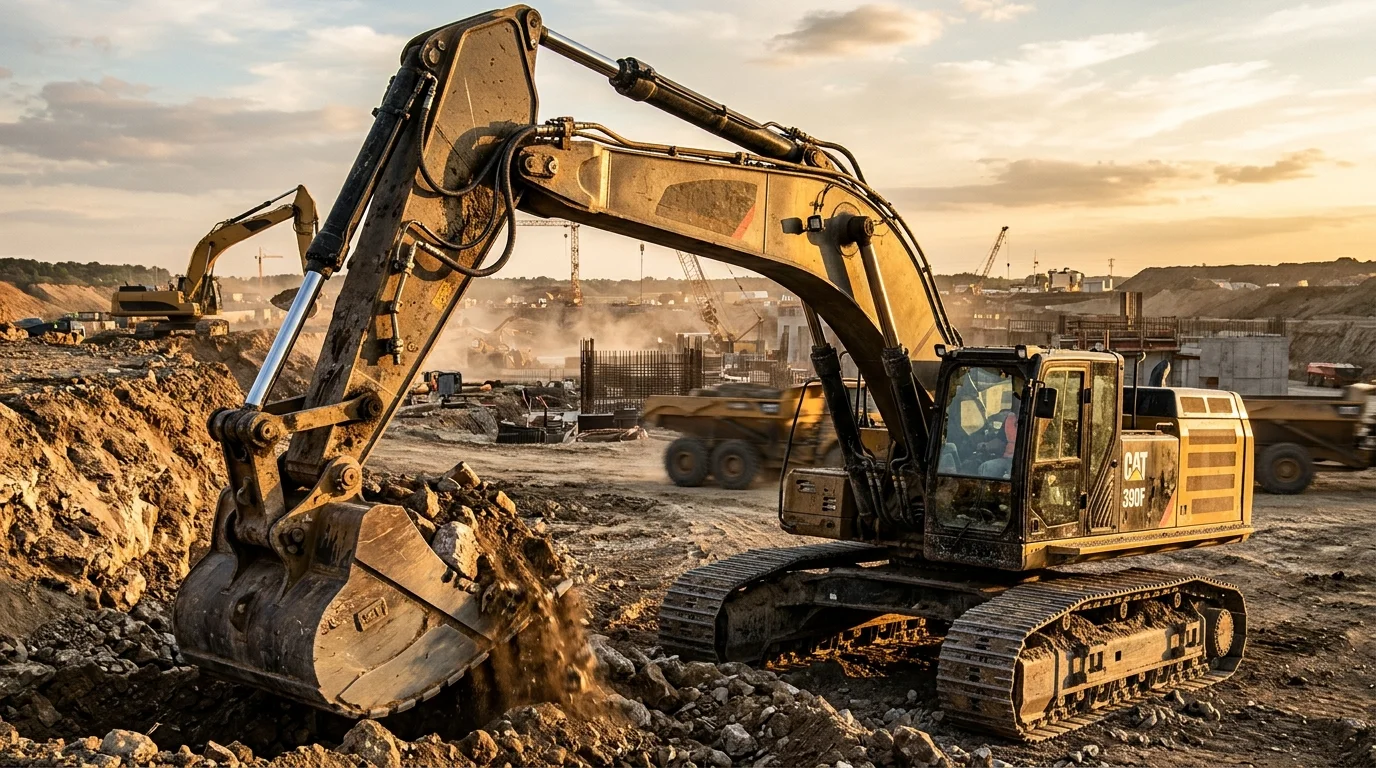
Heavy Machinery Parts Demand 2026: Market Guide
Heavy machinery parts demand 2026 is rising fast. Explore market size, key drivers, regional trends, and procurement strategies for B2B buyers worldwide.
Loading article…
Article Not Found
The article you're looking for doesn't exist or may have been removed.
Back to BlogHeavy machinery parts demand 2026 is the measure of global procurement activity for spare components across construction, mining, and energy equipment sectors. According to a research report published by Spherical Insights & Consulting, the global heavy equipment spare parts market is projected to grow from USD 95.2 billion in 2025 at a CAGR of 6.91% through 2035.
Key Takeaways
- The global heavy equipment market reached USD 211.1 billion in 2026, per GMI Research data.
- The spare parts segment is growing at a CAGR of 6.91% from 2026 to 2035, driven by infrastructure investment and mining expansion.
- Caterpillar Inc. led the market with over 12.5% share in 2025; the top five players collectively held 31.9%.
- Asia Pacific is the largest regional market; Middle East & Africa is the fastest-growing region.
- Preventive maintenance, IoT monitoring, and digital procurement platforms are reshaping how fleets source parts.
- Supply chain resilience and skilled labor availability remain the two most pressing operational challenges for procurement teams.
Understanding Heavy Machinery Parts Demand in 2026
The global spare parts market is expanding because equipment fleets are aging, infrastructure pipelines are full, and operators have learned that reactive maintenance costs more than prevention. The global heavy equipment market was valued at USD 201 billion in 2025, rising to USD 211.1 billion in 2026, and is projected to reach USD 309.6 billion by 2035 at a 4.4% CAGR, according to GMI Research. Within that broader market, the spare parts segment is growing faster, fueled by end-of-life fleet cycles and the shift toward condition-based maintenance.
Market Overview
The heavy machinery parts market covers engine components, hydraulic systems, undercarriage assemblies, filter systems, and electrical systems. These components keep construction excavators, mining haul trucks, agricultural combines, and energy-sector cranes running. When a tracked machine loses a sprocket or a hydraulic cylinder seal fails, the clock starts immediately. Every hour of downtime on a productive site translates directly into project cost overruns.
Growth Projections
According to Spherical Insights & Consulting, the heavy equipment spare parts market is projected to grow at a CAGR of 6.91% from 2026 to 2035. This growth is attributed to increasing machinery demand in developing economies, the expansion of OEM aftermarket services, and the adoption of AI diagnostic systems that generate more precise, timely parts orders.
"The market experiences growth because of three factors: the increasing development of infrastructure, the rising activities in mining and agriculture, and the increasing need for preventive maintenance and equipment lifecycle management." - Spherical Insights & Consulting, April 2026 Research Report
How the Spare Parts Market Actually Works
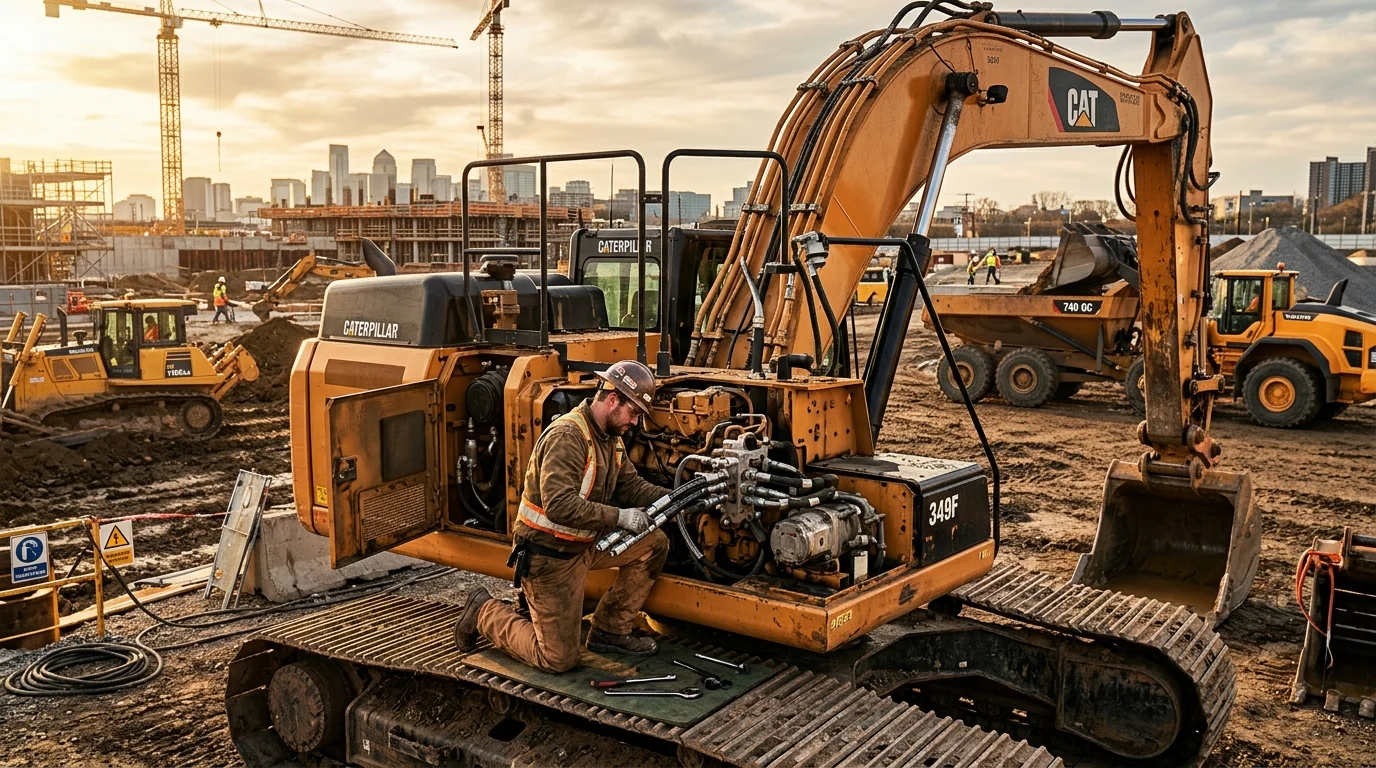
Understanding the mechanics behind parts demand helps procurement managers make smarter sourcing decisions. The market operates across two primary channels: OEM (original equipment manufacturer) supply and the aftermarket. Each channel serves different buyer needs, price points, and lead times.
OEM supply chains run from the manufacturer's factory through authorized dealer networks. Parts carry full warranty coverage and are engineered to exact tolerances. Lead times can run from days to several weeks depending on part complexity and regional inventory depth. For critical components on machines still under warranty, OEM is often the only compliant option.
Aftermarket supply chains source from independent manufacturers who produce parts to OEM specifications. Quality varies significantly across suppliers. Reputable aftermarket suppliers hold ISO certifications and test to the same dimensional and material standards as the OEM. Pricing is typically more competitive, and regional warehousing often means shorter lead times for common wear parts.
The procurement cycle works like this: a fleet maintenance supervisor identifies a failing component through either a scheduled inspection or a telematics alert. They check internal stock, then query their preferred supplier network. If the part is in stock regionally, it ships within 24-48 hours. If it requires international sourcing, lead times extend to 5-15 business days depending on origin and customs clearance. Digital marketplaces are compressing that timeline by aggregating global inventory into a single searchable interface.
IoT monitoring has added a predictive layer to this cycle. Sensors on hydraulic systems, engine components, and undercarriage assemblies generate real-time wear data. Fleet management software analyzes that data and flags components approaching end-of-service life before they fail. The result: parts are ordered proactively, not reactively, which reduces emergency freight costs and unplanned downtime.
Key Drivers of Heavy Machinery Parts Demand
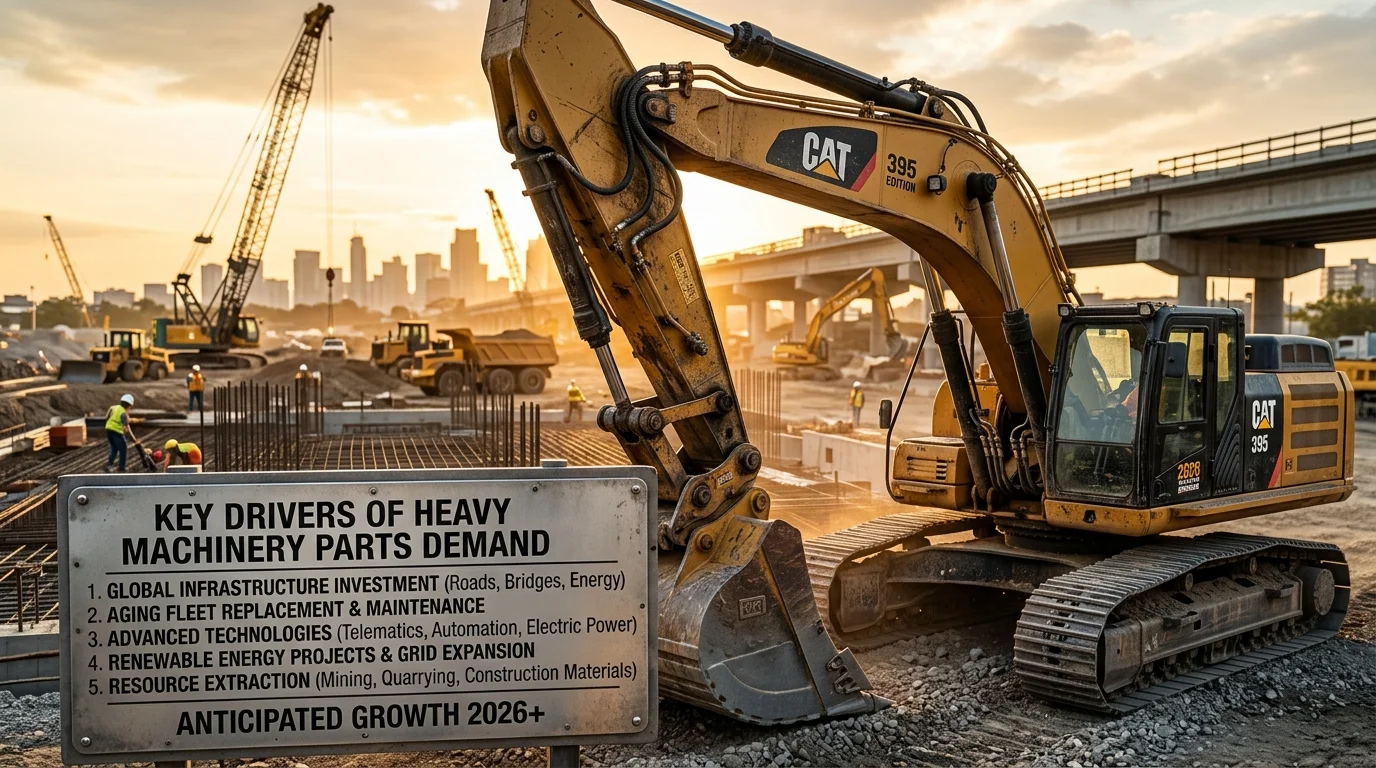
Infrastructure Development
Government investment in infrastructure is the single largest demand driver for heavy machinery parts right now. Projects in India, China, Southeast Asia, and the Middle East require sustained fleets of excavators, bulldozers, motor graders, and cranes. These machines consume wear parts at predictable rates: undercarriage components on a tracked excavator typically require inspection every 1,000 operating hours and replacement at intervals that depend heavily on ground conditions. A large infrastructure project running dozens of machines generates a continuous, forecastable parts demand stream.
Mining and Agricultural Activities
Mining operations place extreme stress on equipment. Haul trucks, drill rigs, and loading shovels operate in abrasive, high-load environments where component wear rates are significantly higher than in standard construction applications. As commodity demand grows, mining companies expand fleets and push existing machines harder, both of which increase parts consumption. Agricultural equipment faces similar dynamics during peak seasons, where a combine harvester breakdown during harvest can cost a farm operator far more than the part itself.
Technological Advancements
IoT and predictive maintenance systems are reshaping how spare parts are procured and managed. These technologies enable better monitoring of equipment health, optimizing replacement and maintenance schedules. AI diagnostic systems can now cross-reference sensor data with historical failure patterns to recommend specific part numbers before a failure occurs. This precision reduces both over-ordering and emergency procurement, improving overall supply chain efficiency.
Market Trends Influencing Demand
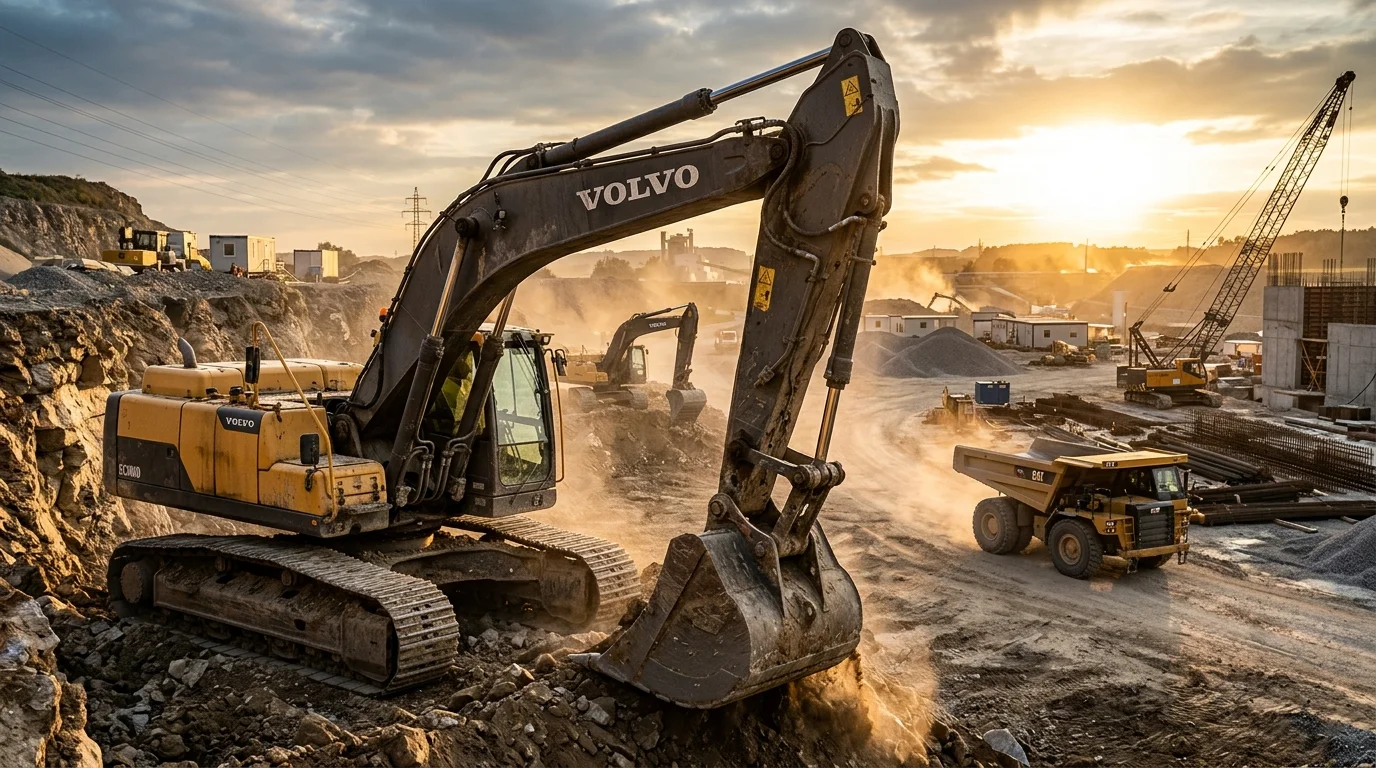
Shift Towards Preventive Maintenance
There is a clear shift from reactive maintenance to preventive maintenance strategies across the heavy machinery sector. Fleet operators who previously replaced parts only after failure are now scheduling replacements based on operating hours, load cycles, and condition monitoring data. This transition increases the volume of parts ordered in any given period, but it reduces the premium costs associated with emergency sourcing and expedited freight.
Digital Marketplaces
E-commerce platforms for spare parts procurement have emerged as a significant trend that enhances supply chain operations globally. These platforms aggregate inventory from multiple suppliers, provide real-time availability data, and enable procurement managers to compare OEM and aftermarket options side by side. For international buyers, digital marketplaces reduce the friction of cross-border sourcing and provide clearer visibility into lead times and landed costs.
Focus on Sustainability
Environmental compliance requirements are influencing parts development and procurement decisions. Equipment operators in regulated markets are prioritizing components that meet current emissions standards and reduce fluid consumption. Remanufactured parts, which restore used components to OEM specifications, are gaining acceptance as a cost-effective and environmentally responsible alternative to new parts.
Pros and Cons of Current Market Conditions for Buyers
Pros
- Expanded supplier options: Digital marketplaces have made it easier to source parts from verified global suppliers, increasing competition and improving pricing for buyers.
- Predictive maintenance tools: IoT and AI diagnostics reduce emergency procurement events, lowering total maintenance costs and improving fleet availability.
- Growing aftermarket quality: Reputable aftermarket manufacturers are producing parts to tighter tolerances, giving buyers more confidence in non-OEM options for non-critical components.
- Faster international shipping: Improved logistics networks and regional warehousing have reduced average lead times for international parts orders.
- OEM aftermarket expansion: Major OEMs are investing in their own aftermarket programs, improving parts availability and reducing the gap between OEM and aftermarket lead times.
Cons
- Supply chain fragility: Global disruptions, from port congestion to raw material shortages, can still create sudden availability gaps for specific part categories.
- Quality inconsistency in aftermarket: Not all aftermarket suppliers meet OEM specifications. Substandard parts can cause premature failure and void equipment warranties.
- Skilled labor shortage: A shortage of qualified maintenance technicians limits the effective use of predictive maintenance tools and slows repair turnaround times.
- Price volatility: Steel, rubber, and electronic component costs fluctuate with commodity markets, creating unpredictable pricing for buyers on long-term projects.
- Regulatory complexity: Emissions and safety compliance requirements vary by region, complicating procurement for multinational fleet operators.
Competitive Landscape
Key Players in the Market
The heavy machinery parts market is characterized by the presence of several key players, including:
- Caterpillar Inc.
- Komatsu Ltd.
- John Deere
- Sany Heavy Industry
- XCMG Group
Market Share Analysis
As of 2025, Caterpillar Inc. led the market with over 12.5% share, according to GMI Research. The top five players collectively held 31.9% of the market, indicating a competitive landscape where no single company dominates. The remaining market share is distributed across a large number of regional OEMs, independent aftermarket suppliers, and remanufacturers.
"Growth is shifting toward higher-specification machines with connectivity, automation, emissions controls, and alternative-power capability, rather than being driven solely by unit volumes." - GMI Research, Heavy Equipment Market Report, September 2026
Emerging Companies
Several emerging companies are entering the market with a focus on digital-first aftermarket services, AI-powered diagnostics, and direct-to-buyer e-commerce platforms. These entrants are targeting the gap between large OEM dealer networks and independent repair shops, offering faster fulfillment and more transparent pricing. Their growth is putting pressure on traditional distribution models and accelerating the adoption of digital procurement across the industry.
OEM vs. Aftermarket: A Procurement Comparison
Choosing between OEM and aftermarket parts is one of the most consequential decisions a procurement manager makes. The right choice depends on the component, the machine's warranty status, the operating environment, and the buyer's risk tolerance.
| Factor | OEM Parts | Aftermarket Parts |
|---|---|---|
| Price | Higher (manufacturer premium) | More competitive for common wear parts |
| Quality assurance | Factory-certified to exact tolerances | Varies by supplier; ISO-certified suppliers match OEM specs |
| Lead time | Days to weeks via dealer network | Often shorter for high-volume wear parts |
| Warranty compatibility | Fully compliant | May affect warranty on machines under OEM coverage |
| Availability | Dependent on dealer stock and regional distribution | Broader global availability through digital marketplaces |
| Best for | Critical systems, warranty-active machines, low-tolerance components | High-wear consumables, out-of-warranty fleets, cost-sensitive projects |
Regional Insights
Asia Pacific Dominance
Asia Pacific is the largest regional market for heavy equipment and spare parts, driven by rapid industrialization and large-scale infrastructure programs in China, India, and Southeast Asia. Government-backed construction pipelines in these countries generate sustained, predictable demand for machinery and the components that keep it running.
Middle East and Africa: Fastest Growing
According to GMI Research, the Middle East & Africa region is the fastest-growing market for heavy equipment as of 2026. Large-scale energy, infrastructure, and urban development projects across the Gulf states and sub-Saharan Africa are driving fleet expansion and, with it, parts demand. For international suppliers, this region represents a significant near-term growth opportunity.
North America and Europe
North America and Europe are mature but stable markets, driven by equipment replacement cycles, infrastructure renewal programs, and strict maintenance compliance requirements. The demand in these regions is supported by well-established supply chains and a strong culture of preventive maintenance.
Emerging Markets
Latin America and parts of Africa are seeing increased investment in mining and infrastructure, creating gradual but real growth in parts demand. These markets often have less developed local supply chains, which creates opportunities for international suppliers with strong logistics capabilities.
How to Build a Smarter Parts Procurement Strategy in 2026
Procurement managers who treat spare parts sourcing as a reactive function are leaving money on the table. Here is a practical framework for building a proactive, cost-effective parts strategy.
- Audit your fleet's wear patterns. Start by cataloging the components that fail most frequently across your fleet. Group them by machine type, operating environment, and failure mode. This data becomes the foundation of your stocking strategy.
- Segment parts by criticality. Not all parts carry the same risk. A hydraulic pump failure stops a machine immediately. A worn cab door seal does not. Assign criticality tiers to your parts catalog and set minimum stock levels accordingly for high-criticality items.
- Qualify multiple suppliers per part category. Single-source dependency is a risk. For every critical part category, identify at least two qualified suppliers: one OEM-authorized and one reputable aftermarket source. This gives you pricing leverage and a backup when one source has a stock gap.
- Connect telematics data to your procurement system. If your machines have telematics, integrate that data with your parts ordering workflow. When a sensor flags a component approaching end-of-life, your system should automatically generate a purchase inquiry rather than waiting for a technician to report a failure.
- Negotiate frame agreements with key suppliers. For high-volume wear parts, negotiate annual supply agreements with fixed pricing and guaranteed lead times. This protects your budget from commodity price swings and ensures priority fulfillment during periods of high market demand.
- Track total cost of ownership, not just unit price. A cheaper part that fails in half the time costs more over the machine's life. Build a simple TCO model that accounts for part price, expected service life, installation labor, and downtime cost per failure event.
Common Mistakes in Heavy Equipment Parts Procurement
Even experienced procurement teams make avoidable errors. These are the patterns we see most often, and how to correct them.
Buying on Price Alone
The lowest-priced part is rarely the lowest-cost option over a machine's service life. Substandard aftermarket parts can fail prematurely, cause secondary damage to adjacent components, and void OEM warranties. Always verify that a supplier holds relevant quality certifications before placing a first order.
Ignoring Lead Times Until It's Too Late
Procurement managers often focus on price during the planning phase and only think about lead times when a machine is already down. Build lead time data into your stocking decisions. If a critical component takes 10-15 business days to source internationally, you need safety stock on hand, not a supplier relationship you've never tested under pressure.
Failing to Standardize Part Numbers Across the Fleet
Mixed fleets with multiple brands and model years often have overlapping part numbers that are not cross-referenced in the procurement system. This leads to duplicate stock, missed compatibility opportunities, and confusion during urgent sourcing. Invest in a clean, cross-referenced parts database before you need it in an emergency.
Underestimating Customs and Import Complexity
International parts sourcing introduces customs classification, import duties, and documentation requirements that can add days to a delivery and unexpected costs to a purchase order. Work with suppliers who have experience navigating cross-border logistics and can provide accurate HS codes and commercial invoices upfront.
Neglecting Supplier Qualification
Approving a new supplier based solely on a price quote and a website is a risk. Before placing a significant order with any aftermarket supplier, request quality certifications, ask for references from buyers in your industry, and start with a small trial order on a non-critical component.
A Realistic Procurement Scenario: Mining Fleet in Southeast Asia
Consider a mid-size mining operation running a fleet of tracked excavators and haul trucks in Indonesia. The fleet manager notices through telematics that three excavators are showing elevated hydraulic system temperatures, a common early indicator of seal degradation. Under a reactive model, the team would wait for a failure, then scramble to source seal kits from the local dealer, often waiting 7-10 business days and paying premium prices for expedited handling.
Under a proactive model, the telematics alert triggers a purchase inquiry to the fleet's pre-qualified parts supplier. The supplier confirms stock availability and ships a batch of hydraulic seal kits for all three machines within 48 hours. The maintenance team schedules the seal replacements during a planned shift change, completing the work with zero unplanned downtime. The total cost: the price of three seal kits plus standard shipping. The avoided cost: three potential hydraulic pump failures, each of which could have sidelined a machine for a week or more.
This scenario plays out across mining and construction operations globally. The difference between the two outcomes is not luck. It is a procurement strategy built on data, qualified suppliers, and pre-negotiated supply agreements.
Challenges Facing the Heavy Machinery Parts Market
Supply Chain Disruptions
Supply chain disruptions remain a structural challenge for the heavy machinery parts market. Port congestion, raw material shortages, and geopolitical trade tensions can create sudden availability gaps for specific components. The most resilient procurement teams maintain safety stock for critical parts, qualify suppliers across multiple geographies, and monitor supply chain risk indicators as part of their regular planning process.
Skilled Labor Shortage
The heavy machinery industry faces a shortage of qualified maintenance technicians in many markets. This shortage affects both the speed of repairs and the effective use of predictive maintenance tools, which require skilled interpretation of sensor data. Companies are responding by investing in technician training programs and partnering with equipment manufacturers on remote diagnostics support.
Regulatory Compliance
Emissions and safety regulations are tightening in major markets. Equipment operators must ensure that replacement parts meet current regulatory standards, which adds complexity to procurement decisions, particularly for older machines that may require upgraded components to remain compliant.
Future Outlook
The outlook for heavy equipment parts through 2026 and beyond is positive. The GMI Research forecast projects the broader heavy equipment market reaching USD 309.6 billion by 2035, with the spare parts segment growing faster than the overall market due to aging fleet cycles and the continued expansion of preventive maintenance programs. The Middle East & Africa region is expected to be the fastest-growing market, while Asia Pacific maintains its position as the largest.
Digital procurement platforms, AI diagnostics, and improved international logistics will continue to compress lead times and improve price transparency for buyers worldwide. Companies that invest in supplier qualification, data-driven maintenance strategies, and flexible supply chains will be best positioned to manage costs and maintain fleet availability as demand grows.
As of 2026, the procurement teams winning on cost and uptime are not the ones with the biggest budgets. They are the ones with the best data, the most qualified supplier networks, and the discipline to act on early warning signals before a failure becomes a crisis.
Shop OEM-quality spare parts with global 5-day delivery at 3genexport.com. Our team sources components for Caterpillar, Komatsu, Volvo, Atlas Copco, and 40+ brands, with direct shipping to construction, mining, and energy operations worldwide.
Frequently Asked Questions
Is heavy equipment in high demand in 2026?
Yes. The global heavy equipment market reached USD 211.1 billion in 2026, according to GMI Research, reflecting continued strong demand across construction, mining, and infrastructure sectors. The spare parts segment is growing at a CAGR of 6.91% through 2035, driven by aging fleets and the expansion of preventive maintenance programs globally.
What is the projected market size for heavy machinery parts in 2026?
The global heavy equipment spare parts market is projected to grow from USD 95.2 billion in 2025 at a CAGR of 6.91% through 2035, per Spherical Insights & Consulting. The broader heavy equipment market reached USD 211.1 billion in 2026, per GMI Research. These figures reflect OEM and aftermarket parts combined across construction, mining, and agricultural applications.
What factors are driving the demand for heavy machinery parts?
The primary drivers are infrastructure investment in developing economies, expansion of mining and agricultural operations, and the industry-wide shift toward preventive maintenance. IoT monitoring and AI diagnostics are also increasing the frequency and precision of parts orders by flagging wear before failure occurs.
Which regions are expected to dominate the heavy machinery parts market?
Asia Pacific is the largest regional market, driven by large-scale infrastructure programs in China and India. The Middle East & Africa region is the fastest-growing market as of 2026, according to GMI Research, fueled by energy and urban development investment across the Gulf states and sub-Saharan Africa.
Will heavy equipment operators be replaced by AI?
Not in the near term. AI and automation are augmenting equipment operation, particularly in repetitive tasks like haul truck routing in mining, but skilled operators remain essential for complex, variable-condition work. The more immediate impact of AI in this industry is in maintenance diagnostics, where machine learning is improving the accuracy of predictive maintenance systems.
Who sells the most heavy equipment globally?
Caterpillar Inc. led the global heavy equipment market with over 12.5% market share in 2025, according to GMI Research. The top five players, including Komatsu Ltd., Sany Heavy Industry, XCMG Group, and John Deere, collectively held 31.9% of the market. The remaining share is distributed across a large number of regional manufacturers and aftermarket suppliers.
What challenges does the heavy machinery parts market face?
The three most significant challenges are supply chain disruptions, a shortage of skilled maintenance technicians, and increasing regulatory complexity around emissions and safety compliance. Procurement teams can mitigate supply chain risk by qualifying multiple suppliers per part category and maintaining safety stock for critical components.