

How to Extend Life of Heavy Machinery Parts
Learn how to extend life of heavy machinery parts with proven maintenance strategies, OEM parts guidance, and global sourcing tips for 2026.
Loading article…
Article Not Found
The article you're looking for doesn't exist or may have been removed.
Back to BlogKey Takeaways
- Regular, documented maintenance is the single most effective way to extend the life of heavy machinery parts across all equipment categories.
- Lubrication, seal inspection, cleaning, and fluid analysis are non-negotiable practices for Caterpillar, Komatsu, Volvo, and other major brands.
- According to a study sponsored by ServiceMax and conducted by Vanson Bourne of GE Digital, 82% of companies have experienced unplanned downtime in a three-year period, with average outages costing $2 million each.
- OEM-quality parts outlast generic aftermarket substitutes and maintain manufacturer warranty coverage.
- Environmental protection, operator training, and telematics monitoring are often overlooked but deliver measurable gains in component lifespan.
- As of 2026, digital maintenance tools and remote diagnostics are reshaping how procurement and maintenance teams manage fleet health.
How to Extend Life of Heavy Machinery Parts
How to extend life of heavy machinery parts is a question of systematic maintenance: regular inspections, correct lubrication, timely cleaning, and OEM-quality replacements applied on a documented schedule to reduce wear, prevent failures, and protect your capital investment.
Why This Matters More Than Ever in 2026
Heavy machinery represents one of the largest capital line items in any construction, mining, or energy operation. Every hour a machine sits idle costs real money in lost productivity, missed deadlines, and emergency sourcing fees. According to a study sponsored by ServiceMax and conducted by Vanson Bourne of GE Digital, 82% of companies have experienced unplanned downtime over a three-year period, with those outages lasting an average of four hours and costing an average of $2 million per event. As of 2026, that figure is driving procurement managers to treat maintenance as a revenue-protection strategy, not just a cost center.
The good news: most catastrophic failures are preventable. The pattern we see repeatedly across our global customer base is the same one competitors and OEM dealers report. Operators push through early warning signs, hoping the issue resolves itself. It never does. A leaking hydraulic seal becomes a blown cylinder. A neglected filter becomes a contaminated pump. Small problems compound into five-figure repair bills.
This guide covers the proven, practical steps to extend the life of heavy machinery parts, whether you run a single excavator or a fleet of 50 machines across multiple continents.
Understanding How Heavy Machinery Parts Wear
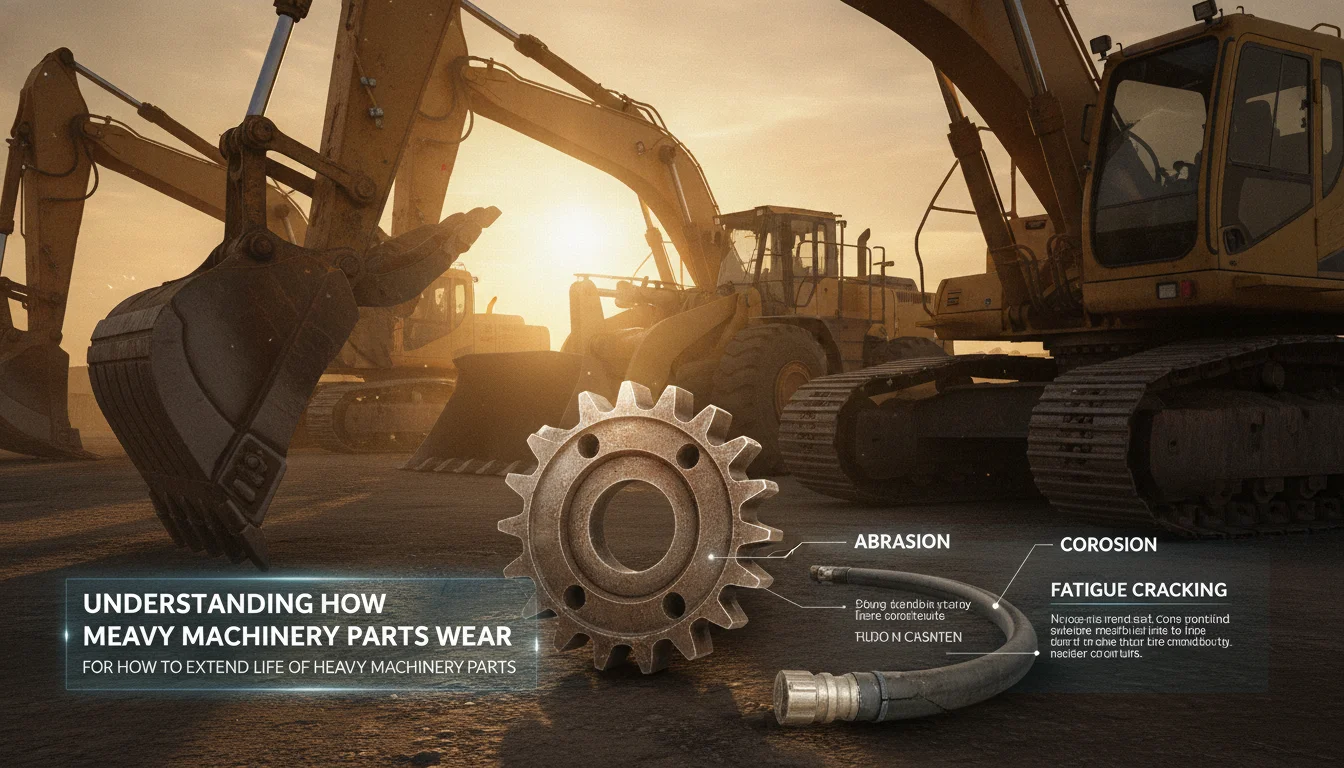
Heavy machinery maintenance works by interrupting the natural wear cycle before it reaches the failure threshold. Understanding the mechanics of wear helps you prioritize where to focus time and budget.
Every moving component in heavy equipment experiences one or more of these wear mechanisms:
- Abrasive wear: Particles in lubricants or hydraulic fluid act like sandpaper on metal surfaces. This is the leading cause of premature pump and cylinder failure.
- Adhesive wear: Metal-to-metal contact under insufficient lubrication causes material transfer between surfaces, degrading both components simultaneously.
- Fatigue wear: Repeated stress cycles cause micro-cracks in metal, eventually leading to spalling or fracture. Common in undercarriage components and track links.
- Corrosive wear: Moisture, acidic fluids, and environmental contaminants chemically attack metal surfaces. Particularly aggressive in coastal, tropical, and mining environments.
- Erosive wear: High-velocity fluid or abrasive particles strip material from surfaces. Common in hydraulic valves and pump housings.
According to manufacturer specifications from Caterpillar and Komatsu, contamination control alone, keeping fluids clean and filters fresh, is responsible for the largest share of preventable component failures in hydraulic systems. This is why fluid analysis programs exist: they detect wear particles before the damage becomes visible.
Hydraulic system components on excavators have well-documented service lives when properly maintained. Hydraulic pumps typically reach 5,000 to 10,000 hours. Hydraulic hoses require attention at 1,000 to 2,000 hours. Seals generally last 2,000 to 5,000 hours depending on operating conditions. Hydraulic filters need replacement at 500 to 1,000 hours. These figures come from EquipmentShare's component lifespan data and align with OEM service bulletin intervals.
"Contaminated fluid introduces dirt and particles that can damage internal components, emphasizing the need for clean fluid and properly maintained filters. Neglecting scheduled inspections and servicing allows small issues to escalate, significantly reducing the lifespan of hydraulic components." - EquipmentShare, Component Lifespan Analysis, 2025
Benefits and Drawbacks of Proactive Maintenance
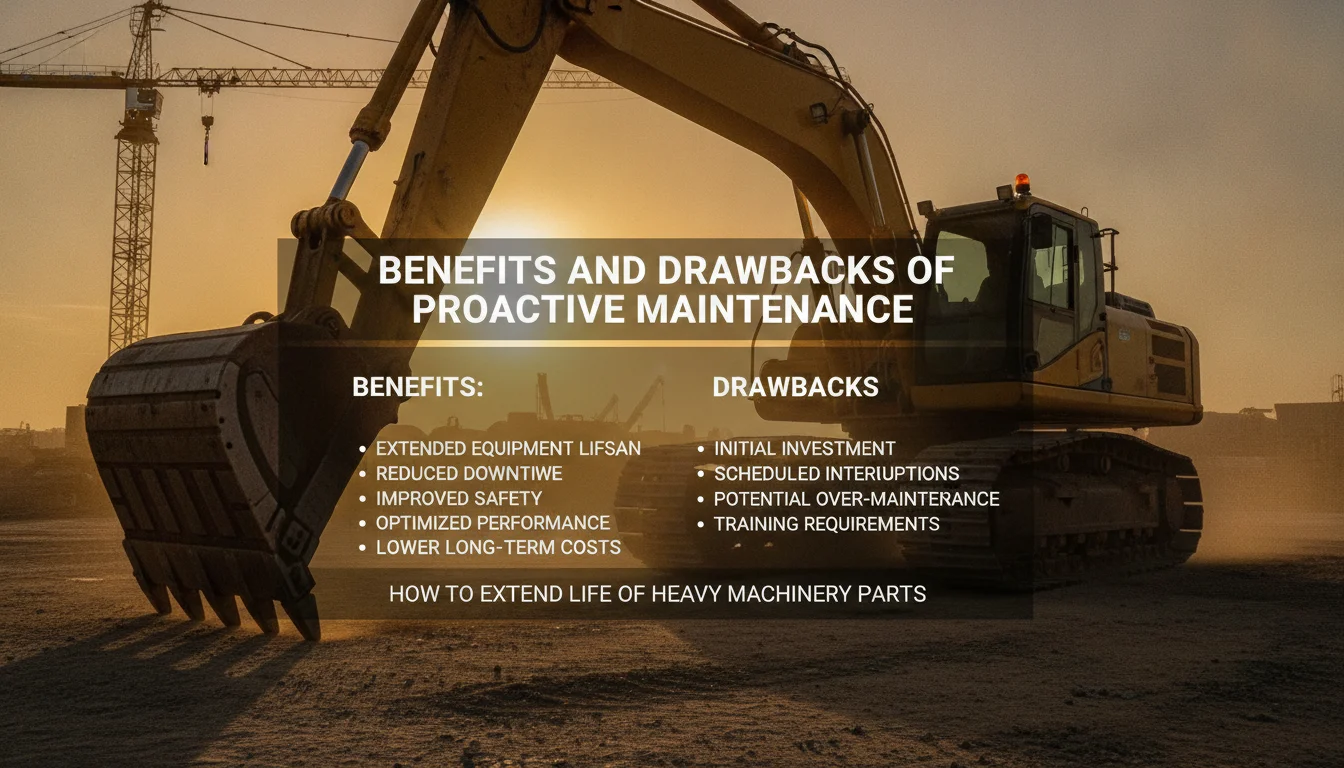
Proactive maintenance delivers clear advantages, but it also requires real commitment of time, budget, and organizational discipline. Here is an honest assessment.
Pros
- Lower total cost of ownership: Fixing minor wear now prevents much larger, more costly breakdowns later. Preventive maintenance consistently outperforms reactive repair on a cost-per-hour basis.
- Extended component life: Properly lubricated, cleaned, and inspected parts reach their full rated service hours instead of failing prematurely.
- Improved safety: Well-maintained equipment reduces the risk of operator injury and worksite incidents. The Canadian Centre for Occupational Health and Safety highlights regular inspections as a key method for mitigating workplace hazards.
- Better resale value: Documented maintenance history is one of the strongest factors in used equipment valuation.
- Reduced unplanned downtime: Consistent care keeps machines operating during peak production periods when downtime is most expensive.
- Warranty protection: OEM parts and documented service intervals preserve manufacturer warranty coverage.
Cons
- Upfront time and labor cost: Scheduled maintenance requires pulling machines from production, which creates short-term productivity gaps.
- Requires organizational discipline: Maintenance programs fail without consistent enforcement. High staff turnover can break the chain of documented procedures.
- Parts availability risk: Sticking to OEM-specified intervals means you need parts on hand or a reliable supply chain. Delays in sourcing can push maintenance windows back.
- Initial investment in tools and training: Proper lubrication analysis, telematics setup, and operator training programs require upfront investment before they deliver returns.
Key Maintenance Practices to Extend Life of Heavy Machinery Parts
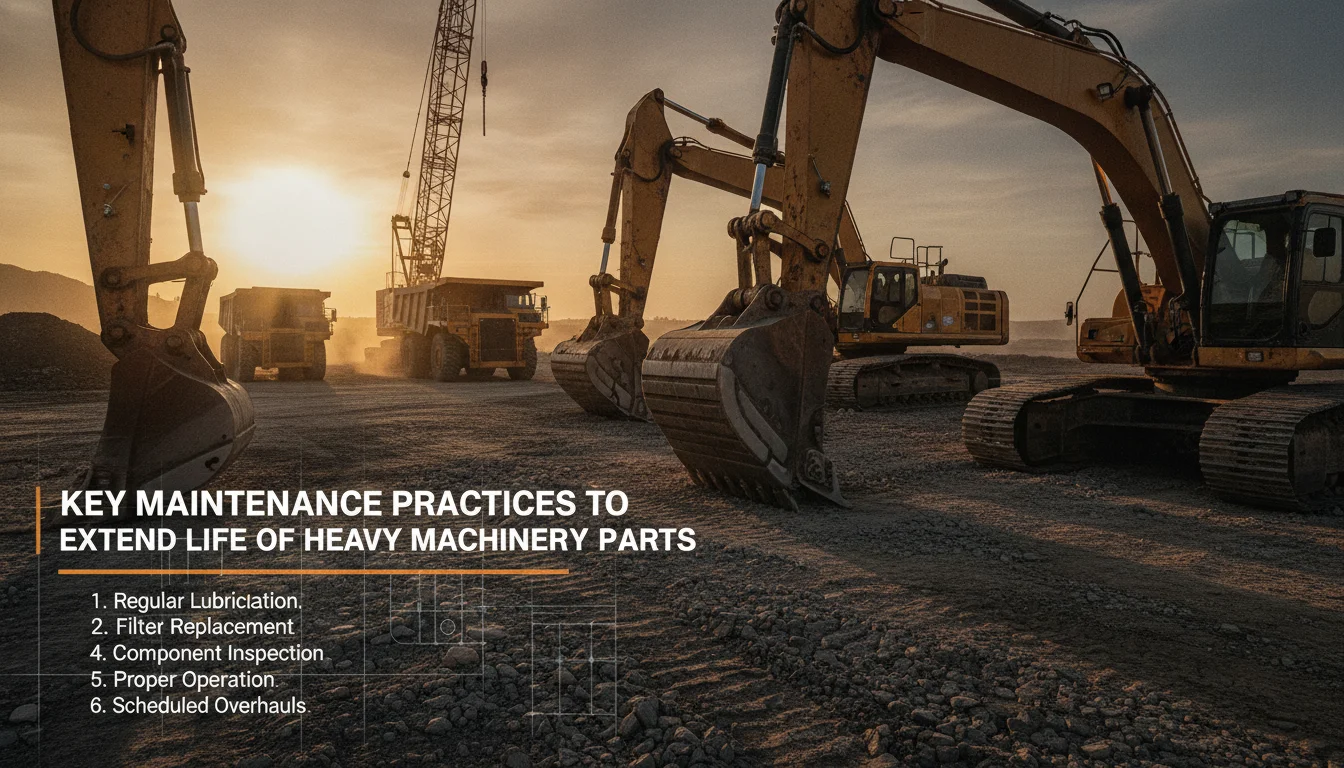
Implementing effective maintenance practices is the foundation of any strategy to extend the life of heavy machinery parts. Below are the most impactful strategies, drawn from OEM service bulletins and industry maintenance data.
1. Regular Inspections
Conducting regular inspections allows operators to identify potential issues before they escalate into serious problems. Inspections should include:
- Checking for leaks in hydraulic systems, hoses, cylinders, and fittings.
- Assessing the condition of tires, tracks, idlers, and undercarriage components.
- Examining electrical connections, controls, and safety mechanisms.
- Looking for rust, cracks, dents, or warping on metal fixtures.
- Checking chain or belt tension and hydraulic fluid levels.
Scott Equipment and Thompson Machinery both emphasize the pre-shift walkaround as the single most cost-effective maintenance habit available to any fleet operator. Train every operator to treat it as non-negotiable, not optional.
2. Lubrication
Lubrication is critical in reducing friction and wear on moving parts. Here are some tips for effective lubrication:
- Use the correct type of lubricant as specified by the manufacturer. Different parts require different grease and oil formulations.
- Regularly check lubricant levels and replenish as needed. Check for grease buildup on pistons or signs of excess oil around seals.
- Apply the proper amount: too much causes excessive buildup and performance issues; too little increases friction and accelerates wear.
- Consider professional lubricant analysis to detect particles and contaminants that indicate which components are experiencing degradation.
3. Cleaning
Keeping machinery clean is essential to prevent dirt and debris from causing damage. Effective cleaning practices include:
- Using pressure washers to remove stubborn grime from the exterior and undercarriage.
- Using industrial degreasers to remove oil and grease from engine components.
- Regularly cleaning filters and vents to ensure proper airflow and prevent overheating.
- Inspecting and cleaning seals to prevent leaks. Allow equipment to dry completely before returning to service to prevent water damage.
4. Seal Inspection and Maintenance
Industrial seals regulate pressure, resist contamination, and control leakage. They are among the most failure-prone components in hydraulic systems, and their condition directly affects how long other expensive parts last. Per Gregory Poole's maintenance guidance, seals require lubricants compatible with the hydraulic fluid in the system. Sufficient lubrication prevents seals from cracking and extends their service life significantly.
When installing replacement seals, ensure they avoid contact with sharp edges, threads, or drilled holes. Use correct installation tools, mounting tubes, and sleeves. Inspect seals before assembly and before each shift. Any visible cuts, scratches, or signs of leakage mean the seal needs immediate replacement.
5. Fluid and Filter Management
Engine oil, hydraulic fluid, coolant, and fuel all play a critical role in machine health. Monitor levels regularly and always use manufacturer-approved fluids and filters. Per Caterpillar's maintenance schedule framework, tiered service intervals (daily checks, 250-hour service, 500-hour service) ensure no task is missed and allow teams to anticipate component wear before it becomes a breakdown.
Documenting Maintenance Activities
Keeping a detailed record of maintenance activities is crucial for tracking the health of your machinery and knowing how to extend life of heavy machinery parts over the long term. This documentation should include:
- Dates and details of inspections and repairs.
- Records of lubricant changes and fluid levels.
- Observations of any unusual performance issues.
- Parts replaced, including part numbers and whether OEM or aftermarket.
Benefits of Documentation
Documenting maintenance activities provides several benefits:
- Helps in identifying patterns of wear and tear across your fleet.
- Facilitates compliance with safety regulations and OEM warranty requirements.
- Enhances communication among team members regarding equipment status.
- Supports resale value by demonstrating a verifiable service history to buyers.
Using Genuine OEM Parts
When replacing components, always opt for genuine OEM parts. These parts are engineered specifically for your machinery and ensure optimal performance and longevity. This is one of the most direct ways to extend the life of heavy machinery parts at the component level.
Advantages of Genuine Parts
Using genuine parts offers several advantages:
- Compatibility: OEM parts are engineered to fit perfectly with your machinery's tolerances and specifications.
- Quality: Genuine parts are manufactured to high standards, ensuring durability across rated service hours.
- Warranty: OEM parts often come with warranties that aftermarket parts do not provide.
- Predictable service life: OEM components are tested to meet the same lifespan benchmarks as the original parts, making maintenance planning more accurate.
"When you need parts, don't settle for aftermarket substitutes. Genuine Cat parts are engineered for your machine and tested to deliver lasting performance." - Quinn Company, Authorized Cat Dealer, 2025
Environmental Considerations
Protecting machinery from environmental factors can significantly extend its life. Consider the following:
- Store equipment indoors or under cover to prevent exposure to harsh weather.
- Use covers and tarps to shield machinery from dust and debris during idle periods.
- Implement rust and corrosion prevention measures, especially in coastal or high-humidity environments.
Impact of Environment on Machinery
Environmental factors can accelerate wear on machinery. For instance:
- Extreme temperatures affect fluid viscosity and component performance. Avoiding extreme temperature exposure prevents fluid breakdown and component stress, per EquipmentShare's maintenance data.
- Moisture leads to rust and corrosion on metal fixtures and electrical connections.
- Dust and debris clog filters, restrict airflow, and cause overheating in engines and hydraulic systems.
Operator Training: The Overlooked Factor
Operator behavior is one of the most significant variables in how long heavy machinery parts last. Improper operation, overloading, and skipped pre-shift checks accelerate wear faster than almost any other factor. Per Apple Rubber's equipment lifespan guidance, without appropriate training, basic protocols get missed and machines get used improperly, leading to a shorter service life across all components.
Every new operator should receive structured training covering:
- Pre-shift inspection procedures specific to each machine type.
- Correct operating techniques to avoid overloading or shock-loading components.
- Recognition of warning signs: unusual noises, reduced performance, dashboard alerts, and visible leaks.
- Proper shutdown procedures to allow cooling and pressure equalization in hydraulic systems.
In heavy machinery, vibration, shock, high temperatures, friction, and age all have a negative impact over time. Trained operators reduce the frequency and severity of all five.
Telematics and Condition Monitoring in 2026
As of 2026, telematics systems have become a standard tool for fleet managers who want to extend the life of heavy machinery parts without relying solely on scheduled intervals. Systems like Caterpillar's VisionLink alert operators to performance issues, fault codes, and maintenance needs in real time, giving maintenance teams a head start on service planning and reducing unplanned downtime.
Condition monitoring through oil analysis, vibration sensors, and thermal imaging allows teams to detect wear patterns before they become failures. This approach, sometimes called predictive maintenance, moves beyond fixed intervals to service components based on actual condition rather than calendar time. The result is fewer unnecessary part replacements and fewer missed failures.
For procurement teams, telematics data also improves parts forecasting. When you know a hydraulic pump is approaching the end of its service life, you can source the replacement part in advance rather than paying premium prices for emergency delivery.
Common Mistakes That Shorten Component Life
Understanding what to avoid is just as important as knowing what to do. These are the most common errors we see across fleets of all sizes.
- Using the wrong lubricant: Different components require specific grease and oil formulations. Substituting a similar-looking product can accelerate wear rather than prevent it.
- Skipping the pre-shift walkaround: This is the most frequently skipped maintenance task and the one that catches the most preventable failures. Make it mandatory, not optional.
- Ignoring early warning signs: Strange noises, reduced performance, and dashboard alerts are not minor inconveniences. They are early failure signals. Addressing them immediately costs a fraction of what a full component replacement costs later.
- Over-lubricating: Excess grease causes buildup on pistons and around seals, creating its own set of performance problems. Follow manufacturer specifications precisely.
- Using aftermarket parts without vetting: Not all aftermarket parts are equal. Low-quality substitutes may not meet OEM tolerances, leading to premature failure and potential warranty voidance.
- Inconsistent documentation: Maintenance logs that are incomplete or inconsistently kept make it impossible to identify wear patterns or demonstrate service history at resale.
- Neglecting the undercarriage: Tracks, idlers, and rollers are among the most expensive components to replace and among the most neglected in daily inspection routines.
A Realistic Scenario: Hydraulic System Failure Avoided
Consider a mid-size mining operation running a fleet of Komatsu PC360 excavators in a high-dust environment. The maintenance supervisor implements a strict 500-hour hydraulic filter replacement schedule and adds a monthly oil analysis program. During the third analysis cycle, the lab detects elevated iron particle counts in one machine's hydraulic fluid, a clear sign of internal pump wear.
Because the issue is caught early, the team sources a replacement hydraulic pump through 3GEN Export's global parts network, receives it within five days, and schedules the swap during a planned maintenance window. Total cost: the pump plus labor. Compare that to the alternative: a catastrophic pump failure mid-shift, contaminated hydraulic fluid destroying downstream valves and cylinders, and an unplanned shutdown lasting several days while emergency parts are sourced at premium prices.
This is exactly the scenario that proactive maintenance programs are designed to prevent. The oil analysis program paid for itself many times over on a single catch.
Step-by-Step Process to Extend Life of Heavy Machinery Parts
Follow this step-by-step process to effectively extend the life of heavy machinery parts across your fleet:
- Establish a Maintenance Schedule: Create a routine maintenance schedule based on manufacturer recommendations. Use tiered checklists covering daily checks, 250-hour service intervals, and 500-hour major service intervals.
- Conduct Daily Inspections: Perform pre-shift walkarounds before every operation to identify immediate issues. Check for leaks, track condition, fluid levels, and any visible damage.
- Implement Lubrication Protocols: Regularly lubricate moving parts according to OEM guidelines. Use the correct lubricant type and quantity. Schedule professional oil analysis to detect internal wear early.
- Clean Equipment Thoroughly: Schedule regular cleaning sessions to remove dirt, debris, and grime. Use pressure washers for exterior surfaces and industrial degreasers for engine components.
- Inspect and Maintain Seals: Check hydraulic seals before each shift. Replace any seal showing cuts, scratches, or leakage. Lubricate seals with compatible fluid to prevent cracking.
- Document Everything: Keep detailed records of all maintenance activities, observations, parts replaced, and fluid changes. Use digital maintenance management tools where possible.
- Use Genuine OEM Parts: Always replace components with OEM or OEM-quality parts to ensure compatibility, durability, and warranty protection.
- Protect from Environmental Factors: Store machinery properly, use protective covers, and implement corrosion prevention measures appropriate to your operating environment.
- Train Operators: Ensure every operator understands pre-shift inspection procedures, correct operating techniques, and how to recognize early warning signs.
- Deploy Telematics: Use condition monitoring and telematics systems to track machine health in real time and move toward predictive maintenance scheduling.
Comparison of Maintenance Practices
| Maintenance Practice | Frequency | Key Benefit | Risk if Skipped |
|---|---|---|---|
| Pre-shift walkaround inspection | Daily | Early detection of leaks and damage | Catastrophic failure mid-operation |
| Lubrication check and top-up | Daily / Weekly | Reduced friction and component wear | Accelerated metal-to-metal wear |
| Hydraulic filter replacement | Every 500-1,000 hours | Clean fluid, protected pump and valves | Contamination-driven pump failure |
| Full equipment cleaning | Monthly / Quarterly | Prevention of debris buildup and overheating | Clogged filters, engine overheating |
| Seal inspection and replacement | Before each shift / As needed | Leak prevention, system pressure integrity | Hydraulic fluid loss, cylinder damage |
| Oil analysis (fluid sampling) | Monthly | Early detection of internal wear particles | Undetected component degradation |
| Documentation and logging | Ongoing | Pattern identification, warranty compliance | Missed wear trends, warranty voidance |
| OEM parts replacement | As needed | Compatibility, durability, warranty protection | Premature failure, voided warranty |
OEM vs. Aftermarket Parts: Making the Right Call
One of the most consequential decisions in any parts replacement program is whether to use OEM or aftermarket components. The answer is not always black and white, but the default position for critical components should always favor OEM or verified OEM-quality parts.
| Factor | OEM Parts | Generic Aftermarket | OEM-Quality Aftermarket |
|---|---|---|---|
| Dimensional fit | Guaranteed | Variable | High (when sourced correctly) |
| Material specification | Meets OEM standard | Often unknown | Meets or matches OEM standard |
| Service life | Rated to OEM hours | Unpredictable | Close to OEM rated life |
| Warranty coverage | Full OEM warranty | None or limited | Supplier warranty |
| Price | Higher | Lower | Competitive |
| Availability | Dealer network | Wide | Specialist suppliers (e.g., 3GEN Export) |
For high-stress components like hydraulic pumps, cylinders, and seals, OEM or OEM-quality parts are the only defensible choice. For lower-stress wear items, a verified OEM-quality aftermarket source can deliver acceptable performance at a lower cost, provided the supplier can document material specifications and dimensional compliance.
Frequently Asked Questions
How long does heavy equipment last?
Heavy equipment can last anywhere from 5,000 to 10,000 hours of operation, depending on maintenance practices and operating conditions. Hydraulic pumps, for example, typically reach 5,000 to 10,000 hours when properly maintained, while hydraulic hoses require attention at 1,000 to 2,000 hours. Consistent preventive maintenance is the primary factor separating machines that reach the top of that range from those that fail prematurely.
What is the 10 rule in maintenance?
The 10 rule in maintenance is a general guideline suggesting that for every hour of equipment operation, approximately 10 minutes should be allocated to maintenance activities to ensure optimal performance. It is a rough planning benchmark, not a manufacturer specification, and actual maintenance time varies by machine type, age, and operating environment. Use it as a starting point for scheduling, then adjust based on your OEM service manual intervals.
How to maintain heavy machinery?
Maintain heavy machinery by conducting daily pre-shift inspections, adhering to a documented lubrication schedule, cleaning equipment regularly, inspecting and replacing seals as needed, and using genuine OEM or OEM-quality parts for all replacements. Supplement these practices with oil analysis programs and telematics monitoring to catch internal wear before it becomes a failure. Document every activity to build a service history that supports warranty claims and resale value.
What is the depreciation life of heavy machinery?
The depreciation life of heavy machinery typically ranges from 5 to 7 years for accounting purposes, depending on usage intensity and maintenance quality. This is a financial classification, not a physical lifespan. Well-maintained machines regularly operate productively well beyond their depreciation period, which is why maintenance investment directly translates into extended asset value.
How can I tell if my machinery needs maintenance?
Signs that your machinery needs immediate attention include unusual noises during operation, reduced hydraulic performance or slow cylinder movement, visible fluid leaks around hoses or seals, dashboard warning lights or fault codes, and visible cracks or damage during your pre-shift walkaround. Any of these signals should trigger a maintenance check before the machine returns to service. Ignoring them is the fastest way to turn a minor repair into a major component replacement.
What are the benefits of preventive maintenance for heavy machinery parts?
Preventive maintenance reduces unplanned downtime, extends the service life of components, enhances operator safety, and minimizes total repair costs over the machine's life. According to industry maintenance data, zero unplanned downtime has become a high priority for 72% of organizations, driven by the financial impact of unexpected failures. A structured preventive maintenance program is the most reliable way to protect that goal and to extend the life of heavy machinery parts across your entire fleet.
Where can I source OEM-quality parts quickly for global operations?
For global procurement teams, sourcing speed and part quality are equally important. 3GEN Export supplies OEM-standard spare parts for Caterpillar, Komatsu, Volvo, Atlas Copco, and 40+ other brands with global delivery in as few as five business days. Having a reliable international parts supplier in your supply chain means you can source replacement components in advance based on telematics data, rather than scrambling during an unplanned shutdown. Browse available parts at 3genexport.com/parts-categories or explore by brand at 3genexport.com/brands.