
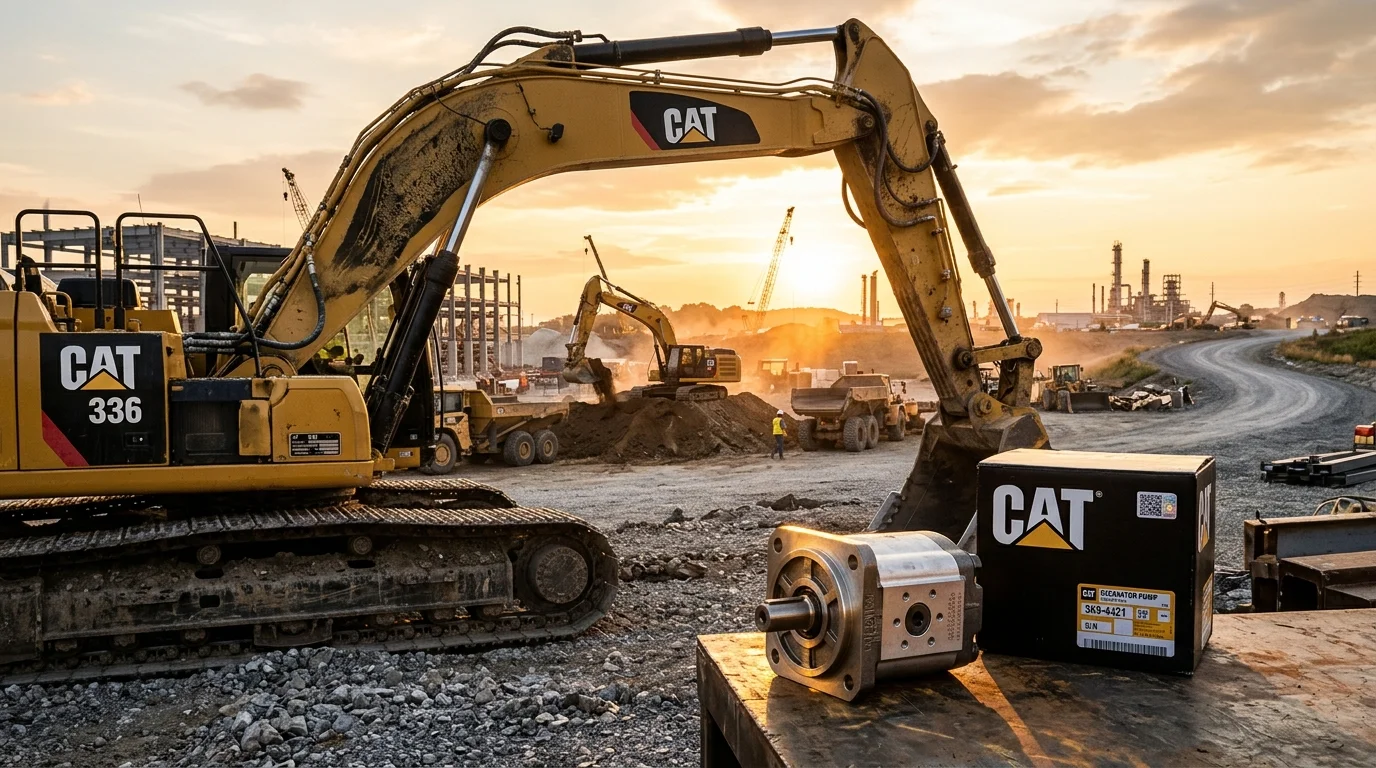
How to Identify Genuine Heavy Machinery Parts
How to identify genuine heavy machinery parts: verify part numbers, inspect packaging, vet suppliers, and use digital authentication to avoid costly
Loading article…
Article Not Found
The article you're looking for doesn't exist or may have been removed.
Back to BlogKey Takeaways
- Genuine parts carry consistent part numbers, crisp OEM markings, and proper supply chain documentation - counterfeits often fail on all three.
- Visual inspection is your first line of defense, but supplier reputation is your strongest safeguard.
- A cheap part that saves $200 today can trigger $20,000 in downtime costs tomorrow, according to industry supplier data.
- Digital authentication tools - QR codes, RFID tags, and blockchain tracking - are now standard practice among leading OEMs as of 2026.
- Authorized dealer networks and documented supply chains are the most reliable protection against counterfeit components.
- Detailed purchase records protect your warranty claims and give you leverage if a part fails prematurely.
How to Identify Genuine Heavy Machinery Parts
How to identify genuine heavy machinery parts is the process of verifying that replacement components meet OEM specifications through part number checks, physical inspection, supplier vetting, and digital authentication.
Understanding the Importance of Genuine Parts
Genuine heavy machinery parts are engineered specifically for your equipment, delivering the fit tolerances, material grades, and load ratings your machine was designed around. Counterfeit alternatives may look identical on the shelf but fail under real operating conditions - often at the worst possible moment.
The Risks of Counterfeit Parts
Counterfeit parts cause damage that extends well beyond the failed component itself. A counterfeit hydraulic seal that fails can destroy an entire transmission. Fake filters may not protect engines properly, leading to expensive rebuilds. Safety-critical components - brake assemblies, swing motor pistons, final drive seals - put operators and job sites at serious risk when they're not genuine.
"Counterfeit parts aren't just cheap alternatives - they're dangerous impostors. The consequences extend far beyond immediate operational concerns: fake components lead to premature equipment failure, voided warranties, increased downtime, safety hazards for operators, and repair costs that far exceed any initial savings." - Langley Excavator Parts, industry parts specialists
Financial Implications
The math is straightforward. A cheap part that saves $200 today might cost $20,000 in downtime tomorrow, according to MCGILL Industries, a USA-based industrial parts supplier with over 20 years in the sector. Equipment downtime, emergency repair labor, and potential liability from safety incidents compound quickly. Failed counterfeit components also frequently void OEM warranties, leaving your operation fully exposed to repair costs that should have been covered.
The Parts Landscape: Know Your Options
Before you can spot a fake, you need to understand what genuine actually means. The terminology in this market gets misused constantly, and that confusion is exactly what counterfeit sellers exploit.
Factory-Direct (Genuine OEM) Parts
These components come straight from the machine's original manufacturer and carry official branding - genuine Caterpillar parts for a CAT excavator, genuine Komatsu parts for a Komatsu dozer. They arrive with full factory backing, warranty protection, and optimal fit because they were engineered specifically for your machine. The trade-off is cost: factory-direct parts carry a premium price.
OEM Replacement Parts
Many buyers assume "OEM" means the same as "genuine," but that's not accurate. OEM components are typically made by the same production facilities that supply name-brand manufacturers, but they don't carry the brand's name. Quality is usually comparable, but you need to vet the supplier carefully.
Aftermarket Replacement Parts
Aftermarket parts are produced by third-party manufacturers and designed to function similarly to the original. Quality varies widely - from near-OEM performance to outright dangerous. Reputable aftermarket suppliers can meet or exceed OEM standards at competitive prices. The key is thorough vetting of both the part and the supplier.
Remanufactured Parts
Properly remanufactured parts follow strict quality protocols and often carry warranties comparable to new components, at significantly lower prices. As with aftermarket parts, the supplier's process and quality controls determine whether a reman part is a smart buy or a liability.
Benefits and Drawbacks of Genuine OEM Parts
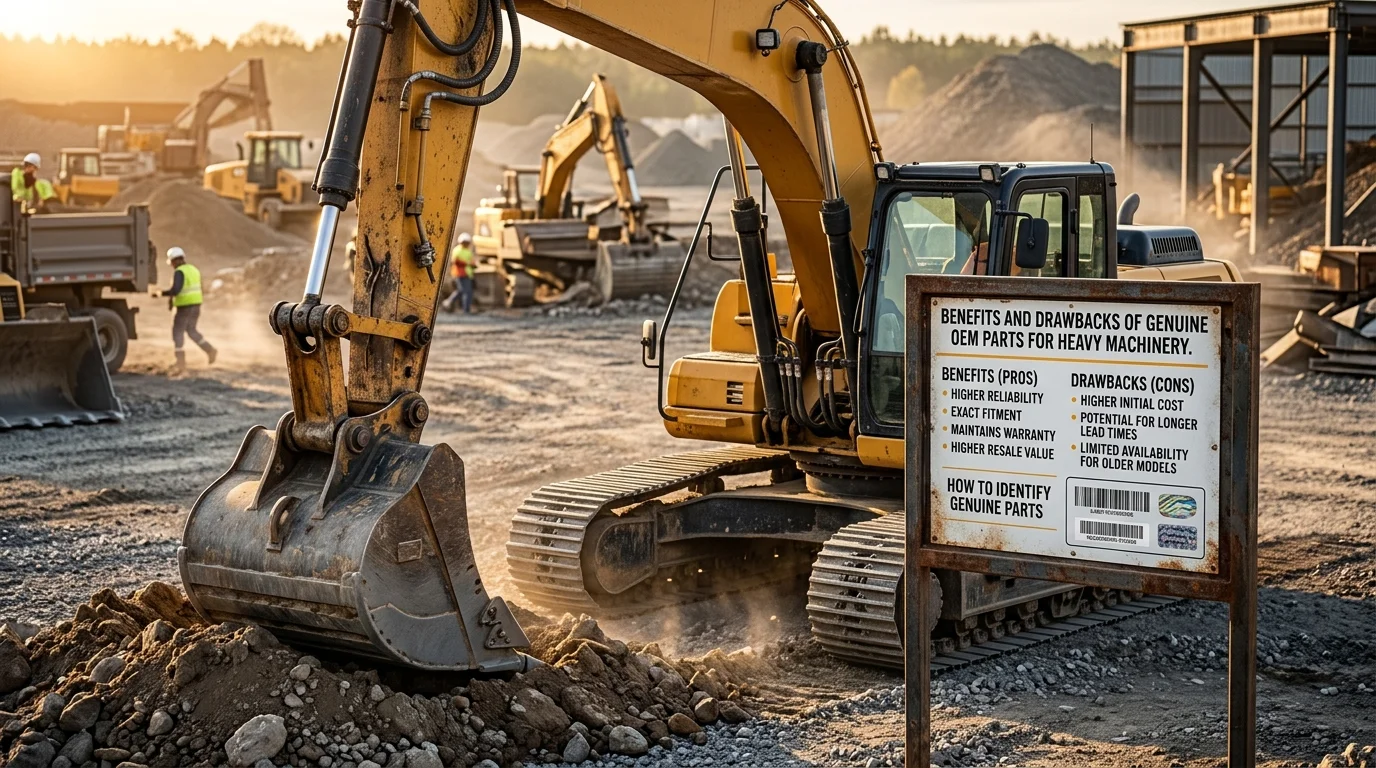
Pros
- Guaranteed fit and compatibility: Engineered to exact OEM tolerances - no guesswork on dimensions or material grades.
- Full warranty coverage: Genuine parts preserve your equipment warranty; counterfeits void it immediately.
- Predictable service life: OEM parts are tested to manufacturer specifications, so you can plan maintenance intervals with confidence.
- Safety assurance: Critical components like brake assemblies and hydraulic seals meet the load and pressure ratings your machine requires.
- Supply chain traceability: Genuine parts come with documentation that traces them back to the manufacturer.
Cons
- Higher upfront cost: Factory-direct parts carry a significant price premium over aftermarket alternatives.
- Longer lead times in some regions: Sourcing directly through OEM dealer networks can mean extended wait times, particularly for less common components.
- Limited availability for older machines: OEMs discontinue parts for older equipment, forcing operators to find qualified aftermarket or remanufactured alternatives.
- Geographic pricing variation: OEM list prices can differ substantially by region, making global procurement more complex.
Visual Inspection Techniques
Visual inspection is your first practical step when a part arrives - and it's more reliable than most buyers realize, once you know what to look for.
Packaging and Documentation
- High-quality printing: Genuine parts come in well-printed packaging with correct logos, consistent fonts, and accurate spelling. Blurry text or misaligned graphics are immediate red flags.
- Certificates of authenticity: Look for documentation that includes installation instructions, warranty information, and a Certificate of Conformance with country of origin details.
- Holographic security features: Many authentic parts include holograms, batch numbers, and manufacturing dates that counterfeiters struggle to replicate accurately.
- Part numbers on packaging match the part: Cross-reference the number on the box against the number stamped or engraved on the component itself.
Physical Component Examination
Examine the part carefully for machining quality and material consistency. Genuine parts typically show:
- Consistent machining quality and proper surface finishes - no rough edges, tool marks, or uneven surfaces.
- Accurate dimensions and weight that match OEM specifications. Fake parts frequently use inferior metals or plastics that feel noticeably lighter or different in texture.
- Clear, crisp markings and logos that are aligned correctly and use correct fonts.
- Consistent color and finishing across similar components from the same manufacturer.
Brand Markings and Serial Numbers
Examine all markings, logos, and serial numbers closely. Genuine parts feature crisp, clear markings that align properly and use correct fonts. Counterfeit parts often show blurry printing, incorrect logos, or misaligned text. Many manufacturers also include unique security features - special inks, raised lettering, or holographic elements - that counterfeiters find difficult to reproduce accurately.
Identifying Part Numbers and Manufacturer Markings
Part numbers are the single most reliable indicator of authenticity, and verifying them correctly takes less than five minutes.
How to Check Part Numbers for Caterpillar and Komatsu Components
Both Caterpillar and Komatsu use unique, consistent numbering systems. A genuine part will always have a clearly engraved or printed part number directly on the product or on its OEM label. For reference, genuine Caterpillar part numbers follow formats like "6Y7197", "8E5346", or "1R0749". Komatsu uses formats like "708-2L-00510" or "207-27-51310". If a part shows only a generic label or the number cannot be found in the official manufacturer catalog, treat it as a red flag. Cross-reference every part number against the manufacturer's published catalog before purchase - this single step eliminates most counterfeits.
Brand Markings Across Major OEMs
Each major OEM has distinct marking conventions. Caterpillar uses the CAT wordmark and yellow color coding. Komatsu uses its distinctive K logo. Volvo CE parts carry the Volvo iron mark. Atlas Copco components include the brand's specific font and color scheme. Familiarize yourself with the authentic appearance of markings for the brands in your fleet - counterfeit versions almost always show subtle inconsistencies in font weight, color saturation, or logo proportions.
How Part Authentication Actually Works: The Underlying Mechanics
Understanding why counterfeits get through helps you build a more effective verification process. Counterfeit parts enter the supply chain at multiple points: through unauthorized distributors, online marketplaces with weak seller verification, and grey-market brokers who mix genuine and fake inventory. The sophistication of fakes has increased significantly - modern counterfeits often replicate packaging, holograms, and even part numbers with enough accuracy to fool a casual inspection.
The verification process works by creating multiple independent checkpoints that are progressively harder to fake simultaneously. A counterfeiter might replicate the packaging, but they're unlikely to also replicate the correct part number, the correct material weight, the correct surface finish, AND have a verifiable supply chain document trail. Each additional checkpoint you apply exponentially increases the difficulty of passing a fake through.
Material and Metallurgical Verification
For high-value components - hydraulic cylinder rods, final drive gears, swing motor pistons - material quality is critical and not visible to the naked eye. Genuine OEM parts use specified alloy grades, heat treatment processes, and surface hardening that counterfeit manufacturers skip to reduce cost. When the stakes are high enough, request material certification documents from your supplier. Reputable suppliers can provide mill certificates or material test reports that confirm the alloy composition of critical components.
Dimensional Verification
OEM parts are manufactured to tight tolerances. A hydraulic seal that's even slightly undersized will leak under pressure. A gear that's marginally off-spec will wear faster and generate heat. If you have access to precision measurement tools - calipers, micrometers, bore gauges - compare critical dimensions against the OEM service manual specifications. This is standard practice in professional rebuild shops and should be part of any incoming inspection process for high-value components.
Supplier Verification Strategies
Supplier reputation is your strongest safeguard against counterfeit parts - stronger than any visual inspection technique.
Authorized Dealer Networks
Working with authorized dealers significantly reduces counterfeit risk. These suppliers receive parts directly from manufacturers through controlled supply chains and adhere to strict quality control processes. For Caterpillar, Komatsu, Volvo, and Atlas Copco equipment, authorized dealer networks are the gold standard. That said, specialized parts solutions providers with documented sourcing processes and established supplier relationships can also provide legitimate, high-quality components - particularly for older machines or less common part numbers.
Evaluating Supplier Credentials
When assessing a new supplier, ask these specific questions:
- How long has the business been operating, and can they provide references from comparable operations?
- Do they have direct relationships with OEM manufacturers or authorized distributors?
- Can they provide supply chain documentation tracing the part from manufacturer to your facility?
- Do they offer a warranty on the parts they supply, and what does it cover?
- Are they willing to answer technical questions about the part's application and compatibility?
A reputable supplier doesn't just sell parts - they understand them. The best suppliers ask questions about your application, offer alternatives when appropriate, and stand behind what they sell. They're partners in keeping your equipment running, not just order-takers.
Requesting Supply Chain Documentation
Always ask for complete supply chain documentation for high-value components. Legitimate suppliers can provide proof of purchase from authorized sources, shipping records, and handling documentation that traces parts from the manufacturer to your facility. If a supplier cannot or will not provide this documentation, treat it as a serious red flag. Legitimate businesses understand the importance of documentation and maintain it as standard practice.
"Who you buy from matters just as much as what you buy. A reputable heavy equipment supplier doesn't just sell parts - they understand them. Sourcing from a reliable, established supplier is the real safeguard against counterfeits." - MCGILL Industries, USA-based industrial parts supplier
Utilizing Digital Authentication Technologies
Digital authentication tools have become standard practice among leading OEMs and are increasingly accessible to procurement teams at all levels. As of 2026, these technologies represent the most reliable verification layer available beyond authorized dealer sourcing.
QR Codes and RFID Tags
Many manufacturers now include QR codes or RFID tags on their parts and packaging. Scanning a QR code with a standard smartphone can provide instant verification of authenticity, linking to the manufacturer's database and confirming the part number, production batch, and authorized distribution chain. RFID tags serve a similar function and are particularly useful for tracking components through a fleet maintenance system. If a part claims to be genuine but carries no scannable authentication feature, verify through other channels before installing it.
Blockchain-Based Supply Chain Tracking
Some OEMs and major distributors are adopting blockchain technology to create immutable records of a part's journey from manufacture to installation. Each transaction in the supply chain is recorded and cannot be altered retroactively, making it effectively impossible to insert a counterfeit into a blockchain-tracked supply chain without detection. This technology is still rolling out across the industry, but procurement teams sourcing high-value components should ask suppliers whether blockchain tracking is available for critical parts.
Manufacturer Online Verification Portals
Caterpillar, Komatsu, and several other major OEMs operate online portals where you can enter a part number or serial number to verify authenticity. These portals are free to use and take less than a minute. Make them a standard step in your incoming inspection process for any part above a defined value threshold.
How to Apply This in Practice: A Step-by-Step Verification Process
Here's a concrete verification workflow you can implement immediately across your procurement and receiving operations.
Step 1: Verify the Part Number Before Ordering
Cross-reference the required part number against the OEM parts catalog for your specific machine make, model, and serial number. Confirm the number matches your machine's serial number break - two machines with the same model number but different serial numbers may require different parts. Never order based on a generic description alone.
Step 2: Assess the Supplier Before Placing the Order
Check the supplier's business history, references, and whether they can provide supply chain documentation. For first-time suppliers, request a sample documentation package before committing to a large order. Verify that they can answer technical questions about the part's application - a supplier who can't discuss compatibility is a supplier who doesn't truly know what they're selling.
Step 3: Inspect Packaging on Receipt
When the part arrives, inspect the outer packaging before opening it. Check print quality, logo accuracy, spelling, and the presence of security features like holograms or batch numbers. Compare the part number on the packaging against your order documentation and the OEM catalog.
Step 4: Examine the Physical Component
Open the packaging and inspect the part itself. Check machining quality, surface finish, material weight, and the clarity of all markings. For precision components, measure critical dimensions against OEM specifications if you have the tools available. Compare the part number stamped or engraved on the component against the packaging and your order.
Step 5: Scan Digital Authentication Features
Scan any QR codes or RFID tags present on the part or packaging. Verify the result against the manufacturer's database. If the part number doesn't appear in the manufacturer's online verification portal, escalate immediately - do not install the part.
Step 6: Review and File Documentation
Collect all documentation that came with the part - Certificate of Conformance, warranty information, supply chain records - and file it against the part number and installation record. This documentation is essential for warranty claims and provides a paper trail if a part fails prematurely.
Common Mistakes to Watch Out For
Even experienced procurement teams make these errors. Knowing them in advance is the most efficient way to avoid them.
Choosing Price Over Quality
The cheapest option is rarely the best option when you factor in failure risk. A part that saves money upfront but fails in service doesn't just cost the price of the replacement - it costs the labor to remove and reinstall, the downtime while the machine sits idle, and potentially the damage to surrounding components. The $200 saving that becomes a $20,000 problem is not a hypothetical - it's a pattern that parts suppliers see repeatedly.
Skipping the Part Number Verification Step
Ordering by description rather than part number is one of the most common procurement errors in heavy equipment. Two parts that look identical and serve similar functions may have different material grades, dimensional tolerances, or pressure ratings. Always order by part number, and always verify that number against the OEM catalog for your specific machine serial number.
Ignoring Documentation
Never overlook the importance of documentation. If a supplier cannot provide a Certificate of Conformance, proof of purchase from an authorized source, or basic supply chain records, that absence is a clear signal. Legitimate suppliers maintain this documentation as standard practice - it's not an unusual request.
Assuming Visual Inspection Is Sufficient
Modern counterfeits are sophisticated enough that visual inspection alone cannot reliably detect them. As MCGILL Industries notes, it's often very difficult to distinguish genuine parts from counterfeits through visual inspection alone - the same principle that lets street vendors sell convincing-looking fakes applies directly to industrial components. Visual inspection is a necessary first step, not a complete verification process.
Buying from Unverified Online Marketplaces
Online marketplaces with weak seller verification are a primary entry point for counterfeit parts into the supply chain. If you're sourcing through an online platform, verify the seller's credentials independently - don't rely on platform ratings alone. Request documentation before purchase, and treat any seller who resists providing it as a disqualified source.
A Realistic Scenario: Swing Motor Rotary Group Replacement
Consider a common situation: an excavator operator needs to replace the rotary group in a swing motor. The genuine OEM kit - valve plate, cylinder block, and nine pistons - costs over $2,500 through an authorized dealer. An unverified online supplier offers what appears to be the same kit for $250, shipping included.
The price difference is real and significant. But the risk calculation matters. If the low-cost kit uses inferior piston alloys or undersized tolerances, the components will wear faster under the high-pressure cycling of a swing motor. When they fail, the debris doesn't stay contained - contaminated hydraulic fluid carries metal particles through the entire system, damaging the shaft, bearings, seals, and housing. What started as a $250 repair decision becomes a full swing motor replacement, plus hydraulic system flush and inspection, plus the downtime cost while the machine sits out of service.
The right approach in this situation: source from a supplier who can provide material certification for the piston alloy, dimensional specifications that match OEM tolerances, and a warranty that covers consequential damage. That supplier may not be the cheapest, but they're the one who keeps your machine running.
Critical Components Requiring Extra Scrutiny
Not all parts carry equal risk if they're counterfeit. These categories deserve the most rigorous verification process.
Hydraulic Seals and Cylinder Components
Hydraulic seals operate under extreme pressure and temperature cycling. A seal that's made from the wrong elastomer compound will degrade faster, leak, and ultimately cause hydraulic fluid loss that damages the entire system. For CAT 320 excavators, Komatsu PC series, and Volvo EC series machines, always source seal kits from suppliers who can confirm the elastomer specification matches OEM requirements.
Final Drives, Swing Motors, and Travel Motors
These are complex, high-value assemblies where a single counterfeit internal component can cause cascading failure across the entire unit. The cost of a failed final drive on a large excavator or mining truck is substantial - and the downtime while waiting for a replacement assembly compounds the financial impact. Apply the full six-step verification process to every component that goes into these assemblies.
Undercarriage Components
Track chains, rollers, idlers, and sprockets are high-wear items that buyers frequently try to source at the lowest possible price. Counterfeit undercarriage components often use inferior steel grades that wear faster and can crack under impact loads. For machines operating in mining or quarrying environments, the safety implications of a failed track component are serious.
Filters: Engine, Hydraulic, and Fuel
Filters are among the most commonly counterfeited parts in the heavy equipment market because they're high-volume, relatively low-cost, and visually easy to replicate. A counterfeit engine oil filter that bypasses filtration at lower pressure than specified allows contaminants into the engine. A fake hydraulic filter that doesn't meet the micron rating allows particles to circulate through the hydraulic system. Always source filters from authorized dealers or suppliers with verifiable OEM supply chains.
Maintaining Detailed Purchase Records
Thorough purchase records are the foundation of an effective parts management system - and they're your primary protection if a warranty claim becomes necessary.
What to Document for Every Part Purchase
- Part number (as listed in OEM catalog)
- Supplier name, contact information, and order reference
- Purchase date and invoice number
- Machine make, model, and serial number the part was installed on
- Installation date and technician name
- All documentation received with the part (Certificate of Conformance, warranty card, supply chain records)
Building a Supplier Communication Protocol
Establish clear, documented communication with your suppliers. When you receive a part that raises any concern - packaging inconsistency, unexpected weight, unclear markings - contact the supplier immediately and document the exchange. Reputable suppliers will take these concerns seriously and either verify the part's authenticity or replace it. A supplier who dismisses authenticity concerns is a supplier you should stop using.
2026 Outlook: Where Parts Authentication Is Heading
As of 2026, the counterfeit parts problem in heavy equipment is not diminishing - the sophistication of fakes continues to increase alongside the growth of global e-commerce. At the same time, OEM authentication technology is advancing. More manufacturers are embedding digital authentication at the component level, not just on packaging. Blockchain-based supply chain tracking is expanding beyond pilot programs into standard practice for high-value component categories.
For procurement teams, the practical implication is clear: the verification processes that were adequate five years ago are no longer sufficient. Building digital authentication checks into your standard receiving process - QR code scanning, online portal verification, RFID reading - is no longer optional for operations that depend on equipment reliability. The teams that adopt these practices now will have a significant advantage in parts quality control as the market continues to evolve.
At 3GEN Export, we supply OEM-quality spare parts for Caterpillar, Komatsu, Volvo, Atlas Copco, and 40+ additional brands to procurement teams worldwide. Every part we ship comes with full documentation, verified supply chain records, and our quality assurance backing. Explore our parts categories at 3genexport.com/parts-categories or browse by brand at 3genexport.com/brands.
Frequently Asked Questions
How can I check if a part is genuine?
Verify the part number against the manufacturer's official catalog, inspect the packaging for high-quality printing and security features like holograms, and scan any QR codes or RFID tags against the manufacturer's verification portal. Cross-check the part number stamped on the component itself against the packaging and your order documentation. For high-value components, request a Certificate of Conformance and supply chain documentation from your supplier.
What is the difference between OEM and genuine parts?
Genuine parts are factory-direct components that carry the OEM brand name - for example, a part sold under the Caterpillar or Komatsu label. OEM parts are typically made by the same production facilities that supply name-brand manufacturers but don't carry the brand's name. Both can be high quality, but genuine parts come with full manufacturer warranty support and are the safest choice for safety-critical components.
How do I check my equipment's serial number to find the right part?
The serial number plate is typically located on the main frame of the machine - on excavators, check the upper structure near the cab; on dozers and loaders, check the main frame rail. Record the full serial number including any prefix letters, as these identify the production series and determine which parts are compatible with your specific machine. Serial number breaks occur when a manufacturer updates a design mid-production run, meaning two machines with the same model number may require different parts.
What should I look for in supplier documentation?
Supplier documentation should include a Certificate of Conformance, country of origin information, proof of purchase from an authorized source, and shipping records that trace the part back through the supply chain to the manufacturer. Part numbers in the documentation must match the OEM catalog exactly. If a supplier cannot provide this documentation, treat it as a disqualifying factor.
Why are counterfeit parts such a serious problem in heavy equipment?
Counterfeit parts fail under real operating conditions because they use inferior materials, incorrect tolerances, or inadequate manufacturing processes. When a critical component fails on heavy machinery, the damage rarely stays contained - a failed hydraulic seal can destroy a transmission, and contaminated hydraulic fluid can damage every component in the system. Beyond the repair costs, safety incidents involving counterfeit parts expose operations to serious liability.
How can digital technology help identify genuine parts?
QR codes and RFID tags on genuine parts link directly to manufacturer databases, providing instant verification of the part number, production batch, and authorized distribution chain. Blockchain-based supply chain tracking creates an immutable record of a part's journey from manufacture to your facility, making it effectively impossible to insert a counterfeit without detection. Manufacturer online verification portals - available from Caterpillar, Komatsu, and other major OEMs - allow you to confirm authenticity by entering a part number or serial number directly.