
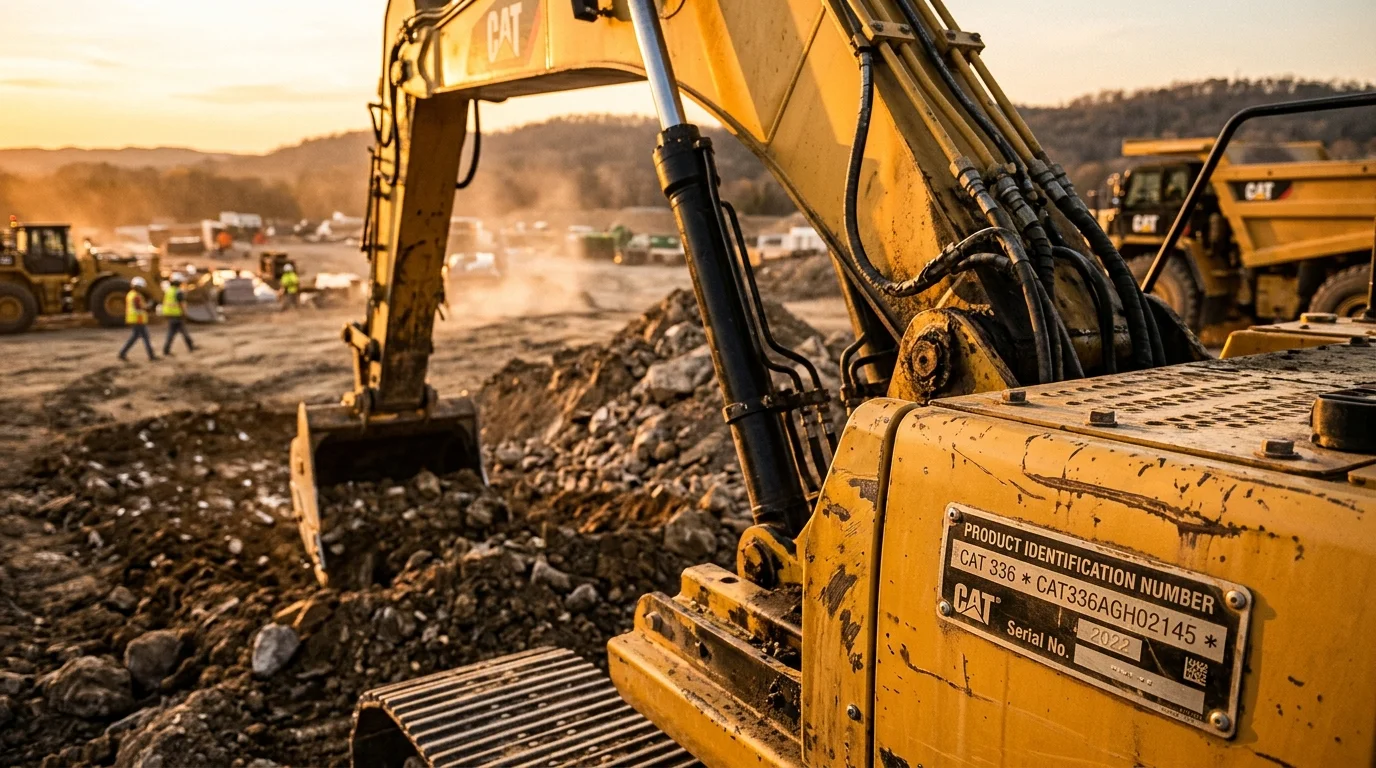
How to Read a Caterpillar Serial Number
How to read a Caterpillar serial number: decode model prefix, production sequence, and suffix to order correct parts fast. Updated for 2026.
Loading article…
Article Not Found
The article you're looking for doesn't exist or may have been removed.
Back to BlogHow to read a Caterpillar serial number is the process of identifying the model prefix, numeric sequence, and suffix codes stamped on your machine to confirm its exact specifications, production details, and compatible parts.
Key Takeaways
- Every Caterpillar serial number encodes the machine model, production sequence, and configuration details in a structured format.
- The serial number is your single most reliable reference when ordering OEM spare parts or filing a warranty claim.
- Serial numbers appear in multiple locations on each machine. Knowing all of them saves time when one plate is worn or obscured.
- Misreading even one character can result in ordering the wrong part, causing costly downtime on your jobsite.
- As of 2026, Caterpillar's dealer network and the Cat SIS (Service Information System) portal both accept serial number lookups to return full machine specifications instantly.
- Accurate serial number records are required for compliance documentation in construction, mining, and energy sectors worldwide.
Why This Matters for Procurement and Maintenance
When a hydraulic pump fails on a Cat 320 excavator at a remote mining site, the first question your parts supplier asks is: what is the serial number? Without it, you are guessing at compatibility. Order the wrong seal kit or the wrong pump cartridge and you have added days to your downtime. We have processed thousands of parts orders at 3GEN Export, and the single most common cause of a wrong-part shipment is an incorrectly recorded serial number.
Serial numbers are not just administrative codes. According to Caterpillar's G3600 Engine Basics documentation, engine and equipment specifications are tied directly to the unit's identification data, including cylinder arrangement, valve timing, and displacement. That data chain starts with the serial number. Get it right, and every downstream decision, from parts selection to service interval scheduling, follows correctly.
The serial number is the foundation of every parts order, warranty claim, and compliance record for Caterpillar equipment. Read it accurately once and you protect every decision that follows.
Understanding Caterpillar Serial Numbers
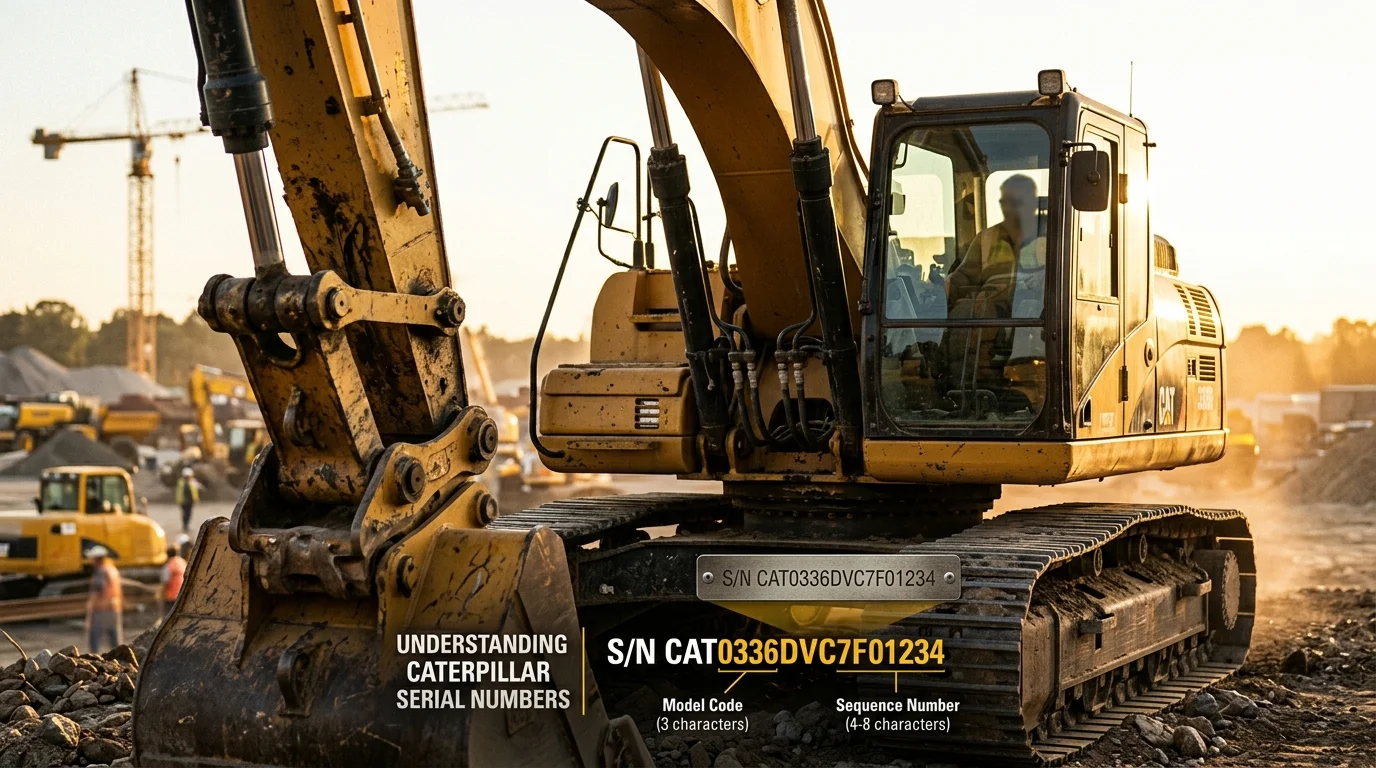
Caterpillar serial numbers are structured codes that convey vital information about the equipment. Each Caterpillar machine carries a unique serial number used to trace its history, specifications, and service requirements.
Structure of Caterpillar Serial Numbers
The serial number consists of a combination of letters and numbers arranged in a defined sequence. The first segment identifies the model family or equipment type. The middle segment is a numeric production sequence unique to that unit. The final segment, where present, carries suffix codes indicating engine configuration, emissions tier, or regional specification. Understanding each segment is what separates a correct parts order from an expensive mistake.
Importance of Serial Numbers
- Identification: They confirm the exact model and factory specifications of the machine.
- Warranty and Service: Serial numbers are required for warranty claims and official service records.
- Parts Replacement: Knowing the serial number ensures the correct OEM or OEM-quality aftermarket parts are ordered for every repair.
- Compliance: Regulatory documentation in construction, mining, and energy sectors requires accurate serial number records.
- Resale: A verified serial number history supports machine valuation and buyer confidence in the used equipment market.
How Caterpillar Serial Number Encoding Works
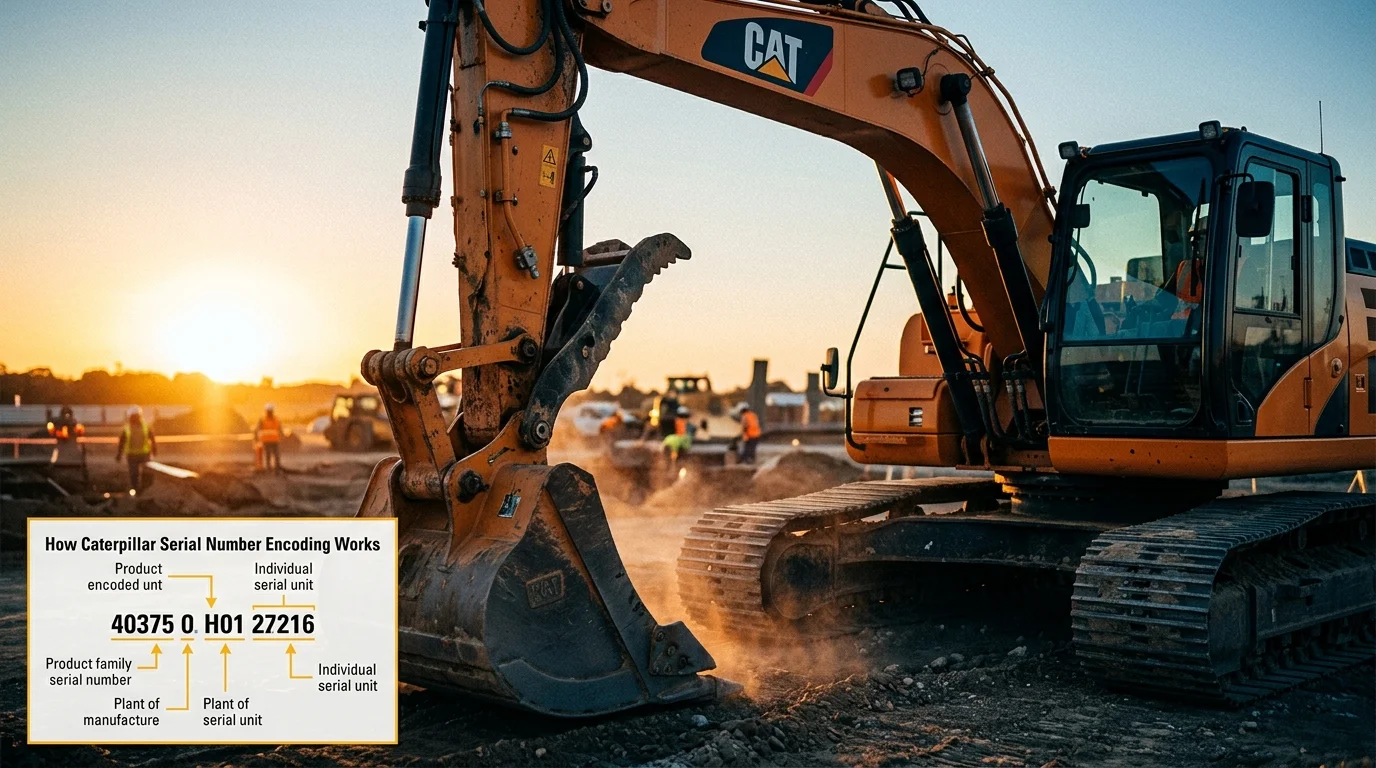
Caterpillar's serial number system encodes machine identity through a layered structure where each character position carries a specific meaning. This is not a random string. It is a deliberate engineering record.
The model prefix (typically three alphanumeric characters) identifies the equipment family. A Cat excavator, a Cat motor grader, and a Cat generator set each carry a distinct prefix that maps to a specific product line in Caterpillar's parts and service database.
The production sequence number follows the prefix. This numeric block identifies the individual unit within its production run. It tells Caterpillar's system exactly which machine came off the line, in which configuration, and with which factory-installed options.
The suffix or feature code, when present, specifies additional configuration details. On engine-powered equipment, this may indicate the emissions standard the engine was certified to, such as U.S. EPA Tier 4 Final, EU Stage V, or China Nonroad Stage III, as listed in Caterpillar's Industrial Engine Ratings Guide. On marine applications, it may reference the propulsion configuration or gear ratio.
This layered structure means two machines of the same model can have different compatible parts if their suffix codes differ. A Cat C18 generator set certified for stationary emergency use carries different fuel system and aftertreatment specifications than a C18 certified for prime power. The serial number captures that difference.
How to Decode a Caterpillar Serial Number: Step-by-Step
Decoding a Caterpillar serial number follows a clear sequence. Work through each step in order and record your findings before contacting a supplier or dealer.
Step 1: Locate the Serial Number Plate
Before you can read the number, you need to find it. Serial number plates on Caterpillar equipment appear in several standard locations depending on machine type. Check the engine block near the oil filter, the main structural frame, the operator cab door frame, and the control panel or instrument cluster. On engine-only units, the data plate is typically mounted directly on the engine block. Refer to the machine's Operation and Maintenance Manual for the exact location diagram for your model.
Step 2: Identify the Model Prefix
The first few characters in the serial number represent the model prefix. This prefix identifies the equipment type and product family. For excavators, motor graders, bulldozers, and generator sets, the prefix maps to a specific product line in Caterpillar's parts catalog. Record these characters exactly as stamped, including any leading zeros or letters that might look like numbers (the letter O versus the numeral 0 is a common transcription error).
Step 3: Record the Production Sequence Number
The numeric block following the model prefix is the production sequence. Copy this number character by character. Do not round it, abbreviate it, or guess at worn digits. If a character is illegible due to corrosion or paint, use a wire brush to clean the plate before recording. A single transposed digit sends your parts order to the wrong machine configuration.
Step 4: Note the Suffix or Feature Code
Check whether your serial number ends with additional letters or a secondary alphanumeric block. These suffix codes specify engine configuration, emissions certification, or regional build variants. When ordering parts, always provide the full serial number including the suffix. Omitting it is one of the most common ordering errors we see.
Step 5: Cross-Reference with Caterpillar's System
Enter the complete serial number into Cat SIS (Service Information System) through your authorized Cat dealer, or use the parts lookup tool on the Cat dealer portal. The system will return the full machine specification, including engine model, displacement, rated speed, and applicable service bulletins. This cross-reference confirms you have read the number correctly before any parts order is placed.
Step 6: Document and Store the Number
Record the serial number in your fleet management system immediately. Photograph the data plate for your records. On large fleets, maintain a serial number register that links each machine to its service history, warranty status, and parts order history. This documentation pays dividends at every service interval and at resale.
Common Formats of Caterpillar Serial Numbers
Caterpillar uses different serial number formats across its equipment lines. The format varies by product family, and knowing the expected format for your machine type helps you spot transcription errors before they cause problems.
| Equipment Type | Typical Format Structure | Example Pattern | Key Notes |
|---|---|---|---|
| Excavators | 3-character prefix + 5-digit sequence | CAT + XXXXX | Prefix identifies machine family; sequence is unique per unit |
| Bulldozers / Track-Type Tractors | 3-character prefix + 5-digit sequence | CAT + XXXXX | Model prefix differs from excavator prefix even for same power rating |
| Motor Graders | 3-character prefix + 5-digit sequence | AWF + XXXXX | Prefix reflects grading product line |
| Generator Sets | Prefix + sequence + suffix letter | CATG + XXXXX + suffix | Suffix indicates emissions tier and regional certification |
| Industrial Engines | Engine model code + sequence | C18 + XXXXX | Engine model (e.g., C18) is part of the identifier; aspiration and aftertreatment codes may follow |
| Marine Propulsion | Engine S/N + vessel IMO reference | 3500 + XXXXX | Marine units carry both engine S/N and vessel IMO number for commissioning records |
Finding the Serial Number on Caterpillar Equipment
Locating the serial number on a Caterpillar machine varies by model, but standard search locations apply across most product lines.
Common Locations
- Engine Block or Valve Cover: The primary data plate on engine-powered units is typically mounted on the engine block, near the oil filter or on the valve cover rail.
- Main Frame: The structural frame carries a secondary serial number plate, often on the left side of the machine when viewed from the operator's seat.
- Cab Door Frame: Many excavators and wheel loaders display the serial number on the interior door frame of the operator cab.
- Control Panel or Instrument Cluster: Some machines display the serial number on a label inside the cab near the instrument panel.
- Undercarriage or Belly Plate: On track-type machines, a secondary plate may appear on the undercarriage frame.
Using Caterpillar Manuals
Caterpillar Operation and Maintenance Manuals include a dedicated section showing the exact serial number plate location for each model. If you are working on an unfamiliar machine, check the manual before spending time searching. The manual diagram will show you the precise location and the expected format for that model's serial number.
Online Resources and Dealer Support
Caterpillar's authorized dealer network provides serial number lookup support. Dealers with access to Cat SIS can retrieve full machine specifications from the serial number alone. As of 2026, many Cat dealers also offer remote lookup services, allowing fleet managers to verify machine specifications without having a technician physically present at the machine.
Comparison: OEM Lookup vs. Third-Party Decoding Tools
Procurement managers often ask whether they should use Caterpillar's official lookup system or a third-party serial number decoder. Each approach has real trade-offs.
| Method | Accuracy | Access Requirements | Best For | Limitations |
|---|---|---|---|---|
| Cat SIS (Official) | Highest - direct from Caterpillar's database | Authorized dealer login required | Full spec confirmation, warranty lookup, service bulletin access | Requires dealer relationship; not always available in remote regions |
| Cat Dealer Portal | High - same database as SIS | Dealer account or customer portal login | Parts ordering, service scheduling | Account setup required; some regions have limited dealer coverage |
| Third-Party Decoder Tools | Medium - relies on publicly available format data | Open access, often free | Quick format check, rough model identification | May not reflect regional variants, suffix codes, or recent model updates |
| OEM Parts Supplier (e.g., 3GEN Export) | High - cross-referenced against OEM catalogs | Serial number provided at inquiry | Parts compatibility confirmation before ordering | Confirmation step adds lead time if serial number is unclear |
Our recommendation: always start with the official Cat SIS or dealer portal for specification confirmation. Use a trusted OEM-quality parts supplier to cross-reference compatibility before placing a parts order, especially for high-value components like hydraulic pumps, final drives, or engine rebuild kits.
Common Mistakes When Reading Caterpillar Serial Numbers
Most wrong-part orders trace back to one of a small number of recurring errors. Knowing them in advance is the fastest way to avoid them.
Confusing Similar Characters
The letter O and the numeral 0, the letter I and the numeral 1, and the letter B and the numeral 8 are the most common transcription errors on worn or painted-over data plates. Always clean the plate before reading. Use a flashlight at an angle to bring stamped characters into relief. If a character is still ambiguous, cross-reference the format against the expected pattern for your machine type.
Omitting the Suffix Code
Procurement teams frequently record only the prefix and production sequence, dropping the suffix. For machines with emissions-specific configurations, such as EU Stage V or U.S. EPA Tier 4 Final engines, the suffix determines which aftertreatment components, fuel system parts, and electronic control modules apply. Omitting it can result in ordering parts that physically fit but are not compatible with the machine's certified configuration.
Reading the Wrong Plate
Caterpillar machines carry multiple identification plates. The engine serial number and the machine (chassis) serial number are different. When ordering engine parts, use the engine serial number. When ordering undercarriage, structural, or cab components, use the machine serial number. Mixing these up is a common source of incorrect parts orders on rebuilt or re-engined machines.
Relying on a Previous Order Record
Fleet managers sometimes reuse a serial number from a previous order, assuming all machines of the same model are identical. They are not. Production changes, regional variants, and mid-run specification updates mean two machines with the same model designation can require different parts. Always read the serial number from the physical plate for each machine, every time.
Not Accounting for Rebuilt or Re-engined Machines
On used or rebuilt equipment, the engine may have been replaced with a unit from a different production run. The engine serial number on the data plate will reflect the replacement engine, not the original. When purchasing used Caterpillar equipment, verify that the engine serial number matches the machine's service history documentation before ordering any engine components.
Worked Example: Ordering Parts for a Cat Excavator
Here is a realistic scenario that shows how the decoding process works in practice.
A fleet maintenance supervisor at a quarrying operation needs to order a hydraulic final drive seal kit for one of their excavators. The machine has been in service for several years and has had one engine replacement. The supervisor photographs the machine serial number plate on the cab door frame and the engine serial number plate on the engine block separately.
Reading the machine serial number: the prefix identifies the excavator product family. The production sequence number is recorded character by character. The suffix indicates the machine was built to EU Stage V emissions standards.
The supervisor contacts 3GEN Export with the full machine serial number, including the suffix. Our parts team cross-references the serial number against the OEM catalog and confirms the correct final drive seal kit part number for that specific production run and emissions configuration. The kit ships within 48 hours to the quarry site.
Without the suffix, the lookup would have returned two possible seal kits: one for the Stage V configuration and one for the earlier Tier 4 Final build. Providing the complete serial number eliminated the ambiguity and prevented a wrong-part shipment.
Accurate serial number data, including every prefix, sequence digit, and suffix character, is the difference between a 48-hour parts delivery and a week of back-and-forth to resolve a wrong-part return.
Benefits and Drawbacks of Serial Number-Based Parts Procurement
Pros
- Exact compatibility confirmation: A verified serial number lookup returns the precise OEM part number for your machine's configuration, eliminating guesswork.
- Faster order processing: Suppliers can process orders without lengthy back-and-forth when the full serial number is provided upfront.
- Warranty and compliance support: Serial number records are required for warranty claims and regulatory compliance documentation in construction, mining, and energy sectors.
- Resale value protection: Complete serial number history supports machine valuation and buyer confidence in the used equipment market.
- Access to service bulletins: The serial number unlocks applicable Caterpillar service bulletins and technical updates specific to your unit.
Cons
- Plate wear and legibility: On older or heavily used machines, data plates can become corroded, painted over, or physically damaged, making accurate reading difficult.
- Multiple plates create confusion: Engine and chassis serial numbers serve different purposes. Using the wrong one for a parts lookup produces incorrect results.
- Dealer access required for full lookup: The most accurate serial number lookups require an authorized Cat dealer account, which is not always accessible in remote operating regions.
- Rebuilt machines complicate records: Re-engined or heavily rebuilt equipment may carry serial numbers that no longer match the original machine configuration, requiring additional verification steps.
Why Accurate Reading is Important
Accurate reading of Caterpillar serial numbers is essential across every stage of equipment ownership.
Maintenance and Repairs
Knowing the correct serial number ensures that maintenance and repairs are performed using the right specifications and parts. This prevents costly mistakes and reduces equipment downtime. According to Caterpillar's engine documentation, engine specifications including valve lash settings (inlet: 0.50 mm, exhaust: 1.27 mm, gas admission: 0.64 mm on G3600 series engines) are tied to the specific unit's production record. Using the wrong specification because of a misread serial number can cause premature engine wear or failure.
Resale Value
For those selling Caterpillar equipment, a verified serial number history provides potential buyers with confidence in the machine's documented service record and specifications. This is particularly relevant in the global used equipment market, where buyers in different regions rely on serial number verification to confirm emissions compliance and import eligibility.
Compliance and Regulations
In construction, mining, and energy sectors worldwide, compliance with local regulations requires accurate equipment identification records. Serial numbers appear on import documentation, emissions compliance certificates, and site safety records. An error in the serial number on any of these documents can delay project approvals or trigger regulatory penalties.
2026 Context: Serial Numbers in the Digital Age
As of 2026, Caterpillar's digital ecosystem has made serial number management more accessible than at any point in the company's history. Cat dealers worldwide offer remote serial number lookup services. Fleet telematics systems, including Cat's own VisionLink platform, link machine serial numbers to real-time operational data, service alerts, and parts consumption records.
For global procurement teams, this means the serial number is no longer just a plate on a machine. It is the key that connects physical equipment to a complete digital service record. Suppliers like 3GEN Export use serial number data to cross-reference OEM catalogs and confirm parts compatibility before shipment, reducing the risk of wrong-part deliveries to remote sites in Africa, the Middle East, Southeast Asia, and Latin America.
The practical implication for fleet managers this year: invest in a systematic serial number documentation process for every machine in your fleet. Photograph every data plate. Record every character. Store the data in your fleet management system. The time spent doing this correctly once will save significant time and cost across every future parts order and service event.
Frequently Asked Questions
What is a Caterpillar serial number?
A Caterpillar serial number is a unique identifier assigned to each piece of Caterpillar equipment, encoding information about its model family, production sequence, and configuration details. It is the primary reference for parts ordering, warranty claims, and service record management.
Where can I find the serial number on my Caterpillar machine?
The serial number appears in several locations depending on the machine type: on the engine block near the oil filter, on the main structural frame, on the cab door frame, and on the control panel or instrument cluster. Consult the Operation and Maintenance Manual for the exact location diagram for your specific model.
Why is it important to know my Caterpillar serial number?
Your serial number is required for ordering the correct OEM or OEM-quality parts, filing warranty claims, accessing applicable service bulletins, and maintaining compliance documentation. Without it, parts compatibility cannot be confirmed and wrong-part orders are a real risk.
Can I find my Caterpillar serial number online?
Yes. Through an authorized Cat dealer or the Cat SIS portal, a full machine specification lookup is available using the serial number. As of 2026, many dealers also offer remote lookup services for fleet managers who need specification data without a technician on-site.
What should I do if I cannot read my serial number plate?
Clean the plate with a wire brush to remove corrosion and paint buildup, then use a flashlight at an angle to bring stamped characters into relief. If the plate is still illegible, contact an authorized Cat dealer. Dealers can sometimes retrieve the serial number from the machine's electronic control module or from Caterpillar's production records using the machine's VIN or other identifying information.
How can I verify the authenticity of my Caterpillar equipment using the serial number?
Submit the serial number to an authorized Cat dealer for verification against Caterpillar's official production records. The dealer can confirm whether the serial number matches the machine's stated model, production year, and configuration. This is particularly important when purchasing used equipment, where serial number fraud or plate swapping occasionally occurs in the global market.