
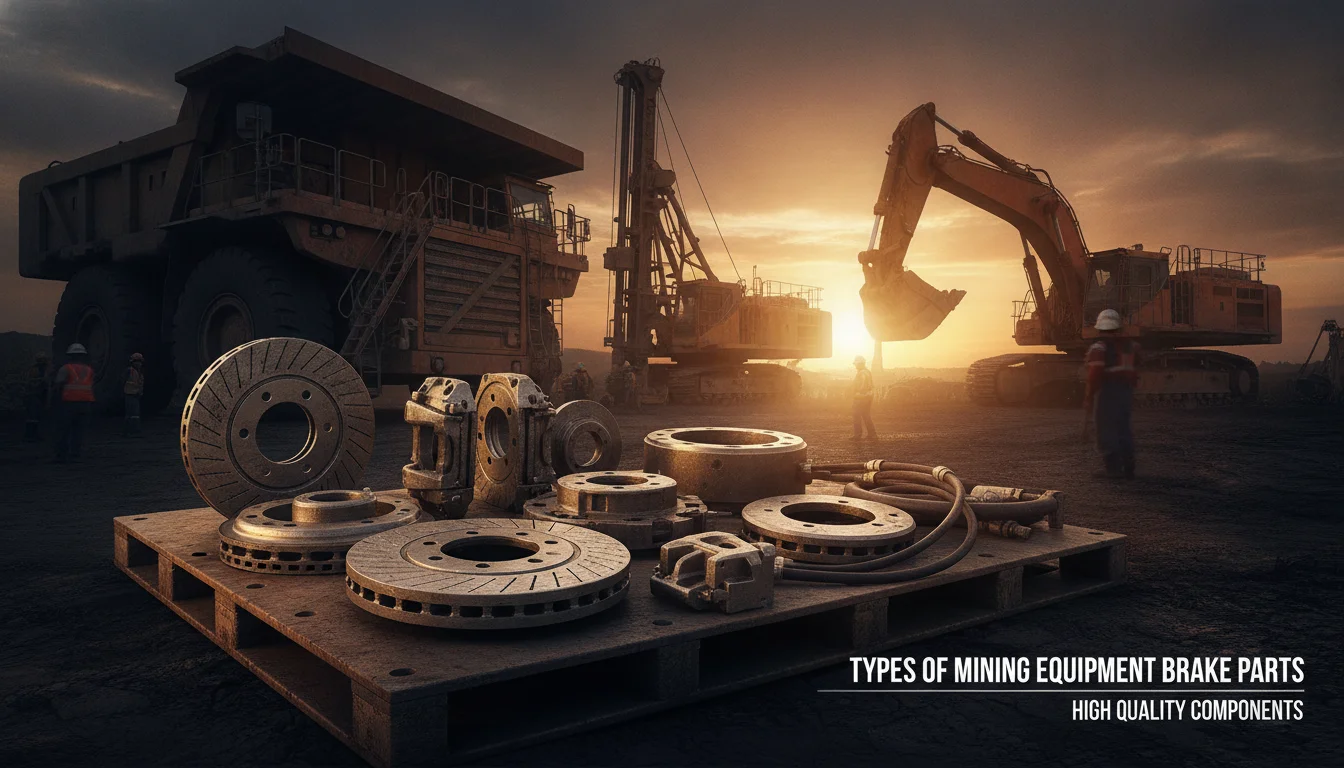
Mining Equipment Brake Parts: Buyer's Guide 2026
Mining equipment brake parts are critical for site safety. Compare types, top suppliers, and maintenance tips.
Loading article…
Article Not Found
The article you're looking for doesn't exist or may have been removed.
Back to BlogKey Takeaways
- Understand the different types of mining equipment brake parts for various applications.
- Evaluate suppliers based on quality, delivery speed, and technical support.
- Prioritize scheduled maintenance to extend the lifespan of braking systems.
- OEM parts deliver guaranteed fit, compatibility, and performance for heavy-duty equipment.
- Band brakes, eddy current brakes, and wet multi-disc systems are widely used but often overlooked in procurement planning.
- As of 2026, global sourcing options have expanded significantly, making fast delivery to remote mine sites more achievable than ever.
Mining equipment brake parts are the critical components that stop and control heavy machinery operating under extreme load, heat, and contamination. Selecting the wrong parts puts operators at risk and drives up downtime costs across your entire fleet.
Types of Mining Equipment Brake Parts
Mining equipment uses several distinct braking systems, each engineered for specific load conditions, environments, and machine types. Knowing which system your equipment runs is the first step toward sourcing the right replacement parts.
1. Hydraulic Brakes
Hydraulic brakes apply fluid pressure to force brake shoes outward against drums, or to press pads against rotors. They're the dominant system in large mining trucks and excavators because they scale reliably with load size. According to manufacturer specifications, hydraulic systems deliver consistent actuation force regardless of operator input variation, which matters on steep haul roads.
2. Disc Brakes
Disc brakes pair a steel rotor with a caliper to deliver precise, fade-resistant stopping power. The disc is anchored to the wheel or axle and reduces speed individually per wheel, giving operators finer control on uneven terrain. Wilwood Engineering, a recognized OEM disc brake manufacturer for mining and earthmoving equipment, supplies calipers, rotors, master cylinders, and proportioning valves for applications ranging from haul trucks to continuous miners.
3. Drum Brakes
Drum brakes generate stopping force through friction pads pressing against a rotating drum. They're a relatively older design and less common in modern heavy mining equipment, but they remain cost-effective for specific underground applications where simplicity and low replacement cost matter.
4. Wet Multi-Disc Brakes
Wet multi-disc brakes are immersed in oil to prevent overheating and brake fade during extended heavy use. The braking assembly typically mounts on both sides of the final drive housing, inside the wheel hub. This design is well-suited to the heaviest machinery operating on long descents or in high-cycle environments. Per competitor industry data, the multiple discs in wet brake systems are the key to stopping power in even the heaviest machines.
5. Band Brakes
Band brakes use a flexible band pressed against a rotating drum or pulley to slow and stop rotation. They're common on crawler-type equipment and caterpillar-tracked machines. The operation is mechanically simple, which makes field servicing straightforward in remote locations.
6. Eddy Current (Electromagnetic) Brakes
Eddy current brakes slow machinery without direct friction between components. An electromagnetic field creates an opposing current that resists motion, reducing wear on physical brake surfaces. These systems are used in applications where heat generation from friction brakes would be problematic, such as high-speed conveyor systems and rotary equipment.
7. Dynamic and Retarder Brakes
Retarder brakes control speed progressively on long downhill hauls without engaging the primary friction brakes. They're standard on large haul trucks operating on steep mine ramps, reducing heat buildup in the primary braking system and extending service intervals for friction components.
What to Look For When Buying Mining Equipment Brake Parts
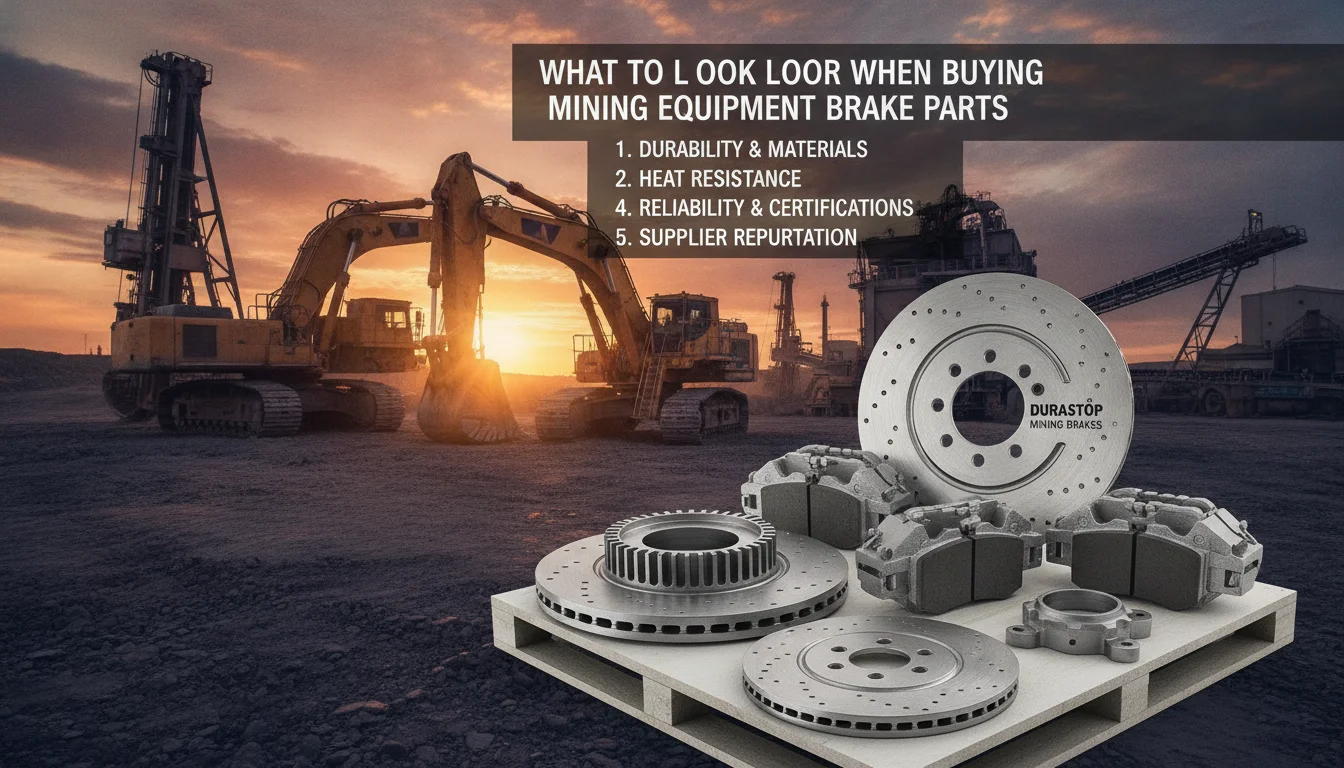
Buying the right mining equipment brake parts comes down to four factors: material quality, compatibility, supplier credibility, and total cost of ownership. Getting any one of these wrong can cost far more than the price difference between a budget part and a quality one.
1. Material Quality
High-grade steel, carbon composites, and specialized friction materials are the standard for heavy-duty mining brake components. Carlisle Brake & Friction, which has engineered mining brake systems since the 1930s, developed high-density paper and carbon paper friction discs that set a new industry standard for large-scale wet brake systems. Verify that parts meet ISO or ASTM certification requirements before purchasing.
2. Compatibility
Confirm compatibility with your specific equipment model and serial number range before ordering. OEM parts are the safest choice for guaranteed fit and performance. Aftermarket parts may carry a lower price tag, but they don't always meet OEM specifications, and a mismatched caliper or rotor on a 200-tonne haul truck is not a risk worth taking.
3. Supplier Reputation
Choose suppliers with documented experience in mining applications, not just general industrial parts. Look for remanufacturing capabilities, engineering support, and warranty programs. According to industry maintenance data, suppliers who offer engineering upgrades alongside replacement parts often deliver longer component life than OEM-standard replacements alone.
4. Total Cost of Ownership
The cheapest brake pad on the shelf is rarely the cheapest option over a 12-month maintenance cycle. Investing in quality friction materials and properly rated calipers reduces replacement frequency and cuts unplanned downtime. Factor in shipping lead time too: a part that takes three weeks to arrive from overseas costs you three weeks of production.
"Mining is a world of extremes. Massive mining equipment faces punishing conditions: dust, dirt, extreme temperatures, and relentless demands push braking systems to their absolute limits. Failure is not an option." - Carlisle Brake & Friction, Mining Market Overview
Pros and Cons of OEM vs. Aftermarket Mining Brake Parts
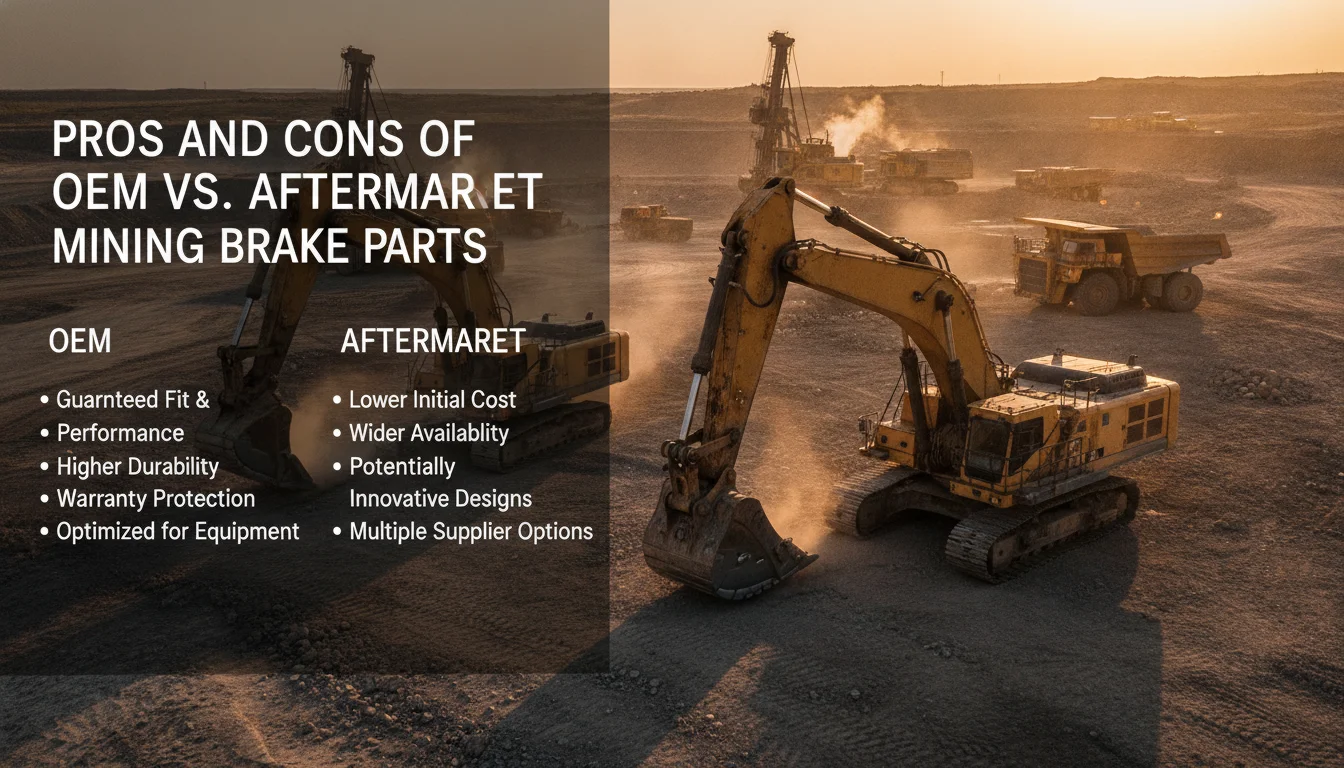
Choosing between OEM and aftermarket brake parts is one of the most common decisions procurement managers face. Both options have legitimate use cases depending on your equipment age, budget cycle, and risk tolerance.
Pros
- OEM parts guarantee fit, compatibility, and performance as validated by the original equipment manufacturer.
- Remanufactured OEM-grade parts from specialist suppliers can match OEM performance at lower cost, often with extended warranty coverage.
- Aftermarket parts from certified manufacturers can reduce procurement costs for lower-criticality components on older equipment.
- Wider sourcing options mean faster availability, especially for equipment operating in remote regions with long OEM supply lead times.
Cons
- Aftermarket parts may not meet OEM specifications, creating compatibility and safety risks on critical braking systems.
- OEM parts often carry premium pricing and longer lead times, particularly for older or less common equipment models.
- Low-cost imports without verifiable certification can fail prematurely, increasing total maintenance cost and downtime risk.
- Remanufactured parts require careful vetting of the remanufacturer's capabilities and quality standards before use on safety-critical systems.
Top Suppliers of Mining Equipment Brake Parts
Several reputable suppliers specialize in brake systems and components for heavy mining equipment. Here's a comparison of the leading companies active in this space as of 2026.
| Supplier | Specialization | Location | Contact |
|---|---|---|---|
| HEPI / Brake Supply | New, remanufactured, and re-engineered parts for underground and surface mining | West Virginia, USA | Visit Site |
| Wilwood Engineering | OEM disc brake systems for mining and earthmoving equipment | California, USA | Visit Site |
| Carlisle Brake & Friction | Friction materials, wet brake systems, hydraulic actuation for mining | Ohio, USA | Visit Site |
| Ausco (via Bull Powertrain) | Heavy-duty brake systems with advanced heat dissipation for off-highway mining vehicles | Ontario, Canada | Visit Site |
| Force Control | Heavy-duty brakes with Oil Shear Technology for mining applications | Ohio, USA | Visit Site |
| 3GEN Export | OEM-quality spare parts for Caterpillar, Komatsu, Volvo, and 40+ brands with global delivery | Global | Shop Parts |
"Force Control products are designed to exceed safety and reliability expectations. Oil Shear Technology, at the heart of most Force Control products, offers a longer service life with no downtime or maintenance." - Force Control Industries, Mining Applications Overview
Care and Maintenance of Mining Equipment Brake Parts
Regular maintenance of braking systems is non-negotiable in mining operations. A brake failure on a loaded haul truck or underground vehicle can be fatal. These practices keep your systems performing between scheduled rebuilds.
1. Routine Inspections
Inspect braking systems at regular intervals, ideally every 250 operating hours or as specified in your OEM service bulletin. Check rotors for cracks, measure pad thickness against minimum wear limits, and inspect hydraulic lines for leaks or chafing. Catching wear early prevents the kind of sudden failure that grounds an entire shift.
2. Cleaning
Mining environments push dust, mud, and chemical contamination directly into brake assemblies. Keep components clean using appropriate solvents that won't degrade seals or friction materials. Ausco's sealed brake designs address this challenge at the engineering level, but even sealed systems benefit from regular external cleaning and inspection.
3. Lubrication
Lubricate all moving brake components according to the manufacturer's specified intervals and lubricant types. Over-lubrication near friction surfaces is as damaging as under-lubrication of pivot points. Follow the OEM service manual precisely.
4. Heat Management
Heat buildup is the primary cause of brake fade and accelerated wear in mining applications. On equipment running long descents, use retarder systems to reduce load on primary friction brakes. Monitor brake temperatures where instrumentation allows, and replace ventilated disc components at the first sign of thermal cracking.
Pro Tip: Keep a brake wear gauge on-site for haul trucks and loaders. HEPI's Brake Wear Gauge product line is specifically designed for mining equipment and removes the guesswork from pad replacement decisions.
Main Components of a Mining Brake System
A complete mining brake system includes several interdependent components, each of which must be sourced and maintained correctly for the system to perform safely.
| Component | Function | Common Failure Signs |
|---|---|---|
| Brake Pads / Friction Discs | Create friction against rotor or drum to slow the machine | Reduced stopping power, squealing, visible wear below minimum thickness |
| Rotors / Drums | Rotating surface that friction material acts against | Visible cracks, scoring, heat discoloration, vibration during braking |
| Calipers | Clamp brake pads against the rotor | Uneven pad wear, fluid leaks, dragging sensation |
| Hydraulic Lines | Transmit fluid pressure from master cylinder to calipers | Spongy pedal feel, visible leaks, pressure loss |
| Master Cylinder | Generates hydraulic pressure when operator applies brakes | Fluid loss, inconsistent pedal response |
| Brake Adjusters | Maintain correct clearance between pad and rotor as wear occurs | Excessive pedal travel, uneven braking |
| Park / Emergency Brake Assembly | Holds machine stationary and provides backup stopping in emergencies | Machine creep on grades, warning light activation |
Frequently Asked Questions
What are all the parts for brakes on mining equipment?
The main components include brake pads or friction discs, rotors or drums, calipers, hydraulic lines, master cylinders, brake adjusters, and park or emergency brake assemblies. Each part plays a specific role in the system, and failure in any one component affects the performance of the entire braking system.
What are the four types of brakes used in mining equipment?
The four most common types are hydraulic brakes, disc brakes, drum brakes, and wet multi-disc brakes. Mining equipment also uses band brakes, eddy current brakes, and retarder systems depending on the application and machine type.
How often should mining equipment brakes be inspected?
Brakes should be inspected every 250 operating hours or as specified in the OEM service bulletin for your equipment model. Frequent inspections in high-cycle or high-load applications help prevent unexpected failures that could injure operators or damage equipment.
Can I use aftermarket brake parts for my mining equipment?
Aftermarket parts can be appropriate for lower-criticality applications or older equipment, but they don't always meet OEM specifications. For primary braking systems on haul trucks, loaders, and underground vehicles, OEM or OEM-grade remanufactured parts are the safer and more cost-effective long-term choice.
What are the signs of brake failure in mining equipment?
Warning signs include unusual noises during braking, reduced stopping power, vibration through the pedal or chassis, fluid leaks near wheel assemblies, and dashboard warning lights. Address any of these immediately. On a loaded haul truck on a steep grade, delayed response to brake failure signs is not an option.