Mining Equipment Brake Parts Suppliers Guide 2026
Find trusted mining equipment brake parts suppliers for OEM-grade brakes, clutches & friction materials. Fast global delivery at 3genexport.com.
Loading article…
Article Not Found
The article you're looking for doesn't exist or may have been removed.
Back to BlogMining equipment brake parts suppliers are companies that source, manufacture, and distribute braking system components for heavy-duty mining machinery, including haul trucks, grinding mills, hoists, and conveyors. Choosing the right supplier directly affects site safety, machine uptime, and total maintenance cost.
Key Takeaways
- Reliable braking systems are non-negotiable in mining: failure means injury, equipment loss, and costly downtime.
- Top parts suppliers offer hydraulic, pneumatic, and mechanical brake solutions for every mining application.
- MSHA certification and ISO 9001 are the baseline quality benchmarks to demand from any supplier.
- Compatibility with your OEM specifications, not just price, should drive every purchasing decision.
- Preventive maintenance, including regular inspection and timely friction material replacement, extends brake life significantly.
- 3GEN Export ships OEM-quality brake parts globally with 5-day delivery to keep your fleet running.
"The safety and efficiency of mining operations heavily depend on the reliability of braking systems, making it essential to choose the right suppliers and products." - Industry Expert
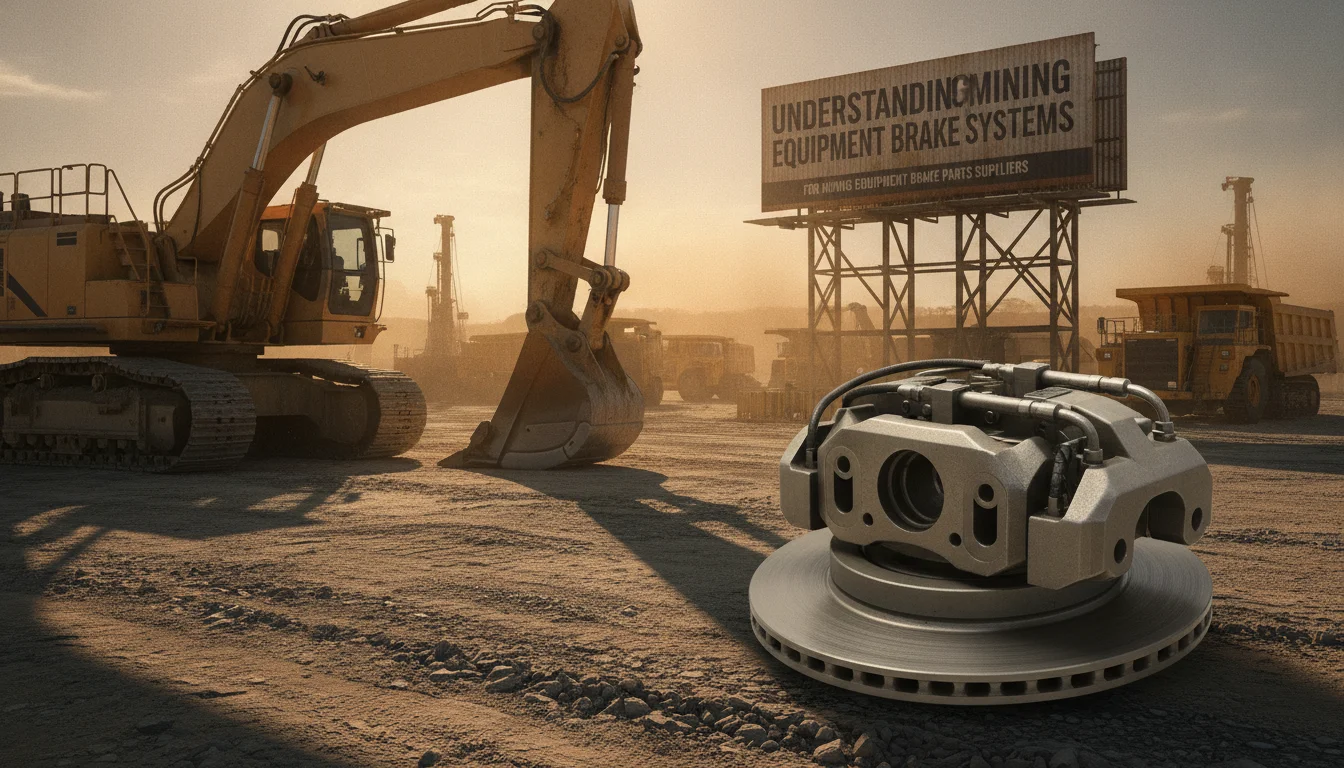
Understanding Mining Equipment Brake Systems
Mining equipment brake systems are purpose-built to handle conditions that would destroy components designed for lighter-duty work: high torque loads, heavy dust, extreme heat, and long hauls to remote sites. A brake failure on a loaded haul truck or a charged grinding mill is not a maintenance inconvenience. It is a serious incident. Understanding the system types and their components is the first step toward making a sound purchasing decision.
Types of Brake Systems
- Hydraulic Brakes: Use hydraulic fluid to transmit clamping force, delivering precise control and high stopping power. Hydraulic caliper disc brakes are the standard for grinding mills, winders, and high-torque conveyor drives.
- Pneumatic Brakes: Operate on compressed air, making them well-suited for rope shovels, draglines, and other heavy earthmoving equipment where spring-applied, air-released designs provide fail-safe holding. WPT Power's Mining Brake is a representative example: a spring-applied, air-released unit with metallic friction linings, multiple torque capacities, and solid or ventilated floating wear plates.
- Mechanical Brakes: Rely on physical linkage, levers, and cables. Appropriate for lower-demand applications or as secondary holding brakes on simpler systems.
Key Components of Brake Systems
- Friction Materials: The wear element that generates stopping force. Options range from molded rigid blocks for shovels and draglines to semi-metallic sintered pads for high-heat mill and winder applications.
- Calipers: House the brake pads and apply clamping pressure against the rotor or disc. Hydraulic caliper disc brakes are the preferred choice for high-torque mill and winder discs.
- Rotors and Discs: The rotating surface the pads clamp against. Quality rotors must dissipate heat evenly and resist warping under sustained torque loads.
- Actuators and Thrusters: Electro-hydraulic thrusters are the most common actuator on hoist and winder brakes. According to Kor-Pak's field data, the thruster wears out well before the brake it actuates, meaning many apparent brake failures are actually thruster failures with a far less expensive fix.
- Steel Plates and Dampers: Steel plates must be made from top-grade flat sheet steel to dissipate heat evenly and prevent warping under heavy torque. OEM-grade dampers use uniform density distribution to ensure consistent service life.
Top Mining Equipment Brake Parts Suppliers
Selecting among this type of suppliers requires more than comparing a price list. Reputation, product depth, in-house manufacturing capability, and 24/7 support availability all matter when a mill brake fails at 2 a.m. on a Sunday. Below are the leading suppliers active in the global mining market as of 2026.
1. H-E Parts International (HEPI)
With over 70 years of expertise in friction materials, built on the legacy of Brake Supply and Morgan Brake and Clutch, HEPI delivers brake and clutch solutions for mining, heavy equipment, oil and gas, and industrial applications. Their Delta Friction division in Richmond, BC, manufactures specialty friction products in-house, supporting continuous R&D and ensuring products meet or exceed OEM performance. HEPI stocks brake bands, plates, discs, linings, and custom applications, and runs wet brake exchange programs to minimize fleet downtime. Their friction discs feature grooves cut with diamond tooling for precise oil channels, chamfered edges for safe handling, and ground surfaces for maximum performance.
2. Kor-Pak
Kor-Pak is a specialist in industrial braking systems for mining applications, with installations on grinding mills, conveyors, stacker reclaimers, crushers, hoists, and mobile equipment worldwide. Their product range covers electric and hydraulic drum and disc brakes, storm brakes, rail clamps, and complete power units. For grinding mills, Kor-Pak supplies complete braking packages: calipers, discs, power units, and controls, sized to the mill and its charge. They also stock Eaton Airflex air-cooled clutches, Svendborg hydraulic disc brakes, Pintsch Bubenzer high-performance disc and drum brakes, and Marland backstops for conveyor rollback protection. Critically, Kor-Pak offers 24/7 support and a stocking program that puts critical wear items on the shelf before the shutdown that needs them.
3. Stearns (a Regal Rexnord Division)
Stearns was the first motor brake manufacturer to offer a line of Division 1 hazardous location brakes and remains the only manufacturer to produce electric safety brakes certified by the Mine Safety and Health Administration (MSHA). Their spring-set, electrically-released brakes automate processes with zero-emission motors and serve blast drills, bulk handling conveyors, mine elevators, hoists, winches, crushers, grinding mills, ball mills, and shuttle cars. Stearns holds ISO 9001:2015 certification and is also UL Recognized, RoHS Compliant, and REACH Compliant. For underground coal and gassy mine environments, MSHA-certified Stearns brakes are the specified choice.
4. Bull Powertrain
Bull Powertrain supplies off-highway OEM brakes from Ausco and Dana, covering SAHR, Posi Stop, and LCB (liquid-cooled brake) applications. Based in Sudbury, Ontario, they serve mining operations with new OEM parts, rebuilds, exchanges, and full repair services. Their positioning as a dedicated off-highway service center means they carry the application knowledge to match the right brake to the right machine, not just ship a catalog part.
5. Wilwood Engineering
Wilwood Engineering is a global OEM manufacturer of high-performance disc brake solutions for mining and earthmoving equipment, covering articulated tractors, track and wheel dozers, dump trucks, haul trucks, mass excavators, motor graders, scrapers, continuous miners, roadheaders, and personal carriers. With over 20,000 engineered and produced industrial brake parts on their shelves, Wilwood offers short lead times on custom OE parts, including initial design, engineering, and rapid prototyping. Their component range includes hydraulic and mechanical calipers, master cylinders, pedal assemblies, one-piece iron rotors, proportioning valves, brake pads, hubs, spindles, and custom support bracketry. Wilwood draws on more than 35 years of brake design and high-volume production experience.
6. WPT Power
WPT Power Corporation manufactures the Mining Brake, a spring-applied, air-released unit specifically designed for heavy-duty earthmoving equipment including rope shovels and draglines. Key features include metallic friction linings, vertical or horizontal mounting configurations, a single-piston design for high torque capacity, and optional limit switches and wear indicators. Multiple hub options provide installation flexibility across equipment types.
7. Westrock USA
Westrock supplies pneumatic, hydraulic, and electromechanical braking solutions to the mining industry, with products designed under OEM specifications for P&H and Bucyrus shovels covering hoist, crowd, swing, and propel applications. Their friction material is engineered to deliver the braking distance, time, and service life specified by the OEM, and they supply both individual brake discs and plates as well as complete brake units for shovels and draglines. Westrock serves OEM and aftermarket customers across mining, construction, industrial, and marine markets from facilities in Little Rock, AR, and Santiago, Chile.
"According to manufacturer specifications from Stearns, MSHA certification is the critical compliance benchmark for brakes used in underground coal and gassy mine environments, where explosion risk demands verified, tested equipment, not just claimed compliance." - 3GEN Export Technical Team
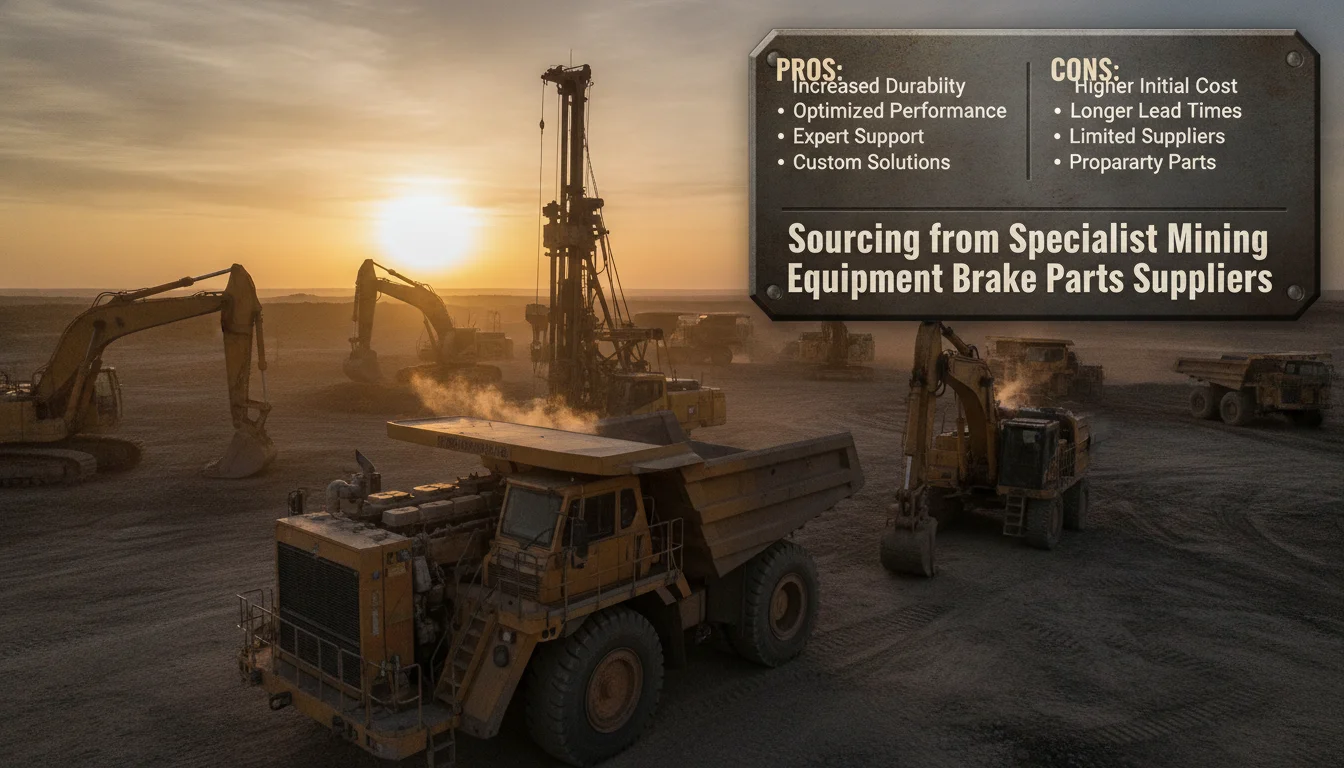
Pros and Cons of Sourcing from Specialist Mining Equipment Brake Parts Suppliers
Pros
- Application-specific expertise: Specialist mining equipment brake parts suppliers understand the torque loads, duty cycles, and environmental conditions of your equipment, not just the catalog dimensions.
- Broader product depth: From friction discs and sintered pads to complete hydraulic caliper assemblies and storm brakes, specialists stock what generalist distributors don't carry.
- Compliance assurance: MSHA-certified and ISO 9001-qualified suppliers reduce your regulatory exposure, particularly for underground and hazardous location applications.
- Support infrastructure: 24/7 technical support, in-house relining and rebuild services, and stocking programs reduce your emergency response time when a brake fails mid-shift.
- OEM-grade quality: In-house manufacturing capabilities, such as HEPI's Delta Friction division, ensure friction materials meet or exceed OEM performance standards.
Cons
- Higher unit cost vs. generic aftermarket: OEM-quality brake components from specialist suppliers carry a premium over low-grade aftermarket alternatives, though total cost of ownership is typically lower.
- Lead time on custom parts: Custom-engineered solutions, while available from suppliers like Wilwood, require design and prototyping time that standard catalog parts don't.
- Geographic availability: Several leading mining equipment brake parts suppliers are concentrated in North America, which can extend lead times for operations in Africa, Southeast Asia, or remote regions without a local distribution partner.
- Minimum order requirements: Some specialist suppliers prioritize fleet-scale or OEM-volume orders, which can be a barrier for smaller operations sourcing single replacement components.
What to Look For When Buying Mining Equipment Brake Parts
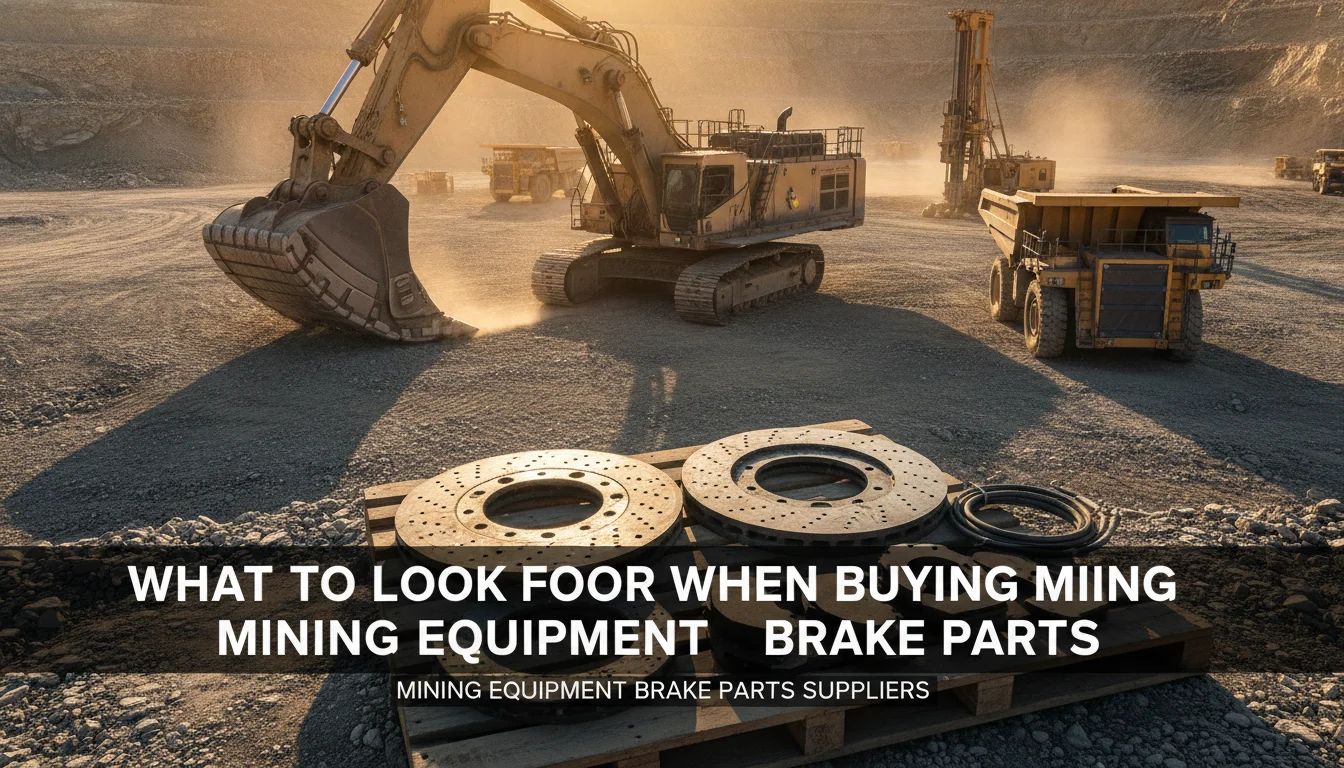
Sourcing from the right mining equipment brake parts suppliers requires evaluating several factors beyond the initial price. A brake component that fails early costs far more than the premium you saved at purchase.
1. Material Quality
Brake components must withstand extreme heat, heavy dust, moisture, and sustained high-torque loads. Look for friction materials with proven resistance to heat glazing and non-abrasive characteristics that protect drum and rotor surfaces. Non-asbestos linings, per industry maintenance data, can deliver wear life and friction performance equal to or greater than legacy asbestos materials without the associated drum wear or grooving.
2. OEM Compatibility
Verify that brake parts match your specific equipment model's OEM specifications and part numbers before ordering. A caliper or friction disc that is close but not exact will cause uneven wear, reduced stopping power, and potential failure. Cross-reference against the OEM service bulletin for your machine model.
3. Certifications and Compliance
For underground and hazardous location applications, MSHA certification is not optional. For surface operations, ISO 9001:2015 certification from the supplier is the baseline quality assurance standard. Also check for UL recognition and RoHS compliance where relevant to your operating jurisdiction.
4. Supplier Support Infrastructure
Evaluate whether the supplier offers 24/7 technical support, in-house rebuild and relining services, and a stocking program for your critical wear items. When a grinding mill brake fails during a production shift, the supplier's response time is as important as the part itself.
5. Total Cost of Ownership
Establish a budget that accounts for installation, maintenance intervals, and expected service life, not just the purchase price. A friction disc that lasts twice as long at 40% higher cost is the better economic decision for a high-utilization mining fleet.
Care and Maintenance of Mining Equipment Brake Parts
Proper maintenance of brake systems is the most cost-effective way to extend component life and prevent unplanned downtime. These practices apply across all brake types used in mining applications.
1. Regular Inspections
Inspect brake pads, friction discs, rotors, calipers, and actuators at every scheduled maintenance interval. Look for uneven wear patterns, heat discoloration, cracking, or glazing on friction surfaces. Replace components before they reach minimum thickness, not after. Waiting until a component fails in service is always more expensive than a planned replacement.
2. Cleaning
Keep brake assemblies clear of dust, ore fines, and hydraulic fluid contamination. Mining environments generate aggressive particulate that accelerates friction material wear and can cause caliper seizure. Use cleaning agents approved for the specific brake material, as some solvents degrade friction compounds or seal materials.
3. Lubrication
Lubricate caliper slide pins, pivot points, and actuator linkages at manufacturer-specified intervals. Under-lubrication causes binding and uneven pad wear. Over-lubrication, particularly near friction surfaces, contaminates the brake material and reduces stopping power. Follow the OEM service bulletin for your specific brake assembly.
4. Thruster and Actuator Checks
On hoist and winder brakes, inspect electro-hydraulic thrusters regularly. As Kor-Pak's field experience confirms, the thruster typically wears out before the brake itself. Catching a failing thruster early means a lower-cost repair and avoids a full brake system replacement.
"Per OEM service bulletins for grinding mill brake systems, scheduled inspection of friction disc thickness and caliper hydraulic pressure is the single most effective preventive measure against unplanned mill stoppages." - 3GEN Export Technical Team
Comparison of Leading Mining Equipment Brake Parts Suppliers
| Supplier | Product Range | Key Features | Certifications |
|---|---|---|---|
| H-E Parts (HEPI) | Wet/dry brake assemblies, friction discs, clutch components, specialty linings | In-house friction manufacturing (Delta Friction, Richmond BC), diamond-tooled disc grooves, exchange programs | ISO 9001 |
| Kor-Pak | Hydraulic and electric drum/disc brakes, storm brakes, rail clamps, friction materials, thrusters | Complete mill brake packages, 24/7 support, in-house relining and rebuild, stocking programs | Industry-recognized specialist |
| Stearns | Motor brakes, Division 1 and Division 2 hazardous location brakes, clutches | Only manufacturer with MSHA-certified electric safety brakes, spring-set electrically-released, self-adjusting | MSHA Certified, ISO 9001:2015, UL, RoHS, REACH |
| Bull Powertrain | OEM off-highway brakes (Ausco, Dana), SAHR, Posi Stop, LCB, rebuild and exchange services | Dedicated off-highway service center, new OEM parts plus full repair capability | ISO 9001 |
| Wilwood Engineering | Disc brake systems, calipers, master cylinders, rotors, pedal assemblies, custom bracketry | 20,000+ engineered parts in stock, rapid prototyping, 35+ years OEM experience, NSN-listed components | ISO 9001 |
| WPT Power | Mining Brake (spring-applied, air-released), industrial clutches, winches | Metallic friction linings, single-piston high-torque design, vertical/horizontal mounting, wear indicators | Industry-recognized |
| Westrock USA | Brake discs, plates, complete brake units for shovels and draglines, friction materials | OEM-spec designs for P&H and Bucyrus shovels, full friction and clutch service capability | Strict in-house quality control and laboratory testing |
Why Source Mining Equipment Brake Parts Through 3GEN Export
We work with procurement managers and fleet maintenance supervisors at mining and construction operations across more than 40 countries. The challenge we hear most often is not finding a part number. It is finding a verified, OEM-quality component that ships fast to a remote site without the paperwork complications of dealing with multiple regional distributors.
3GEN Export stocks OEM-standard brake components for Caterpillar, Komatsu, Volvo, and 40+ additional brands. Our global logistics network delivers to mining sites in Africa, Southeast Asia, Latin America, the Middle East, and beyond, with a standard 5-day global delivery target. Every part ships with full traceability documentation, so your maintenance team and compliance records stay clean.
When you need mining equipment brake parts suppliers that combine verified OEM quality with fast international shipping, 3GEN Export is the direct route. No middlemen, no uncertainty about part origin, no waiting three weeks for a friction disc that should have been on the shelf.
Shop OEM-quality spare parts with global 5-day delivery at 3genexport.com. Explore our full parts categories or browse by equipment brand to find the exact brake components your fleet requires.
Frequently Asked Questions
What should I look for in mining equipment brake parts suppliers?
Prioritize suppliers with MSHA certification or ISO 9001:2015 accreditation, in-house manufacturing or rebuild capability, and 24/7 technical support. Verify that their product range covers your specific equipment models and that they can supply friction materials, calipers, actuators, and complete assemblies, not just individual wear parts.
How do I confirm brake part compatibility with my mining equipment?
Cross-reference the OEM part number and equipment model against the supplier's catalog or technical team. Check the OEM service bulletin for your machine, which specifies friction material type, caliper pressure ratings, and disc dimensions. Never substitute based on visual similarity alone, as dimensional differences cause uneven wear and reduced stopping performance.
What maintenance practices extend the life of mining brake systems?
Regular inspection at every scheduled maintenance interval, cleaning of assemblies to remove ore fines and dust, lubrication of caliper slide pins and actuator linkages at OEM-specified intervals, and early replacement of electro-hydraulic thrusters before they cause secondary brake damage are the four practices that most consistently extend brake service life in mining environments.
What certifications should mining equipment brake parts suppliers hold?
For underground coal and gassy mine applications, MSHA certification is mandatory. For surface operations, ISO 9001:2015 is the baseline quality standard. UL recognition, RoHS compliance, and REACH compliance are additional markers of a supplier operating to rigorous international standards.
How do I find reliable mining equipment brake parts suppliers for international delivery?
Look for suppliers with established global logistics networks and experience shipping to remote mining sites. Confirm they provide full traceability documentation with each shipment, can handle export compliance for your destination country, and stock sufficient inventory to ship without extended lead times. 3GEN Export specializes in exactly this: OEM-quality brake components with verified 5-day global delivery.
Are there certifications I should require from brake parts suppliers?
Yes. MSHA certification is required for underground and hazardous location applications. ISO 9001:2015 confirms the supplier's quality management system meets international standards. For specific markets, also check for UL recognition and RoHS or REACH compliance depending on your operating jurisdiction's regulatory requirements.