
Mining Equipment Electrical Parts: 2026 Buying Guide
Mining equipment electrical parts buying guide for 2026: OEM vs aftermarket, top suppliers, pricing tiers, and maintenance tips for procurement teams.
Loading article…
Article Not Found
The article you're looking for doesn't exist or may have been removed.
Back to BlogMining equipment electrical parts are the circuit breakers, control panels, wiring harnesses, connectors, and grid resistors that control, distribute, and protect electrical power in heavy mining machinery. They keep haul trucks, drills, and shovels running safely under extreme load.
Key Takeaways
- Quality electrical parts directly affect uptime, safety, and total cost of ownership.
- OEM and aftermarket parts each carry distinct tradeoffs in cost, warranty coverage, and compatibility risk.
- Supplier reliability and inventory depth matter as much as part price, especially for remote sites.
- Fit and compatibility checks against part numbers prevent expensive installation errors.
- Scheduled inspection, cleaning, and timely replacement extend the service life of electrical components.
- Pricing varies widely by component type and brand, so budgeting by tier helps control procurement spend.
"Investing in high-quality this type of parts is crucial for operational efficiency and equipment longevity." - Industry Expert
Understanding Mining Equipment Electrical Parts
this kind of electrical parts cover a broad category of components that regulate power flow through haul trucks, drills, crushers, and underground vehicles. These parts include circuit breakers, control panels, wiring harnesses, and connectors, all of which are vital for safe and efficient equipment operation. As of 2026, fleet operators are replacing these components more proactively than in past years, largely because unplanned electrical failures on a working mine site carry a much higher cost than the part itself.
Types of Electrical Parts
- Circuit Breakers: These devices protect electrical circuits from overloads and short circuits, ensuring the safety of equipment.
- Control Panels: These panels house the controls for various electrical systems, allowing operators to manage equipment functions effectively.
- Wiring Harnesses: These are assemblies of wires that transmit electrical signals and power to different parts of the machinery.
- Connectors: Connectors facilitate the connection of electrical circuits, ensuring reliable power delivery.
- Grid Resistors and Contactor Boxes: Common on electric-drive haul trucks, these manage load during dynamic braking and drive control.
Larger fleets running Komatsu electric-drive haul trucks, for example, rely on both older Statex (DC drive) and newer Invertex (AC/IGBT drive) control systems, and each requires distinct electronic cards and grid components. Getting the wrong generation of part is one of the most common and costly mistakes we see in procurement.
OEM vs. Aftermarket Parts
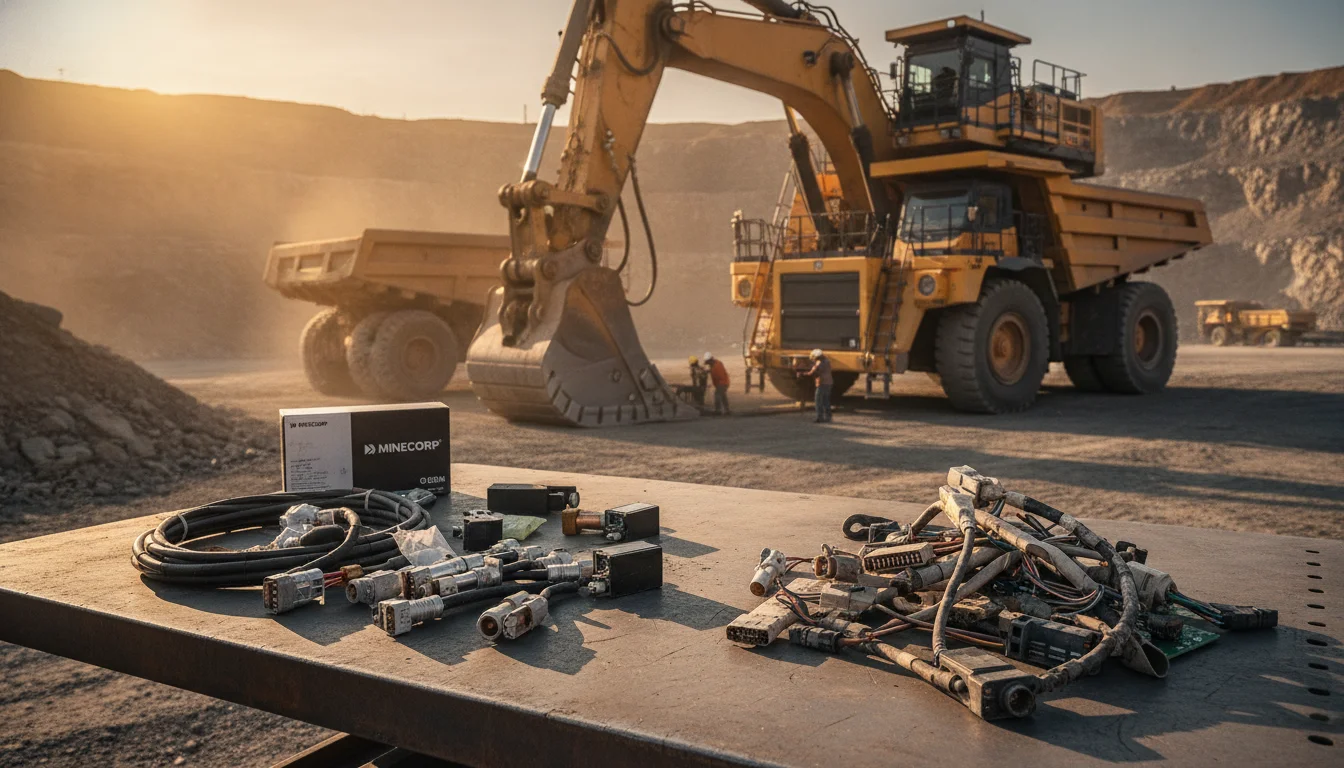
OEM parts are built by the original equipment manufacturer to exact factory specifications, while aftermarket parts come from third-party manufacturers at typically lower cost. Choosing between them depends on your equipment's criticality, warranty status, and how much compatibility risk your operation can tolerate.
OEM Parts
OEM parts are manufactured by the original equipment manufacturer and are designed to meet the exact specifications of the equipment. They typically offer the following advantages:
- Guaranteed compatibility with existing equipment.
- Higher reliability and performance standards.
- Often come with warranties that cover defects.
Aftermarket Parts
Aftermarket parts are produced by third-party manufacturers and may vary in quality and compatibility. Key considerations include:
- Potential cost savings compared to OEM parts.
- Variety of options available, which may include enhanced features.
- Risk of compatibility issues, which can lead to performance problems.
There's a middle path worth knowing about: many electrical components, including grid resistors and control cabinet parts, are manufactured by the same companies that supply the original OEM. Sourcing directly from those manufacturers, rather than the OEM's branded catalog, can deliver equivalent quality at a more competitive price. This is the model several specialized mining electrical suppliers use today.
What to Look For When Buying Mining Equipment Electrical Parts
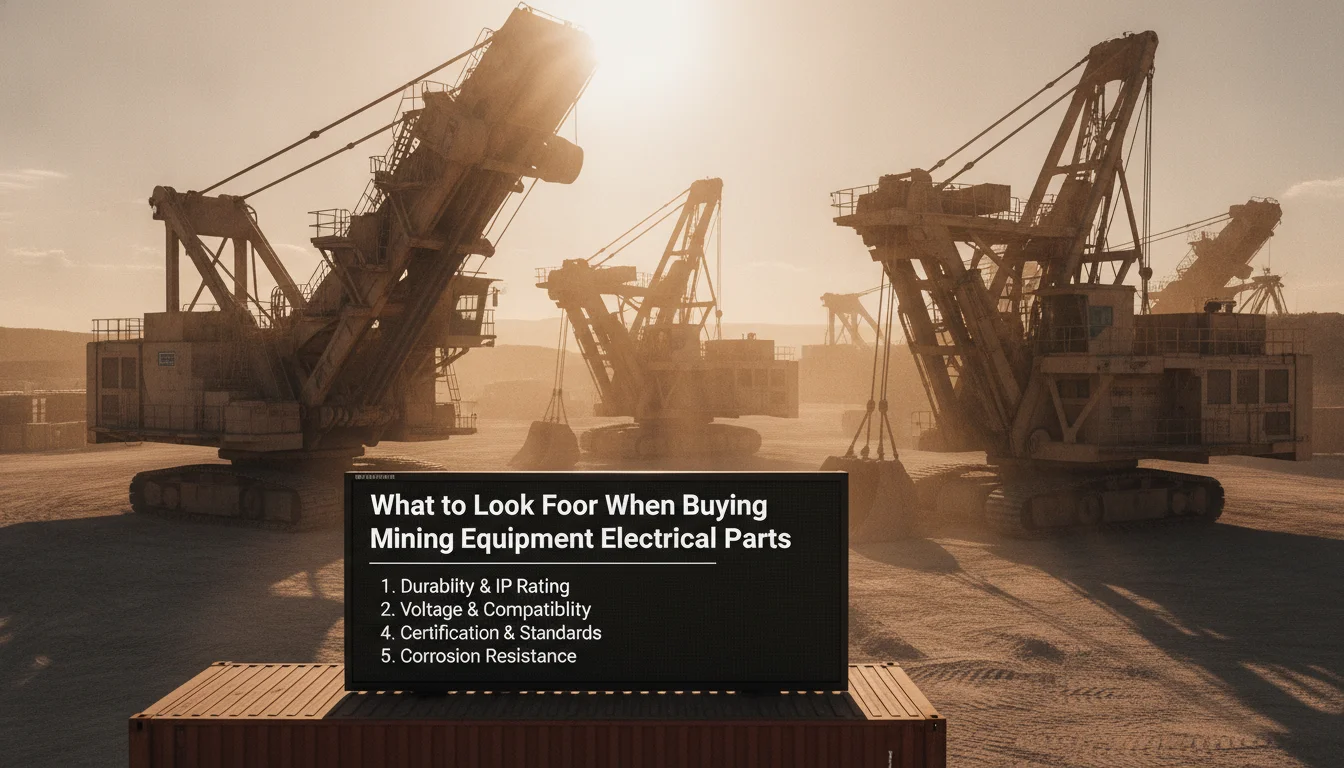
The right the equipment electrical parts match your machine's exact control system, use materials rated for harsh site conditions, and come from a supplier who can prove traceability back to a qualified manufacturer. Skipping any of these checks increases the risk of premature failure.
Material Quality
The materials used in electrical parts significantly impact their durability and performance. Look for parts made from high-quality materials that can withstand dust, vibration, moisture, and temperature swings common in mining operations.
Fit and Compatibility
Ensure that the electrical parts you purchase are compatible with your existing equipment. Check the part numbers and specifications against your machine's serial number and control system generation to avoid costly mistakes.
Price Range
Electrical parts can vary widely in price. Establish a budget and compare prices across different suppliers. Keep in mind that the cheapest option may not always be the best in terms of quality and reliability.
Supplier Track Record
A supplier's history in the mining sector tells you more than a product listing ever will. Ask how long they've supplied mining electrical components, whether they carry stock for your specific brand, and how they handle urgent orders when a truck is down on site.
How to Choose the Right Parts for Your Fleet
Choosing the right parts starts with identifying your machine's control system generation, then matching parts by exact part number rather than by general category. Skipping this step is the single biggest cause of return shipments and installation delays we encounter.
For example, a mine running a mixed fleet of older DC-drive haul trucks alongside newer AC/IGBT models cannot use the same grid resistors or electronic cards across both. Pull your equipment's serial number, cross-reference it against the OEM's control system documentation, and confirm with your supplier before ordering. For underground loaders and utility vehicles, connectors and high-voltage couplers rated for the correct amperage and voltage class are equally non-negotiable. Mismatched voltage ratings on power couplers are a safety hazard, not just a compatibility inconvenience.
Pricing Tiers: Budget, Mid-Range, and Premium
mining equipment generally fall into three pricing tiers based on component complexity and sourcing. Budget-tier items like standard push buttons, indicator lights, and basic connectors are typically the least expensive line items in an electrical parts order. Mid-range components, including circuit breakers, contactor boxes, and control cabinet parts, cost more due to certification requirements and build complexity. Premium-tier items, such as Komatsu electronic cards, high-voltage couplers rated for thousands of volts, and complete control panel assemblies, represent the largest single-line expenses in an electrical parts budget. Published pricing from industry suppliers shows individual components like transformers and specialty connectors ranging from roughly a few dozen dollars to nearly a thousand dollars depending on voltage rating and build complexity, according to Carroll Technologies Group's published product catalog.
| Tier | Typical Components | Best For |
|---|---|---|
| Budget | Indicator lights, push buttons, basic switches, standard connectors | Routine wear-item replacement, non-critical circuits |
| Mid-Range | Circuit breakers, contactor boxes, control cabinet parts, diodes | Scheduled maintenance and standard control system upkeep |
| Premium | Electronic drive cards, high-voltage couplers, complete control panels | Drive system repairs and critical haul truck electrical systems |
Top Suppliers of Mining Equipment Electrical Parts
Choosing a reliable supplier is critical for ensuring that you receive quality parts promptly. Here are some reputable suppliers in the industry:
| Supplier | Specialty | Notable Brands | Website |
|---|---|---|---|
| H-E Parts | OEM-quality electrical components | Komatsu | H-E Parts |
| 3GEN Export | Mining machinery electrical parts | Various OEMs | 3GEN Export |
| Carroll Technologies Group | Electrical and electronic products | Eaton, Cutler Hammer | Carroll Technologies |
| Arnold Machinery Company | Mining parts supplier | Various brands | Arnold Machinery |
H-E Parts, for instance, reports that most of its Komatsu electrical components are sourced from the same manufacturers that supply the OEM, backed by more than a decade of proven reliability in mining operations, according to the company's product documentation. Carroll Technologies Group notes that its Eaton/Cutler Hammer circuit breakers and MSHA-approved ground monitors support hundreds of industrial projects across North America. These details matter when you're vetting a new supplier: ask for the same kind of manufacturer traceability and track record before committing to a large order.
Pros and Cons
Pros
- Sourcing electrical parts from specialized suppliers gives access to OEM-quality components at more competitive prices than factory-branded catalogs.
- Wide global supplier networks mean most standard components ship within days, not weeks.
- Aftermarket and manufacturer-direct options let fleets control maintenance budgets without sacrificing reliability.
Cons
- Compatibility risk increases when mixing part sources across different control system generations.
- Premium components like drive cards and high-voltage couplers carry a real cost that's hard to reduce without risking downtime.
- Remote mine sites can face longer effective lead times even when a supplier ships quickly, due to customs and last-mile logistics.
Care and Maintenance of Electrical Parts
Extending the life of mining equipment electrical parts requires routine inspection, regular cleaning, and prompt replacement of worn components. Skipping any one of these steps shortens the service interval of the whole electrical system.
Inspection
Conduct regular inspections of electrical components to identify signs of wear or damage. Look for frayed wires, corrosion, and loose connections.
Cleaning
Keep electrical parts clean and free from dust and debris, which can interfere with their operation. Use appropriate cleaning agents that do not damage the components.
Replacement
Replace any damaged or worn-out parts promptly to avoid further damage to the equipment. Keep a stock of critical spare parts to minimize downtime.
Pro Tip: Keep a documented inspection log for every control cabinet on site. Tracking wear patterns over time helps you predict which components are approaching end of life, so you can order replacements before a failure takes a haul truck out of rotation.
What to Expect in 2026 and Beyond
Mining fleets in 2026 are leaning further into AC/IGBT drive systems, which means demand for legacy DC-drive (Statex) parts is gradually shrinking while support for newer Invertex-generation components grows. Operators running mixed fleets should plan ahead: sourcing legacy parts may require more lead time as manufacturers shift production focus toward current-generation control systems. Global suppliers with distributed inventory across regions remain the safest bet for keeping both older and newer equipment running without extended downtime.
"Full coverage for Komatsu Statex (DC) and Invertex (AC/IGBT) control systems remains essential, because most mining fleets operate a mix of both generations for years before a full fleet transition." - H-E Parts product documentation
Frequently Asked Questions
What are mining equipment electrical parts?
Mining equipment electrical parts are components that control, distribute, and protect electrical power in heavy machinery used in mining operations. This includes circuit breakers, control panels, wiring harnesses, connectors, and grid resistors.
How do I choose between OEM and aftermarket parts?
Consider factors such as compatibility, reliability, and cost. OEM parts are typically more reliable and carry manufacturer warranties, while aftermarket or manufacturer-direct parts may offer meaningful cost savings without sacrificing quality, provided you verify the source.
Where can I buy mining equipment electrical parts?
You can purchase these parts from various suppliers, including H-E Parts, 3GEN Export, Carroll Technologies Group, and Arnold Machinery Company, among others. Always confirm inventory availability and part number compatibility before ordering.
What maintenance is required for electrical parts?
Regular inspections, cleaning, and prompt replacement of damaged parts are essential for maintaining the performance of electrical components. Keeping a documented inspection log also helps predict failures before they cause downtime.
How can I ensure compatibility with my equipment?
Check the part numbers and specifications against your equipment's requirements, including the control system generation, such as DC drive versus AC/IGBT drive, to ensure compatibility before purchasing.
What is the typical price range for mining equipment electrical parts?
The price range varies significantly based on the type and quality of the parts, from budget-tier switches and connectors to premium electronic drive cards and high-voltage couplers. Establish a budget by tier and compare prices from different suppliers before committing to a large order.
How fast can I get replacement electrical parts shipped internationally?
Global suppliers with distributed inventory can typically ship standard components within days rather than weeks. At 3GEN Export, we support this with OEM-quality spare parts and global 5-day delivery, helping fleet managers minimize downtime regardless of location.
Ready to source reliable components for your fleet? Shop OEM-quality spare parts with global 5-day delivery at 3genexport.com.