Mining Equipment Filters & Fluids: Buying Guide 2026
Mining equipment filters and fluids protect your machinery from costly downtime. Compare top brands, maintenance tips, and OEM specs in this 2026 guide.
Loading article…
Article Not Found
The article you're looking for doesn't exist or may have been removed.
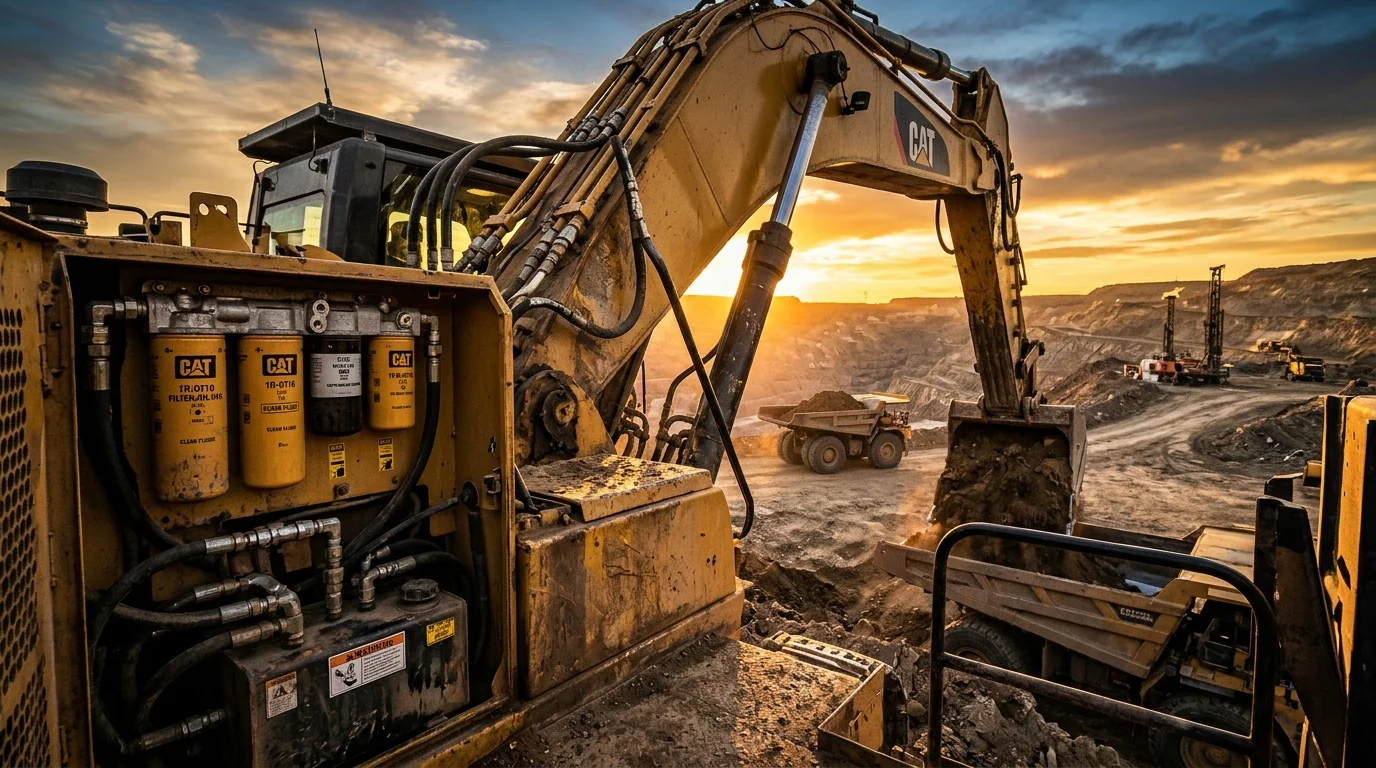
Back to BlogMining equipment filters and fluids are the protective systems that remove contaminants from hydraulic, fuel, and air circuits while lubricating and cooling engine components. Without them, abrasive particles destroy pumps, valves, and injectors - often before operators notice any performance drop.
Key Takeaways
- Filters and fluids are your first line of defense against contamination-driven failures in hydraulic, fuel, and air systems.
- Timely filter replacement - typically every 500 hours or per OEM schedule - directly reduces unplanned downtime and repair bills.
- OEM-specification fluids extend drain intervals and protect components beyond what generic alternatives can offer.
- Fluid analysis programs (such as Komatsu KOWA or Cat S·O·S℠) let you catch wear trends before they become catastrophic failures.
- As of 2026, smart IoT-connected filter monitoring is becoming standard practice on large mining fleets, enabling predictive rather than reactive maintenance.
- Proper disposal of used filters and fluids is a legal and environmental obligation - plan for it in your maintenance budget.
Understanding Mining Equipment Filters and Fluids
Filters and fluids work as a system: filters trap harmful particles before they reach sensitive components, while fluids lubricate, cool, and transmit power throughout the machine. Neglect either side of that equation and you accelerate wear across the entire drivetrain.
Clean filters and fluids are not a maintenance cost - they are the lowest-cost insurance policy available to any mining operation.
Types of Filters
- Hydraulic Filters: Specialized devices designed to remove contaminants from hydraulic fluids, safeguarding pumps, valves, and actuators. Common variants include suction filters, return line filters, pressure filters, and inline filters - each targeting a different point in the hydraulic circuit.
- Fuel Filters: Prevent dirt, water, and microbial debris from entering the fuel system. Modern high-pressure common rail (HPCR) engines operate at extremely tight tolerances, making fuel cleanliness critical. Even microscopic particles act as abrasives inside injectors.
- Air Filters: Protect the engine from dust and particulate matter - a constant threat in open-pit and underground mining environments. Clean air filters improve combustion efficiency and reduce emissions.
- Breather Filters (Desiccant Breathers): Often overlooked, these prevent moisture and airborne particulates from entering hydraulic reservoirs and gearboxes during thermal cycling. They are especially important in humid or dusty conditions.
Types of Fluids
- Engine Oils: Reduce friction and wear on moving components. OEM-grade engine oils are formulated for the specific thermal and load cycles of mining equipment.
- Hydraulic Fluids: Transmit power within hydraulic systems. Fluid cleanliness directly determines system reliability - contaminated hydraulic fluid accelerates wear on pumps, valves, and actuators.
- Coolants: Regulate engine temperature and prevent corrosion inside cooling circuits. Using the wrong coolant chemistry can cause silicate dropout and block coolant passages.
- Gear Lubricants: Protect transmission gearboxes, final drives, and traction reducers. Programs like the Komatsu JOY™ Fluids and Lubricants Analysis Program use regular sampling of gearboxes and hydraulic systems to optimize drain intervals and catch contamination early.
Why Filters and Fluids Matter in Mining
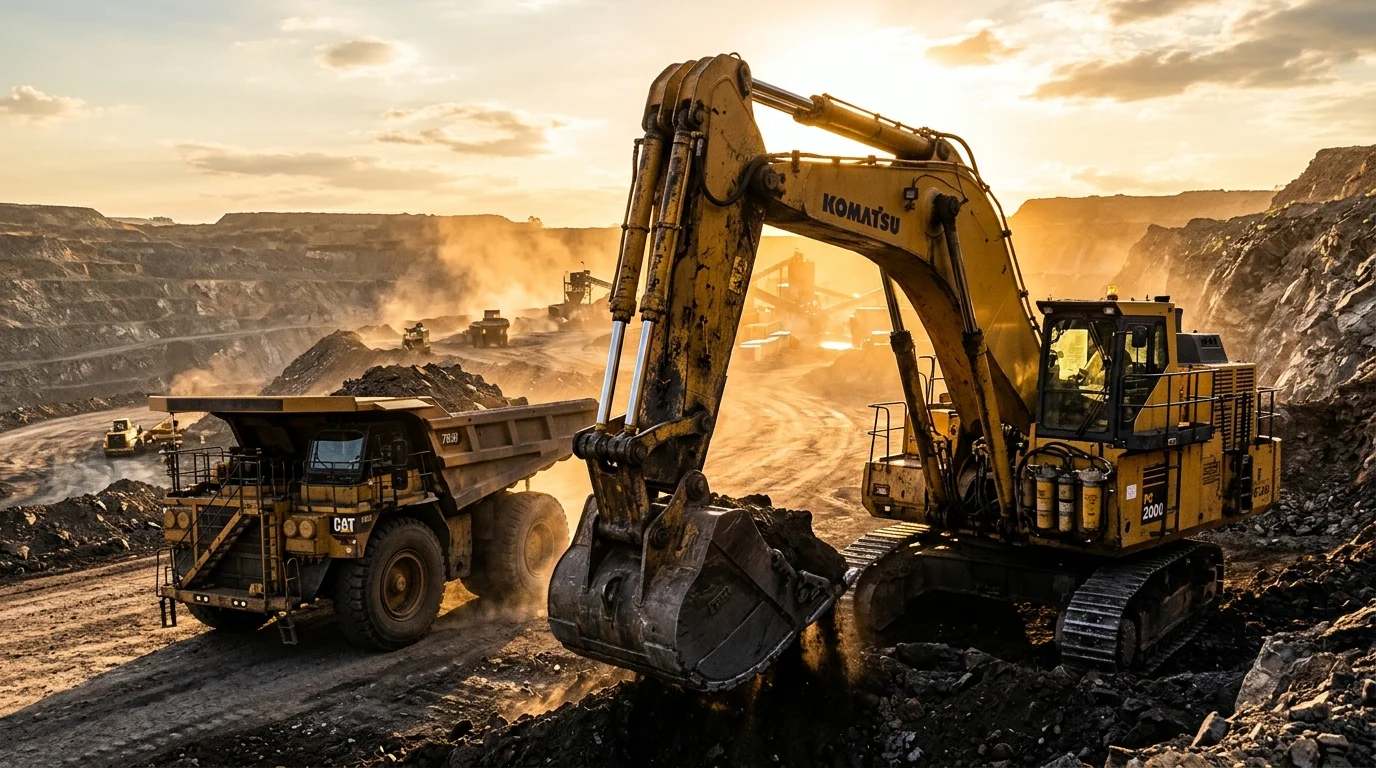
Mining machinery operates in some of the toughest environments on earth - dust, grit, abrasive particles, extreme loads, and 24/7 production cycles. Contamination enters hydraulic systems through air intake, worn seals, and fluid refills. Once inside, even microscopic particles cause excessive wear, blockage, or corrosion in critical components.
According to industry maintenance data published by Luber-Finer, a fleet of 30 haul trucks can require more than $300,000 worth of filtration products per year - and some large mining operations budget upwards of $75 million annually for equipment maintenance. A single failed filter on a million-dollar machine can render it inoperable. That context makes proper filter selection a financial decision, not just a technical one.
- Increased Uptime: Clean filters and fluids reduce unplanned stoppages. Downtime in mining operations costs thousands of dollars per hour - every hour a machine sits idle is revenue lost.
- Extended Equipment Life: Proper filtration minimizes abrasive interaction between components, extending service life and reducing replacement costs across the fleet.
- Improved Safety: Reliable machinery reduces the risk of hydraulic system failures and related accidents, protecting personnel and maximizing output.
- Environmental Compliance: Effective filtration reduces fluid leaks and contamination events, helping operations meet increasingly strict environmental standards.
Pros and Cons of OEM vs. Aftermarket Filters and Fluids
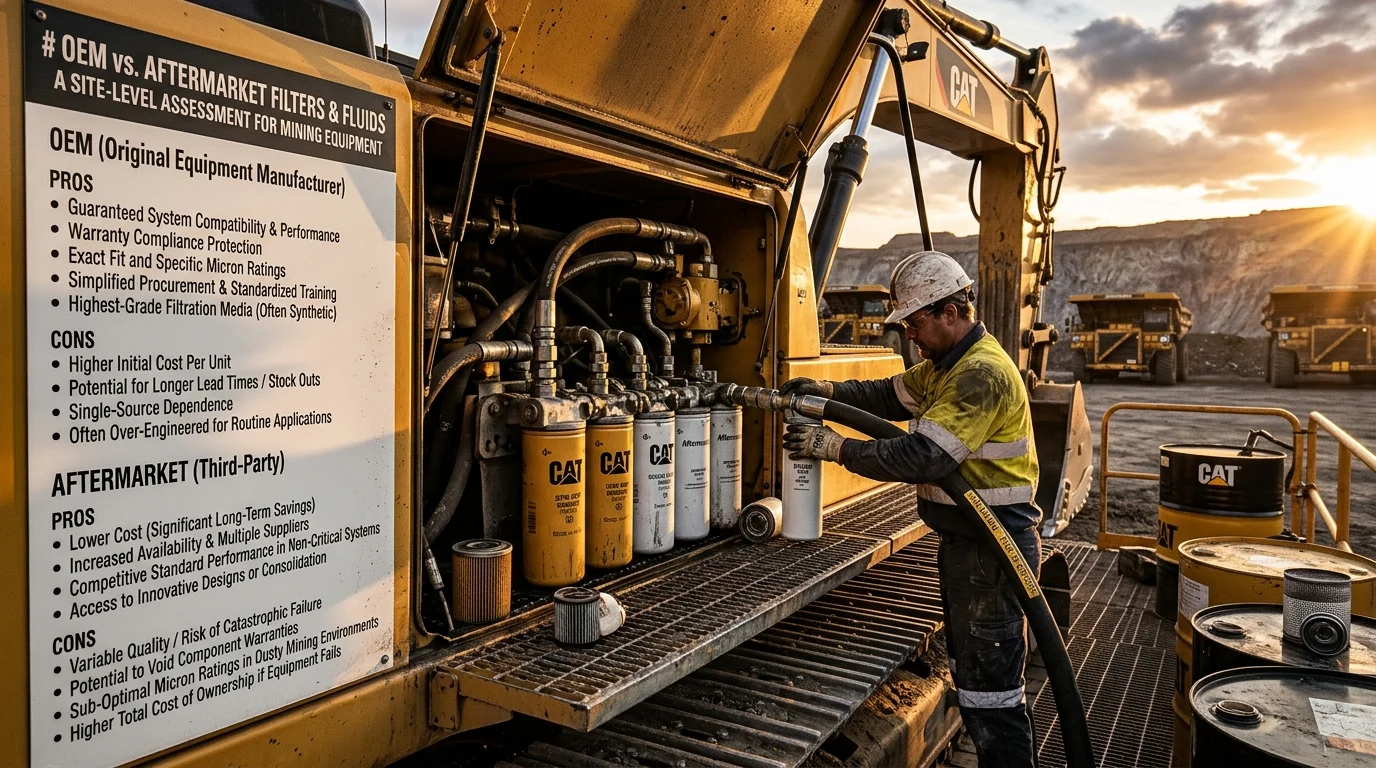
Pros
- OEM filters are engineered to match the exact flow rates, bypass valve settings, and media efficiency ratings of the host machine - no guesswork on compatibility.
- OEM fluids carry manufacturer approval, which protects warranty coverage and ensures the chemistry is correct for the specific alloys and seal materials used in your equipment.
- Quality aftermarket filters from established brands (Donaldson, Luber-Finer) often meet or exceed OEM specifications at a lower unit cost, providing genuine value for high-volume fleets.
- Fluid analysis programs (Cat S·O·S℠, Komatsu KOWA) add intelligence to your maintenance program - you stop changing fluids on a calendar and start changing them based on actual condition data.
- Synthetic fluids provide better thermal stability, longer drain intervals, and superior protection under extreme load compared to conventional mineral oils.
Cons
- OEM parts carry a price premium. In remote or fast-moving operations, the cost difference between OEM and quality aftermarket filters adds up across a large fleet.
- Low-cost aftermarket filters may use inferior filter media, incorrect bypass valve ratings, or inadequate dirt-holding capacity - creating a false economy that leads to premature component failure.
- Fluid analysis programs require discipline. Samples must be taken immediately after shutdown while the system is still at operating temperature, before wear metals and contaminants settle - a step that gets skipped under production pressure.
- Synthetic fluids cost more upfront, which can be a barrier for operations managing tight consumables budgets, even when the total cost of ownership favors synthetics over time.
- Incorrect fluid selection - using the wrong viscosity grade or coolant chemistry - can cause more damage than running slightly past a change interval.
What to Look For When Selecting Filters and Fluids
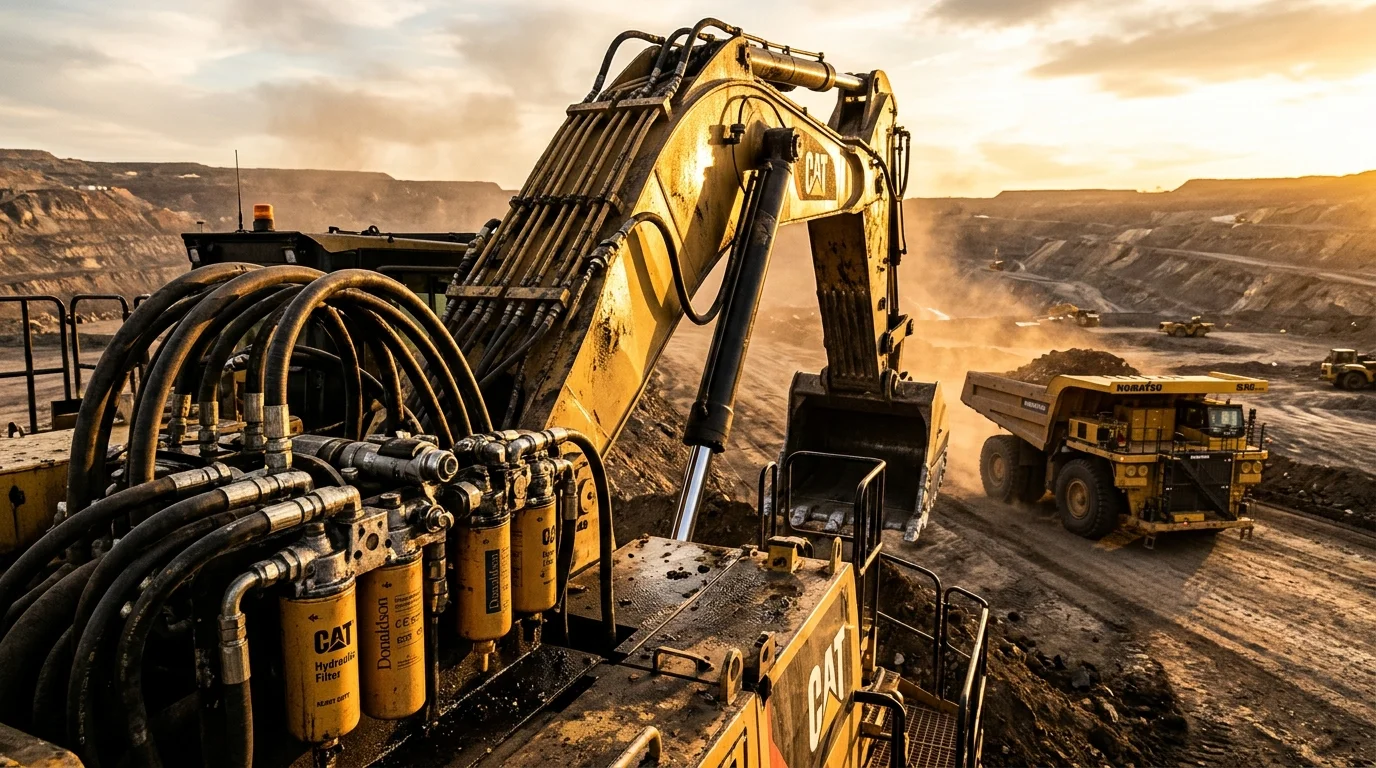
Selecting the right filter or fluid starts with understanding your specific application, operating environment, and OEM requirements. Here are the criteria that matter most to procurement managers and fleet supervisors.
Filter Selection Criteria
- Beta Rating (Filtration Efficiency): The beta ratio measures how effectively a filter removes particles of a given size. A higher beta rating means fewer particles pass through. For hydraulic systems in mining, target filters rated to the ISO cleanliness code your OEM specifies - not just the cheapest option on the shelf.
- Dirt-Holding Capacity: A filter with high dirt-holding capacity lasts longer between service intervals, reducing maintenance frequency on remote or hard-to-access machines.
- Compatibility: Confirm the filter fits your exact machine model and serial number range. A filter that looks identical but has the wrong bypass valve setting can allow contaminated fluid to bypass the media entirely under high-flow conditions.
- Media Type: Synthetic glass fiber media (such as the DuoGlass media used in some aftermarket filters) captures finer particles than cellulose media and maintains efficiency longer in high-contamination environments.
- Certifications: Look for filters tested to ISO 16889 (hydraulic filter testing) or ISO 16890 (air filtration). These standards provide an objective basis for comparing products across brands.
Fluid Selection Criteria
- OEM Approval: Always cross-reference the fluid specification in your machine's Operation and Maintenance Manual. Using a non-approved fluid can void warranty coverage and cause seal incompatibility.
- Viscosity Grade: Match viscosity to your operating temperature range. A fluid that is too thin at operating temperature provides inadequate film strength; too thick and it increases parasitic losses and startup wear.
- Synthetic vs. Conventional: Synthetic fluids offer better thermal stability and longer drain intervals. For equipment running continuous 24/7 shifts in extreme heat or cold, the performance advantage is real and measurable.
- Coolant Chemistry: Verify whether your engine requires OAT (Organic Acid Technology), HOAT, or conventional silicate coolant. Mixing chemistries causes inhibitor dropout and accelerated corrosion.
How to Choose: Matching Products to Your Operation
The right choice depends on your fleet size, operating environment, and procurement model. Here are three common scenarios with concrete guidance.
Scenario 1: Large Open-Pit Mine, 24/7 Operations
For fleets running Cat 793 mining trucks or similar large off-highway equipment around the clock, OEM filters and fluids paired with a formal fluid analysis program deliver the lowest total cost of ownership. The Cat S·O·S℠ service or Komatsu KOWA program gives you data-driven drain intervals rather than fixed schedules, which reduces both fluid consumption and the risk of running degraded oil. Budget for a dedicated filtration consumables contract with your OEM dealer.
Scenario 2: Mid-Size Contractor Fleet, Mixed Equipment
When you're running Caterpillar, Komatsu, and Volvo machines side by side, sourcing OEM filters for every model from every dealer becomes logistically complex and expensive. Quality aftermarket filters from established brands like Donaldson - which engineers filtration solutions specifically for mining air intake, hydraulic, and fuel systems - provide a practical alternative, provided you verify OEM-equivalent specifications before purchasing. Consolidating your filter supply through a single global parts supplier reduces lead times and administrative overhead.
Scenario 3: Remote or Emerging-Market Operations
Supply chain reliability is the dominant concern. Prioritize suppliers who stock inventory regionally and can deliver within days, not weeks. Carrying a buffer stock of critical filters (hydraulic return line, fuel primary and secondary, air primary and safety elements) on-site is standard practice. For fluids, synthetic options reduce change frequency and lower the volume you need to transport to remote locations.
Price Range Guidance
Filter and fluid costs vary significantly by machine size, brand, and specification. The table below gives procurement managers a working reference for budgeting.
Comparison of Top Mining Equipment Filters and Fluids
| Type | Brand | Key Features | Price Range (USD) | Best For |
|---|---|---|---|---|
| Hydraulic Filter | Donaldson | High dirt-holding capacity, robust design, wide OEM cross-reference | $50 – $150 | Mixed fleets, high-contamination environments |
| Fuel Filter | Cat® | Efficient water separation, long service life, OEM-matched bypass rating | $40 – $120 | Cat equipment under warranty or CVA |
| Air Filter (Primary) | Donaldson | High filtration efficiency, safety element included, easy installation | $30 – $100 | Dusty open-pit and underground applications |
| Engine Oil | Komatsu (JOY™) | Extended drain intervals, superior protection, compatible with KOWA analysis | $25 – $80 per unit | Komatsu underground mining equipment |
| Hydraulic Fluid (Synthetic) | Cat HYDO™ Advanced | Extended drain intervals, wide temperature range, seal-compatible | $60 – $180 per unit | 24/7 operations, extreme temperature environments |
| Coolant (Extended Life) | Cat ELC / OEM-equivalent | OAT chemistry, corrosion protection, long service life | $20 – $60 per unit | All engine types requiring OAT coolant |
Price ranges are indicative for standard unit quantities. Bulk procurement and global supply contracts typically reduce per-unit costs. Contact 3GEN Export for volume pricing on OEM-equivalent parts with global delivery.
Step-by-Step Process for Maintaining Filters and Fluids
- Step 1 - Establish Your Baseline: Pull your OEM Operation and Maintenance Manual for each machine model in your fleet. Document the specified filter part numbers, fluid specifications, and service intervals. This is your non-negotiable starting point.
- Step 2 - Inspect on Schedule: Conduct routine inspections based on manufacturer recommendations. For most mining equipment, this means checking filter condition indicators and fluid levels at every 250-hour service and performing a full filter change at 500 hours or as specified.
- Step 3 - Replace Filters Proactively: Don't wait for a filter to fail completely. A clogged filter that opens its bypass valve is no longer filtering - it's just passing contaminated fluid through the system. Replace on schedule, or earlier if operating in extreme dust conditions.
- Step 4 - Sample Fluids Before Changing: Take fluid samples immediately after shutdown while the system is still at operating temperature, before wear metals and contaminants settle. Send samples to an accredited laboratory (ISO-accredited labs are used by programs like Komatsu KOWA). Compare results against OEM guidelines to identify trends.
- Step 5 - Monitor and Act on Analysis Results: Fluid analysis identifies minor problems before they become major failures. If a sample shows elevated iron or silicon, investigate the source - don't just change the fluid and move on.
- Step 6 - Dispose Correctly: Used filters and fluids are classified as hazardous waste in most jurisdictions. Follow local regulations for collection, storage, and disposal. Many suppliers and OEM dealers offer recycling programs - use them.
Care and Maintenance: What to Expect in 2026
Proper care of filters and fluids is the foundation of any serious equipment maintenance program. As of 2026, the industry is moving toward predictive maintenance models supported by IoT-connected sensors that track filter differential pressure and fluid condition in real time.
Modern mining increasingly relies on advanced filter media and smart monitoring solutions. IoT-connected sensors allow remote tracking of filter status and hydraulic fluid condition, supporting proactive maintenance and reducing unplanned downtime.
Here is what best-practice maintenance looks like on a working mine site:
- Regular Inspections: Conduct visual and instrument-based checks on filters and fluids at every scheduled service. Look for discoloration, unusual odor, and filter indicator warnings.
- Timely Replacements: Replace filters and fluids per OEM guidelines. The average service life of most mining equipment filters falls between 500 and 1,000 hours of operation, depending on type and operating conditions.
- Fluid Analysis: Use oil and wear analysis programs to monitor fluid condition and detect contaminants early. Programs like Komatsu KOWA offer next-day turnaround on routine analysis with 24/7 access to results - giving maintenance teams the data they need without waiting for a scheduled shutdown.
- Smart Monitoring: This year, more operations are integrating filter condition monitoring into their telematics platforms. Differential pressure sensors on hydraulic filters provide real-time alerts when a filter approaches its dirt-holding capacity limit, eliminating both premature changes and dangerous bypass events.
- Pro Tip: Always take fluid samples before draining and replacing. A sample taken from drained fluid tells you nothing useful about the machine's wear state - the sample must come from the live system at operating temperature.
Environmental Impact of Filtration in Mining
Effective filtration does more than protect equipment - it reduces the environmental footprint of mining operations. Hydraulic fluid leaks caused by contamination-driven seal failures release petroleum products into the surrounding environment, creating cleanup costs and regulatory exposure. Proper filtration keeps seals healthy and systems intact.
On the process side, mining filtration equipment - including filter presses used in tailings and concentrate dewatering - plays a direct role in water recovery and waste management. According to Caterpillar's mining services documentation, clean fluid systems contribute to a cleaner overall operation that extends component life and reduces the frequency of fluid changes - which in turn reduces the volume of hazardous waste generated per operating hour.
Disposal of used filters and fluids must comply with local hazardous waste regulations. Many OEM dealers and specialist recyclers accept used filters and bulk fluids. Build disposal costs into your maintenance budget from the start - it is not optional, and regulators in most mining jurisdictions are actively enforcing compliance.
Frequently Asked Questions
What are the signs that my filters need replacement?
Common indicators include reduced engine or hydraulic system performance, increased fuel consumption, a filter restriction indicator showing red or triggered, and visible contamination or discoloration when you cut open a used filter element. In fuel systems, filter plugging often shows up first as hard starting or power loss under load.
How often should I change my hydraulic fluids?
Hydraulic fluids should be changed per your OEM's Operation and Maintenance Manual - typically every 1,000 hours for conventional fluids, with extended intervals possible for synthetic fluids when supported by fluid analysis data. Never extend intervals without a current fluid analysis confirming the fluid is still within specification.
Can I use aftermarket filters on OEM-warranted equipment?
Aftermarket filters can be used, but they must meet or exceed OEM specifications for filtration efficiency (beta rating), bypass valve setting, and dirt-holding capacity. Using a non-conforming filter that triggers a warranty claim denial is a real risk - always verify specifications before substituting, and keep documentation of the parts used.
What is the average service life of mining equipment filters?
Most filters used in mining equipment last between 500 and 1,000 hours of operation, depending on filter type, machine application, and the severity of the operating environment. Filters on equipment working in high-dust conditions may require more frequent replacement than the standard OEM interval suggests.
How do I properly dispose of used filters and fluids?
Used filters and fluids are classified as hazardous waste in most jurisdictions. Drain filters before disposal, store used fluids in sealed containers, and arrange collection through a licensed hazardous waste contractor or OEM dealer recycling program. Never dispose of used oil or coolant in drains, soil, or water bodies.
Are synthetic fluids worth the higher upfront cost for mining equipment?
For equipment running continuous shifts in extreme temperatures or under heavy loads, synthetic fluids typically deliver better protection and longer drain intervals than conventional mineral oils. The higher purchase price is often offset by reduced fluid consumption, fewer oil changes, and lower wear-related repair costs over the machine's service life. Confirm OEM approval before switching to synthetic in any system.
Conclusion
Investing in the right filters and fluids - and maintaining them properly - is one of the highest-return decisions a mining operation can make. The cost of a quality filter is a fraction of the cost of a failed pump, a seized injector, or an unplanned shutdown on a 24/7 production site.
We've supplied OEM-quality spare parts to mining and construction fleets across more than 40 countries. Whether you need Cat® fuel filters, Donaldson hydraulic elements, Komatsu-compatible gear lubricants, or Volvo-spec coolants, we stock and ship globally. Shop OEM-quality spare parts with global 5-day delivery at 3genexport.com.