
Mining Equipment Maintenance Best Practices 2026
Mining equipment maintenance best practices that cut downtime, extend asset life, and protect your crew. OEM parts, global delivery. Read the full guide.
Loading article…
Article Not Found
The article you're looking for doesn't exist or may have been removed.
Back to BlogKey Takeaways
- Preventive maintenance is the foundation of any reliable mining operation: schedule it, log it, and enforce it.
- Regular inspections and servicing extend equipment lifespan and reduce the cost of emergency repairs.
- A structured maintenance program directly improves site safety and operational efficiency.
- Predictive maintenance technology, including sensors and data analytics, allows teams to act before failures occur.
- Effective spare parts management is as critical as the maintenance schedule itself: parts unavailability is a leading cause of extended downtime.
- As of 2026, CMMS platforms and IoT condition monitoring are becoming standard tools in professional mining maintenance programs.
Mining equipment maintenance best practices are the systematic methods used to keep heavy mining machinery operating safely, efficiently, and at full capacity. Applied correctly, these practices reduce unplanned downtime, extend asset life, and protect both workers and profitability.
Why Mining Equipment Maintenance Best Practices Matter
Equipment failure in mining is never an isolated event. When a hydraulic shovel stops loading, haul trucks line up idle, the crusher runs empty, and your blast schedule falls apart. According to the Mine Safety and Health Administration (MSHA), equipment breakdowns are a leading cause of downtime in mining operations. The financial and safety consequences compound fast.
Neglected maintenance also puts people at risk. Technicians rushing overnight repairs under pressure skip steps. Crews working around malfunctioning equipment face mechanical failures, fires, and entrapment hazards. Most of these failures are preventable with the right systems in place.
The mining industry is unique in the severity of its operating conditions: abrasive materials, extreme temperatures, corrosive underground environments, and remote locations where parts and technicians are hard to reach. That context makes mining equipment maintenance best practices not just a cost-saving measure, but a safety imperative.
"Good mining equipment maintenance is what separates operations that hit their targets from those constantly playing catch-up." - StartPac Mining Maintenance Blog
Understanding Mining Equipment Maintenance
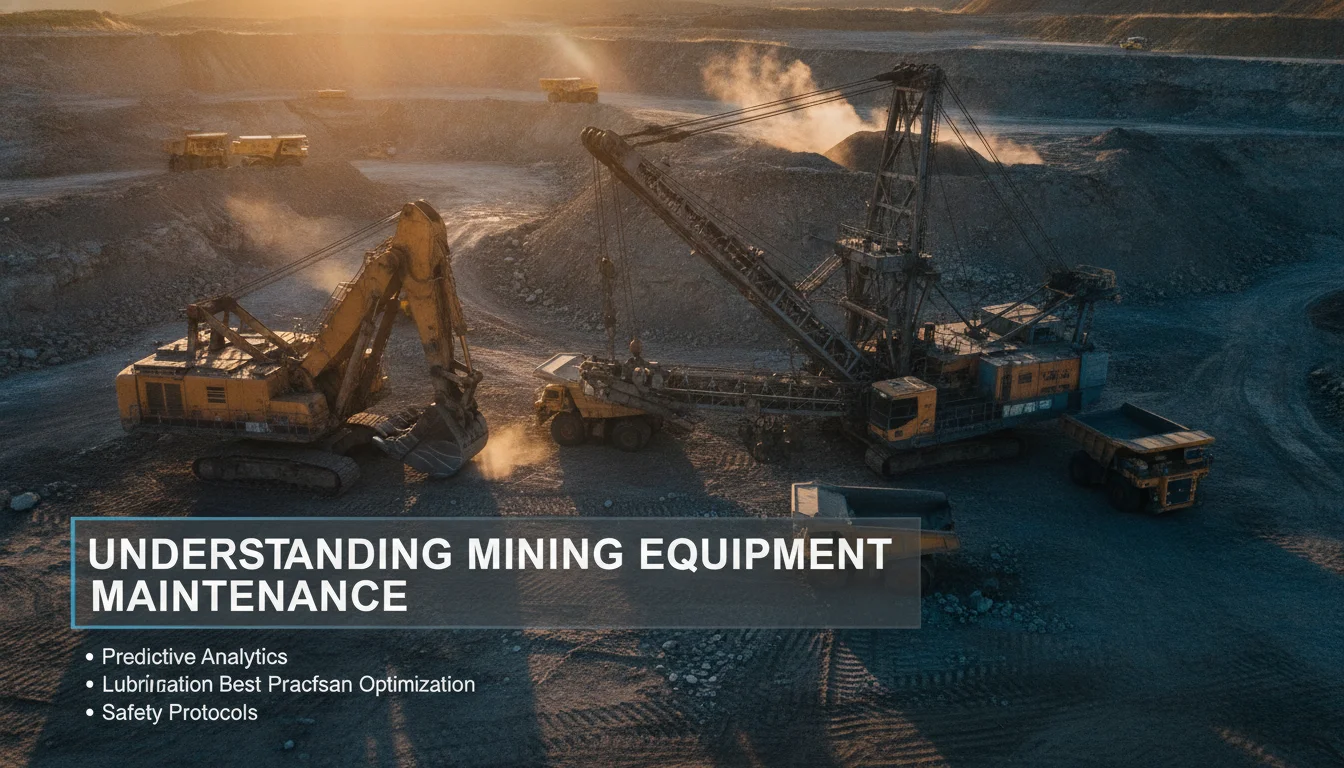
Mining equipment maintenance is the systematic approach to ensuring optimal performance, safety, and longevity of mining machinery. It involves regular inspections, servicing, and repairs to prevent breakdowns and maintain operational efficiency across the full equipment fleet.
Types of Maintenance Strategies
- Preventive Maintenance (PM): Scheduled inspections and servicing to catch potential issues before they lead to failures. Industry benchmarks suggest PM should account for the majority of total maintenance hours, with emergency breakdown work kept below 20% of all maintenance activity.
- Predictive Maintenance (PdM): Uses real-time data and condition monitoring, including sensors and IoT devices, to anticipate equipment failures before they occur. Oil analysis, vibration monitoring, and thermal imaging are common tools.
- Corrective Maintenance: Repairs made after equipment has failed to restore it to operational condition. Necessary but costly when it dominates the maintenance mix.
- Reliability-Centered Maintenance (RCM): A structured approach that prioritizes maintenance tasks based on the criticality of each asset to overall production. Widely used in large mining operations with complex equipment portfolios.
Mining Equipment Maintenance Best Practices: The Core Program
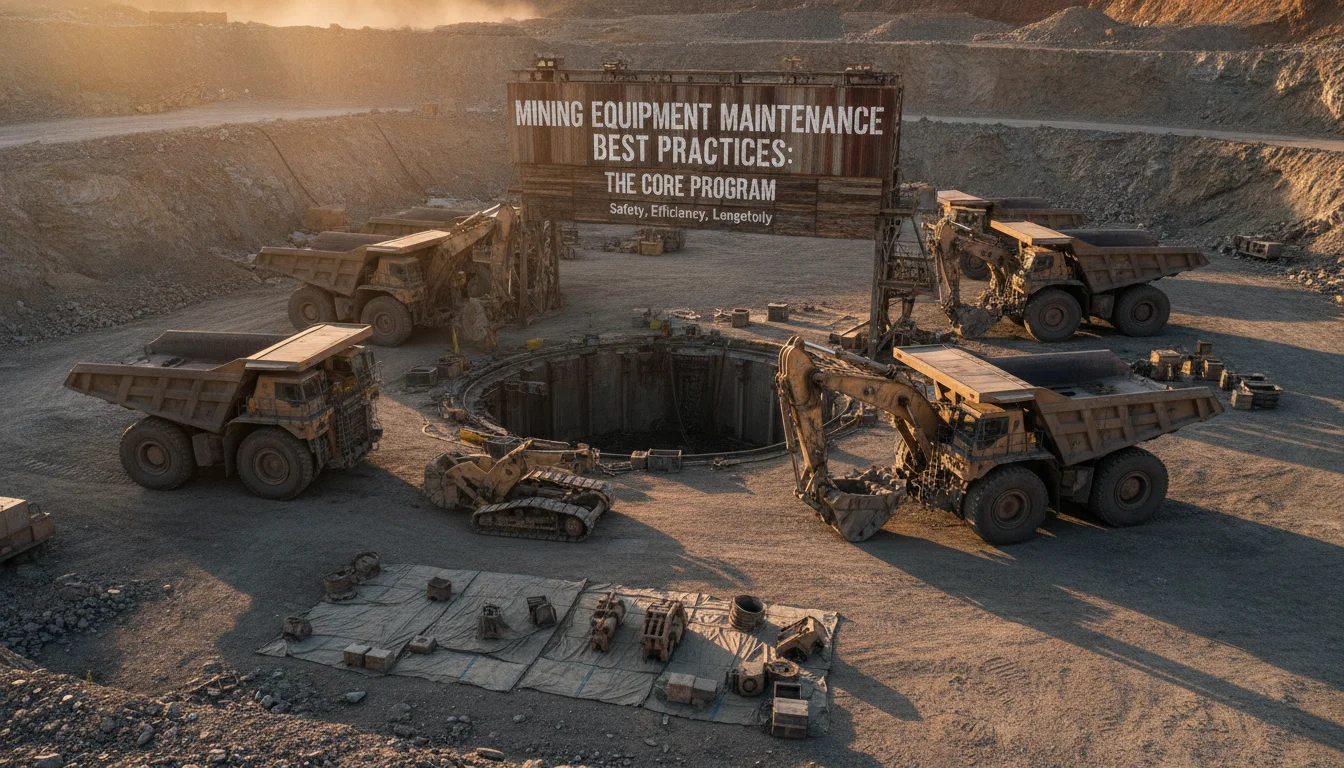
Implementing mining equipment maintenance best practices requires a combination of strategies tailored to the specific equipment types, workloads, and environmental conditions of each operation. Below are the core practices every mining maintenance program should include.
1. Develop a Preventive Maintenance Program
A preventive maintenance program is the first line of defense against unexpected breakdowns. Build it around manufacturer service intervals, then adjust based on actual operating conditions. Key elements include:
- Regular lubrication of all moving parts to reduce friction and wear.
- Scheduled inspections of hydraulic systems, electrical components, and structural integrity.
- Detailed maintenance logs to track performance trends and identify recurring issues.
- Customized PM schedules based on equipment workload: heavy-duty machinery in extreme conditions requires more frequent service than standard intervals suggest.
2. Utilize Predictive Maintenance Technology
Predictive maintenance allows teams to act on data rather than guesswork. As of 2026, sensors, IoT connectivity, and CMMS platforms are accessible to operations of all sizes, not just major multinationals. Practical implementation includes:
- Installing sensors to track temperature, vibration, and pressure on critical components.
- Running oil analysis at regular intervals (industry benchmarks suggest every 250 to 500 hours for mobile equipment) to catch fuel dilution or coolant contamination early.
- Using data analytics to predict when maintenance should be performed, then scheduling it during planned downtime.
- Monitoring vibration on rotating equipment above 100 kW as a standard condition-monitoring practice.
3. Conduct Regular Inspections
Regular inspections are the earliest warning system available to any maintenance team. Daily checks on critical machinery are standard practice across professional mining operations. Key inspection areas include:
- Hydraulic systems: fluid levels, leaks, hose integrity, and operating pressure.
- Electrical systems: battery condition, control panel functionality, and wiring integrity.
- Structural components: cracks, weld integrity, and signs of fatigue in booms, frames, and undercarriages.
- Tires or tracks: wear patterns, inflation levels, and tension settings.
- Safety devices: brakes, steering systems, alarms, and emergency stops.
4. Train Operators and Maintenance Personnel
Operational errors caused by inadequate training are a leading contributor to premature equipment failures. Operators who understand their machines catch early warning signs: unusual sounds, vibration changes, fluid leaks. A well-trained crew is a maintenance asset. Cross-training technicians on multiple equipment types also reduces response time when specialists are unavailable on remote sites.
5. Follow MSHA Safety Standards
Adhering to safety standards is non-negotiable in mining maintenance. Per MSHA regulations, equipment must meet specific standards for performance, guarding, and ongoing inspection. Core compliance requirements include:
- Strict lockout/tagout (LOTO) procedures to prevent accidental machine startups during maintenance.
- Proper fall protection when working at height on large equipment.
- Hazard controls for exposure to mechanical, electrical, hydraulic, and pneumatic energy sources.
- Ventilation system maintenance in underground operations to prevent harmful gas exposure.
Equipment-Specific Maintenance: What to Inspect and When
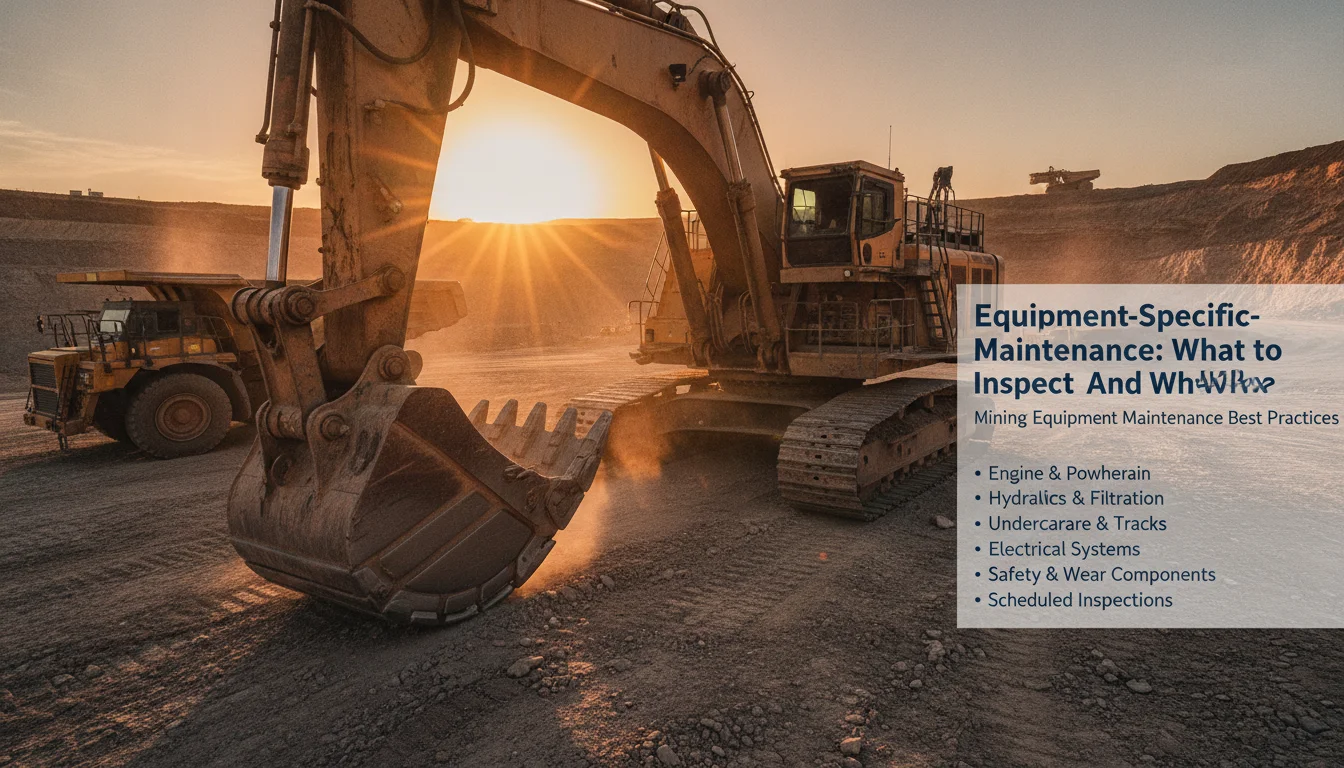
Different equipment types have distinct failure patterns. Knowing what breaks and why is central to any effective mining equipment maintenance program. Below is a breakdown by major equipment category.
Excavators and Shovels
Most excavator problems originate in the hydraulic system. Modern units operate at pressures up to 5,200 PSI with tight tolerances: even small amounts of contamination cause serious internal damage. Keep hydraulic fluid clean to ISO 4406 standards and test it regularly. A whining pump usually signals cavitation, which can destroy a pump in minutes if not addressed. Operating temperatures above 180°F break down seals and thin the oil, leading to internal leaks and power loss.
Undercarriage maintenance is the other major cost center on tracked machines. Check track tension daily: loose tracks can derail entirely, while overtightened tracks accelerate bushing and sprocket wear. Clear packed mud from undercarriage components every day to prevent seized rollers and false tension readings.
Haul Trucks and Dumpers
Tires represent one of the largest recurring costs on large haul trucks. Each tire has a Tonne-Kilometre per Hour (TKPH) rating that must not be exceeded: internal heat builds until the tire separates, creating serious danger for nearby workers. Real-time pressure monitoring helps catch problems early. Watch for temperatures climbing above 185°F and keep pressure differences between dual tires under 5 PSI to prevent uneven loading.
Run oil analysis at regular intervals to catch fuel dilution or coolant leaking into the crankcase. Inspect suspension struts for proper nitrogen charge and oil level at the same time: a collapsed strut transfers shock loads directly to the frame, causing fatigue cracking over time.
Crushers
Crushers take constant punishment from impact and abrasion. Track liner profiles on cone and jaw crushers to predict replacement timing before liners wear thin enough to damage the mainframe. Cone crushers perform best when the cavity stays full (choke feeding), which spreads wear evenly. A half-empty crusher wears unevenly and stresses bearings. Monitor lubrication system oil pressure, flow, and temperature closely: any sudden pressure drop or temperature spike signals bearing trouble and requires immediate shutdown.
Conveyor Systems
Most conveyor failures trace back to belt tracking. A drifting belt that rubs against the structure generates friction, heat, and fire risk while destroying the belt edge. Laser alignment and self-training idlers resolve most tracking issues. Keep scrapers tensioned to clear material from the return side, and inspect splices regularly for separation before they become full belt failures.
Drilling Rigs
Drill bit wear directly affects blasting schedules and downstream production. Inspect bits at every shift change. Check hydraulic fluid levels and hose integrity daily. Engine maintenance, including oil and air filter changes, follows manufacturer intervals adjusted for dust loading in the operating environment.
What to Look For: Selecting the Right Maintenance Approach
Choosing the right maintenance strategy for your operation depends on several practical factors. Not every site needs the same mix of preventive, predictive, and corrective maintenance. Use these criteria to calibrate your program:
- Equipment criticality: Assets on the critical production path, such as the primary crusher or main haul trucks, justify higher investment in predictive monitoring and faster spare parts availability. Non-critical auxiliary equipment can tolerate a more reactive approach.
- Operating environment: Remote sites with long parts lead times require deeper on-site spare parts inventory and more conservative PM intervals. Operations near major supply hubs have more flexibility.
- Equipment age and condition: Older machines with high hours need more frequent inspection intervals than newer assets still within OEM warranty periods.
- Fleet size and complexity: Larger, more diverse fleets benefit most from a CMMS platform to manage scheduling, work orders, and parts inventory across multiple equipment types.
- Manufacturer recommendations: OEM service bulletins and technical manuals set the baseline. Deviating from them without data-driven justification increases risk.
Maintenance Program Tiers: Budget to Premium
Mining operations vary widely in scale and budget. Here is a practical framework for structuring your maintenance investment across three tiers.
| Tier | Approach | Key Tools | Best For |
|---|---|---|---|
| Entry-Level | Paper-based PM schedules, daily operator checklists, reactive repairs as needed | Maintenance logbooks, basic inspection checklists | Small operations, single-site, limited fleet |
| Mid-Range | Digital PM scheduling, oil analysis program, structured spare parts inventory | Basic CMMS software, oil analysis lab, parts tracking spreadsheets | Mid-size operations, 10-50 equipment units |
| Premium | Full predictive maintenance with IoT sensors, AI-driven analytics, integrated CMMS, OEM-aligned parts supply | Condition monitoring sensors, advanced CMMS, real-time dashboards, dedicated reliability engineers | Large operations, multi-site, critical production targets |
The right tier is not always the most expensive one. A mid-size coal operation running a disciplined paper-based PM program with a well-stocked parts inventory will outperform a large operation with sophisticated software but poor execution.
Spare Parts Management
Effective spare parts management is as critical to uptime as the maintenance schedule itself. Parts unavailability routinely extends repair downtime far beyond the actual repair time. A structured approach includes:
- Maintaining an on-site inventory of critical spare parts, particularly for components with long lead times from OEM suppliers.
- Using CMMS or inventory software to track stock levels and automate reorder alerts before shortages occur.
- Partnering with reliable global suppliers who can deliver OEM-quality parts on short notice. As of 2026, fast international logistics make 5-day global delivery a realistic standard for most major part categories.
- Carrying 3 to 6 months of stock for fast-moving wear parts, and longer inventory positions for slow-moving critical components with limited supplier availability.
- Verifying part compatibility with your specific equipment models before ordering: a seal kit for a CAT 320 is not interchangeable with one for a CAT 323, even though the machines look similar.
"By knowing which components need regular replacement, businesses can avoid overstocking or facing critical shortages during breakdowns." - AMAC Company, Preventive Maintenance for Mining Equipment
Common Causes of Equipment Failure
Understanding why equipment fails is the first step toward preventing it. The most common causes across mining equipment types include:
- Wear and Tear: Continuous exposure to abrasive materials, dust, extreme temperatures, and corrosive conditions accelerates degradation faster than standard industrial equipment.
- Improper Maintenance: Skipping scheduled service, using non-OEM parts without verifying compatibility, or extending oil change intervals beyond safe limits all contribute to premature failures.
- Operational Errors: Operators pushing equipment beyond its rated capacity or ignoring early warning signs, such as unusual sounds or fluid leaks, cause avoidable damage.
- Corrosion and Rust: Moisture-rich underground environments accelerate metal corrosion without proper protective coatings and regular inspection.
- Mechanical Fatigue: Repeated stress cycles weaken structural components and mechanical parts over time, leading to cracks or sudden failures in frames, booms, and undercarriages.
Safety Standards in Mining Equipment Maintenance
Adhering to safety standards is paramount in mining operations. Maintenance tasks may appear routine, but they carry serious risk when performed without proper precautions. Per MSHA regulations, compliance requirements include:
- Following MSHA regulations for equipment maintenance, inspection intervals, and return-to-service criteria.
- Implementing lockout/tagout procedures to prevent accidental machine startups during maintenance work.
- Training maintenance personnel on safety protocols, hazard recognition, and proper use of personal protective equipment.
- Maintaining ventilation systems in underground operations to prevent harmful gas exposure.
- Inspecting brakes, steering systems, and safety alarms during every routine service to ensure operators retain full control of their equipment.
Mining Equipment Maintenance Checklist: Daily, Weekly, and Monthly
A structured checklist ensures nothing critical is missed across inspection cycles. Use this framework as a starting point and adjust intervals based on OEM recommendations and site conditions.
| Frequency | Inspection Task | Equipment Types |
|---|---|---|
| Daily | Visual inspection for leaks, cracks, and visible damage | All equipment |
| Daily | Check fluid levels: engine oil, hydraulic fluid, coolant | Excavators, haul trucks, drills |
| Daily | Inspect tires or tracks for wear and proper inflation/tension | Haul trucks, excavators |
| Daily | Verify all safety features are operational | All equipment |
| Weekly | Lubrication of all grease points | All equipment |
| Weekly | Belt alignment and tension check | Conveyor systems |
| Weekly | Brake and steering system inspection | Haul trucks, loaders |
| Monthly | Oil analysis sample collection | Mobile equipment |
| Monthly | Structural inspection: welds, frames, booms | Excavators, shovels, drills |
| Monthly | Electrical system and control panel testing | All equipment |
Pros and Cons of a Structured Mining Maintenance Program
Pros
- Reduced unplanned downtime: Scheduled maintenance catches problems before they cause production stoppages.
- Extended equipment lifespan: Consistent servicing slows wear and delays the need for costly replacements.
- Improved site safety: Well-maintained equipment is less likely to malfunction in ways that injure workers.
- Lower total maintenance cost: Proactive repairs are consistently less expensive than emergency fixes, which carry emergency service fees and collateral damage costs.
- Better spare parts planning: A structured program reveals which parts you actually consume, enabling smarter inventory management.
- Regulatory compliance: A documented maintenance program provides evidence of MSHA compliance during inspections.
Cons
- Upfront investment: Building a proper PM program requires time, trained personnel, software, and initial parts inventory investment.
- Planned downtime: Scheduled maintenance takes equipment offline, which requires careful production planning to avoid output gaps.
- Data dependency: Predictive maintenance programs require reliable sensor data and analytical capability: poor data quality leads to false alerts or missed failures.
- Training burden: Keeping maintenance personnel current on new equipment models and technologies requires ongoing training investment.
Key Performance Indicators for Mining Maintenance Programs
Tracking the right metrics tells you whether your mining equipment maintenance best practices are actually working. Industry benchmarks from mine maintenance professionals include:
- Mechanical Availability: Target 85 to 90% for mobile equipment; 90 to 95% for fixed plant equipment.
- Emergency Work Ratio: Breakdown work should represent less than 20% of total maintenance hours.
- Planned Maintenance Ratio: Aim for at least 80% of all maintenance work to be planned and scheduled in advance.
- Mean Time Between Failures (MTBF): Target above 200 hours for mobile equipment.
- Mean Time To Repair (MTTR): Target below 4 hours for routine repairs.
- Parts Availability: Target 95 to 98% parts availability for planned maintenance work.
- Overall Equipment Effectiveness (OEE): Target above 75% across the fleet.
2026 Outlook: Where Mining Maintenance Is Heading
This year, the gap between operations using digital maintenance tools and those relying on manual systems is widening. CMMS adoption is accelerating across mid-size mining companies that previously managed maintenance on spreadsheets. IoT sensor costs have dropped enough that condition monitoring is no longer limited to tier-one operators.
Artificial intelligence and machine learning are being applied to historical maintenance data to improve failure prediction accuracy. These systems analyze patterns across thousands of operating hours to flag components approaching failure before any human technician would notice the signs. The practical result is fewer surprise failures and more efficient use of maintenance labor.
Remote diagnostics are also changing how OEM support works. Caterpillar, Komatsu, and Volvo all offer remote monitoring services for their newer equipment, allowing manufacturer engineers to review machine health data and recommend service actions without a site visit. For operations in remote regions, this capability significantly reduces response time to emerging issues.
Spare parts supply chains are also evolving. As of 2026, global logistics networks support fast international delivery of OEM-quality parts to most major mining regions, reducing the inventory buffer operations need to carry on-site.
Frequently Asked Questions
What is the 10 rule in maintenance?
The 10 rule in maintenance suggests that for every one hour of preventive maintenance performed, approximately ten hours of unplanned operational downtime can be avoided. It underscores the return on investment from proactive maintenance programs versus reactive repair strategies.
What are the best practices for maintaining mining equipment?
Mining equipment maintenance best practices include developing a structured preventive maintenance program, conducting daily and scheduled inspections, using predictive monitoring technology, maintaining a well-stocked spare parts inventory, training operators and technicians, and adhering to MSHA safety standards. The most effective programs combine all of these elements rather than relying on any single approach.
How often should mining equipment be inspected?
Critical mining equipment should receive visual inspections and fluid-level checks daily. More detailed structural and system inspections follow weekly and monthly schedules depending on the equipment type and operating conditions. OEM service manuals set the baseline intervals, which should be adjusted based on actual workload and environmental severity.
What are the 7 elements of maintenance?
The seven elements commonly referenced in industrial maintenance programs are: inspection, servicing, calibration, testing, alignment, adjustment, and installation of replacement parts. In mining, all seven apply across equipment types, with inspection and servicing forming the daily foundation of any effective program.
What are the four P's of maintenance?
The four P's of maintenance are People, Parts, Processes, and Performance. Effective mining maintenance requires trained personnel, reliable parts availability, documented procedures, and measurable KPIs to track whether the program is actually delivering results.
What should be included in a mining equipment maintenance checklist?
A complete maintenance checklist covers hydraulic system fluid levels and leak checks, electrical system and battery condition, structural integrity of frames and booms, tire or track wear and tension, lubrication of all grease points, brake and steering functionality, and safety device verification. Daily, weekly, and monthly versions of the checklist ensure inspection frequency matches the criticality of each component.
Ready to reduce downtime and protect your fleet? Shop OEM-quality spare parts for Caterpillar, Komatsu, Volvo, Atlas Copco, and 40+ brands with global 5-day delivery at 3genexport.com.