
Mining Equipment Parts Machining Guide 2026
Mining equipment parts machining delivers OEM-precision components for drills, crushers & conveyors. Fast global delivery. Shop 3genexport.com today.
Loading article…
Article Not Found
The article you're looking for doesn't exist or may have been removed.
Back to BlogKey Takeaways
- Mining equipment parts machining uses CNC technology to produce components with tolerances as tight as ±0.0002 inches.
- Unplanned downtime in mining can cost millions of dollars per hour, making rapid parts supply a direct revenue issue.
- Materials range from tool steel and alloy steel to stainless and titanium, each selected for specific wear and load conditions.
- Custom machining enables reverse engineering of legacy components and adaptation to evolving site conditions.
- Certified suppliers adhere to ISO 9001:2015 and ASTM standards, ensuring quality on safety-critical parts.
- As of 2026, hybrid machining combining additive and subtractive processes is reshaping how complex mining parts are produced.
Mining equipment parts machining is the use of CNC and multi-axis machine tools to fabricate precision components for drills, crushers, excavators, and conveyors operating in harsh mining environments.
Understanding Mining Equipment Parts Machining
What Is Mining Equipment Parts Machining?
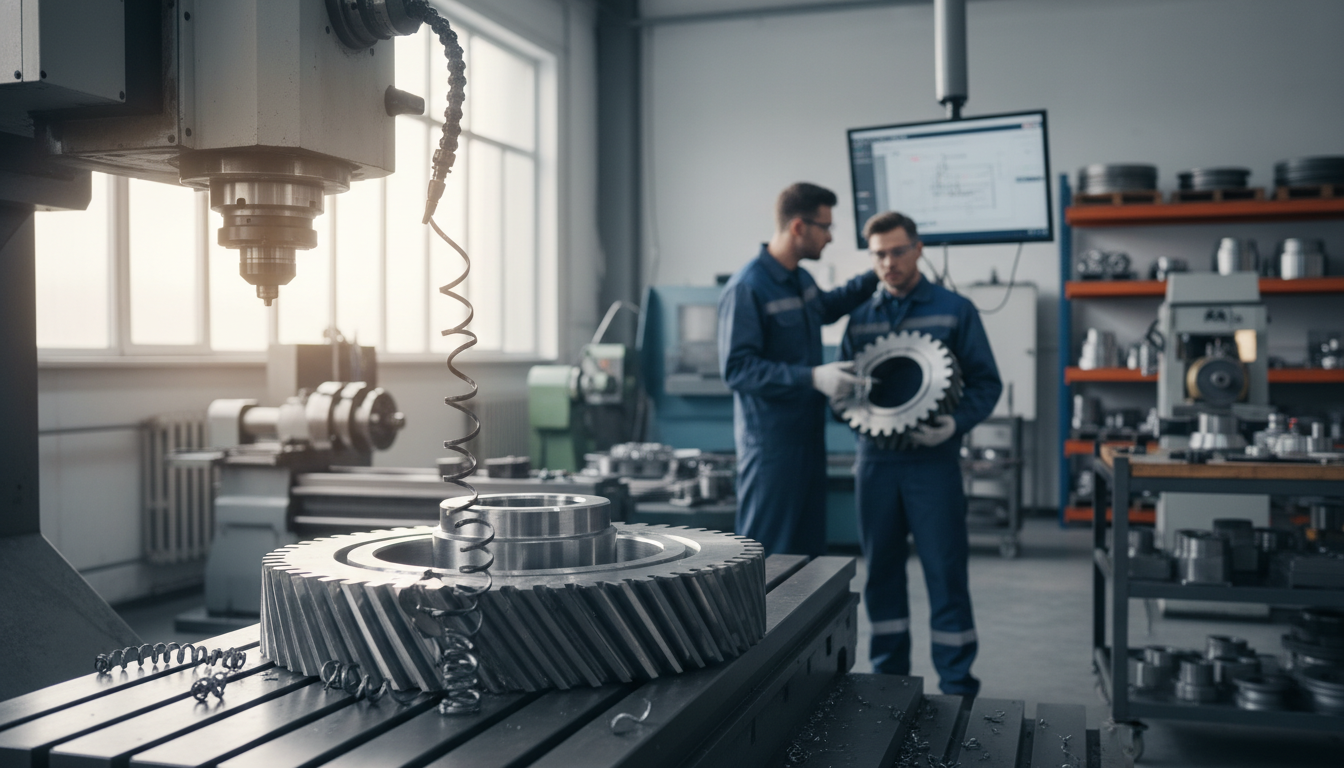
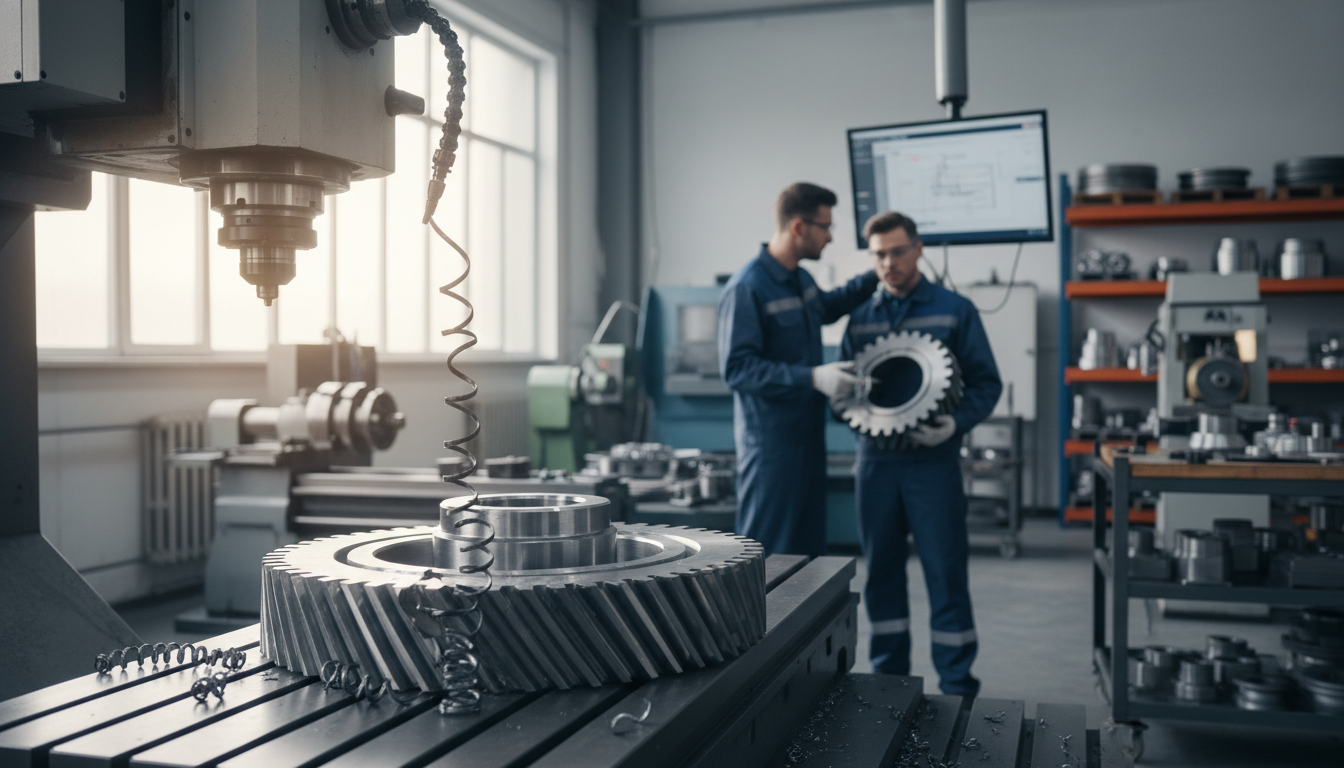
parts machining is the controlled removal of material from metal stock to produce components that meet exact dimensional and surface-finish specifications. CNC machines execute pre-programmed toolpaths on raw bar, plate, or forged blanks, transforming them into finished parts for drills, crushers, excavators, and conveyor systems. Unlike manual machining, CNC processes deliver high repeatability across large production runs, which is essential when replacement parts must interchange precisely with existing assemblies.
The Evolution of CNC Machining in Mining
The shift from manual lathes and mills to multi-axis CNC centers has accelerated steadily over the past two decades. Early machine shops struggled to meet the tight tolerances and fast turnaround that modern mining operations demand. Today, leading providers use 5-axis machining centers that mill, drill, and turn in a single setup, cutting lead times significantly compared to traditional multi-step methods. The result is faster part delivery and fewer handling errors, both of which matter when a crusher is sitting idle.
Pros and Cons of CNC-Based Mining Equipment Parts Machining
Pros
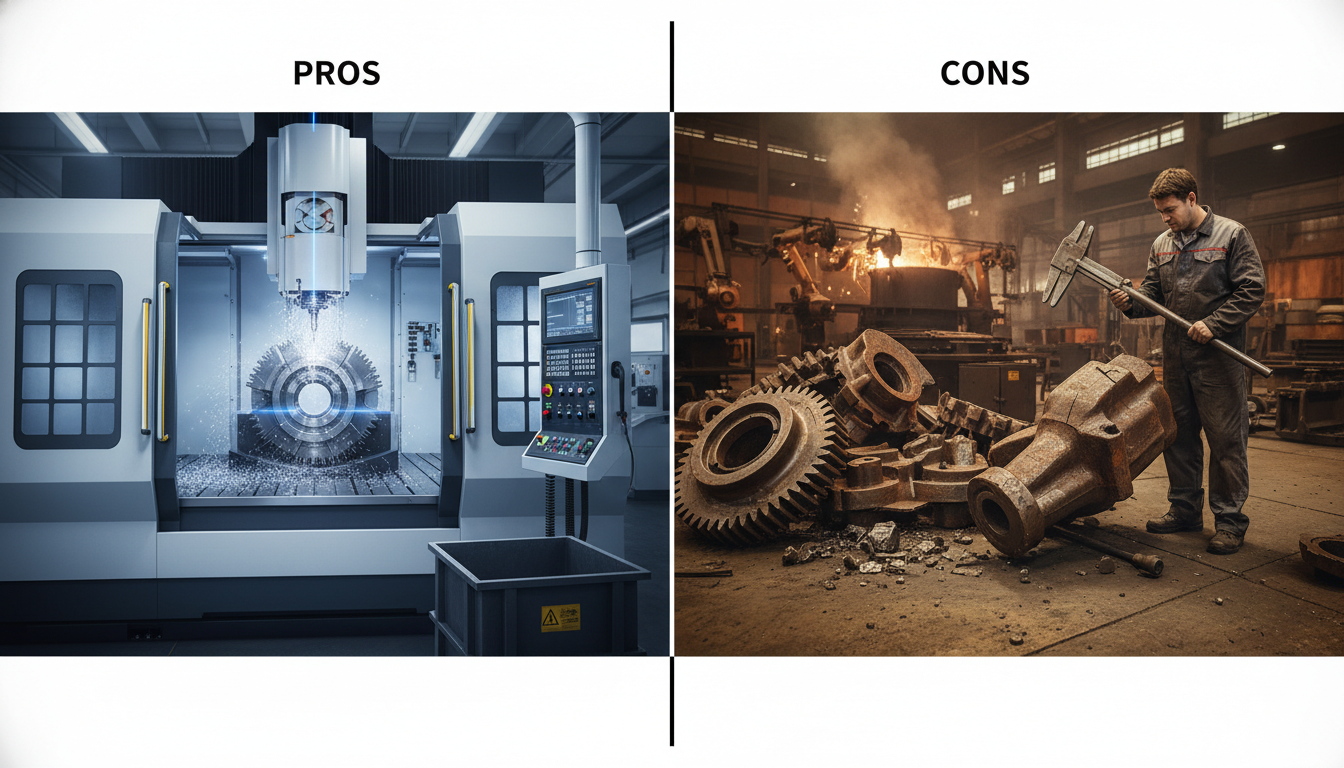
- Tight tolerances: CNC machining holds dimensions to ±0.0002 inches, critical for hydraulic valves and bearing housings.
- Fast turnaround: Many shops offer 24-48 hour express services for emergency replacement parts, minimizing costly downtime.
- Material flexibility: The process accommodates tool steel, alloy steel, stainless steel, titanium, and wear-resistant composites in the same facility.
- Reverse engineering capability: 3D laser scanning of worn parts feeds directly into CAD models, enabling reproduction of legacy components with no original drawings.
- Scalability: CNC turning centers can produce hundreds of identical parts per shift, supporting both emergency single-piece orders and high-volume production runs.
Cons
- Higher unit cost at very large volumes: For extremely high quantities of simple shapes, casting or forging may offer a lower cost per unit.
- Size limitations: Standard CNC machining centers have envelope constraints. Very large structural parts, such as open-die forgings up to 4,000 lbs and 120 inches in length, require specialized large-part machining equipment.
- Material waste: Subtractive machining generates metal chips. While chips are recyclable, material utilization is lower than near-net-shape processes like forging.
- Setup time for one-off parts: Programming and fixturing a complex one-off component carries setup costs that spread more efficiently across larger runs.
Key Advantages of Precision Machined Mining Parts
Enhanced Durability and Performance
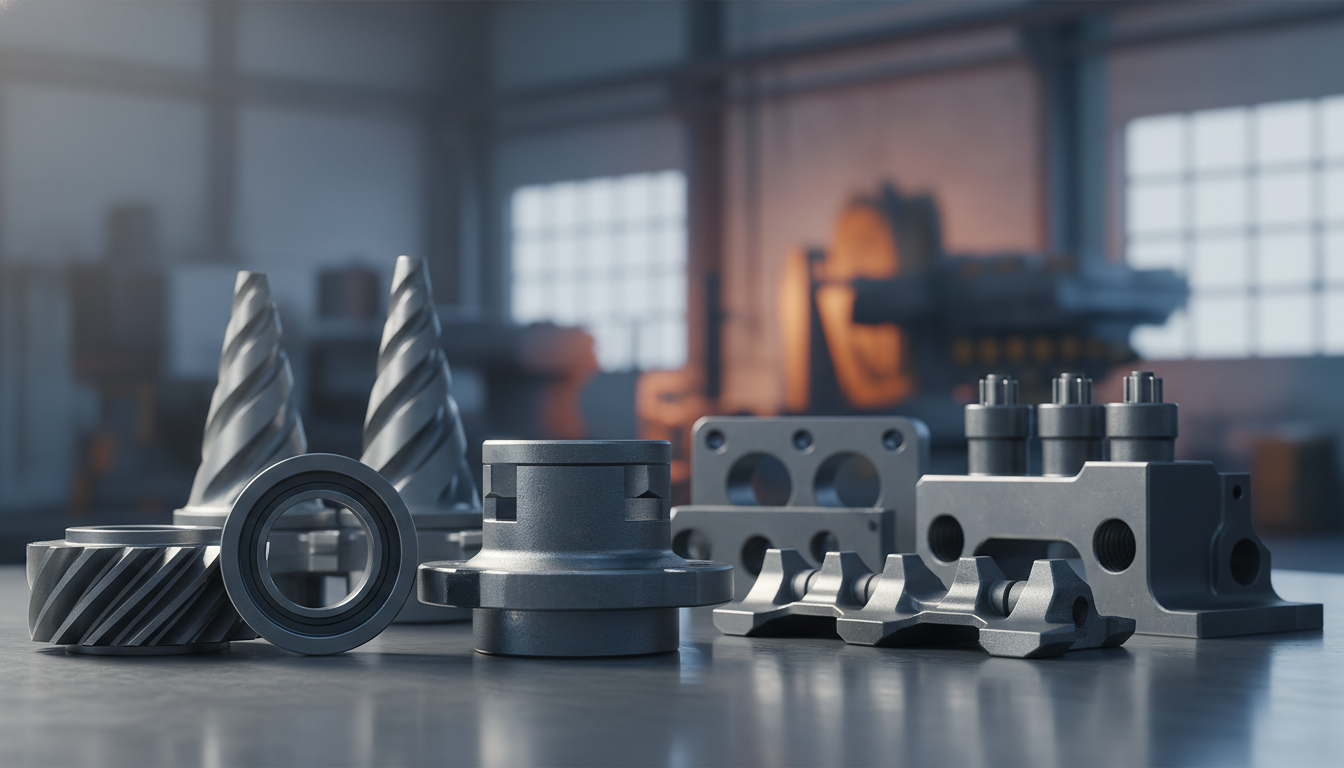
Components produced through precision machining exhibit superior structural integrity compared to many cast alternatives. The CNC process removes material in a controlled manner without introducing the thermal stresses common in casting. This produces parts that withstand extreme impact, vibration, and abrasive wear typical in hard-rock mining. Shovel teeth and adapters machined from high-strength tool steel, for example, endure thousands of operating hours without fracturing, because precise machining eliminates surface defects that initiate cracks.
Precision and Repeatability That Protects Your Equipment
Tolerances as tight as ±0.0002 inches are achievable with modern CNC equipment, according to manufacturer specifications from leading machining centers. This level of accuracy is non-negotiable for hydraulic valves, bearing housings, and gear blanks, where even a minor deviation causes fluid leaks or accelerated wear. Multi-axis machines produce complex fluid passages and internal features with exacting accuracy, protecting the reliability of critical systems across an entire fleet.
Cost-Effectiveness Through Reduced Downtime
Downtime in mining is extraordinarily expensive. Per Australian Bureau of Statistics data, the mining industry contributed A$26.7 billion to Australia’s GDP in a single quarter, which illustrates the scale of revenue at risk when equipment stops. Every hour a crusher or drill rig sits idle translates directly into lost production. Rapid manufacturing of replacement parts, with many CNC shops offering express turnaround of 24-48 hours for emergency orders, helps mines restore operations before losses compound.
“In high-production mining, the cost of a single unplanned shutdown often exceeds the annual maintenance budget for that machine. Precision-machined replacement parts, delivered fast, are not a cost center. They are a revenue protection tool.” – 3GEN Export Technical Team
Common Mining Parts and Their Manufacturing Methods
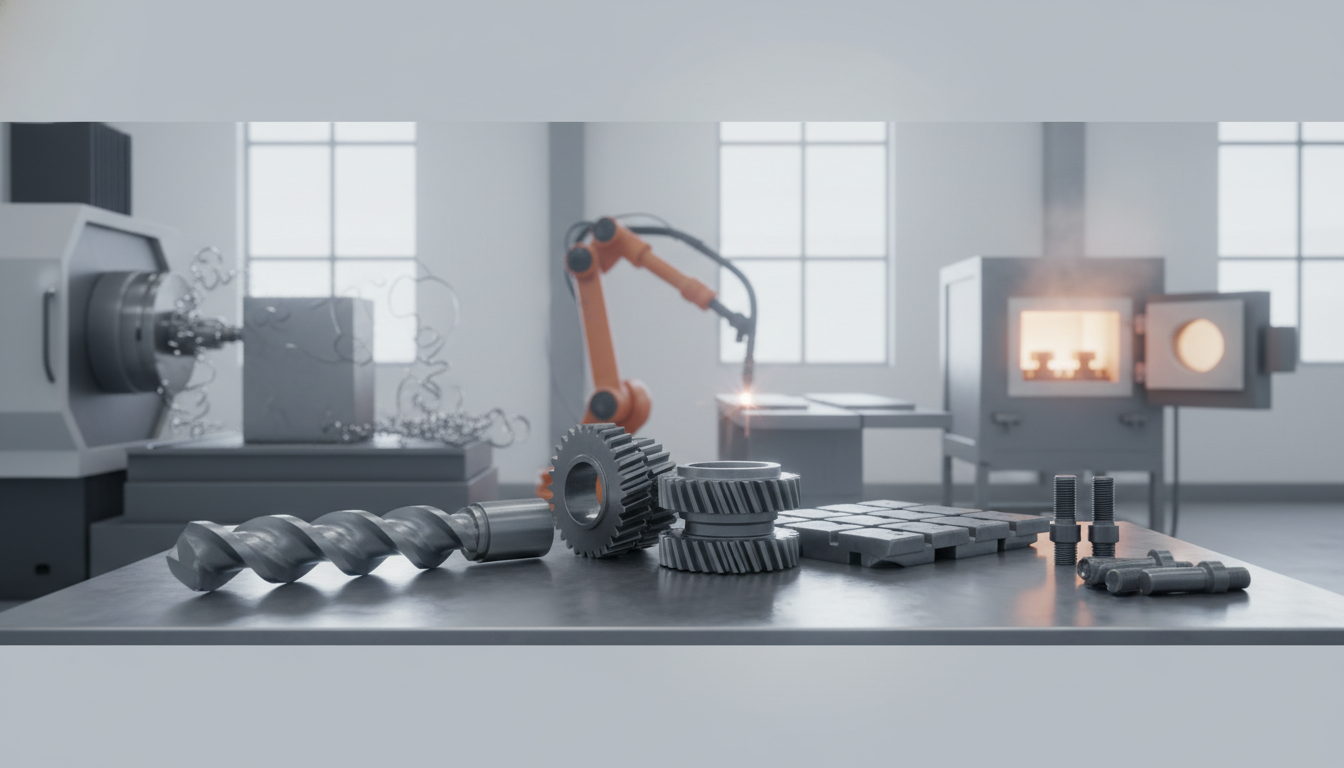
Drill Bits and Borehole Tools
Drill bits, drill stems, and reaming tools are among the most frequently ordered mining components. These parts demand extreme hardness and impact resistance. CNC turning and milling centers shape hardened steel and tungsten carbide inserts to create cutting edges that penetrate rock formations efficiently. Precise seat pockets for carbide inserts are a signature application of mining equipment parts machining, because even a few thousandths of an inch of misalignment accelerates insert breakage. For larger drill assemblies, open-die forging complements machining by adding grain-flow toughness before the final CNC finishing pass.
Excavator and Shovel Components
Excavator buckets, teeth, and adapters must withstand abrasive soil and rock impact on every cycle. Multi-axis machining produces complex curvatures that self-sharpen as they wear, extending service life and reducing replacement frequency. Mounting interfaces are held to close tolerances so field crews can swap components quickly without shimming or rework.
Conveyor and Material Handling Parts
Pulleys, rollers, shafts, and wear plates for conveyors are typically machined from carbon steel or stainless steel. CNC turning centers produce these parts in high volumes, up to hundreds of units per shift, ensuring a steady supply for continuous operations. Consistent concentricity in machined rollers reduces belt tracking problems and bearing wear, cutting maintenance intervals on conveyor systems that run around the clock.
Screw Machine Parts for Safety and Monitoring Equipment
Smaller precision components also matter underground. Gas monitors, pressure sensors, and safety interlocks rely on tight-tolerance screw machine parts, often machined from stainless steel to resist the corrosive atmospheres found in underground mines. Suppliers such as QMP Machine hold tolerances to 0.0002 inches on stainless steel parts up to 6 inches in diameter, demonstrating that mining equipment parts machining extends well beyond large structural components.
Material Selection for Mining Components
High-Strength Steels and Alloys
The material choice drives performance more than almost any other variable. Tool steels like D2 and A2 are standard for wear components, while alloy steels such as 4140 and 4340 provide a balance of toughness and machinability suited to shafts and structural parts. For corrosive environments, 13-8 stainless steel is favored for its combination of high strength and corrosion resistance. Precision machining of 13-8 stainless for mining gas monitors and safety equipment requires rigid setups and sharp tooling to maintain the 0.0002-inch tolerances these components demand.
Wear-Resistant Materials and Coatings
Advanced coatings applied after machining extend service life significantly. Tungsten carbide and chromium carbide coatings push surface hardness well above 70 HRC, improving abrasion resistance on cutting edges and wear surfaces. Diamond-like carbon (DLC) coatings are gaining adoption for components exposed to high sliding wear. These treatments, applied after the machining process is complete, can double or triple the service life of a part compared to an uncoated equivalent.
The Role of Material Certification
Reputable suppliers maintain full material traceability and certification to standards such as ASTM International A487 (steel castings) or ASTM A681 (alloy tool steels). Certification confirms that chemical composition and mechanical properties meet required specifications. For safety-critical mining components, this documentation is not optional. It is the paper trail that protects both the mine operator and the supplier if a component failure is ever investigated.
“Material certification to ASTM and ISO standards is the baseline for any part going into a safety-critical mining application. Without full traceability, you cannot confirm the part will perform as designed under load.” – Industry maintenance data, per OEM service bulletin guidance
The Mining Equipment Parts Machining Process: Step by Step
Step 1: Design and CAD Modeling
Every job starts with a digital blueprint. Engineers model the part in CAD software with exact dimensions and tolerances. For reverse engineering of legacy parts where no drawings exist, 3D laser scanning captures the geometry of a worn or broken component. That scan data is refined into a machinable model, allowing reproduction of parts that OEMs no longer stock.
Step 2: Material Selection and Verification
Based on operating conditions, including load, abrasion, temperature, and corrosion exposure, the appropriate metal is selected. The raw stock is verified against its mill certification to confirm it meets ASTM or ISO requirements before a single cut is made. This step prevents costly scrap and ensures the finished part performs as designed.
Step 3: CNC Machining Operations
Programmed toolpaths run on multi-axis CNC milling machines, turning centers, or Swiss-style lathes depending on part geometry. For complex components, 5-axis simultaneous machining produces intricate features in a single setup. Fewer setups mean less handling, better accuracy, and shorter lead times. This is where the precision of mining equipment parts machining is established.
Step 4: Quality Control and Inspection
After machining, every part undergoes dimensional inspection using CMM (coordinate measuring machines) or laser scanners. In-process probing monitors tool wear and adjusts offsets automatically, ensuring the first part and the last part in a run are dimensionally identical. Inspection reports accompany shipments so procurement teams have documented proof of conformance.
Step 5: Surface Treatment and Finishing
The final step applies surface treatments such as heat treating, case hardening, or wear-resistant coatings. These post-processing steps build on the precision already achieved through machining, producing a finished component ready for immediate installation in the field.
Comparing Manufacturing Methods for Mining Parts
CNC Machining: Precision and Flexibility
CNC machining excels at low-to-medium volume parts with tight tolerances and complex geometries. It offers fast turnaround and broad material compatibility, making it the default choice for replacement parts and custom components.
Open-Die Forging: Strength and Toughness
Forging aligns the grain structure of the metal, producing superior impact resistance and fatigue strength. Open-die forgings can reach 4,000 lbs and 120 inches in length for large structural mining parts. The limitation is that as-forged tolerances, typically around ±0.020 inches, require secondary CNC machining to achieve final dimensional accuracy.
Casting: Complex Geometries at Scale
Casting produces intricate shapes in high volumes at a lower cost per unit. Cast parts often contain internal porosity, however, which reduces strength compared to forged or machined alternatives. For critical mining components, castings are routinely finish-machined to achieve the dimensional accuracy and surface quality required for reliable service.
| Method | Strength | Precision (Tolerance) | Lead Time | Relative Cost | Best For |
|---|---|---|---|---|---|
| CNC Machining | High | ±0.0002 in | Days | Medium | Complex, precise parts; prototypes; medium volumes |
| Open-Die Forging | Very High | ±0.020 in (as forged) | Weeks | Medium–High | Large, high-stress shafts and structural parts |
| Casting | Moderate | ±0.030 in | Weeks | Low–Medium | High volumes; complex shapes |
How to Choose a Reliable Mining Equipment Parts Supplier
Capabilities and Equipment
Look for a supplier with a diverse fleet of CNC machines capable of handling the size and complexity of your parts. Ask specifically whether they run multi-axis mills and live-tooling lathes, and whether they can handle both small screw machine parts and large shaft machining in the same facility. Secondary services such as heat treating, coating, and assembly under one roof reduce lead time and coordination risk.
Quality Certifications and Track Record
ISO 9001:2015 certification is the baseline indicator of a functioning quality management system. For mining applications, additional certifications such as ISO 3834 (welding quality) or specific OEM approvals add confidence. Suppliers with decades of documented experience producing precision parts for mining drive systems, crushers, and safety equipment carry a track record that newer shops cannot replicate. Ask for inspection reports and material certifications on sample orders before committing to a long-term supply relationship.
Turnaround Time and Customer Support
Choose a partner that offers expedited services with clear communication on lead times. For emergency breakdowns, the difference between a 48-hour and a 2-week delivery can represent hundreds of thousands of dollars in lost production. Confirm that your supplier can provide real-time order status and has a direct technical contact, not just a generic inbox, for urgent situations.
Pricing Models and the Quote Process
Transparent pricing matters in B2B procurement. Most reputable machining suppliers offer a request-for-quote (RFQ) process where you submit a drawing or sample part, specify material and quantity, and receive a detailed quote within 1-3 business days. For repeat orders, blanket purchase orders and consignment stock arrangements can reduce per-unit costs and guarantee availability. At 3GEN Export, we provide itemized quotes with material certification costs included, so there are no surprises at delivery.
Future Trends in Mining Equipment Parts Machining
Additive Manufacturing and Hybrid Machining
The integration of additive manufacturing with CNC machining is one of the most significant shifts in precision parts production as of 2026. Hybrid machines deposit metal powder to build a near-net shape, then machine the final surfaces to tolerance in a single setup. This reduces material waste and enables topology-optimized geometries that were previously impossible to produce through subtractive methods alone. For mining, this means lighter components with the same load capacity, reducing wear on the machines that carry them.
Smart Machining and IoT Integration
Industry 4.0 is reaching the machine shop floor. CNC machines equipped with sensors and cloud connectivity enable predictive maintenance of the machine tools themselves, catching spindle wear or thermal drift before it affects part quality. Real-time data analytics optimize cutting parameters for longer tool life and consistent output, which directly benefits mining customers who need identical parts across multiple production runs.
Sustainable Machining Practices
Environmental requirements are driving adoption of minimum quantity lubrication (MQL) and biodegradable coolants. Metal chips from machining operations are collected and recycled, recovering material value and reducing waste disposal costs. Toolpath optimization software cuts energy consumption per part by reducing air-cutting time. These practices align mining equipment parts machining with the broader sustainability commitments that major mining companies now require from their supply chains.
Frequently Asked Questions
What types of mining equipment parts can be CNC machined?
Almost any metallic component can be produced through mining equipment parts machining, including drill bits, shovel teeth, hydraulic fittings, bearing housings, shafts, conveyor rollers, and precision screw machine parts for safety equipment. CNC machining is especially suited to parts with tight tolerances and complex geometries that casting or forging cannot achieve without secondary finishing.
How does CNC machining improve mining equipment reliability?
Precision machining produces parts with consistent dimensions and superior surface finishes, reducing wear and stress concentrations at critical interfaces. This consistency leads to longer component life and fewer unexpected breakdowns, directly improving overall equipment availability across a fleet.
What materials are commonly used in mining equipment parts machining?
Common materials include tool steel (D2, A2), alloy steel (4140, 4340), stainless steel (13-8, 304), titanium, and wear-resistant composites. The choice depends on the required strength, corrosion resistance, and operating temperature of the specific application.
How do I choose the right CNC machining partner for mining components?
Evaluate potential partners based on machine capabilities, quality certifications such as ISO 9001:2015, documented experience with mining applications, turnaround times, and the ability to provide material certifications and CMM inspection reports. 3GEN Export provides all of these assurances to clients across more than 40 countries.
What is the typical lead time for custom mining equipment parts?
Lead times vary by complexity and quantity. Many shops can deliver prototypes in 1-2 weeks and production quantities in 2-4 weeks. Express services for emergency replacements often ship within 48 hours, which is critical when a machine breakdown is costing the operation money by the hour.
Can CNC machining be combined with other manufacturing processes?
Yes. Combining CNC machining with forging or casting is standard practice for high-performance mining parts. A forged blank provides the grain-flow strength needed for impact resistance, while the subsequent CNC finishing pass achieves the dimensional tolerances and surface quality required for reliable assembly.
Shop OEM-quality spare parts with global 5-day delivery at 3genexport.com.