
Mining Equipment Spare Parts Procurement Guide 2026
Mining equipment spare parts procurement done right cuts downtime and cost. See our supplier checklist, OEM vs aftermarket comparison, and buying tips.
Loading article…
Article Not Found
The article you're looking for doesn't exist or may have been removed.
Back to BlogKey Takeaways
- Mining equipment spare parts procurement works best when parts are classified by criticality before a breakdown happens, not during one.
- Choosing a supplier with real mining sector experience and strong logistics capability reduces downtime more than chasing the lowest unit price.
- OEM parts deliver guaranteed fit and warranty coverage; aftermarket and remanufactured parts can lower total spend when sourced from a vetted supplier.
- Predictive maintenance, when tied to procurement triggers, prevents the panic-buying cycle that drives up freight and rush-order costs.
- Inventory management built on usage data and clear reorder points is what keeps a mine from stocking out on a critical component.
- Long-term supplier relationships tend to produce better pricing and faster response when something breaks unexpectedly.
"A single failed component on a haul truck or excavator can cost operations tens of thousands of dollars per day in downtime. That's why understanding the complete journey of each spare part, from procurement planning through to disposal, becomes absolutely crucial for mining success." - Frits de Vroet, PhD, writing on mining inventory optimization in Western Australia
parts procurement is the process of sourcing, evaluating, and stocking replacement components for mining machinery to keep operations running without unplanned interruptions. Done right, it protects both your production schedule and your budget.
Why Mining Equipment Spare Parts Procurement Matters
this type of procurement matters because a single missing component can shut down an entire operation, not just one machine. Two thousand feet underground, a broken loader can halt the whole drill-blast-load-haul sequence: if the loader stops, blasted rock cannot move, and drillers cannot advance the face. That kind of chain reaction is why procurement in this industry is treated as an uptime strategy, not a purchasing task.
We've worked with mining and construction fleets long enough to see the same story repeat. A $50 component, as one industry supplier guide points out, can stop a machine worth hundreds of thousands of dollars. Low-quality or mismatched parts create repeat failures, installation delays, and downtime that compounds fast. In mining, the lowest sticker price is rarely the lowest true cost.
Understanding the Lifecycle of Spare Parts
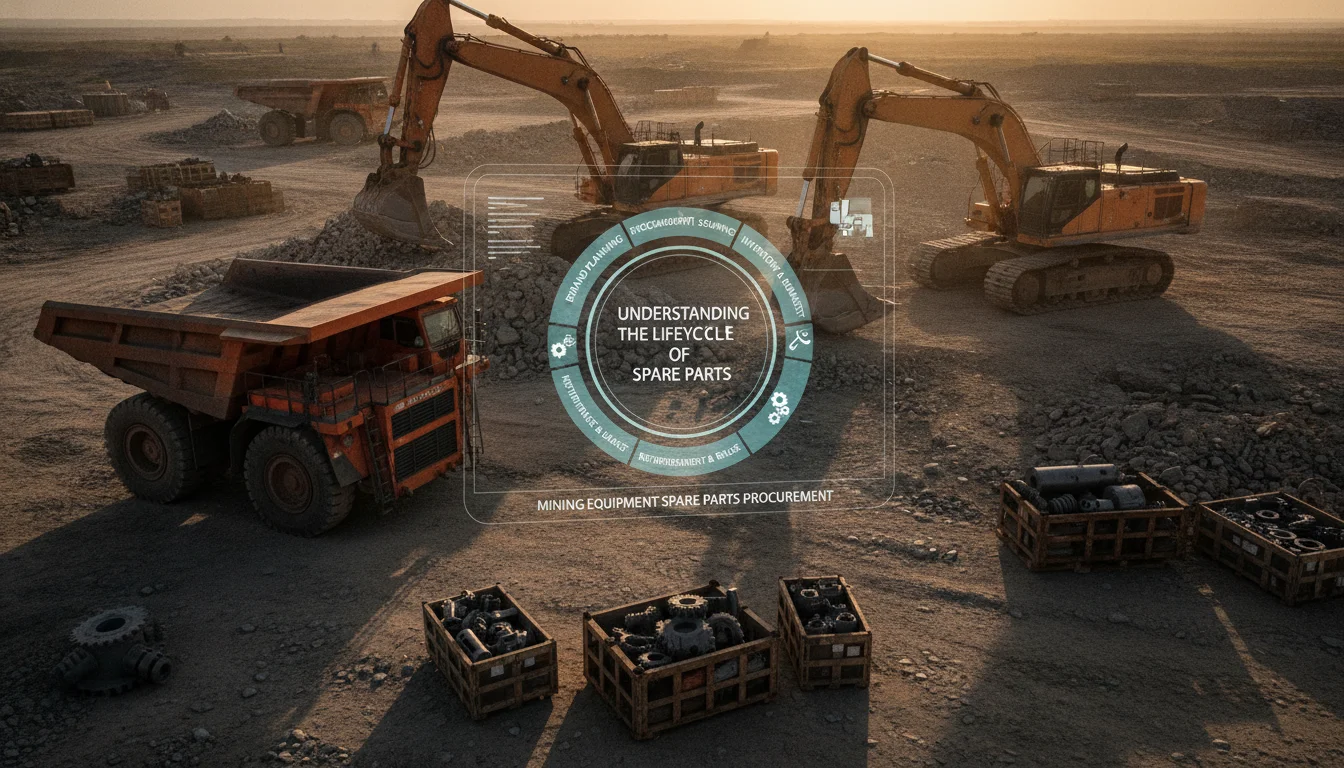
The lifecycle of mining equipment spare parts runs from planning and procurement through usage, maintenance, and eventual disposal, and treating it as a continuous cycle rather than a single purchase event is what separates efficient operations from reactive ones. Every stage feeds the next, so weak planning early on shows up later as emergency freight bills and idle equipment.
1. Comprehensive Asset Criticality Classification
Classifying spare parts by their criticality to operations is the foundation of good planning. This isn't about labeling parts "important" or "not important" in a spreadsheet. It requires analyzing both the probability of failure and the consequence if that failure happens, since a relatively inexpensive bearing in a primary crusher can shut down an entire processing plant for weeks if no replacement is on hand.
Your classification system should weigh equipment redundancy, repair complexity, supplier lead times, and the true cost of emergency procurement. Once that classification exists, it drives every other decision, from stock levels to where parts are physically stored on site.
2. Predictive Maintenance Integration
Mining operations are increasingly connecting condition monitoring, vibration analysis, and oil sampling directly to their spare parts procurement process. When monitoring shows early wear on a gearbox bearing, the system should flag it and trigger procurement of the replacement well before the component reaches failure. This approach removes the panic buying and rush freight charges that plague reactive maintenance programs.
Pro Tip: Set clear condition-based trigger points tied directly to your procurement workflow. This creates a smooth pipeline where parts land on site right as they're needed, instead of gathering dust on a shelf for years or being desperately needed with nothing in stock.
3. Continuous Improvement
Spare parts management is not a project you finish once. Regularly reviewing procurement strategy, supplier performance, and stock accuracy is what keeps costs down and lead times short as your fleet and mine conditions change over time.
How to Choose the Right Supplier
Choosing the right supplier for mining equipment spare parts procurement starts with verifying real mining sector experience, not just a broad parts catalog. The right partner improves your entire procurement cycle: sourcing speed, part accuracy, and delivery reliability.
1. Industry Experience
Pick suppliers who understand real mining conditions, production pressure, and how specific equipment wears in the field. That knowledge matters most exactly when a breakdown is urgent and you don't have time to explain your fleet from scratch.
2. Product Options
A strong supplier offers a mix of OEM, quality aftermarket, and remanufactured components so you can match the part to the application and the budget. This flexibility gives your team control over both cost and lead time rather than being locked into one option.
3. Logistics Capability
For remote mining sites and international operations, logistics capability can matter as much as part quality. Suppliers should manage export documentation, consolidated shipments, freight coordination, customs preparation, and multi-country deliveries without your team chasing updates daily.
4. Responsive Technical Support
The best suppliers do more than ship boxes; they help you solve problems. That includes part identification, cross-referencing between brands, compatibility checks, and installation guidance when your maintenance team is stuck.
OEM vs. Aftermarket Parts
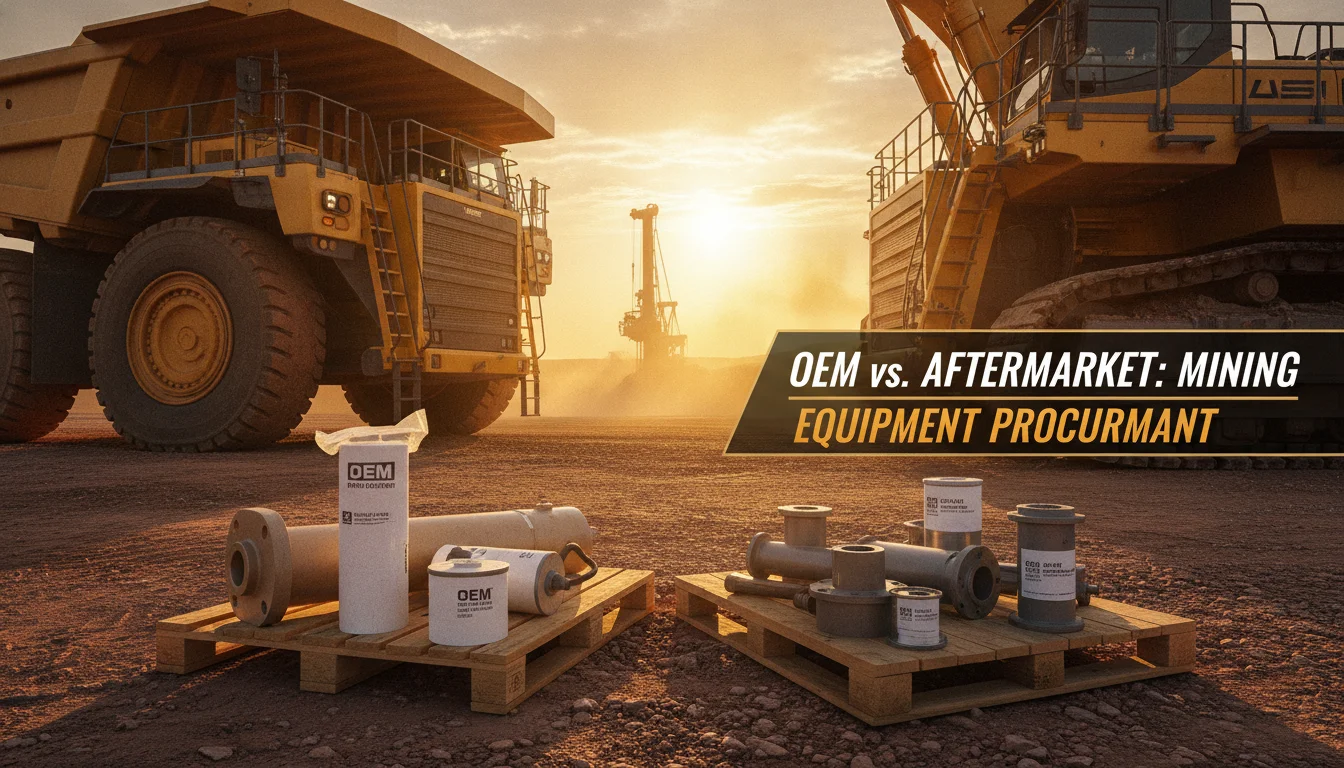
OEM parts are manufactured by the original equipment maker and guarantee an exact fit, while aftermarket parts are produced by third-party manufacturers and can offer meaningful cost savings when sourced from a reputable supplier. Understanding this trade-off is central to smart mining equipment spare parts procurement decisions.
| Factor | OEM Parts | Aftermarket Parts |
|---|---|---|
| Fit & Compatibility | Guaranteed exact fit | Good fit from reputable brands; verify specs |
| Cost | Higher upfront price | Typically lower cost |
| Lead Time | Can be longer, especially overseas | Often faster, depending on supplier stock |
| Warranty | Manufacturer-backed | Varies by supplier |
| Best For | Critical systems, warranty-sensitive equipment | Cost-conscious operations, non-critical wear parts |
1. OEM Parts
OEM parts are designed specifically for your equipment, which means reliable performance and no compatibility guesswork. The tradeoff is a higher price tag and, in many cases, longer lead times, particularly when the part has to ship internationally from the manufacturer.
2. Aftermarket Parts
Aftermarket parts can match or exceed OEM performance at a lower price point, but the quality gap between suppliers is real. Working with a vetted, reputable supplier is the only way to avoid counterfeit or substandard components making their way into your fleet.
3. Cost Considerations
Total cost of ownership, including maintenance frequency and downtime risk, matters more than the invoice price alone. A cheaper part that fails early costs more in the long run than a well-sourced OEM or aftermarket alternative that lasts.
Pros and Cons of Modern Spare Parts Procurement Strategies
Pros
- Predictive maintenance integration reduces emergency procurement and rush freight costs.
- A mixed OEM/aftermarket sourcing strategy gives procurement teams flexibility on cost and lead time.
- Strong supplier logistics capability shortens delivery timelines for remote and international mine sites.
- Long-term supplier relationships typically improve pricing and response speed during emergencies.
Cons
- Aftermarket sourcing carries counterfeit risk if suppliers aren't properly vetted.
- Predictive maintenance systems require upfront investment in condition monitoring technology.
- Criticality classification takes time and cross-team input to build correctly.
- Overreliance on a single supplier can create exposure if that supplier faces its own delays.
Inventory Management Strategies
Effective inventory management for mining spare parts means setting stock levels and reorder points based on actual usage patterns rather than guesswork, so parts are on hand without tying up excess capital in a warehouse.
1. Stock Levels and Reorder Points
Establishing optimal stock levels and reorder points based on historical usage prevents both stockouts and bloated inventory carrying costs. This is where your earlier criticality classification pays off, since high-criticality parts deserve tighter safety stock than low-risk consumables.
2. Use of Technology
Inventory management software streamlines tracking and ordering so the right part is available at the right time, without a maintenance planner manually cross-checking spreadsheets. Digital tools also improve visibility across multiple sites, which matters for fleets spread across different mine locations.
3. Supplier Collaboration
Collaborating directly with suppliers on inventory visibility improves response times for urgent needs. Some suppliers can even flag low stock on your behalf if given access to usage data, tightening the whole procurement loop.
Cost Implications of Mining Equipment Spare Parts Procurement
The cost of mining equipment spare parts procurement extends well beyond the purchase price of each component, and understanding that full picture is what separates an efficient budget from a reactive one. Total cost of ownership includes maintenance labor, downtime risk, and operational efficiency, not just the invoice.
1. Total Cost of Ownership
Factoring in maintenance, downtime, and operational impact alongside purchase price leads to better sourcing decisions than price comparison alone. A part that's 20% cheaper but fails twice as often isn't actually saving money.
2. Budgeting for Spare Parts
A dedicated budget line for spare parts procurement keeps funds available for critical components instead of competing with other capital priorities when an emergency hits.
3. Long-term Supplier Relationships
Building long-term relationships with suppliers tends to produce better pricing, improved service levels, and faster turnaround when something breaks without warning. Suppliers who understand your fleet history can also flag likely failure points before they become expensive.