
Mining Machinery Electrical Parts: Buyer's Guide
Mining machinery electrical parts are critical for uptime. Compare OEM vs aftermarket, top brands, and sourcing tips for global procurement.
Loading article…
Article Not Found
The article you're looking for doesn't exist or may have been removed.
Back to BlogMining machinery electrical parts are the components that control, distribute, and protect electrical power across heavy mining equipment. Selecting the right parts requires matching OEM specifications while balancing environmental durability and total cost of ownership.
Key Takeaways
- electrical parts control power distribution and equipment function in some of the harshest operating environments on earth.
- Always match OEM specifications first, but aftermarket parts from certified suppliers can deliver equal quality at a lower cost.
- Prioritize components with proven IP ratings and mining-specific safety certifications such as MSHA, ATEX, or IECEx.
- Regular inspections and proactive replacement prevent costly unplanned downtime across your fleet.
- Compare brands such as Komatsu, Hella, and Eaton to find parts that balance performance and total cost of ownership.
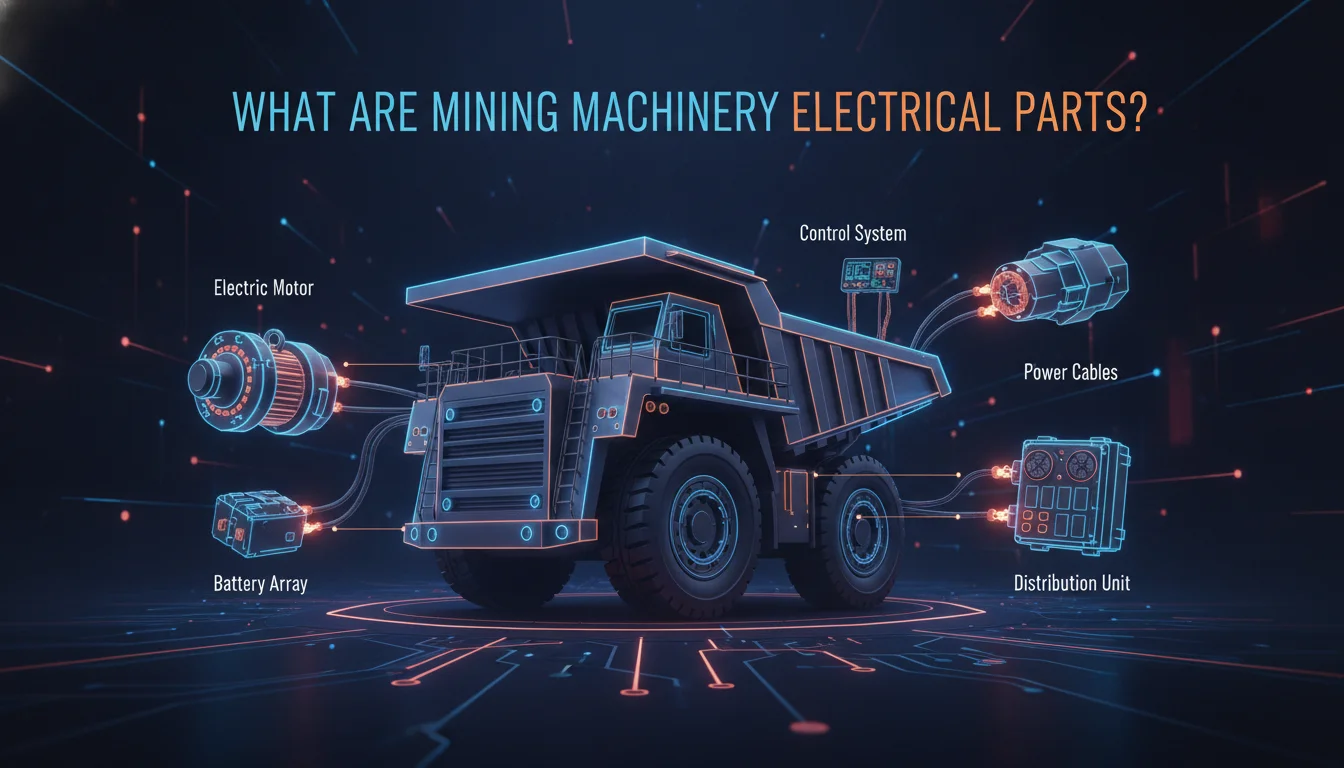
What Are Mining Machinery Electrical Parts?
this type of parts are the components that control, distribute, and monitor electrical power in heavy mining equipment. They range from high-voltage power centers to small sensors and wiring harnesses. In an industry where machinery operates around the clock in extreme conditions, these parts must provide unfailing reliability. Electrical systems in mining have expanded as diesel-powered equipment is increasingly replaced by electric alternatives, making the quality of electrical components more critical than ever.
Defining the Scope
The term covers everything from main power distribution units and motor control centers to individual circuit breakers, fuses, and connectors. It also includes electronic control cards, variable frequency drives (VFDs), lighting systems, and safety devices like ground monitors. Essentially, if a part carries, regulates, or protects an electrical circuit on a mining machine, it belongs in this category. Understanding the full range is the first step in buying the right components for your operation.
Why Quality Matters
Substandard electrical components can lead to catastrophic failures. A blown grid resistor on a haul truck or a faulty connector in an underground coal mine can halt production for hours and create serious safety hazards. Quality parts, often sourced from the same manufacturers as the OEM, ensure consistent performance and longer service life. As H-E Parts notes, their electrical components deliver reliable performance that extends equipment life while reducing operating costs.
"Standard electrical components simply weren't designed for this. The catalog parts that work fine in a climate-controlled factory fall apart quickly when subjected to the relentless demands of mining operations." - IFL Manufacturing
Essential Types of Mining Electrical Components
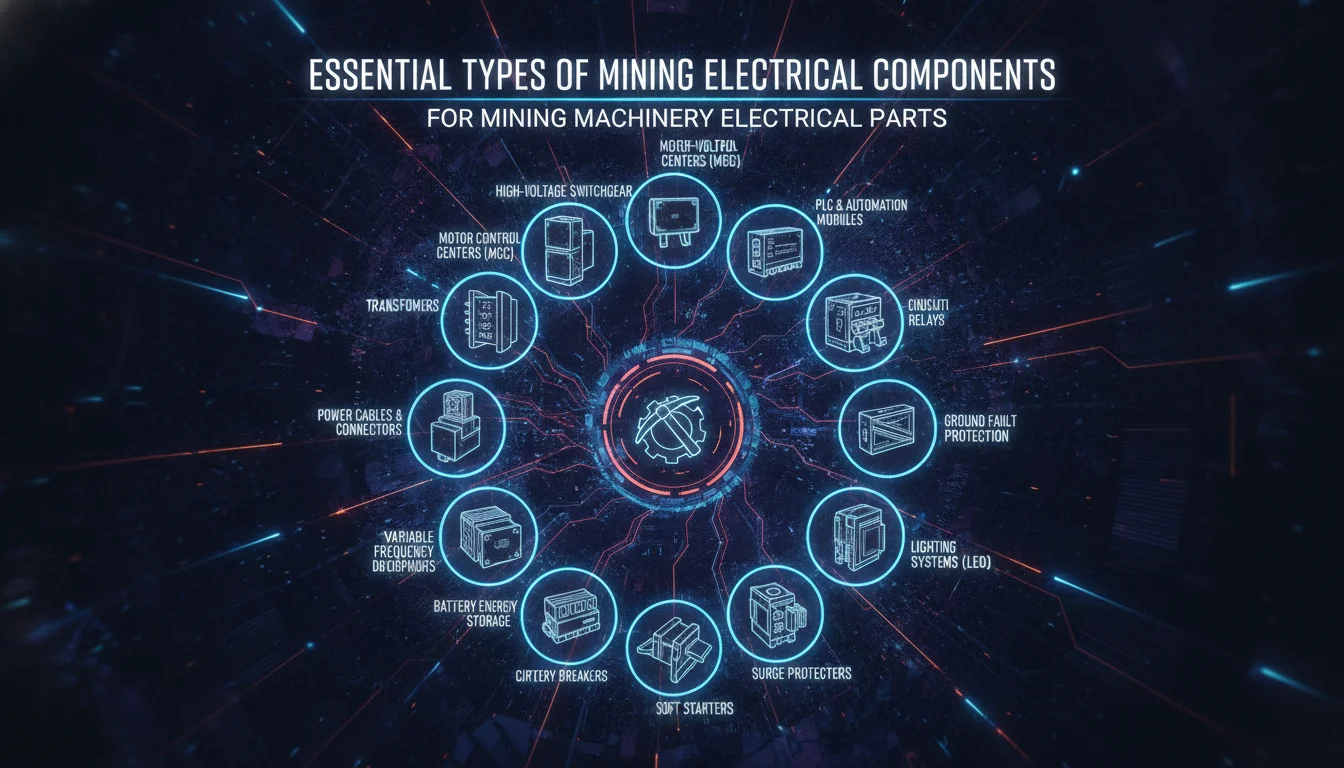
Mining operations rely on a wide variety of electrical components. Below, we cover the main categories you'll encounter when sourcing these parts.
| Component Type | Function | Typical Applications | Pros | Cons |
|---|---|---|---|---|
| Grid Resistors | Dissipate excess energy during braking or speed control | Haul trucks, shovels | High durability; OEM-grade available | Generates heat; requires ventilation |
| Contactor Boxes | Switch high-current circuits to control motors | Excavators, drills | Proven reliability; replaceable tips | Periodic tip replacement needed |
| Control Cabinet Parts | House bus bars, shunts, diodes for power distribution | Load centers, substations | Modular; easy to service | Requires regular inspection |
| Electronic Cards | Manage drive systems and automation | Komatsu Statex/Invertex systems | Advanced control; plug-and-play | Sensitive to moisture and dust |
| Mining Cable and Connectors | Transmit power and signals | All mobile equipment | Robust; flexible; MSHA-approved options | Higher upfront cost |
| Lighting Systems | Improve visibility and safety | Haul roads, underground tunnels | LED options; Hella quality | Mounting requires precision |
Power Distribution and Control
Power centers, often called load centers, step down high-voltage input (5 to 25 kV) to usable levels (480 to 1,000 V) for machinery. According to Becker SMC, these units include protections such as ground fault prevention, arc flash protection, and thermal overload protection. Motor control centers (MCCs) manage multiple motors from a single enclosure, improving both efficiency and safety. When buying electrical parts for mining machinery, confirm these units meet your site's specific voltage and load requirements.
Wiring, Connectors, and Harnesses
Mining environments subject cables and connectors to vibration, moisture, and abrasion. Rugged wiring harnesses, like those offered by Kraemer Mining, resist these stresses and minimize downtime. Connectors from brands such as Patton and Cooke and Special Mine Services provide secure, MSHA-approved connections for power and control circuits. Always check for IP ratings (for example, IP67) when selecting these components.
Monitoring and Safety Devices
Ground monitors, molded case circuit breakers, and amp/volt meters are essential for safety and diagnostics. Carroll Technologies Group supplies Eaton/Cutler Hammer breakers and MSHA-approved ground monitors that protect both personnel and equipment. These devices help prevent electrical fires and ensure compliance with regulatory standards across coal and non-coal mining operations.
Lighting and Electronics
High-intensity LED lighting from Hella and Nordic Lights improves operator visibility and reduces accident risk. Advanced electronic controls, including Komatsu's Statex (DC) and Invertex (AC/IGBT) cards, manage drive systems on haul trucks. Investing in quality electronic cards means fewer unplanned shutdowns and smoother day-to-day operations.
AC vs. DC Drive Systems: What Procurement Teams Need to Know
The distinction between AC and DC drive systems directly affects which mining machinery electrical parts you can order and stock.
Komatsu's Statex platform uses a DC drive architecture. It's the older of the two systems and remains in service across a large installed base of haul trucks worldwide. Statex electronic cards control motor speed and torque through traditional DC regulation. Parts for these systems are mature and widely available through distributors like H-E Parts.
The Invertex platform uses AC drive technology with IGBT (Insulated Gate Bipolar Transistor) switching. AC/IGBT systems offer more precise control and generally run cooler under sustained load. Electronic cards for Invertex systems are not interchangeable with Statex cards, so confirming your truck's drive architecture before ordering is non-negotiable.
Pro Tip: Check your machine's serial number and service manual before ordering any electronic card. A single digit difference in part number can mean an incompatible card that disables the entire drive system.
How to Choose the Right Mining Machinery Electrical Parts
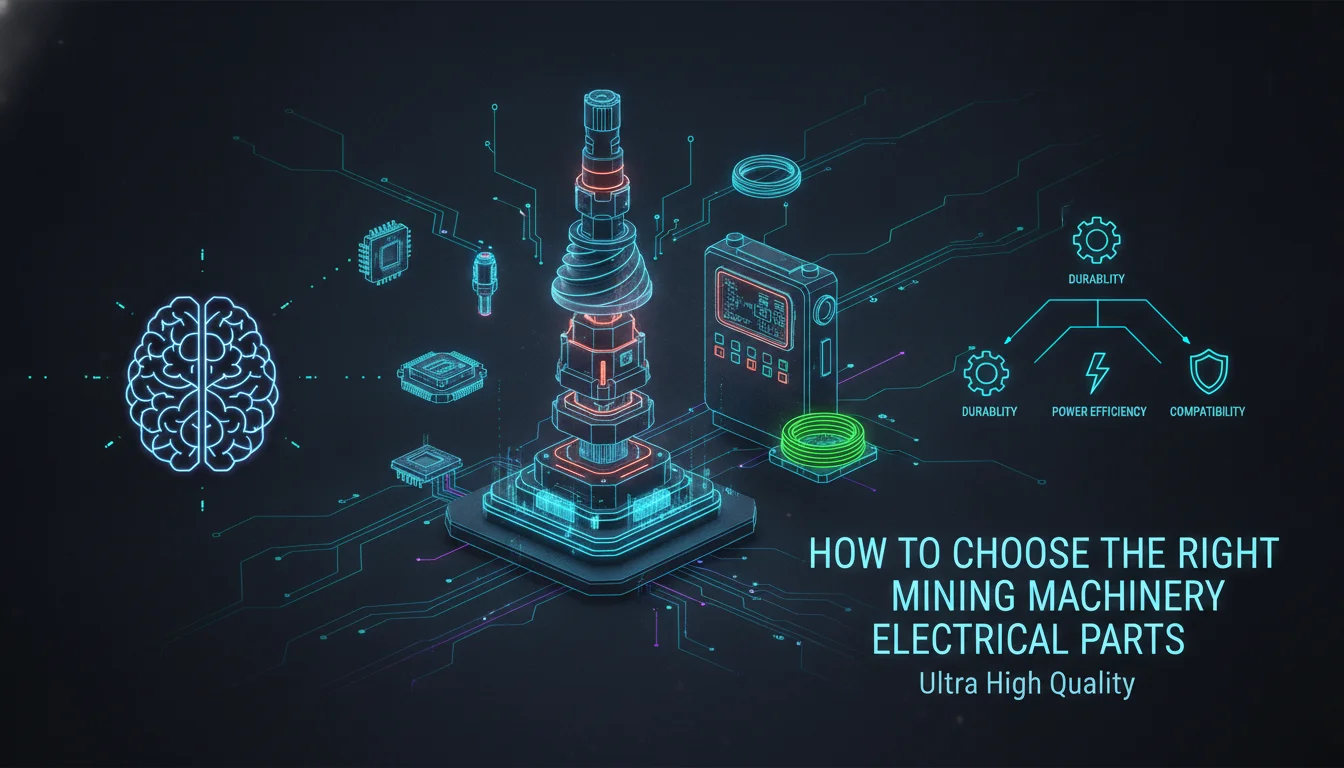
Selecting electrical components is not just about matching part numbers. Follow this step-by-step process to guide your purchase decisions.
Step 1: Verify OEM Compatibility
Begin with the machine's service manual. Cross-reference part numbers carefully. Many aftermarket suppliers maintain databases to map their components to OEM equivalents. Always confirm fitment, especially for electronic cards, where a slight mismatch can disable the whole system.
Step 2: Evaluate Environmental Ratings
Electrical parts for mining machinery must withstand dust, moisture, temperature extremes, and vibration. Look for ingress protection (IP) ratings: IP65 or higher for dust and water jets, IP67 for temporary immersion. For underground coal mines, parts must be intrinsically safe or explosion-proof. Check that connectors and enclosures meet your site's specific conditions before purchase.
Step 3: Prioritize Safety Certifications
In the U.S., look for MSHA (Mine Safety and Health Administration) approval on critical components. Internationally, standards like ATEX or IECEx apply. Safety certifications are non-negotiable: they ensure the component won't ignite flammable gases or cause sparks in hazardous atmospheres.
Step 4: Consider Total Cost of Ownership
Cheaper parts can cost more over time if they fail prematurely. Calculate total cost: purchase price plus expected downtime, labor for replacement, and maintenance intervals. H-E Parts notes that its OEM-quality components, sourced from the same manufacturers as the OEM, reduce operating costs while extending equipment life.
Step 5: Source from Reputable Suppliers
Stick with distributors who specialize in mining. They offer technical support, fast delivery, and inventory depth. Haladjian Mining, for example, operates warehouses in Paris, New Jersey, Casablanca, Ouagadougou, and Dakar to deliver parts anywhere in the world, backed by more than $20 million in inventory. A reliable supplier ensures you get genuine, warranted parts with full traceability.
Pros and Cons of OEM vs. Aftermarket Mining Electrical Parts
Choosing between OEM and aftermarket mining machinery electrical parts is one of the most consequential decisions in fleet procurement. Here's a direct comparison.
Pros
- OEM parts guarantee exact fit, full warranty coverage, and direct manufacturer support.
- Aftermarket parts from certified suppliers often come from the same Tier 1 manufacturers as OEM, at a more competitive price.
- Aftermarket options typically offer faster availability through distributed global warehouses.
- For high-wear consumables like contactor tips, grid resistors, and fuses, aftermarket quality frequently matches OEM durability.
Cons
- OEM parts carry a significant price premium, which compounds across a large fleet.
- Some OEM components have extended lead times due to manufacturing schedules or regional distribution gaps.
- Low-quality aftermarket parts from unverified suppliers can fail prematurely and void equipment warranties.
- For critical systems like engine ECUs or drive control cards, an incorrect aftermarket substitution can disable the entire machine.
Top Brands and Suppliers for Mining Electrical Components
The market offers a mix of OEM and aftermarket options. Knowing the key players helps you make informed decisions about sourcing.
"Most components are manufactured by the same companies that supply the OEM, giving customers the confidence of OEM-quality at a more competitive price point." - H-E Parts International
Notable Manufacturers
- Komatsu: Original manufacturer of Statex and Invertex drive systems for haul trucks. OEM cards and components are widely available through authorized distributors.
- Hella and Nordic Lights: Leading providers of rugged mining lighting solutions that improve visibility and reduce accident risk.
- Eaton and Cutler Hammer: Industry-standard circuit breakers and motor control products, distributed by Carroll Technologies Group among others.
- Patton and Cooke: Specializes in high-voltage couplers and connectors for mobile mining equipment.
- Special Mine Services (SMS): Manufactures MSHA-rated plugs, receptacles, and cable accessories for underground applications.
When ordering, confirm availability and lead times. Some mining machinery electrical parts carry extended manufacturing schedules, particularly for specialized electronic cards and high-voltage assemblies.
Global Sourcing and Logistics for Mining Electrical Parts
Procurement doesn't end at part selection. Getting the right component to the right site, fast, is where many operations lose time and money.
Suppliers with distributed warehouse networks reduce lead times significantly. Haladjian Mining's logistics center spans 30,000 square meters and supports delivery across Africa, Europe, and North America from warehouses in Paris, New Jersey, Casablanca, Ouagadougou, and Dakar. For operations in remote regions, this kind of geographic coverage is not a luxury: it's a requirement.
At 3GEN Export, we ship OEM-quality mining machinery electrical parts to over 60 countries with a standard 5-day global delivery window. Our team cross-references part numbers against OEM databases before every shipment, so you receive the correct component the first time.
For procurement managers sourcing spare parts across multiple equipment brands, consolidating orders through a single specialist distributor reduces administrative overhead and improves traceability. Browse our full brand catalog to confirm availability for your fleet.
Maintenance and Care for Longevity
Even the best electrical components fail without proper care. Build these practices into your maintenance schedule to extend the life of your mining machinery electrical parts.
Regular Inspections
Schedule weekly checks of high-wear items like contactor tips, cable insulation, and ground monitors. Look for discoloration, loose connections, or moisture ingress. Catching a deteriorating grid resistor early can prevent a blown assembly that takes a truck offline for days.
Cleaning and Environmental Protection
Dust and debris cause overheating. Keep cabinets clean and seals intact. In underground mines, use compressed air to remove coal dust from VFD heatsinks. After washing machines, ensure electrical enclosures are thoroughly dried before re-energizing to prevent short circuits and corrosion.
Proactive Replacement
Don't wait for failure. Components like fuses, surge suppressors, and contactor tips have predictable lifespans. Stock critical spares and replace them during scheduled shutdowns. Many suppliers offer exchange programs for electronic cards and wheel motors, minimizing downtime and keeping your operation on schedule.
As of 2026, more mining operators are adopting condition-based monitoring systems that flag electrical component degradation before failure occurs. Pairing this technology with a well-stocked spares inventory is the most effective approach to reducing unplanned downtime.
Frequently Asked Questions
What are the most common mining machinery electrical parts that need replacement?
Grid resistors, contactor tips, fuses, and electronic cards are among the most frequently replaced due to high cycling and harsh operating conditions. Connectors and cables also wear from constant physical stress and vibration.
How do I know if an aftermarket electrical part is safe for mining use?
Look for MSHA, ATEX, or IECEx certifications on the component documentation. Reputable suppliers provide full traceability and often source from the same manufacturers as the OEM. Always verify that the part matches your equipment's exact specifications before installation.
Can I use standard industrial electrical parts in mining equipment?
Generally not. Mining machinery electrical parts are specially engineered for vibration, moisture, and explosive atmospheres. Standard industrial parts typically lack the necessary IP ratings and safety certifications, which creates both failure risk and regulatory compliance issues.
What is the difference between Komatsu Statex and Invertex systems?
Statex refers to older DC drive systems, while Invertex uses AC drive with IGBT technology. When buying electronic cards or related components, you must confirm which system your truck uses, as the two are not interchangeable and a mismatch can disable the entire drive system.
How can I reduce downtime when waiting for electrical parts?
Maintain a critical spares inventory on-site, work with suppliers who offer fast global shipping, and consider exchange programs for repairable units. Distributors with regional warehouse networks, like those covering multiple continents, can dramatically cut delivery times for urgent orders.
Whether you maintain a single excavator or a fleet of haul trucks, the reliability of your mining machinery electrical parts directly affects safety and productivity. By understanding the component types, selecting based on environmental fit and certification, and partnering with knowledgeable suppliers, you can keep your machines running with minimal interruptions. Always weigh total cost of ownership over sticker price, and never compromise on safety ratings when sourcing electrical parts for demanding mining environments.
Shop OEM-quality spare parts with global 5-day delivery at 3genexport.com.