
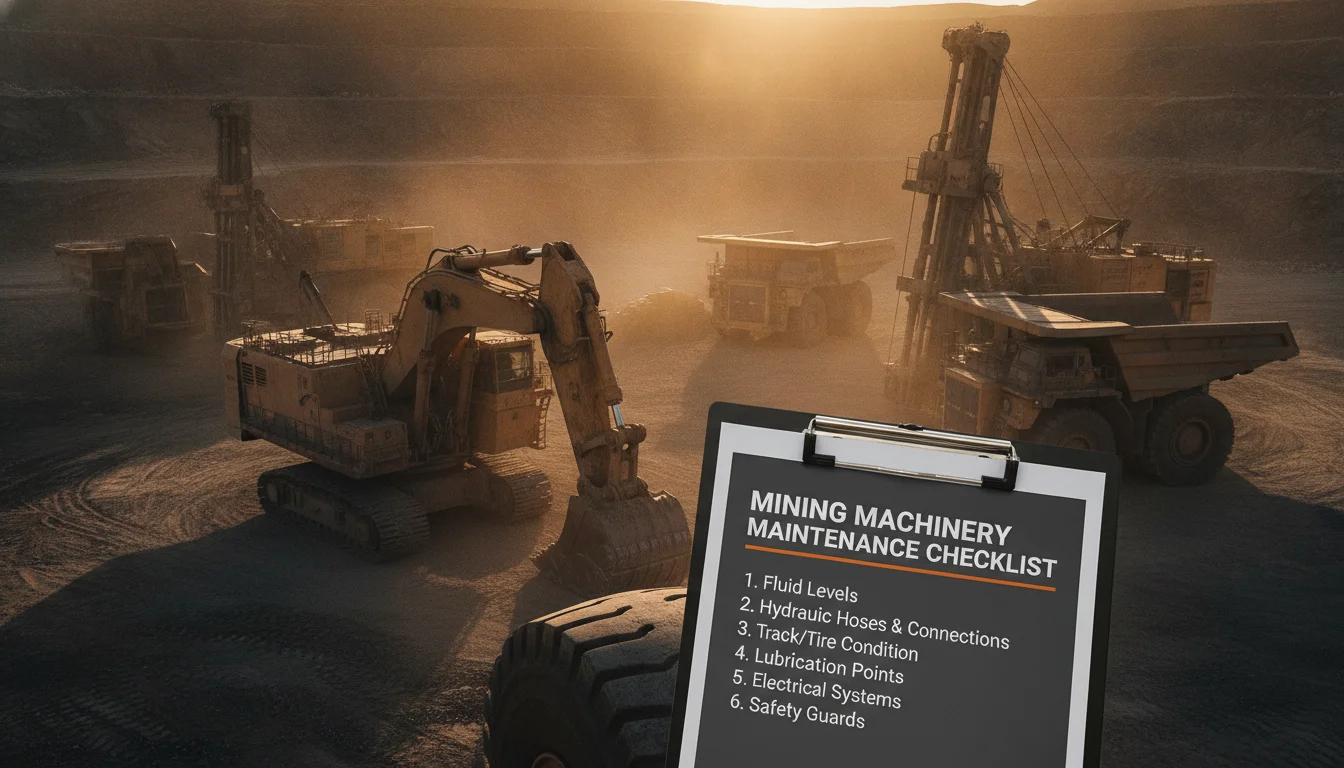
Mining Machinery Maintenance Checklist: 2026 Guide
Our mining machinery maintenance checklist covers daily to annual tasks, common failure points, and OEM part sourcing tips to cut downtime in 2026.
Loading article…
Article Not Found
The article you're looking for doesn't exist or may have been removed.
Back to BlogA mining machinery maintenance checklist is a structured schedule of inspections, servicing tasks, and part replacements designed to keep heavy equipment running safely and efficiently. It covers daily, weekly, monthly, quarterly, and annual tasks across every major system on a machine.
Key Takeaways
- A mining machinery maintenance checklist is essential for operational efficiency and safety across excavators, haul trucks, drills, and crushers.
- Regular inspections catch small issues before they become costly breakdowns, extending equipment lifespan significantly.
- Structured maintenance programs, whether preventive or predictive, reduce downtime and protect production targets.
- Different equipment types (excavators, haul trucks, drilling rigs, crushers, conveyors) each carry distinct maintenance demands.
- Sourcing OEM-standard replacement parts quickly is as important as the checklist itself, since delays turn small fixes into extended downtime.
- Operator training and proper documentation are as important as the physical inspection tasks.
Introduction
A mining machinery maintenance checklist is a vital tool for ensuring that heavy equipment operates efficiently and safely in the demanding environment of mining operations. We've worked with fleet managers who run this exact discipline daily, and the pattern holds everywhere: sites that follow a documented checklist have fewer surprise failures than sites that rely on operator memory. Regular maintenance helps prevent unexpected breakdowns, enhances safety, and extends the lifespan of machinery.
Importance of Mining Machinery Maintenance
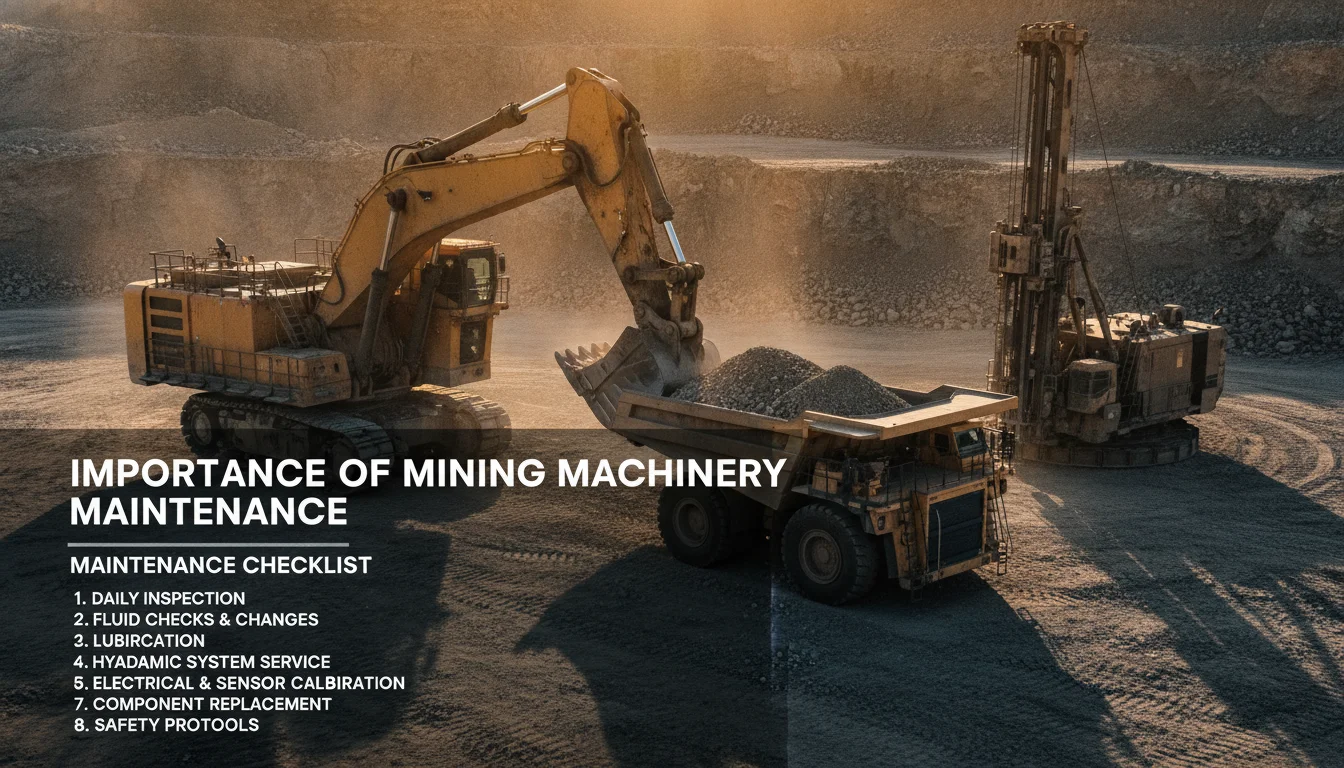
Mining machinery maintenance matters because it directly controls downtime, safety incidents, and total cost of ownership across the fleet. Maintenance of mining machinery is critical for several reasons:
- Minimizing Downtime: Regular inspections and servicing help detect small issues before they escalate into major failures, thereby reducing equipment downtime.
- Enhancing Safety: Properly maintained equipment minimizes the risk of accidents caused by equipment malfunctions.
- Extending Equipment Lifespan: Consistent upkeep maximizes the service life of valuable machinery.
- Cost-Efficiency: Preventive maintenance is less expensive than emergency repairs or equipment replacements, according to industry maintenance data.
- Maintaining Production Levels: Healthy equipment ensures steady production rates, allowing operations to meet output targets.
"A single failure in mining rarely stays single. When a loader goes down, it doesn't simply idle one machine, it starves the crusher, backs up trucks, and throws your blast schedule off."
- Startpac, Mining Equipment Maintenance: Best Practices to Reduce Downtime
Common Causes of Equipment Failure
Understanding the common causes of mining equipment failure can help in developing effective maintenance strategies. Mining environments are harsh, leading to natural wear on machinery, and this reality shapes every checklist decision we make with clients.
- Wear and Tear: Mining environments are harsh, leading to natural wear on machinery from dust, rock, and extreme weather.
- Improper Maintenance: Skipping scheduled maintenance or using low-quality replacement parts can severely shorten equipment lifespan.
- Operational Errors: Lack of operator training can lead to misuse of machinery, and operator training reduces the likelihood of misuse and mechanical failures.
- Corrosion and Rust: Moisture-rich environments accelerate metal corrosion, especially in underground mining conditions.
- Mechanical Fatigue: Repeated stress cycles can weaken metal structures over time.
How a Maintenance Checklist Works
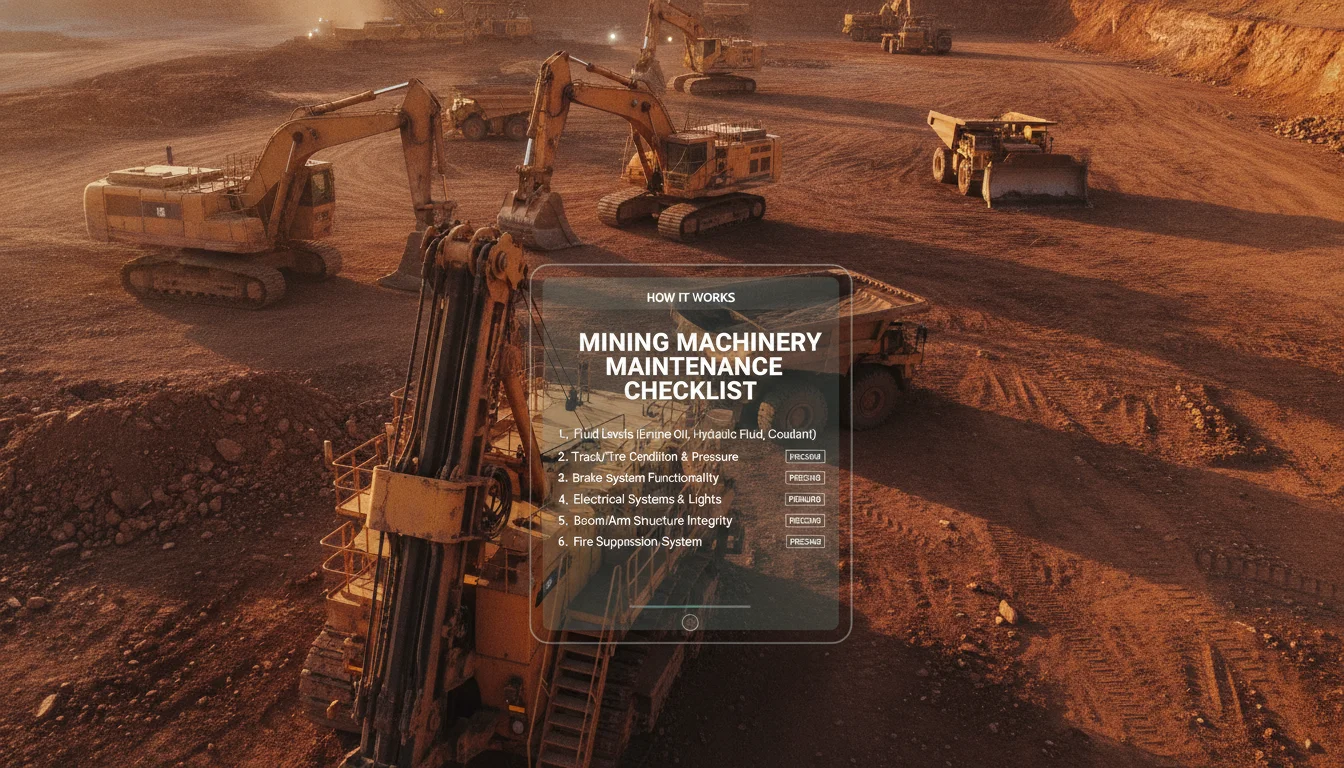
A mining machinery maintenance checklist works by breaking equipment upkeep into time-based intervals so nothing gets overlooked between major services. Instead of relying on a technician's memory or a rushed pre-shift glance, the checklist assigns specific tasks to specific frequencies: daily walk-arounds catch visible leaks and damage, while quarterly and annual reviews dig into structural integrity and electrical systems.
The logic behind this structure mirrors what fleet management platforms and CMMS (Computerized Maintenance Management System) tools use to schedule work orders. Each task on the checklist ties back to a failure mode: a daily tire check exists because tire failure is sudden and costly, while a quarterly structural inspection exists because frame cracks develop slowly and are easy to miss during a fast daily inspection. According to Limble's mining equipment guide, excavators, haul trucks, drilling rigs, conveyor systems, and crushers each carry their own failure patterns, which is why generic checklists often underperform equipment-specific ones.
Pro Tip: Build your checklist around the failure modes specific to each machine class rather than copying a single generic template across your whole fleet. An excavator's hydraulic system and a haul truck's brake system fail differently, and a checklist that treats them the same misses warning signs.
Mining Machinery Maintenance Checklist
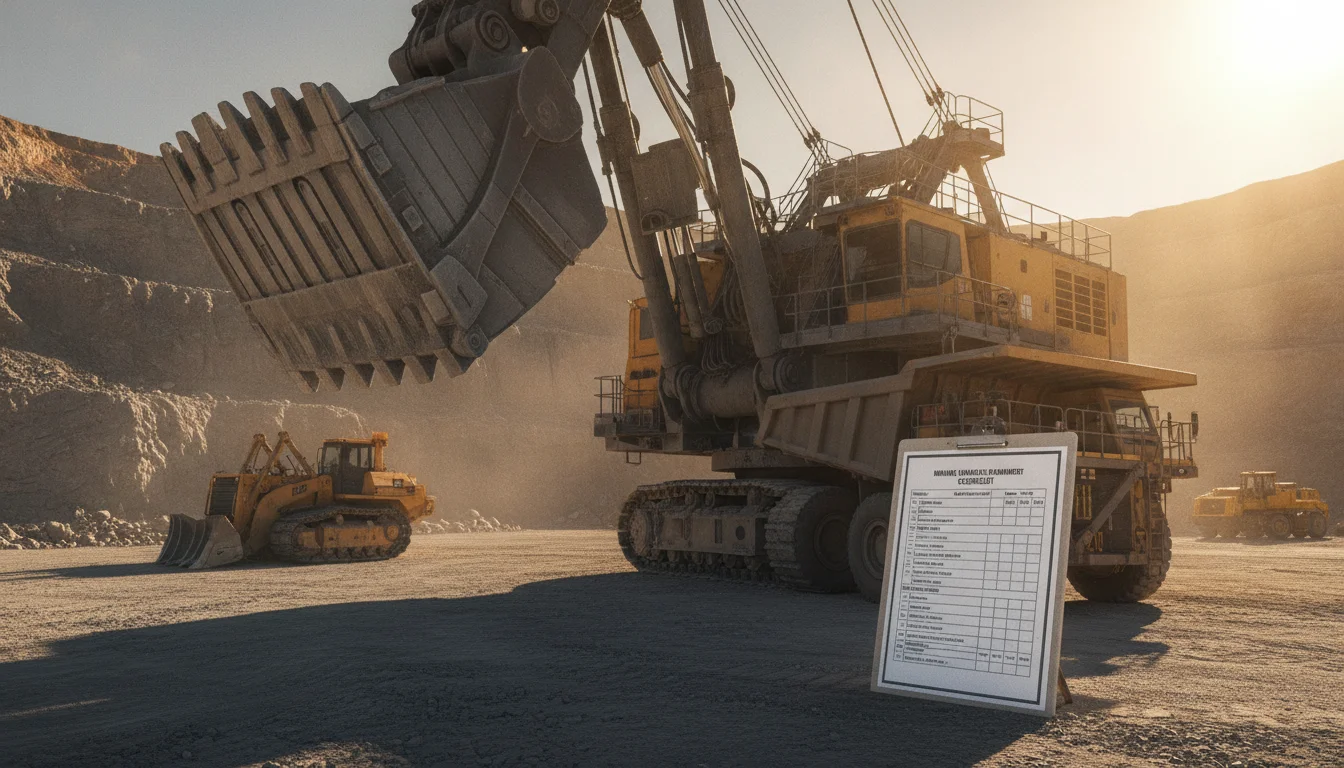
A well-organized maintenance checklist ensures that all critical aspects of machinery are regularly inspected. Below is a detailed mining machinery maintenance checklist organized by frequency.
Daily Inspections
- Check for leaks, cracks, and other visible damages.
- Inspect tires or tracks for wear and proper inflation.
- Verify fluid levels: oil, coolant, and hydraulic fluids.
- Confirm proper functioning of brakes and lights.
Weekly Maintenance
- Clean air filters and replace if necessary.
- Test emergency systems and backup alarms.
- Inspect attachments and custom fittings for signs of damage or fatigue.
- Lubricate moving parts to prevent friction wear.
Monthly Maintenance
- Perform a full diagnostic check on the engine and hydraulics.
- Replace worn-out hoses, belts, and filters.
- Review alignment and calibration of equipment systems.
Quarterly Maintenance
- Conduct structural inspections for frame cracks or weld fatigue.
- Assess electrical systems and replace worn connections.
- Test the integrity of custom fabrications such as reinforced arms or guards.
Annual Overhaul
- Complete teardown and rebuild of key equipment.
- Comprehensive inspection and repairs involving custom metal fabrications.
- Upgrade parts based on the latest industry standards.
How to Apply This Checklist on Your Site
Applying a mining machinery maintenance checklist starts with assigning ownership, then building it into daily workflow rather than treating it as a separate paperwork exercise. Here's how we recommend rolling it out:
- Assign a checklist owner per machine class. Excavators, haul trucks, drilling rigs, conveyors, and crushers each need a technician familiar with their specific failure points.
- Digitize the checklist. Paper forms get lost or filled out from memory at end of shift. A digital form time-stamps entries and flags overdue tasks automatically.
- Tie tasks to OEM service intervals. Cross-reference your checklist against manufacturer specifications for Caterpillar, Komatsu, Volvo, or Atlas Copco equipment rather than using a one-size-fits-all interval.
- Pre-stock common failure parts. Seals, filters, hoses, and belts should be on hand before they're needed, not ordered after a machine goes down.
- Review completed checklists weekly. A supervisor should scan for patterns, like the same hydraulic hose failing across multiple machines, which often points to a systemic issue rather than a one-off part failure.
- Audit against the checklist quarterly. Confirm that daily and weekly tasks are actually being completed, not just marked complete.
Worked Example: A Haul Truck Fleet Scenario
Consider a mid-sized surface mining operation running a fleet of haul trucks. The maintenance team follows the checklist's daily tire inspection step and notices uneven tread wear on one truck's rear tire, several days before it would have caused a blowout. Because tires on large haul trucks can run into tens of thousands of dollars each, according to Startpac's maintenance data a single haul truck tire can cost $50,000 or more, catching this early through a routine daily check avoided both the tire replacement cost and the lost production hours from an unplanned stop.
The same fleet's monthly diagnostic check later flags a hydraulic pump running hotter than normal. The technician traces it to a clogged suction strainer, a cheap part, and replaces it before the pump itself is damaged. Neither catch required advanced diagnostics: both came directly from following the checklist's daily and monthly steps without skipping ahead.
Comparative Analysis of Maintenance Strategies
| Maintenance Strategy | Description | Benefits |
|---|---|---|
| Reactive Maintenance | Action taken after equipment failure. | Simple to implement but can lead to high costs and downtime. |
| Preventive Maintenance | Regularly scheduled maintenance to prevent failures. | Reduces unexpected breakdowns and extends equipment life. |
| Predictive Maintenance | Uses data analytics to predict failures before they occur. | Optimizes maintenance schedules and reduces costs. |
Best Practices for Mining Equipment Maintenance
The best mining equipment maintenance practices combine preventive scheduling, predictive data analysis, and consistent operator training. Implementing these practices together significantly improves the reliability of mining machinery compared to relying on any single approach.
Preventive Maintenance Programs
Preventive maintenance involves scheduling regular checks and servicing to address issues before they lead to equipment failure. This approach reduces unexpected breakdowns and extends equipment life.
Predictive Maintenance Strategies
Predictive maintenance uses data and analytics to predict equipment failures before they occur. By using vibration analysis, oil sampling, and telematics data, mining operations can optimize maintenance schedules and reduce costs rather than servicing components on a fixed calendar regardless of actual condition.
Operator Training and Awareness
Training operators on proper equipment use and maintenance practices is essential. Well-trained operators are less likely to misuse machinery, reducing the risk of mechanical failures, and they're often the first to notice unusual sounds, vibrations, or leaks before those issues appear on any formal inspection.
Common Mistakes to Watch Out For
The most common mistake with a mining machinery maintenance checklist is treating it as a compliance document instead of a working diagnostic tool. Watch for these pitfalls:
- Filling out forms retroactively. Technicians who complete checklists from memory at the end of a shift miss details that only surface during the actual inspection.
- Ignoring minor deviations. A slightly low fluid level or a faint hydraulic whine often gets logged but not escalated, until it becomes a major failure.
- Using generic checklists across different equipment brands. Caterpillar, Komatsu, and Volvo machines have different service intervals and wear patterns; a single generic template misses brand-specific requirements.
- Delaying part replacement due to sourcing lead times. Waiting weeks for OEM parts to ship turns a scheduled maintenance task into an unplanned outage.
- Skipping quarterly structural checks. Frame cracks and weld fatigue develop slowly and are easy to defer, but they're also among the most dangerous failures to miss.
Pros and Cons of a Structured Maintenance Checklist
Pros
- Reduces unplanned downtime by catching issues during scheduled inspections rather than after failure.
- Extends equipment lifespan through consistent, documented upkeep.
- Creates an audit trail that supports safety compliance and warranty claims.
- Makes it easier to train new maintenance staff since tasks are clearly defined.
Cons
- Requires ongoing discipline; a checklist only works if it's actually followed, not just filed.
- Can create a false sense of security if tasks are checked off without genuine inspection.
- Demands upfront investment in training, digital tools, or CMMS software to track completion.
- Needs regular updates as equipment ages or brands change within the fleet.
Specific Maintenance Technologies and Tools
Modern mining maintenance now relies on more than a clipboard and a flashlight. CMMS platforms, telematics feeds from OEM dealers, and digital inspection apps let maintenance managers track task completion, flag overdue items, and spot recurring failure patterns across a whole fleet. Fluid analysis programs check hydraulic oil against cleanliness standards, while vibration sensors on pumps and bearings can flag developing wear before it's audible or visible. As of 2026, more mid-sized mining operations are adopting these digital tools not to replace the physical checklist, but to make sure it's actually being completed and to catch the failure signals a purely visual inspection would miss.
2026 Outlook for Mining Maintenance Programs
This year, mining operations are under continued pressure to reduce downtime while managing tighter parts budgets, which makes disciplined use of a mining machinery maintenance checklist more valuable, not less. Fleets that pair a documented checklist with faster access to OEM-standard replacement parts are better positioned to avoid the extended downtime that comes from waiting on slow part shipments. We expect this trend, tighter maintenance discipline paired with faster global parts sourcing, to keep shaping procurement decisions through the rest of 2026 and beyond.