
Mining Machinery Parts Manufacturer Guide 2026
Find the right mining machinery parts manufacturer for your fleet. OEM, aftermarket, and surplus options with global 5-day delivery at 3genexport.com.
Loading article…
Article Not Found
The article you're looking for doesn't exist or may have been removed.
Back to BlogMining machinery parts manufacturer is a supplier that produces or consolidates replacement components for drills, haul trucks, crushers, shovels, and support equipment to OEM or certified aftermarket standards.
Key Takeaways
- Always verify part numbers against your machine's serial number before ordering from any mining machinery parts manufacturer.
- Three primary sourcing tiers exist: OEM, certified aftermarket, and surplus/new old stock (NOS).
- According to IndustrySelect, U.S. mining machinery manufacturers export 53% of their equipment globally.
- Brand ecosystems from Komatsu, Caterpillar, Epiroc, Sandvik, and Atlas Copco dominate parts availability worldwide.
- Always request material certifications, warranty terms, delivery schedules, and after-hours support before purchase.
- Lifecycle cost matters more than purchase price: a cheap part that fails early costs far more than an OEM component.
A reliable mining machinery parts manufacturer should offer brand-compatible components, verified part numbers, global shipping, and clear warranty terms. Compare OEM, certified aftermarket, and surplus sources before requesting quotes for your specific equipment model.
The U.S. mining industry uses an average of 3.4 tons of coal and 40,000 pounds of minerals per person annually, according to IndustrySelect. That scale makes parts sourcing a production-critical decision, not just a procurement task. MNI data referenced by IndustrySelect also shows 1.67% growth in U.S. mining machinery manufacturing employment. The best suppliers align brand coverage, material quality, global logistics, and documentation with your specific equipment serial numbers.
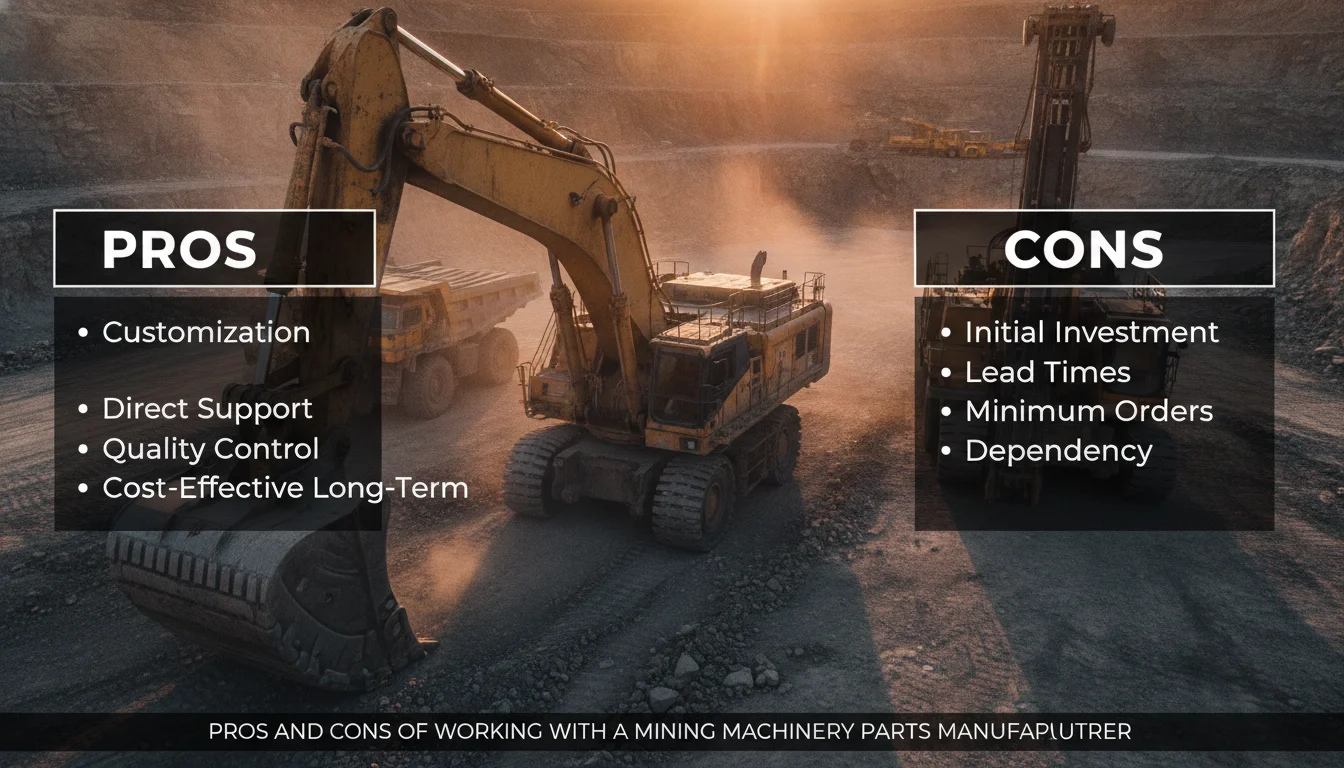
Pros and Cons of Working With a Mining Machinery Parts Manufacturer
Pros
- Brand-specific compatibility: Reputable manufacturers maintain part-number databases tied to serial ranges, reducing fitment errors.
- Documentation and traceability: Material certificates, warranty terms, and country-of-origin records protect your procurement process.
- Multiple sourcing tiers: OEM, certified aftermarket, and surplus options let you match cost to criticality for each component.
- Global logistics support: Established manufacturers ship to any country, reducing lead times for remote operations.
- 24/7 support availability: Suppliers like Cogar Manufacturing offer after-hours parts hotlines, keeping unplanned downtime short.
Cons
- OEM lead times: Factory-direct parts often carry the longest lead times, especially for low-volume or regional equipment models.
- Price premium on OEM: Safety-critical OEM components cost significantly more than certified aftermarket equivalents.
- Shelf-age risk on surplus: New old stock seals, hoses, and electrical components may degrade in storage and require inspection before installation.
- Verification burden: Buyers must independently confirm part-number compatibility; a "will probably fit" statement is not acceptable.
What to Look For in a Mining Machinery Parts Manufacturer
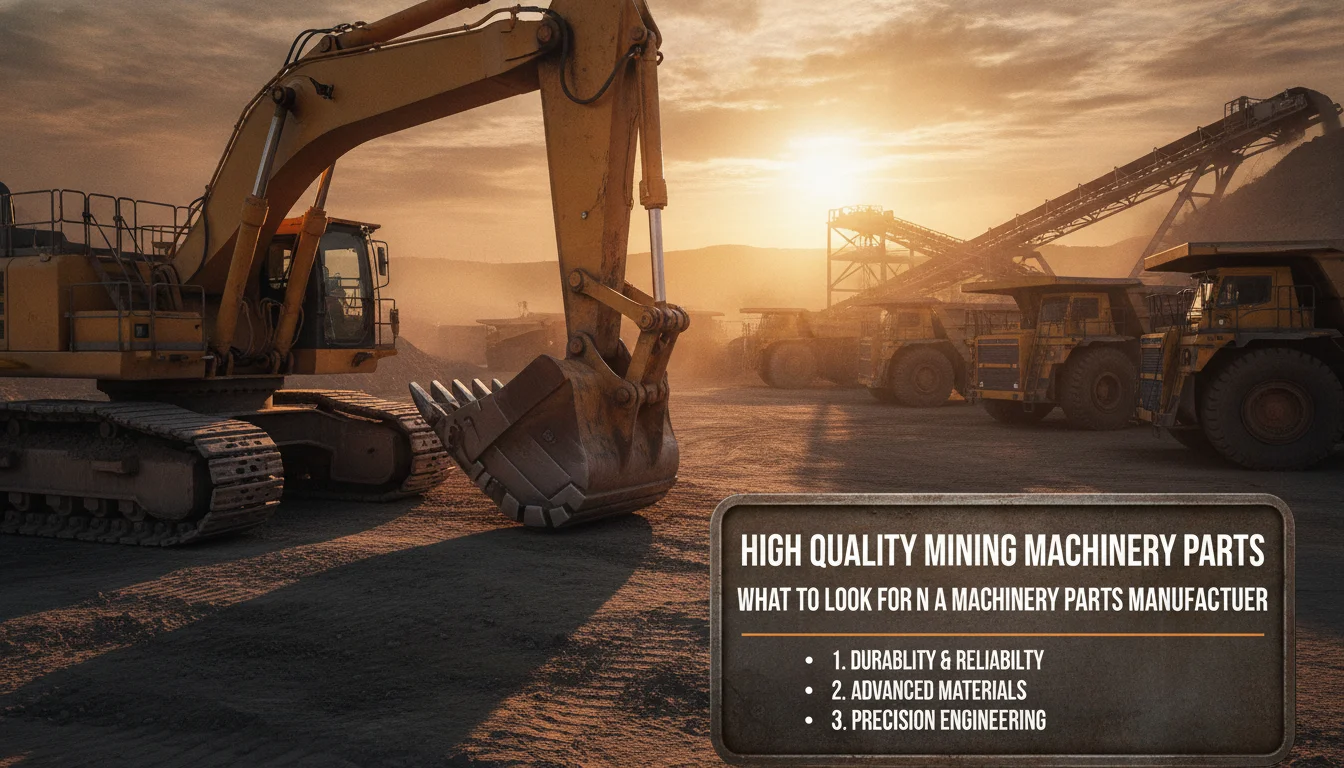
Before requesting quotes, define the machine types and failure modes you need to cover. This prevents buying on price alone and reduces the risk of mismatched or short-life parts.
Material and Engineering Specifications
Mining parts operate in abrasive, high-impact, and high-temperature environments. Ask for material certificates, hardness ranges, and tolerance data for wear components, hydraulic components, and drivetrain parts. OEM parts are components produced by the original equipment manufacturer or its licensed suppliers to match the factory specification exactly. Certified aftermarket parts are made by third parties to fit and function like OEM but are not produced by the original manufacturer. For critical assemblies such as driveshafts, axles, and brake parts, request documented material traceability.
"Mining equipment design is highly complex. We supply both genuine parts and certified aftermarket components, and our quality control department checks each spare part for reliability and full correspondence with the specific equipment model." - AGA Parts, Brooklyn, NY
Compatibility and Part-Number Verification
A part number is the manufacturer's unique identifier used to trace design revisions and compatibility across equipment serial ranges. Many mining machines have serial-number-specific variations in hydraulic circuits, electrical harnesses, and wear packages. Use the equipment's data plate and operator manual to collect the exact part number, serial number, and date of manufacture. Suppliers like AGA Parts provide an auto search function by part number for Atlas Copco, Caterpillar, Hitachi, Komatsu, Liebherr, Sandvik, and Volvo machinery. Never accept a "will probably fit" statement as a compatibility confirmation.
Price Range Expectations
Price tiers vary by sourcing path rather than list price alone. Budget-tier options include aftermarket and surplus components, often sourced from specialist suppliers. Mid-range certified aftermarket components balance cost and documentation. Premium OEM parts from Komatsu, Caterpillar, Hitachi, or Sandvik carry full factory warranty and exact serial compatibility but typically cost more. Lifecycle cost is the total cost of a part including purchase price, installation labor, downtime, and expected service life. A cheap part that fails early can cost far more than an OEM component.
Supplier Quality Control and Warranty
Documented quality control is non-negotiable for production equipment. AGA Parts states that its quality control department checks each spare part for reliability and full correspondence with the specific equipment model. Cogar Manufacturing emphasizes 24/7 parts and service support, a large inventory, and fast delivery times. Ask whether the manufacturer's quality system is documented against ISO 9001 or an equivalent internal standard, and request the warranty period in operating hours or calendar days before shipment.
"Downtime is costly. That's why we offer 24/7 industrial and mining equipment parts and service support, ensuring your operation stays up and running." - Cogar Manufacturing
Sourcing Options: OEM, Aftermarket, and Surplus Compared
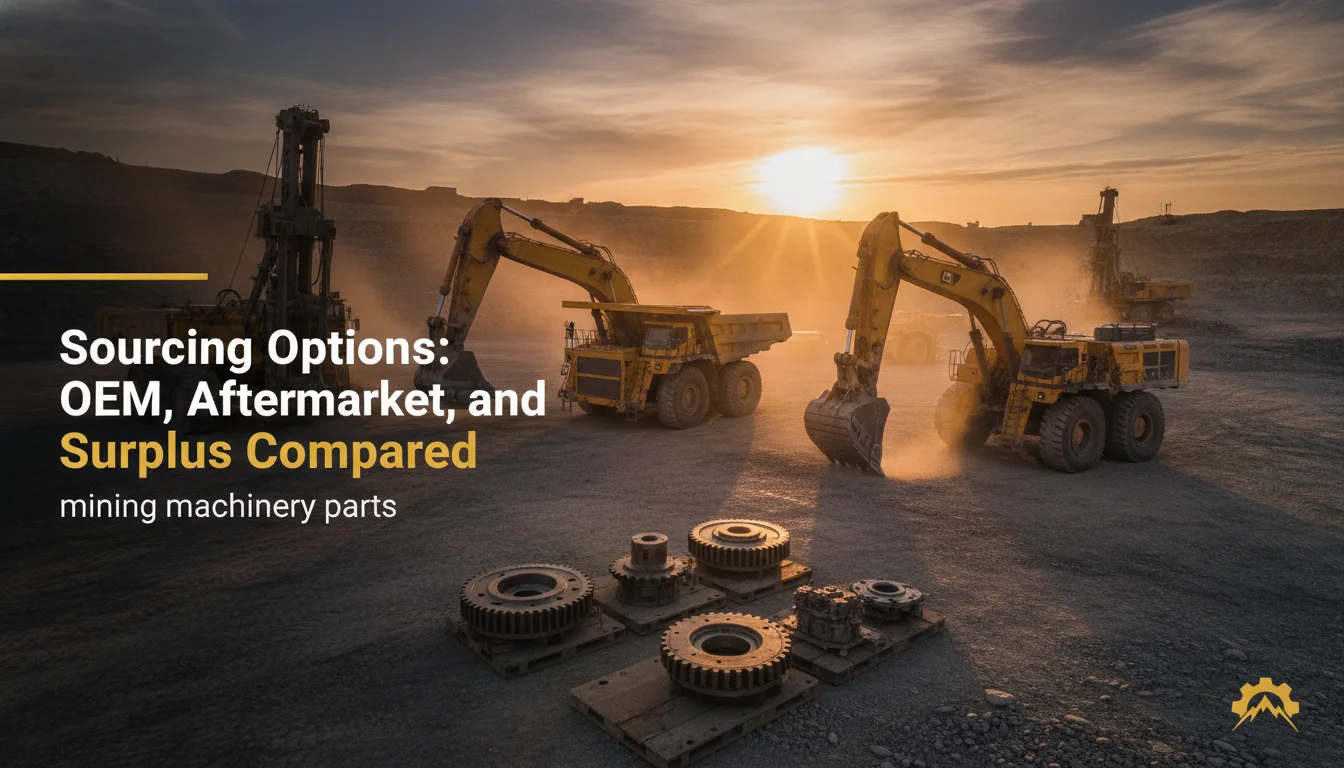
There is no single best sourcing path for every component. High-failure wearable parts may justify aftermarket pricing, while safety-critical steering and brake components may warrant strict OEM supply. The table below summarizes the four main options.
OEM Parts
OEM parts are produced or licensed by the original equipment manufacturer. They offer the tightest fit and factory warranty but often carry the longest lead times and highest prices. Road Machinery & Supplies Company supports Komatsu, Astec, Epiroc, and Sandvik equipment, illustrating how regional dealers can provide OEM-backed parts for complete extraction-to-finish maintenance.
Certified Aftermarket
Aftermarket components are manufactured by third parties using reverse engineering or compatible design data. They can reduce cost and lead time, but the buyer must verify material specs. Vikay Mining Equipments, through miningequipmentparts.com, markets OEM-quality aftermarket replacement parts for Atlas Copco Rock Drill, BBC 120F Drifter, Simba Junior, Wagon Drill, and Chicago Pneumatic construction air tools from India.
Surplus and New Old Stock
Surplus and new old stock (NOS) parts are unused OEM-branded components sold from warehouse inventory as-is. This path is valuable for older or discontinued machines. Vintage Parts lists 8,777 construction and mining part SKUs from manufacturers including Bucyrus, Caterpillar, John Deere, Kobelco, Komatsu, Liebherr, Link-Belt, Terex, Vermeer, Wirtgen, and Weir Minerals. Buyers should inspect shelf-sensitive items such as seals, hoses, and electrical components before installation.
| Sourcing Option | Best For | Brand Coverage Examples | Lead Time | Price Tier | Key Consideration |
|---|---|---|---|---|---|
| OEM factory parts | New equipment, warranty claims, safety-critical systems | Caterpillar, Komatsu, Hitachi, Volvo, Liebherr, Sandvik | Often longest; depends on factory allocation | Premium | Exact fit and full factory warranty |
| Certified aftermarket | Routine wear parts, budget-controlled fleets | Atlas Copco, Chicago Pneumatic, Metso, Sandvik | Usually shorter if stocked regionally | Mid-range | Verify material certification and source reputation |
| Surplus/NOS | Older, discontinued, or low-volume machinery | Bucyrus, John Deere, Kobelco, Terex, Wirtgen, Weir Minerals | Inventory-dependent; can be immediate | Budget to mid | Inspect shelf-age on seals, hoses, and electronics |
| Rebuild/exchange | High-cost assemblies such as hydraulic motors and cylinders | Staffa, Hagglunds, Hydrostar, KYB | Shop capacity dependent | Mid-range | Confirm core charge, rebuild warranty, and test documentation |
Outfit Your Mining Fleet: Bundling and Support Strategies
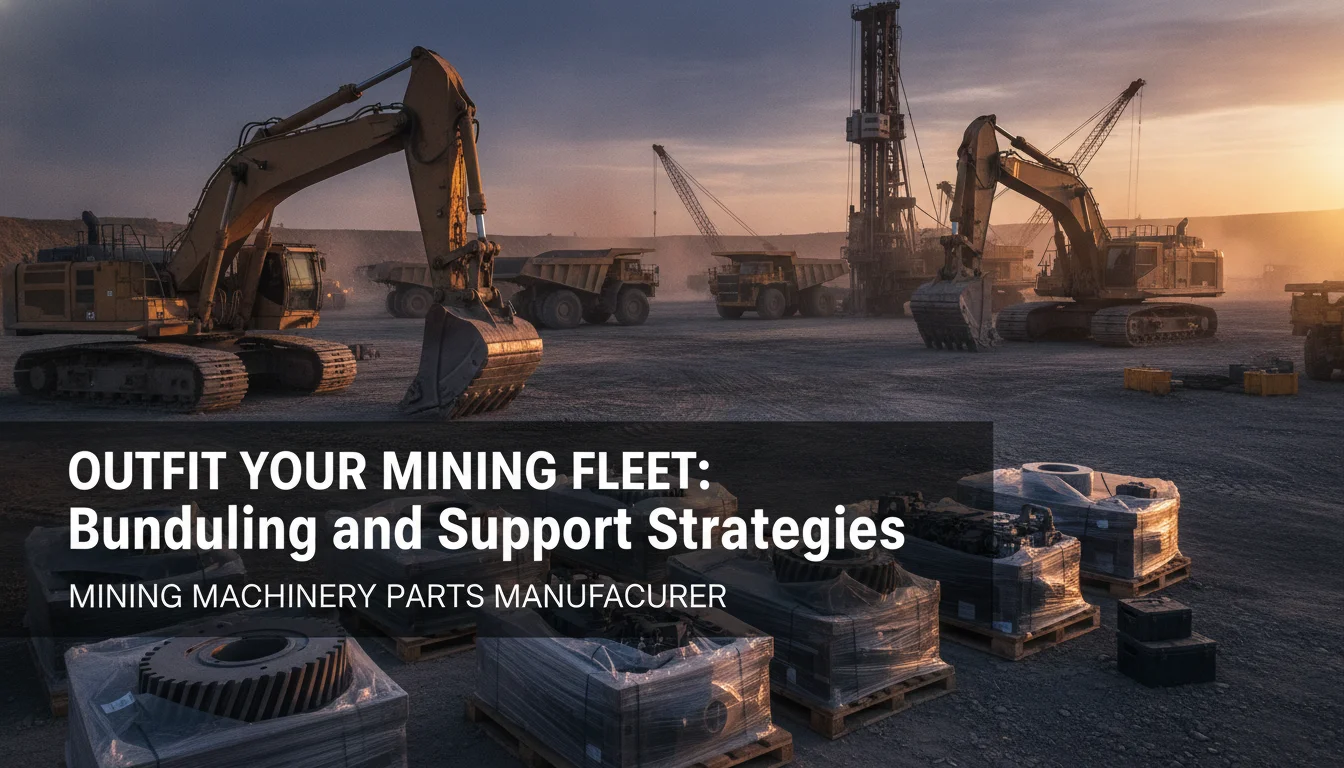
Mining parts buying is more than transactionally replacing a hose. Smart buyers build kits around common failure modes, seasonal maintenance, and machine criticality.
Critical Spare Parts Bundles
Stock at least one replacement set for high-wear items on each production asset. According to AGA Parts, commonly ordered mining machinery components include hydraulic components, driveshafts, axles, bearing ferrules and cogwheels, filters, valves, repair kits, wearable components, cooling system components, and steering system parts. For drills and underground bolters, include airline lubricators, shank adapters, coupling sleeves, and drill bits.
Operator Cabin and Comfort Components
Operator fatigue directly affects productivity and safety. Include cabin components, control instruments and meters, steering system elements, and service brake parts in your stock plan. These components are often overlooked until they fail an inspection or cause unscheduled downtime.
Rebuild and Exchange Programs
For expensive hydraulic drive motors and pumps, a rebuild/exchange program can reduce total cost and lead time. Cogar Manufacturing stocks hydraulic drive motors from Staffa, Hagglunds, Hydrostar, and KYB, as well as breaker, conveyor, crusher, and crawler components. A rebuild program with documented test results is often more predictable than waiting for a new OEM unit from any mining machinery parts manufacturer.
Crusher and Wear Part Selection
Crusher components deserve their own stocking strategy. Roll assemblies, bits, bit holders, reducers, couplings, and corner wheels all wear at different rates depending on material hardness and throughput. Cogar Manufacturing stocks complete crusher component sets, and suppliers like Haladjian Minerals Solutions specialize in wear parts and mechanical parts for aggregates and mining installations, with catalog offerings covering Metso and Sandvik equipment. Match your replacement schedule to the specific ore or aggregate being processed, not a generic calendar interval.
Step-by-Step: How to Qualify and Order from a Mining Machinery Parts Manufacturer
Use a controlled purchasing process to eliminate guesswork and reduce the chance of receiving the wrong component.
Step 1: Build a Serial-Number-Specific Parts List
Collect the machine make, model, serial number, and existing part number from the equipment data plate. Note the date of manufacture and any major component serial numbers, such as axles, transmissions, and hydraulic pumps. This is the single most important step for compatibility when working with any mining machinery parts manufacturer.
Step 2: Request Quotes from Multiple Supplier Types
Send the same RFQ to an OEM dealer, a certified aftermarket supplier, and a surplus specialist. Ask for availability, price, lead time, shipping cost, and documentation. Vikay Mining Equipments processes requests through a global distribution system; AGA Parts accepts quote requests around the clock.
Step 3: Compare Total Cost and Documentation
Do not compare list price alone. Ask for material certificates, warranty hours, country of origin, and part-number confirmation. If one quote is significantly lower, ask why. A lower-priced aftermarket option may be acceptable for a non-critical bracket, but not for a steering valve or brake component.
Step 4: Validate References and Request Photos
Request batch photos, especially for surplus or new old stock components. Check that the part number stamp, packaging, and any date codes match the quote. Vintage Parts notes that its mining components come directly from original manufacturers, which helps validate authenticity for older equipment.
Step 5: Issue a Controlled Purchase Order
Write the part number, serial number, brand, and requested documentation into the purchase order. Include delivery terms and the inspection window after receipt. This protects the buyer in case of mismatched or defective parts from any mining machinery parts manufacturer.
Care and Maintenance for Mining Machinery Parts
Even correctly sourced parts fail early when installed or stored improperly. A disciplined parts-handling process extends service life and protects warranty coverage.
Receiving and Inspection
Inspect all incoming parts for shipping damage, contamination, and part-number mismatches. Keep the packing list and photos. For hydraulic components, verify that ports are capped and fluid passages are clean. For electrical components, check connectors and date codes.
Storage and Contamination Control
Store hydraulic hoses, cylinders, and filters in a clean, dry, temperature-stable area. Protect bearing and seal surfaces from humidity and dust. Airline lubricators and pneumatic tools should be drained and stored dry when not in service. Contamination is a leading cause of hydraulic failure, and storage conditions are part of lifecycle cost.
Scheduled Replacement and Wear Tracking
Track operating hours on wear parts such as drill bits, shank adapters, coupling sleeves, and conveyor idlers. Replace these components on condition-based schedules rather than waiting for failure. For high-impact breaker and crusher components, use bit holders, shear pins, and roll assemblies from suppliers like Cogar Manufacturing to reduce secondary damage.
Who Are the Largest Mining Machinery Parts Manufacturers?
The largest mining machinery parts manufacturers by employee count in the U.S., according to IndustrySelect citing MNI data, include Komatsu Mining Corp. in Longview, Texas with 800 employees; Komatsu America Corp. in Peoria, Illinois with 700 employees; and Komatsu Mining Corp. in Milwaukee, Wisconsin with 650 employees. Epiroc USA in Garland, Texas employs 454 people, while Liebherr Mining Equipment Co. in Newport News, Virginia employs 375. That scale matters for new equipment supply chains. Regional aftermarket and surplus suppliers, however, often handle older machine populations more effectively and with shorter lead times.
As of 2026, U.S. mining machinery manufacturers export 53% of their equipment, according to IndustrySelect, making global parts availability a genuine competitive factor for procurement teams worldwide.
How 3GEN Export Supports Your Parts Sourcing
We've supplied OEM-quality spare parts for Caterpillar, Komatsu, Volvo, Atlas Copco, and 40+ brands since 2006. Our team verifies part numbers against serial-number ranges before shipment, provides material documentation on request, and ships globally with a 5-day delivery target. Whether you need a single seal kit or a full scheduled-maintenance bundle, we treat every order as a production-critical decision. Use the comparison table above, request documentation, and treat parts sourcing as an uptime strategy rather than a commodity purchase. Browse our parts categories or explore by brand to find components for your specific machine population.
Frequently Asked Questions
Who is the largest manufacturer of mining equipment?
According to IndustrySelect citing MNI data, Komatsu Mining Corp. is the largest U.S.-based mining equipment manufacturer by employee count, with its Longview, Texas facility employing 800 people. Globally, Caterpillar, Komatsu, Epiroc, and Sandvik are among the dominant OEM producers.
What is OEM in the mining industry?
OEM stands for original equipment manufacturer. In mining, OEM parts are components produced by the same company that built the machine, or by a licensed supplier, to match the original factory specification exactly. OEM parts carry the tightest dimensional tolerances and full factory warranty coverage.
Should I buy OEM or aftermarket mining machinery parts?
Buy OEM for safety-critical and warranty-bound components such as steering valves, brake assemblies, and drivetrain parts. Certified aftermarket is often acceptable for routine wear parts and budget-controlled fleets. Always verify material specs and part-number compatibility before choosing aftermarket.
How do I verify that a part will fit my machine?
Use the machine data plate, serial number, and existing part number. Send all three to the supplier and request written part-number confirmation before shipment. Never accept a verbal or approximate compatibility statement.
Can I buy parts for old or discontinued mining machines?
Yes. Surplus and new old stock specialists like Vintage Parts list 8,777 construction and mining part SKUs from brands such as Bucyrus, Terex, and Wirtgen. Inspect shelf-sensitive parts including seals, hoses, and electrical components before installation.
What information should I include in a parts quote request?
Include machine make, model, serial number, existing part number, required quantity, shipping destination, and desired delivery date. The more complete the request, the faster and more accurate the quote from any mining machinery parts manufacturer.