
Mining Truck Brake Discs: 2026 Buying Guide
Compare mining truck brake discs by material, price, and brand. Get 2026 OEM specs, maintenance tips, and buying advice from 3GEN Export's parts team.
Loading article…
Article Not Found
The article you're looking for doesn't exist or may have been removed.
Back to BlogKey Takeaways
- Understand the importance of selecting the right mining truck brake discs for safety and efficiency.
- Consider materials, compatibility, and performance ratings when purchasing.
- Regular maintenance can extend the lifespan of brake discs significantly.
- Explore various brands and their unique offerings to find the best fit for your needs.
- Stay informed about pricing trends and availability in the market.
- Cryogenic treatment and sintered friction materials are reshaping replacement cycles heading into 2026.
"Choosing the right brake disc is critical for the safety and efficiency of mining operations. The right material and design can significantly reduce wear and maintenance costs." - Industry Expert
Introduction
brake discs are the rotating friction components that convert a haul truck's kinetic energy into heat, allowing massive loaded vehicles to stop safely on grade. These discs must withstand extreme conditions, including high temperatures and heavy loads, making their selection critical for operational success. This guide covers the types, features, and considerations you need before placing a purchase order, updated for 2026 sourcing conditions.
We source and supply brake discs and friction components for haul trucks, ADTs, and wheel loaders across construction, mining, and energy fleets. The patterns we see are consistent: operators who treat brake discs as a commodity part end up paying for it later in unplanned downtime. Getting the spec right the first time matters more than shaving a few dollars off the invoice.
Types of Mining Truck Brake Discs
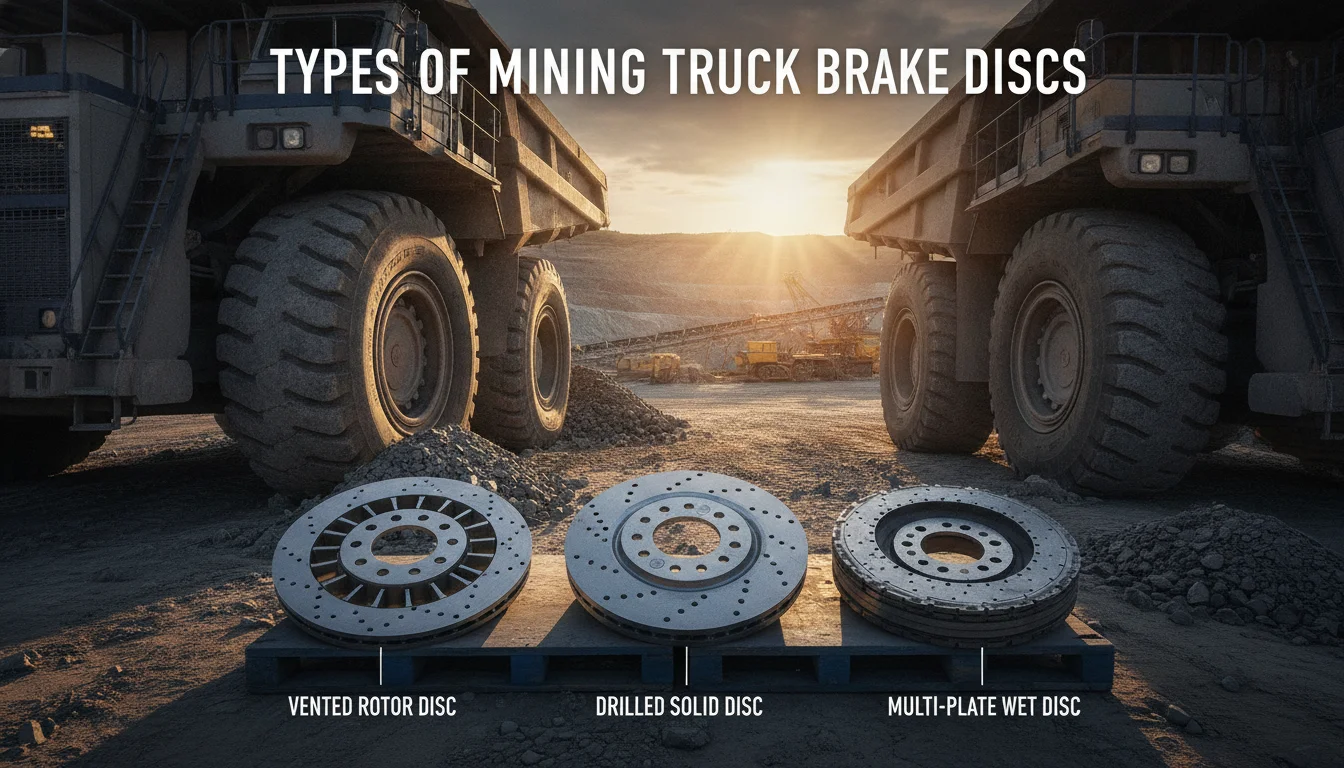
1. Cast Iron Brake Discs
Cast iron brake discs are the standard OEM choice for most haul trucks due to their durability and heat resistance. They handle high-stress braking cycles reliably and remain the most widely stocked option across dealer and aftermarket networks.
2. Sintered Brake Discs
Sintered brake discs pair a high-density friction material with the rotor to improve heat management. According to Coreparts Australia, sintered pads are pressed at high pressure and temperature, contain no resins, and do not require burnishing, which removes a notable safety risk during break-in. The lower operating temperature also reduces pad and rotor wear and helps limit brake fade on long descents.
3. Cryogenically Treated Brake Discs
Cryogenically treated brake discs undergo a deep-freeze process that alters the rotor's grain structure to reduce cracking and wear. In a documented field test on Komatsu 730E haul trucks, Controlled Thermal Processing installed a cryogenically treated rotor on one side of a truck and left an untreated OEM rotor on the other side as a control. After five months, the untreated side had already required a second rotor replacement with severe surface cracking, while the treated rotor showed only minor cracking. Per the company's own reporting on that test, the treated rotor was projected to outlast at least three conventional rotors.
"It is obvious to date that the treated rotor will outlast at least three conventional rotors, and in fact will be monitored weekly just to see how far it will go before it needs to be discarded," the mining company reported after the trial, according to Controlled Thermal Processing's published case study.
What to Look For When Buying Mining Truck Brake Discs
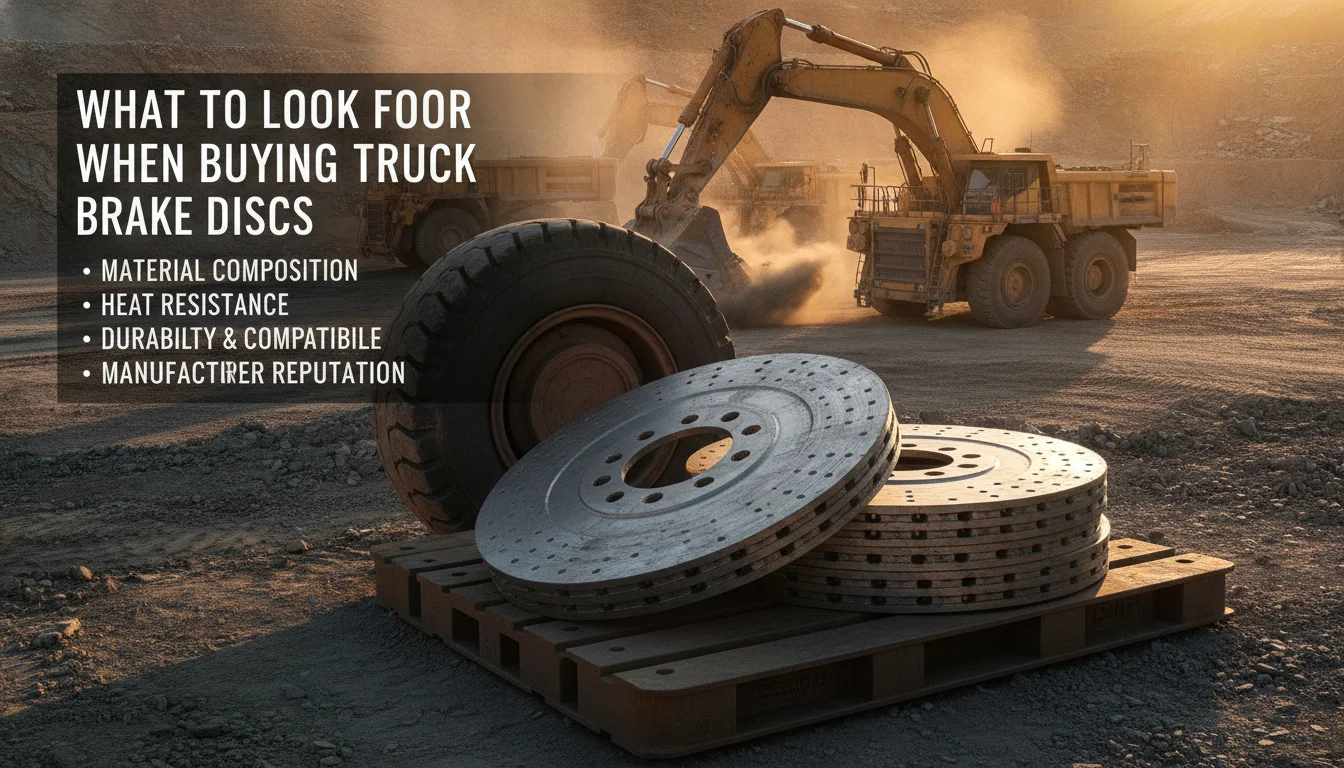
1. Material Quality
Choose brake discs made from high-quality materials such as cast iron, ductile cast iron, or sintered compounds. These materials provide better heat dissipation and wear resistance than lower-grade steel rotors, and ductile cast iron in particular resists the surface cracking and warping common to standard OEM steel rotors.
2. Compatibility
Ensure the brake discs are compatible with your specific mining truck model before ordering. Check OEM part numbers and specifications against your fleet's exact model and year, since even trucks in the same family (Komatsu 630E, 730E, and 830E, for example) often use different rotor diameters and caliper mounts.
3. Performance Ratings
Look for documented performance ratings and field data rather than marketing claims alone. High-performance ratings backed by case studies or fleet trial data indicate reliability under extreme braking loads, heat cycles, and dust exposure typical of open-pit and underground operations.
4. Rotor Dimensions and Caliper Setup
Verify rotor diameter and caliper count against your truck's service brake configuration. As a reference point, large haul trucks like the Komatsu 730E use a 46-inch front rotor operated by three calipers per side, while the rear uses two smaller rotors per side with a single caliper. Getting these dimensions wrong means a part that simply will not bolt on.
How to Choose the Right Brake Disc for Your Fleet
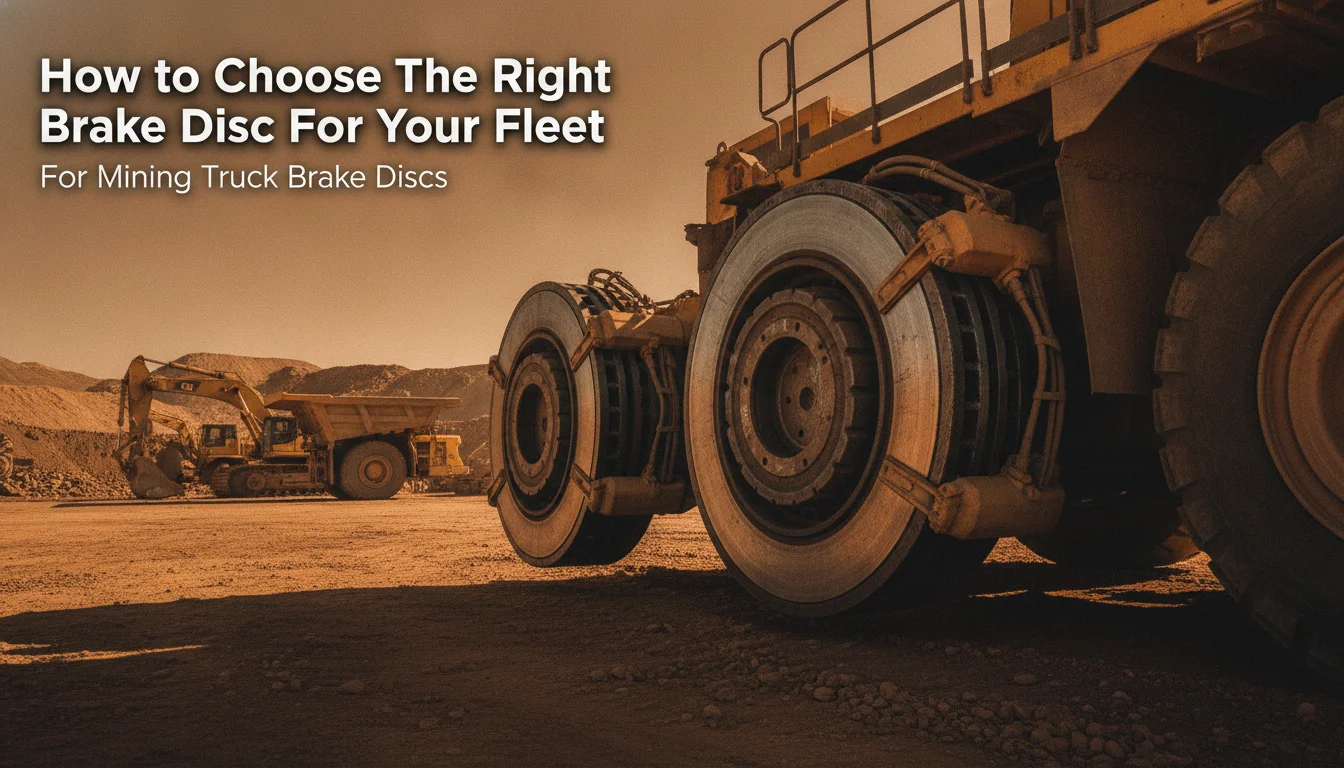
Choosing the right mining truck brake disc starts with matching the disc type to your operating conditions, not just your budget. A haul truck running steep grades with frequent heavy braking needs a different friction solution than a wheel loader working flat yard cycles.
For fleets running steep haul roads or deep pit descents, sintered pads paired with ductile cast iron rotors typically outperform standard resin-based OEM pads because they manage heat more efficiently and reduce the risk of brake fade. For fleets prioritizing minimum downtime and willing to pay more upfront, cryogenically treated rotors offer the longest service intervals we've seen documented. For general-duty trucks with moderate braking demands, a quality OEM-spec cast iron disc remains a sound, cost-effective choice.
Pro Tip: Before ordering, pull your truck's service brake wear logs from the last 12 months. If pad wear or rotor cracking is showing up well before the manufacturer's expected interval, the root cause is often mismatched friction material, not a defective part.
Comparing Mining Truck Brake Disc Options
| Disc Type | Best For | Relative Lifespan | Price Tier |
|---|---|---|---|
| Standard Cast Iron (OEM) | General-duty trucks, moderate grades | Baseline | Budget |
| Sintered Pad + Ductile Iron Rotor | Steep haul roads, heavy braking cycles | Above baseline, reduced fade | Mid-range |
| Cryogenically Treated Rotor | High-downtime-cost fleets, extreme duty | Up to 3x untreated rotors (per documented field trial) | Premium |
Top Brands for Mining Truck Brake Discs
| Brand | Type | Key Features | Warranty |
|---|---|---|---|
| Carlisle Brake & Friction | OEM | Designed for extreme conditions; nearly a century of mining brake engineering, including caliper brakes chosen for early mining truck platforms | 1 year |
| Wilwood Engineering | Performance/OEM | Custom industrial disc brake solutions, one-piece iron rotors, over 20,000 engineered part designs on the shelf | 2 years |
| Coreparts (Friction Tech / DynoAus) | Extended Life | Sintered pads, ductile cast iron rotors; exclusive Australian distributor for Komatsu 630E/730E/830E, Unit Rig, and Liebherr upgrade kits | 1 year |
| Controlled Thermal Processing | Cryogenic | Deep cryogenic treatment of existing rotors, documented Komatsu 730E field trial results | Lifetime |
Care and Maintenance of Mining Truck Brake Discs
1. Regular Inspections
Conduct regular inspections of brake discs for signs of wear, cracking, or warping. Early detection can prevent costly repairs and downtime, and it lines up with OEM service bulletin guidance on scheduled wet brake and disc inspections for haul truck fleets.
2. Proper Cleaning
Keep brake discs clean of dust and debris to maintain optimal performance. Use cleaning agents that will not damage the disc surface or leave residue that interferes with friction material contact.
3. Replacement Schedule
Establish a replacement schedule based on usage hours and observed wear patterns rather than a fixed calendar. Following manufacturer guidelines helps you maximize the lifespan of the brake discs while avoiding surprise failures mid-shift.
4. Watch the Pad-Rotor Relationship
Pad wear and rotor condition are directly linked. In the CTP field trial referenced above, the treated rotor's pad wore only 1.5 mm over the test period compared to 7 mm on the untreated side's pad, a clear sign that rotor surface condition drives pad consumption rate as much as braking frequency does.
Pricing Expectations for Mining Truck Brake Discs
1. Budget Range
Basic cast iron brake discs typically range from $100 to $250 per disc, depending on the brand and specifications. This tier suits general-duty trucks without extreme grade or heat demands.
2. Mid-Range Options
Performance-oriented sintered brake discs can cost between $250 and $500, offering enhanced durability and performance for fleets running tougher grades or higher cycle counts.
3. Premium Choices
Cryogenically treated brake discs and advanced sintered options may range from $500 to $1,000, reflecting their superior technology and longevity. For high-utilization fleets where downtime cost outweighs part cost, this tier often pays for itself over the service interval.
Pros and Cons
Pros
- Premium disc types (sintered, cryogenic) can significantly extend service intervals and reduce unplanned downtime
- Wide brand availability means competitive pricing and multiple sourcing options for most common haul truck models
- OEM-spec parts are readily cross-referenced by part number, simplifying procurement for fleet managers
Cons
- Premium options carry a meaningfully higher upfront cost per disc
- Compatibility mistakes are common when part numbers aren't verified against exact truck model and year
- Some extended-life upgrade kits require matching rotor and pad materials together, limiting mix-and-match flexibility
What to Expect From the Market in 2026
As of 2026, fleet operators can expect continued adoption of sintered friction materials and cryogenic rotor treatments as downtime costs remain the primary driver of purchasing decisions. This year, more suppliers are packaging sintered pads with ductile cast iron rotors as matched upgrade kits rather than selling components separately, following the model established for Komatsu and Unit Rig platforms. Expect lead times to remain a bigger factor than price for many buyers, which is why sourcing from suppliers with global stock and fast shipping matters as much as the spec sheet itself.
Frequently Asked Questions
What are the signs that my mining truck brake discs need replacement?
Signs include excessive wear, visible cracking, reduced braking efficiency, and unusual noises during operation. Uneven pad wear side-to-side on the same axle is also a red flag worth investigating immediately.
How do I choose the right brake disc for my mining truck?
Consider the truck model, type of braking system, and the specific conditions under which the truck operates. Always refer to OEM specifications and confirm rotor diameter and caliper count before ordering.
Are cryogenically treated brake discs worth the investment?
For high-utilization fleets, yes. Based on documented field trial data, treated rotors have outlasted untreated conventional rotors by a factor of roughly three in at least one mining company's test, which can offset the higher upfront cost through fewer replacements and less downtime.
Which brands of brake discs are considered the best?
Carlisle Brake & Friction, Wilwood Engineering, Coreparts, and Controlled Thermal Processing each lead in different niches: OEM reliability, custom engineering, extended-life upgrade kits, and cryogenic treatment respectively. The best brand for you depends on your truck model and operating conditions rather than a single universal answer.
Do big rigs and haul trucks use disc brakes or drum brakes?
Most modern mining haul trucks use oil-cooled wet disc brake systems, while some heavy highway trucks still use drum brakes on certain axles. Caterpillar's wet disc brakes, for example, use friction material bathed in oil for continuous cooling during heavy braking cycles.
Can I install brake discs myself?
While it is technically possible with the right equipment, professional installation is strongly recommended to ensure proper alignment, torque specs, and safety. Misaligned rotors or under-torqued caliper mounts on a machine this size create a serious safety risk.
Where can I purchase mining truck brake discs?
this type of discs can be purchased from specialized suppliers, OEM dealers, and online marketplaces. For OEM-quality parts across Caterpillar, Komatsu, Volvo, and 40+ brands with global 5-day delivery, you can also source directly through 3genexport.com.
Conclusion
Choosing the right mining truck brake discs is essential for maintaining safety and efficiency in mining operations. By understanding the types, materials, and maintenance requirements, you can make an informed decision that improves the performance and uptime of your mining equipment. Always consider reputable brands and verify OEM part numbers before ordering, and consult with a parts specialist when a fitment question isn't fully clear.
Ready to source OEM-quality brake discs and friction components for your fleet? Shop OEM-quality spare parts with global 5-day delivery at 3genexport.com.