
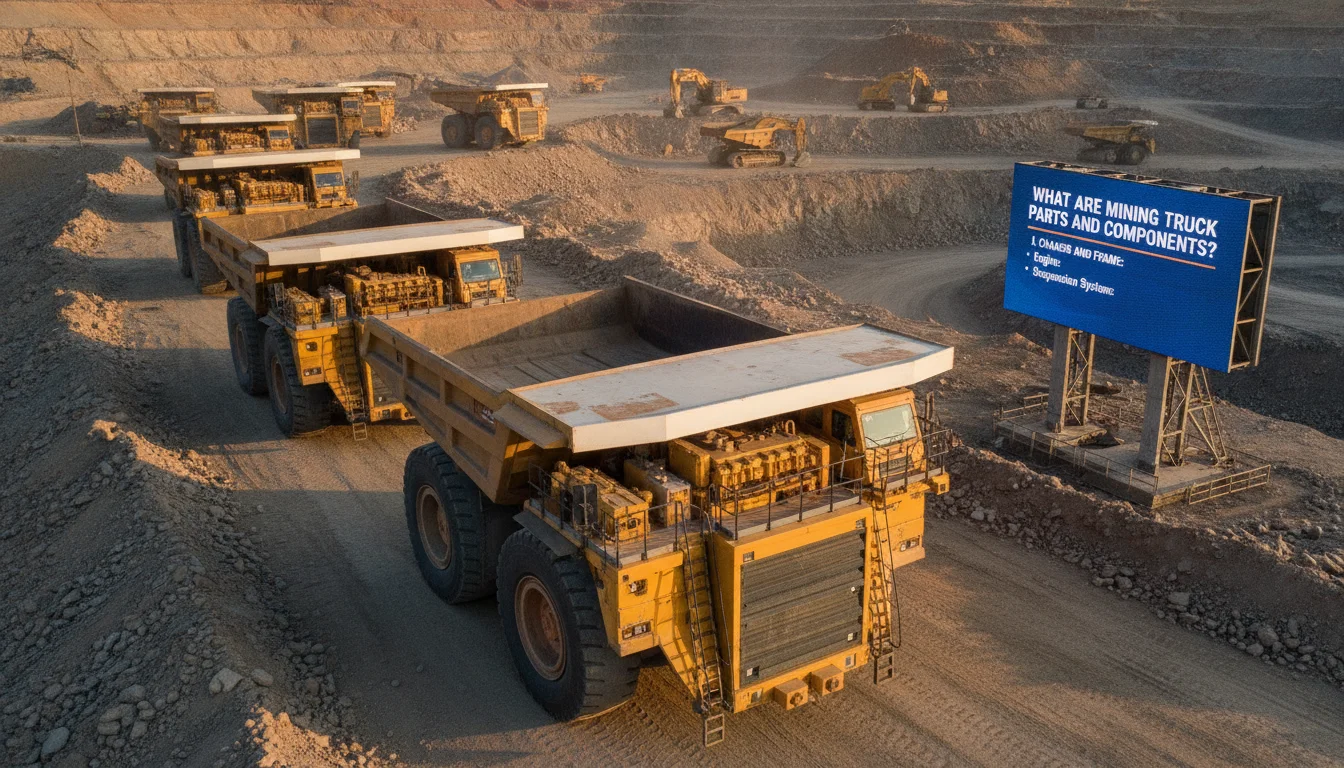
Mining Truck Parts and Components: Buyer's Guide
Sourcing mining truck parts and components? Compare OEM, aftermarket, and rebuilt options, verify fitment, and cut downtime with our 2026 procurement
Loading article…
Article Not Found
The article you're looking for doesn't exist or may have been removed.
Back to BlogMining truck parts and components are the replaceable engine, drivetrain, hydraulic, and structural elements that keep haul trucks productive on site. Sourcing the right mix of OEM, aftermarket, and rebuilt options reduces downtime and protects your equipment investment.
Key Takeaways
- and components span engine, transmission, braking, hydraulic, dump body, and undercarriage systems.
- Condition grading matters: OEM surplus, rebuilt, and high-quality used parts each carry different risk and cost profiles.
- Verify fitment by model and serial number before purchase to avoid downtime.
- Compare total cost of ownership, not just purchase price, when selecting aftermarket alternatives.
- Partner with suppliers that inspect parts to documented standards and ship to remote mine sites.
What Are Mining Truck Parts and Components?
Definition and Scope
A haul truck is an off-highway rigid or articulated dump truck built to move mined material over unpaved roads and steep grades. this type of components are the replaceable elements that keep these machines running, covering the engine, drivetrain, hydraulics, electrical system, frame, and wear surfaces. The haulage cycle is the productive heartbeat of a mine, so every failed component creates a ripple effect across loading, crushing, and processing operations.
Core Systems and Common Components
At the system level, procurement teams typically organize parts into six categories:
- Engine and cooling: pistons, liners, turbochargers, fuel injection pumps, radiators, aftercoolers, water pumps.
- Drivetrain: powershift transmissions, torque converters, drive shafts, differentials, final drives, axles, wheel motor groups.
- Braking and safety: hydraulic and air brake components, brake accumulators, wheel speed sensors, retarders, lighting.
- Dump body and hydraulics: hoist cylinders, telescopic cylinders, dump pumps, control valves, hinges, tailgate pins, hydraulic tanks.
- Undercarriage and wheel group: wheel hubs, planetary gear assemblies, torque tubes, rims, tires.
- Electrical and controls: wiring harnesses, sensors, switches, joystick controllers, display panels.
Key Mining Truck Systems Explained
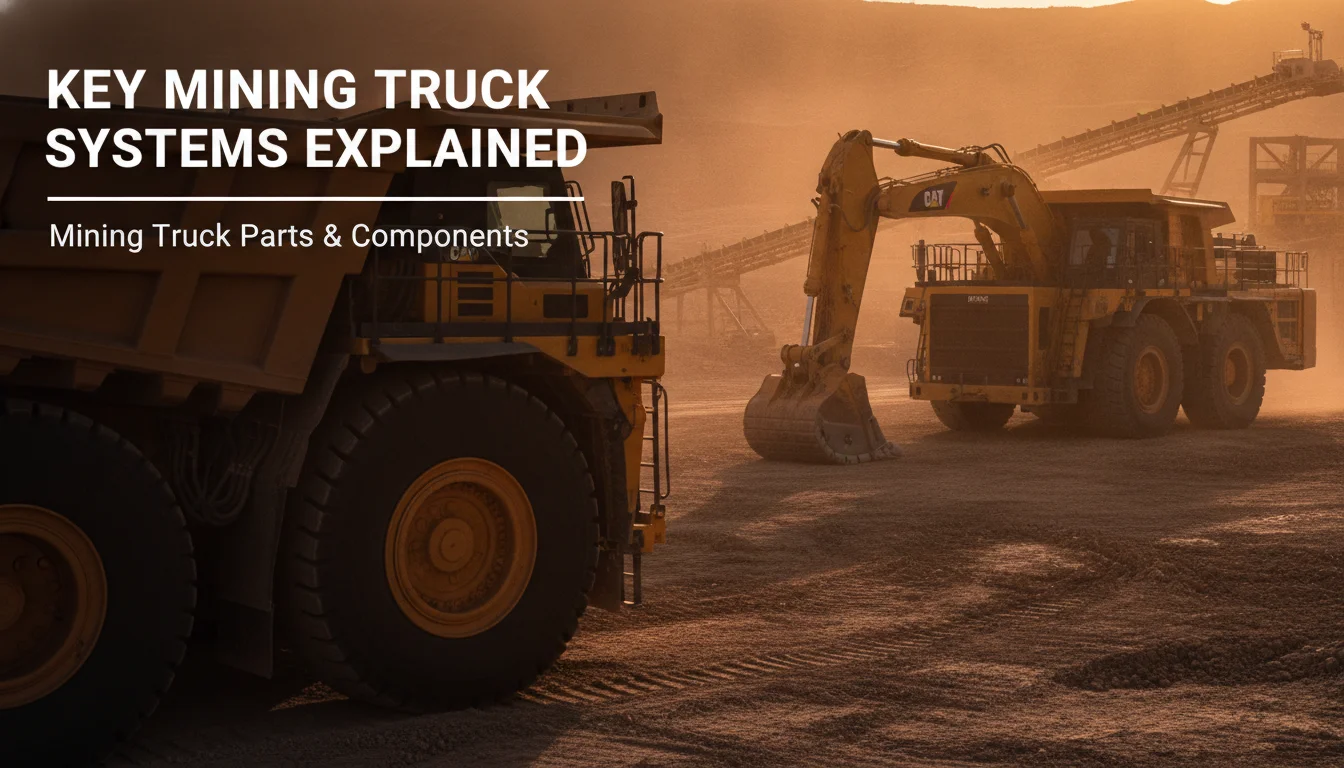
Engine and Drivetrain
Engine components are among the highest-cost items in any this kind of and components budget. Whether you operate Caterpillar, Komatsu, Volvo, Terex, Hitachi, or Belaz equipment, the purchasing decision usually comes down to OEM versus aftermarket or rebuilt options. According to XTME Mining, popular platforms include Komatsu HD785-7, 730E, 830E, and 930E; Belaz 75306 and 75131; Terex TR50, TR60, and TR100; Volvo A40E-F; Hitachi EH3500 and EH4000; and Caterpillar MT4400 and MT3300. Aftermarket suppliers often target these same models, which means part interchangeability and cross-reference data are critical when sourcing the truck parts and components for a mixed fleet.
Hydraulics and Dump Body
Hydraulic components are frequent wear points on any haul truck. Dump pumps, hoist cylinders, and control valves see continuous pressure cycles throughout a shift. For reference, Warren Parts lists Permco and Parker dump pumps from $655.09 to $2,082.86, and Hyva telescopic cylinders from $1,348.65 to $2,169.05. These figures show the spread between simple wear components and complex hydraulic assemblies. A failure in the hoist circuit can disable an entire truck, so maintaining a critical spares inventory of these components makes practical sense.
Articulated, Rigid, and Underground Haulage Variations
Not every haul truck runs the same architecture, and that changes which mining truck you need to stock. Rigid frame trucks like the Komatsu 930E or Caterpillar MT-series use a fixed chassis and rear-axle steering geometry, so drivetrain and final drive parts are typically model-specific. Articulated dump trucks, by contrast, pivot at a center hinge and rely on different steering cylinders and joint components entirely. Underground haulage trucks add another layer: lower clearance designs demand compact cooling packages and specialized transmission control units built for confined decline headings. Imara Engineering stocks parts across rigid dump trucks, articulated dump trucks, and underground mining trucks, covering CAT, Komatsu, Bell, Volvo, Sandvik, and Epiroc equipment. If your fleet mixes truck types, confirm with your supplier that cross-reference data accounts for these structural differences before you place an order.
What to Look For When Buying Mining Truck Parts and Components
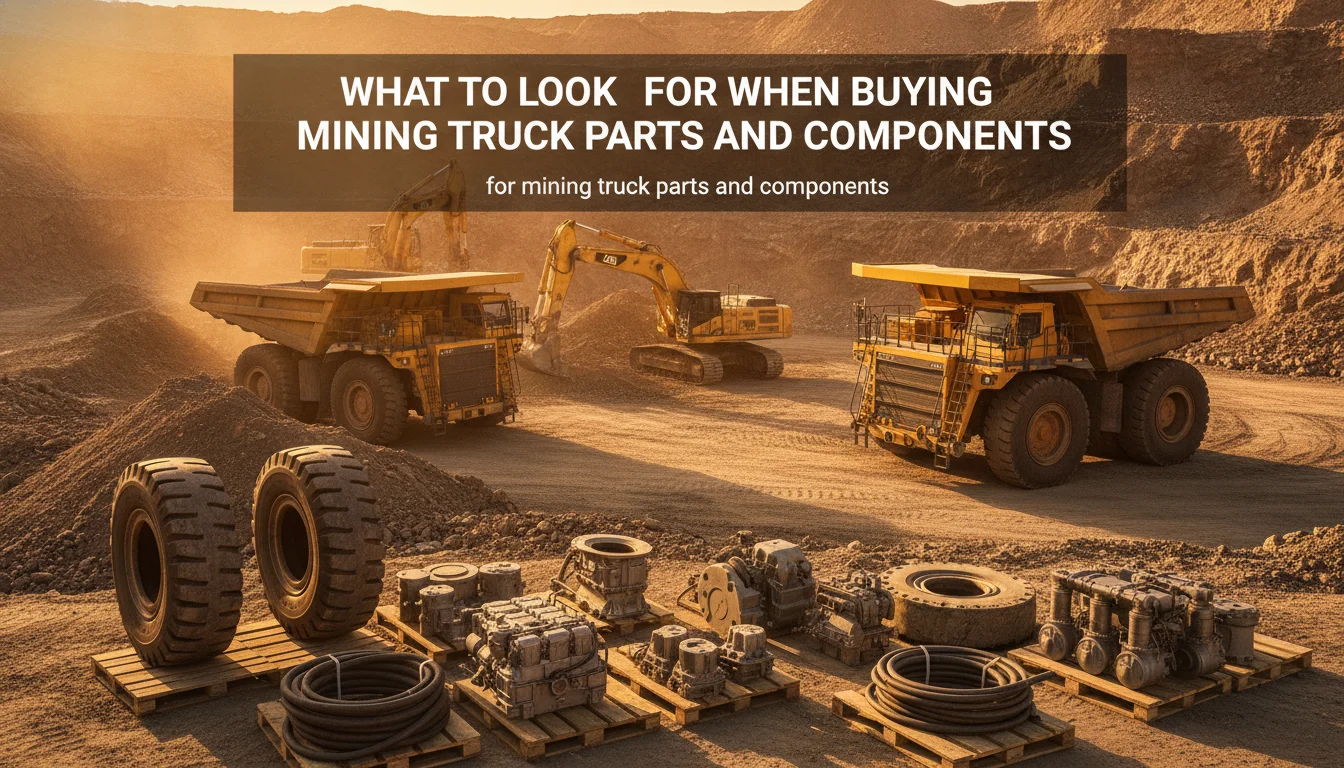
Compatibility and Fitment Verification
Fitment verification is the first gate in any purchase. Imara Engineering states that fitment is verified to the model and serial number before dispatch, which reduces the risk of ordering a part that looks correct but does not bolt up. The same discipline applies across all suppliers: always submit machine model, serial number, part number, quantity, and photos when requesting a quote.
Material Specifications and OEM Interchangeability
An OEM-interchangeable part is a component designed to fit the same mounting interfaces and perform the same functions as the original part without modification. XTME Mining reports that its aftermarket parts are designed for 100% interchangeability with OEM components, with materials that match or exceed OEM standards, and typically achieve 80-90% of original factory performance. That performance gap matters less for non-safety-critical wear parts and more for engine internals or braking components.
Condition Grades and Inspection Standards
Condition grading separates serious suppliers from parts brokers. Portland Tractor offers rebuilt, high-quality used, and OEM surplus haul truck parts, and states that every part entering its 10-acre yard is inspected to the highest standards. Its inventory exceeds 100,000 parts, which is a meaningful signal for availability on older models. When buying used or rebuilt and components, ask for the specific inspection criteria: dimensional checks, crack testing, pressure testing, and photographic evidence.
Interchangeability claims mean little without verification. The suppliers that earn long-term fleet business are the ones that ask for machine serial numbers, provide inspection reports, and stand behind their condition grading.
OEM vs Aftermarket vs Rebuilt: Comparing Your Options
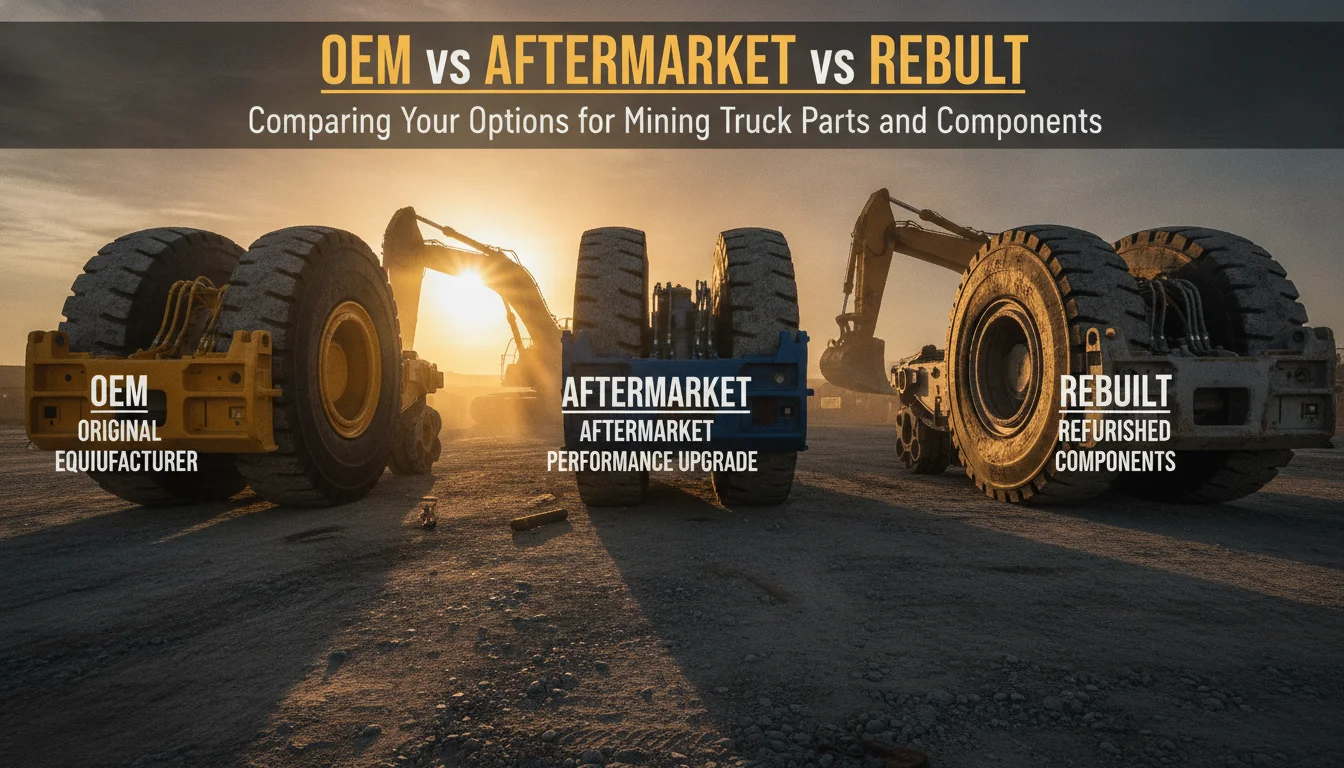
Comparison Table
| Option | Cost Level | Quality and Risk | Best For | Example Source |
|---|---|---|---|---|
| New OEM / OEM surplus | Highest | Matches original specs; limited warranty; zero wear | Critical safety and engine systems; late-model trucks | Portland Tractor OEM surplus |
| Aftermarket (interchangeable) | Mid | 80-90% of factory performance; OEM-standard materials; variable quality by supplier | Wear parts, hydraulic components, undercarriage | XTME Mining, H-E Parts International |
| Rebuilt / remanufactured | Mid-Low | Restored to serviceable condition; inspected; may carry core return requirements | Budget-conscious fleets with internal QC capability | Portland Tractor rebuilt parts |
| High-quality used | Low-Mid | As-removed condition; inspected; possible hidden wear | Older models, emergency downtime, budget repairs | Portland Tractor used parts, salvage networks |
When Each Option Makes Sense
Aftermarket interchangeable parts make financial sense for high-wear items like brake pads, filters, and hydraulic seals, where 80-90% performance at a fraction of OEM cost is acceptable. Rebuilt components work well for transmissions and final drives if the rebuilder follows a documented process. Used parts are often the only option for legacy models such as Caterpillar 769B or Komatsu HD785-7 once new production has ended. According to H-E Parts International, engineered aftermarket components are built to be compatible across most major off-road mining haul truck platforms, which gives fleet managers a broader sourcing net than OEM channels alone. The wrong time to choose the cheapest this type of components is when failure triggers a multi-day shutdown of a primary haul route.
Pros and Cons
Pros
- A wide global supplier base means competitive pricing on both OEM and aftermarket this kind of and components.
- Rebuilt and used options extend the service life of older or discontinued truck models.
- Documented inspection standards from established suppliers reduce the risk of installing a defective part.
- Blending OEM and aftermarket sourcing lets fleets control cost without sacrificing reliability on critical systems.
Cons
- Aftermarket parts typically deliver 80-90% of original factory performance, which may not suit every safety-critical application.
- Used and rebuilt inventory availability varies widely by model and can be inconsistent for less common platforms.
- Verifying fitment and inspection quality across multiple suppliers takes time procurement teams don't always have during an unplanned outage.
- Shipping to remote mine sites can extend lead times if a supplier lacks established export logistics.
How to Source and Select Mining Truck Parts and Components
Step 1: Document the Machine Details
Record the model, serial number, part number, and current condition from the equipment nameplate or service manual before contacting any supplier.
Step 2: Identify the Critical System
Classify the failed component as safety-critical, production-critical, or routine wear so you can prioritize sourcing speed against cost.
Step 3: Request Quotes From Multiple Suppliers
Get quotes from at least three sources, including one OEM channel, one aftermarket interchange supplier, and one used or rebuilt source.
Step 4: Verify Interchangeability and Condition
Ask for cross-reference part numbers, inspection reports, and photos of the actual item before committing to a purchase.
Step 5: Confirm Warranty and Return Policy
Understand core acceptance criteria, return windows, and who pays freight on warranty claims before you sign off.
Step 6: Confirm Shipping and Lead Time
Remote mine sites often require specialized freight and customs documentation, so confirm delivery timelines up front rather than after the order ships.
Supplier Evaluation Checklist
- Inventory depth: Does the supplier stock parts for your specific model or only common fast-moving items?
- Inspection standards: Are parts tested, cleaned, and graded before sale?
- Model coverage: Can the supplier cross-reference multiple OEM part numbers?
- Geographic reach: Do they ship to remote mine sites and understand export documentation?
- Price transparency: Are quotes itemized, with separate pricing for core charges and freight?
Price Ranges and Care and Maintenance
Budget, Mid-Range, and Premium Tiers
Pricing for the truck parts and components varies by complexity, brand, and condition. Based on listed prices from Warren Parts, budget-tier items like tailgate pins, hinges, and lights range from roughly $5 to $150. Mid-range hydraulic components such as dump pumps, motors, and telescopic cylinders fall between $350 and $2,200. Premium assemblies, including complete final drives, wheel motor groups, engines, and transmissions, are quoted on request and typically represent major capital expenditures because they integrate multiple subcomponents and require specialized remanufacturing or OEM sourcing.
Total Cost of Ownership
Purchase price is only one variable in the equation. A cheaper aftermarket component that lasts roughly 80-90% as long as its OEM counterpart may still be the better value if it's readily available and priced well below OEM, but only if the failure mode is predictable and non-catastrophic. For critical drivetrain and braking components, the cost of unplanned downtime often outweighs the part price itself. That's why fleet managers increasingly blend OEM parts for safety-critical positions with aftermarket interchange parts for wear surfaces.
Inspection Schedules and Common Wear Points
The Hebei Huigong guide emphasizes that regular inspections and scheduled maintenance form the foundation of parts longevity. Common wear points include brake accumulators, hydraulic hoses and fittings, dump body pivot pins, and wheel motor seals. Scheduling inspections around haul cycle hours or fuel burn intervals helps catch wear before it becomes a failure that takes a truck off the route entirely.
A haul truck that isn't hauling costs money in every direction. Treat your critical spares inventory of mining truck parts and components as insurance against the one failure mode you can't schedule around.
Record Keeping and Vendor Communication
Maintain a parts performance log that tracks installation date, hours in service, failure mode, and supplier. This data helps you identify which aftermarket parts deliver acceptable life and which do not. Keep vendor source records for every component so warranty claims and reorders stay straightforward. A consistent record-keeping process turns parts procurement from reactive firefighting into a managed reliability program.
As of 2026, selecting the right mining truck parts and components still comes down to disciplined verification, honest condition grading, and a cost model that weighs purchase price against production risk. Suppliers that document fitment, inspection, and shipping capabilities earn a place in the critical spares chain. This year, with global freight lanes tightening in some regions, lead time reliability matters as much as unit price.
Frequently Asked Questions
What is the difference between OEM and aftermarket mining truck parts?
OEM parts are made by the original equipment manufacturer or its licensed supplier and match original specifications exactly. Aftermarket parts are produced by third-party suppliers to be interchangeable with OEM components, often at a lower price and with 80-90% of factory performance according to XTME Mining.
How do I know if a used mining truck part will fit my machine?
Always provide the machine model, serial number, and part number when requesting a quote. Reputable suppliers like Imara Engineering verify fitment to the model and serial number before dispatch.
What are the most commonly replaced mining truck parts and components?
High-wear items include brake pads, hydraulic hoses, hoist cylinders, dump body pins, filters, seals, and undercarriage components. Engine and transmission components are replaced less frequently but at much higher cost.
Are rebuilt mining truck parts reliable?
Rebuilt parts can be reliable if the rebuilder follows a documented process and provides inspection reports. Portland Tractor inventories rebuilt haul truck parts and states that every part entering its yard is inspected to high standards.
What should I check before buying aftermarket components?
Confirm 100% OEM interchangeability, material specifications, performance ratings, warranty terms, and the supplier's inspection process. Ask for cross-reference part numbers and real-world references from similar mining operations.
How fast can I get mining truck parts shipped to a remote site?
Shipping speed depends on supplier location, inventory depth, and freight logistics. Suppliers such as Imara Engineering and Portland Tractor state they ship globally to remote mine sites, often with expedited options and export documentation support. 3GEN Export ships OEM-quality spare parts globally with 5-day delivery, backed by verified fitment and inspection standards.
Ready to source verified mining truck parts and components without the guesswork? Shop OEM-quality spare parts with global 5-day delivery at 3genexport.com, and put your fleet's critical spares chain in hands that understand both the machinery and the logistics.