
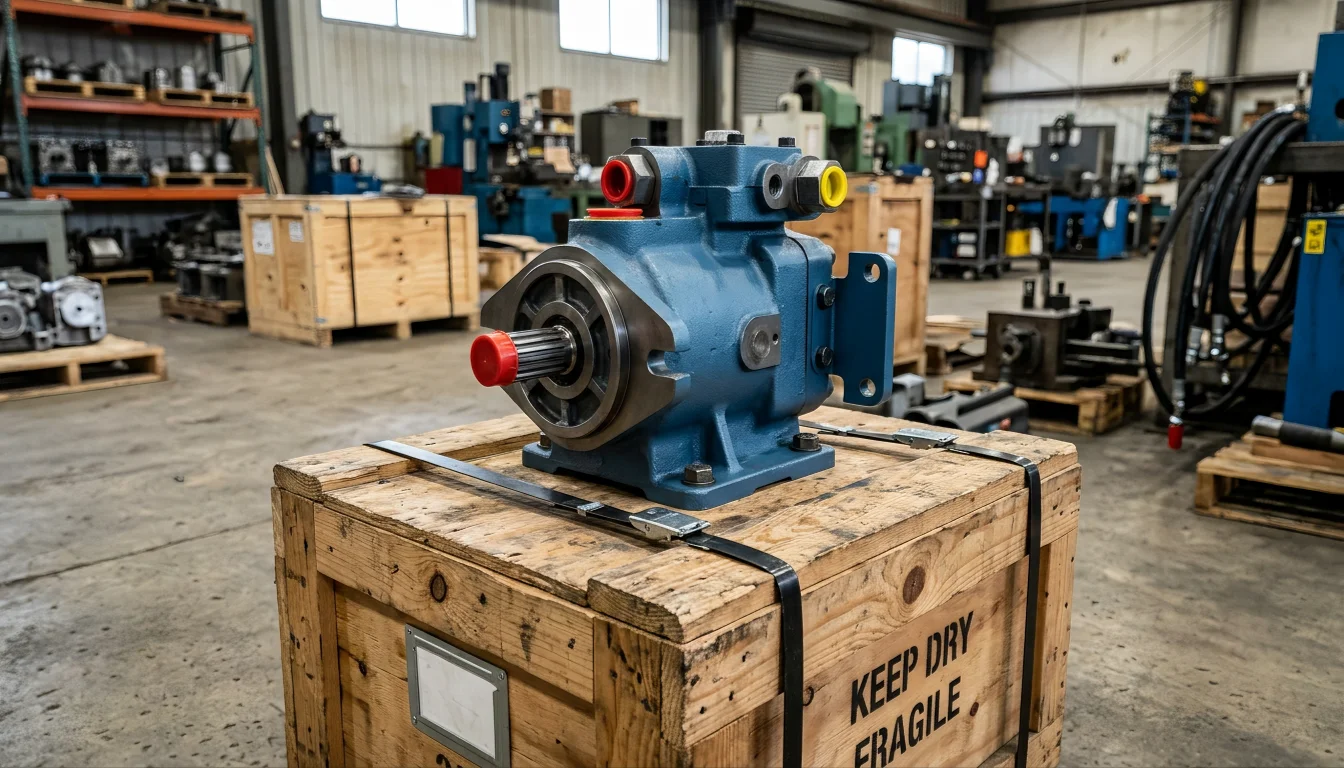
OEM Heavy Equipment Parts: Buyer's Guide 2026
OEM heavy equipment parts deliver exact-fit quality for Cat, Komatsu & Volvo fleets. Source genuine components with fast global delivery at 3genexport.com.
Loading article…
Article Not Found
The article you're looking for doesn't exist or may have been removed.
Back to BlogOEM heavy equipment parts are components manufactured to the original builder's exact engineering specifications, ensuring precise fit, correct material grades, and full warranty compliance. Sourcing the right parts protects your equipment investment and keeps your fleet productive.
Key Takeaways
- equipment parts are produced by the original equipment manufacturer, guaranteeing exact fit, performance, and material specifications.
- Buying from authorized dealers or certified suppliers significantly reduces the risk of receiving counterfeit or substandard components.
- Always cross-reference part numbers against your machine's model and serial number before ordering.
- OEM parts typically carry 6-12 month warranties, reducing long-term repair risk compared to most aftermarket alternatives.
- Suppliers with networked warehouse inventory can deliver parts faster and cut unscheduled downtime.
- 3GEN Export ships OEM-quality spare parts globally, with delivery in as few as 5 days.
What Are OEM Heavy Equipment Parts?
OEM stands for Original Equipment Manufacturer. In practical terms, this type of parts are components produced by the same company that built your machine, or by its licensed manufacturing partners, to the identical engineering tolerances used on the production line. For a Caterpillar 315B excavator, an OEM final drive comes from Caterpillar's factory supply chain. For a Volvo EC330B LC, a track spring assembly carries the OEM part number 14562927 and is built to Volvo's exact load and material specifications. These parts adhere to strict engineering tolerances and material grades, often referenced in standards like ISO 3601 for hydraulic seals. According to the U.S. International Trade Administration, construction machinery parts represent a significant global trade category, underscoring the worldwide demand for authentic components. Unlike generic alternatives, genuine this kind of equipment parts maintain the integrity of your equipment's warranty and authorized service programs.
OEM parts come in several conditions: brand new, remanufactured/rebuilt, and good used take-offs. New parts ship directly from manufacturer inventories. Rebuilt units are disassembled, inspected, and restored to factory specs by specialists. At established rebuild specialists, all rebuilt components are thoroughly tested and warrantied for 6 months before leaving the facility.
Key Benefits of OEM Heavy Equipment Parts
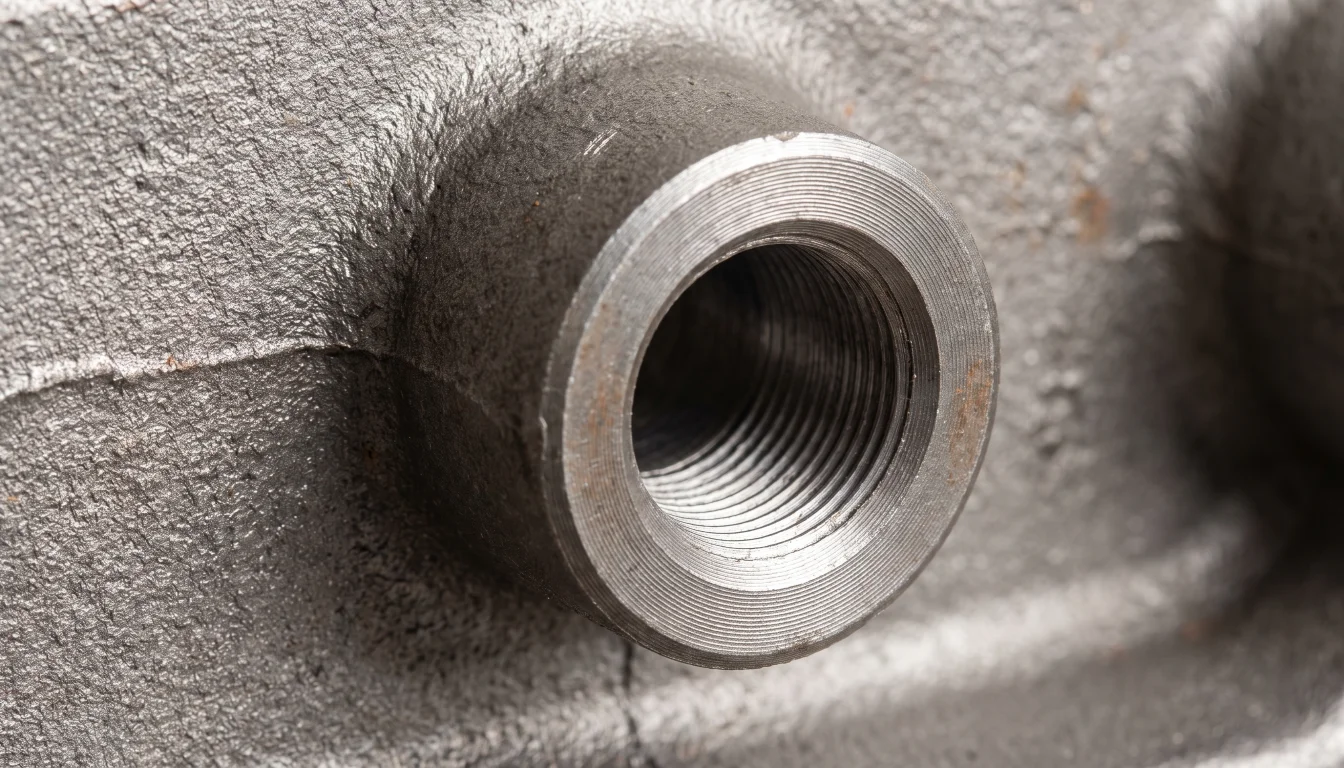
Choosing the heavy equipment parts delivers measurable advantages over generic alternatives across every critical performance category.
- Perfect Compatibility: OEM parts are engineered for your exact model, eliminating guesswork when cross-referencing aftermarket dimensions.
- Proven Durability: Original equipment manufacturers use premium alloys, heat treatments, and coatings tested under real-world operating conditions.
- Warranty Assurance: Most OEM new parts carry a minimum 6-month warranty, with many extending to 12 months or longer. Rebuilt components from established suppliers are backed by a 6-month warranty.
- Resale Value Preservation: Equipment maintained with genuine parts typically commands higher trade-in prices and passes inspection audits more easily.
- Simpler Sourcing: With correct part numbers, you can order directly from dealer networks or verified online catalogs without compatibility risk.
Pros and Cons of OEM Heavy Equipment Parts
Pros
- Exact fit to original engineering tolerances, no modification required
- Full manufacturer warranty coverage, typically 6-12 months on new parts
- Preserves equipment resale value and passes dealer inspection audits
- Consistent material quality: correct alloys, heat treatments, and coatings
- Supports warranty compliance on in-service machines
Cons
- Higher upfront cost compared to aftermarket or used alternatives
- Longer lead times from manufacturer supply chains, especially for older models
- Some discontinued models have limited OEM availability, requiring rebuilt or used options
- Premium pricing can strain budgets on high-volume fleet maintenance programs
Where to Source Genuine Heavy Equipment Parts
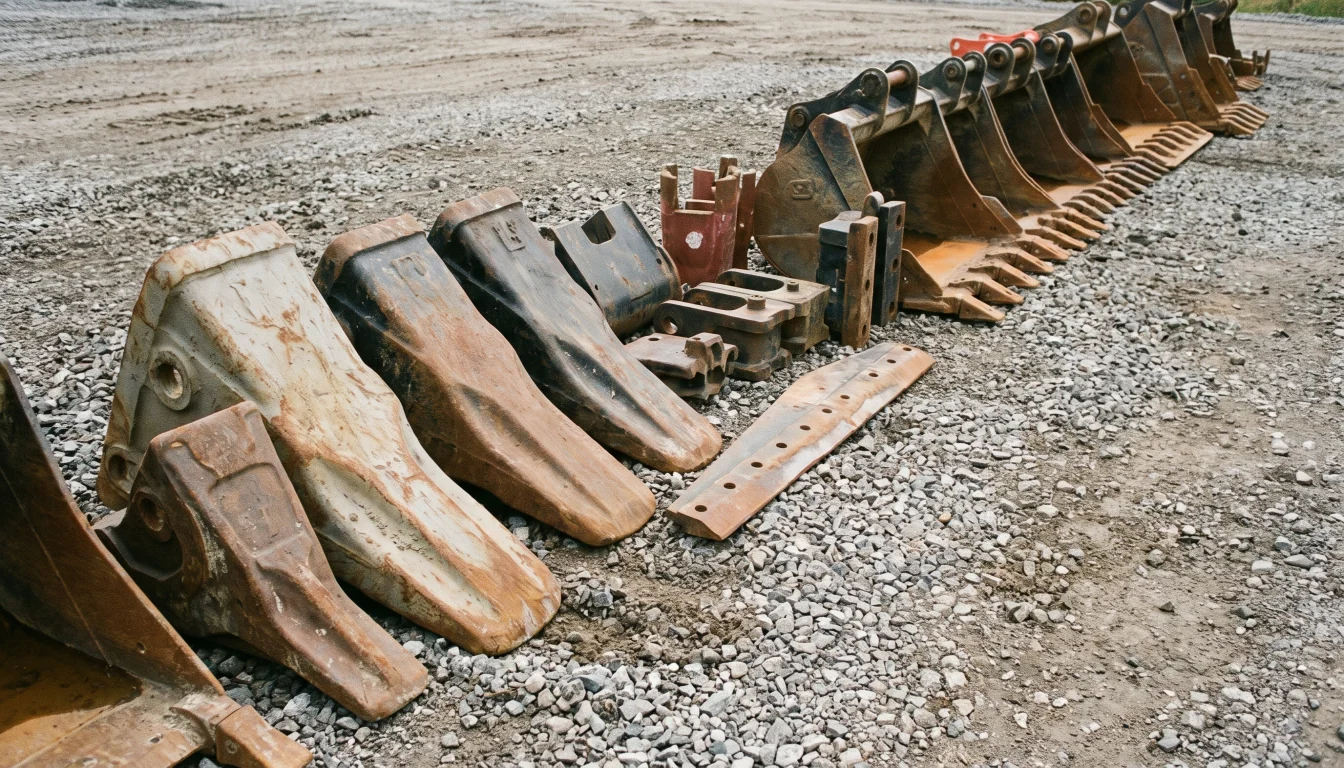
Finding reputable sources for parts is critical. The market includes authorized dealers, independent specialists, salvage networks, and global exporters like 3GEN Export.
Authorized Dealers and Distributors
Major manufacturers like Caterpillar, Komatsu, John Deere, and Volvo maintain global dealer networks. These outlets stock genuine OEM parts and can access factory remanufactured options. Regional distributors, for instance, operates eight branches across the Rocky Mountain region with networked inventory and 24/7 support, so a part stocked in one location can ship overnight from another branch to minimize downtime.
Independent Parts Specialists
established companies source both new OEM surplus and professionally rebuilt components. They often provide competitive pricing while still offering warranties. For older or discontinued models, specialist suppliers carry brand-new OEM stock sourced directly from manufacturers' legacy inventories, with over 8,800 items in their construction and mining category alone. specialist suppliers, a certified Case Construction dealer, maintains over 220,000 parts in stock across its Indiana locations.
Global Exporters and Online Platforms
For procurement teams operating internationally, global exporters offer a practical alternative to regional dealer networks. 3GEN Export supplies oem heavy for Caterpillar, Komatsu, Volvo, Atlas Copco, and 40+ additional brands, with worldwide delivery in as few as 5 days. Digital platforms allow you to search by part number across multiple suppliers. Always verify that the seller is an authorized or certified distributor. Look for return policies, customer reviews, and secure payment options before committing to an order.
"Minimizing downtime and providing real repair solutions is our goal. Over 90% of sales are filled from our own inventory, housed in 3 warehouses." - specialist rebuilders, Joshua, TX (as stated on their official website)
How to Verify Genuine OEM Parts
Counterfeit parts are a real and costly problem in the heavy equipment sector. Follow these steps to authenticate genuine components before installation.
- Step 1: Inspect Packaging and Markings. Genuine equipment parts come in branded packaging with holographic seals, part number labels, and sometimes QR codes linking to manufacturer databases. Damaged, generic, or unbranded packaging is a red flag.
- Step 2: Cross-Reference Part Numbers. Match the part number against your equipment's parts manual. A Track Spring Assembly for a Volvo EC330B LC carries OEM number 14562927. Any deviation suggests a non-OEM or mislabeled part.
- Step 3: Check Supplier Credentials. Authorized dealers display manufacturer logos and certifications. some suppliers, for example, are a certified Case Construction dealer. Ask for proof of authorization if it's not clearly displayed.
- Step 4: Request Documentation. Legitimate suppliers provide invoices with original part numbers and warranty cards. Rebuilt components should include test reports and rebuild specifications.
- Step 5: Compare Price Anomalies. If a price appears significantly below the market rate, question the source. A new final drive for a Caterpillar 315B is listed at $11,120 by specialist suppliers. Listings far below that price point may indicate counterfeit or salvaged inventory.
OEM vs. Aftermarket vs. Rebuilt: A Side-by-Side Comparison
Fleet managers must weigh options based on cost, availability, and application criticality. The table below contrasts the main part categories to help you decide.
| Feature | OEM New | OEM Rebuilt | Aftermarket | Used/Salvage |
|---|---|---|---|---|
| Source | Manufacturer or dealer | Specialized rebuilders | Independent producers | Salvage yards, auctions |
| Quality Assurance | Factory specs, full testing | Restored to OEM specs, tested | Varies widely | As-is, unknown wear |
| Typical Warranty | 6-12 months | 6 months | 90 days to 1 year | Often none |
| Price | Premium | Mid-range | Lower | Lowest |
| Example Part | Cat Final Drive 148-4570: $11,120 | Komatsu Final Drive 14X-27-00410: $11,960 (reconditioned) | Generic bucket linkage | Take-off hydraulic cylinder |
| Best Use Case | Critical systems, warranty compliance | Budget-sensitive repairs needing OEM integrity | Non-safety items, older machines | Emergency fix, discontinued models |
Note: Prices sourced from specialist suppliers listings (2026) and may vary by region and availability.
Budgeting for Heavy Equipment Parts: What to Expect
Prices for this type of parts span three tiers, and understanding them helps procurement teams plan maintenance budgets accurately.
- Budget Tier ($50-$500): Small wear items, seals, filters, gaskets, sensors, and electrical components. Battery cables and hose assemblies for Cat models typically fall in this range.
- Mid-Range ($500-$5,000): Hydraulic cylinders, turbochargers, starters, alternators, bucket pins, and smaller drivetrain parts. A radiator for a Komatsu dozer runs around $1,110, while a Volvo EC330B LC track spring assembly is listed at $1,600.
- Premium Tier ($5,000-$15,000+): Major assemblies including final drives, complete engines, transmissions, and complex hydraulic pumps. A new Caterpillar 315B final drive is priced at $11,120, and a reconditioned Komatsu D65EX-16 final drive at $11,960. Larger components for mining trucks scale proportionally.
Always budget for labor, fluids, and tooling. Many suppliers offer core return programs on rebuilt units, which can reduce net cost depending on the component.
International Shipping and Global Parts Logistics
For procurement teams outside North America, sourcing this kind of equipment parts internationally requires attention to freight class, customs documentation, and lead times. Heavy assemblies like final drives and transmissions typically ship via LTL freight or full container load, depending on order volume. As of 2026, suppliers like Boltz Equipment Parts specialize in full container load and full truck load orders for international buyers, with volume discounts available on large orders. 3GEN Export handles global B2B procurement for mining, construction, and energy fleets, offering 5-day worldwide delivery on stocked items. When ordering internationally, confirm the supplier's export documentation process, including commercial invoices, packing lists, and certificates of origin, to avoid customs delays that extend downtime further than the repair itself.
Ensuring Compatibility: Matching Parts to Your Machine
Even genuine the heavy equipment parts won't perform correctly if you order the wrong variant. Use these methods to guarantee fit before placing an order.
- Machine Identification Number (PIN/Serial): Every piece of heavy equipment has a unique serial number. Enter it into the OEM's online parts portal to pull up exact build sheets for your specific configuration.
- Parts Catalog: Most manufacturers provide digital catalogs searchable by model and serial number prefix. Use these to confirm part numbers before ordering.
- Dealer Consultation: Authorized dealer parts specialists can cross-reference older models and superseded part numbers. a leading supplier's certified parts team, for example, carries over 95 years of combined experience across its staff.
- Physical Measurement: For hydraulic hoses and belts, verify length, diameter, and fitting types even when the part number appears to match. Minor configuration changes between model years can affect fitment.
Care and Maintenance for Extended Part Life
Proper handling and installation of oem heavy equipment parts directly impacts how long they last in service.
- Follow OEM installation procedures, including torque specifications and break-in sequences, as outlined in the service manual for your machine.
- Use OEM-recommended lubricants and filters to maintain warranty validity and system cleanliness.
- Inspect parts regularly for leaks, cracks, or unusual wear. A final drive, for instance, should show clean oil with no metal shavings at scheduled service intervals.
- Store spare parts in clean, dry environments with protective caps on ports and connectors to prevent contamination before installation.
Whether you're rebuilding a final drive or replacing a wear item, investing in genuine oem heavy equipment parts protects your machinery's performance and resale value. Source from certified suppliers, verify authenticity at every step, and follow proper installation protocols. The result is less downtime, lower total repair cost, and equipment that holds its value longer. Shop OEM-quality spare parts with global 5-day delivery at 3genexport.com.
Frequently Asked Questions
Where can I buy real OEM heavy equipment parts?
You can purchase genuine OEM heavy equipment parts through authorized dealer networks, independent specialists with certified OEM stock, manufacturer-direct online portals, and global exporters like 3GEN Export. Always verify the supplier's credentials and confirm factory packaging before completing your order.
What does OEM stand for in heavy equipment?
OEM stands for Original Equipment Manufacturer. In the heavy equipment context, it refers to components produced by the same company that built the machine, or by its licensed partners, to the identical engineering specifications used during original production. OEM parts are distinct from aftermarket parts, which are produced by third-party manufacturers.
What is the price difference between OEM and aftermarket heavy equipment parts?
OEM parts carry a higher upfront cost than aftermarket equivalents, though the gap varies by component type and brand. A new OEM final drive for a Caterpillar 315B is listed at $11,120, while aftermarket alternatives typically come in lower. Total cost of ownership often favors OEM due to longer service life and warranty coverage.
Do OEM parts come with a warranty?
Yes. Most new OEM heavy equipment parts carry a 6-12 month warranty. Rebuilt OEM components from reputable rebuilders, such as specialist rebuilders in Texas, typically include a 6-month warranty. Aftermarket warranties vary and are often shorter or more limited in scope.
Can I use aftermarket parts on a machine still under manufacturer warranty?
Installing non-OEM parts can void your equipment warranty if those parts cause a failure. Check with your authorized dealer before fitting aftermarket components to any in-warranty machine. For critical systems, OEM parts are always the safer choice from a warranty compliance standpoint.
How long do OEM heavy equipment parts last compared to aftermarket?
Properly installed OEM parts are designed to match the original component's full service life, which can run thousands of operating hours depending on the part type and maintenance discipline. Aftermarket parts may have shorter service lives due to differences in material grades and manufacturing tolerances, though quality varies significantly by supplier.