
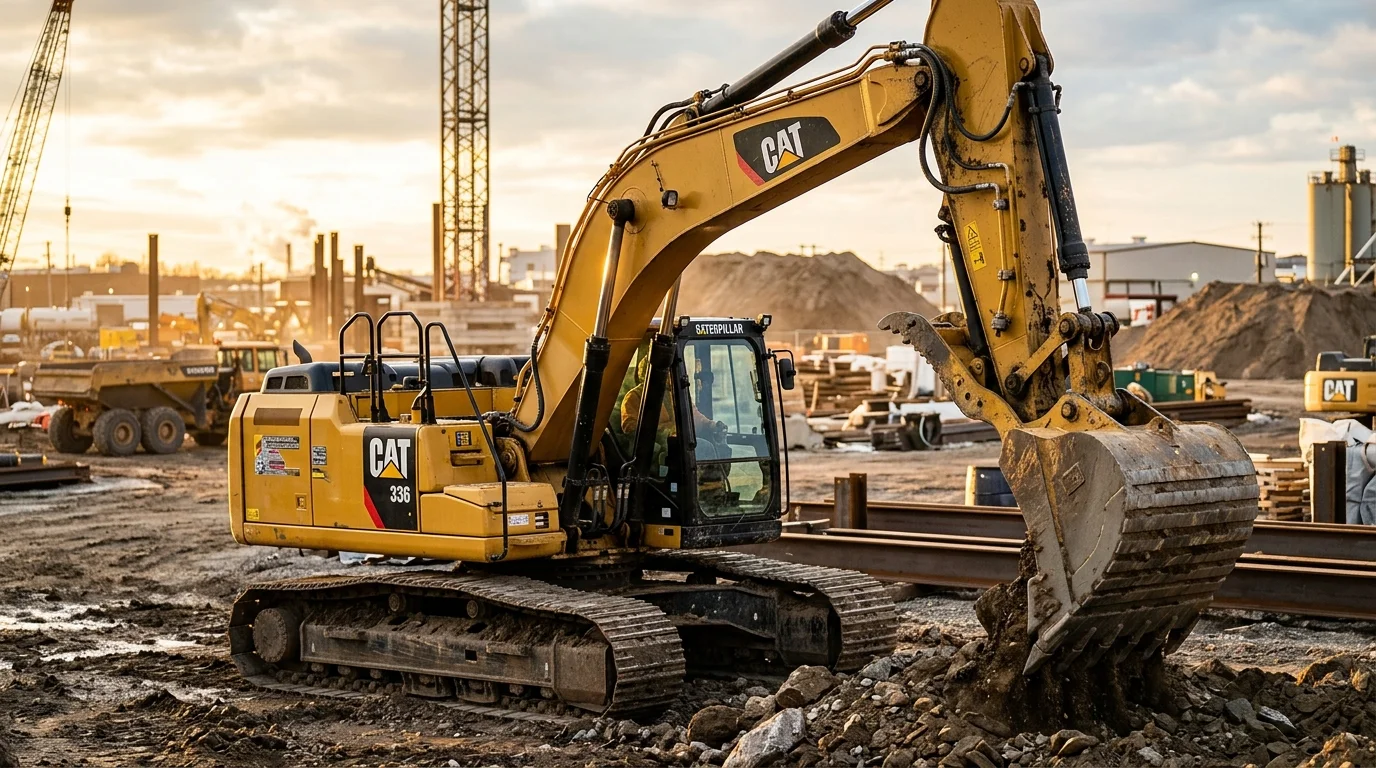
OEM Standard Parts for Caterpillar: 2026 Guide
OEM standard parts for Caterpillar keep your fleet running. Compare genuine vs aftermarket, find suppliers, and get global 5-day delivery at 3genexport.
Loading article…
Article Not Found
The article you're looking for doesn't exist or may have been removed.
Back to BlogKey Takeaways
- OEM standard parts for Caterpillar are manufactured to exact factory specifications, guaranteeing fit and function without modification.
- Caterpillar's parts catalog covers more than 1.4 million components, from filters and seals to full overhaul kits.
- Authorized dealers can deliver replacement parts in 48 hours or less, minimizing costly downtime.
- High-quality aftermarket alternatives, such as KMP Brand parts, are fully interchangeable with genuine Cat components and carry their own warranty.
- Regular inspections and adherence to Caterpillar's maintenance schedules are the most reliable way to extend component life.
- 3GEN Export ships OEM-quality spare parts globally with 5-day delivery to over 140 countries.
OEM standard parts for Caterpillar are components built to the exact specifications set by Caterpillar, ensuring direct fit and full performance in any Cat machine without modification or guesswork.
"Cat parts are designed to support the way you work, delivering 100% confidence in virtually any application or operating environment." - Caterpillar / MacAllister Machinery authorized dealer documentation
"By using genuine KMP parts, you can be confident in the quality and compatibility of the components, as they are engineered to integrate with your Caterpillar existing systems, preserving the original performance and functionality of your equipment." - KMP Brand technical documentation
Understanding OEM Standard Parts
OEM standard parts are components manufactured to the original equipment manufacturer's exact design tolerances and material specifications. For Caterpillar machinery, this means every bolt, seal, filter, and injector is engineered to perform the same way the factory-installed part did on day one. That consistency matters most in demanding environments: mining sites, large-scale construction projects, and energy installations where unplanned downtime carries a real cost.
What Are OEM Parts?
OEM parts are original components produced either by Caterpillar directly or by suppliers manufacturing to Cat's approved specifications. They carry the Cat part number, pass Caterpillar's quality control process, and are covered under the equipment's existing warranty terms. Aftermarket parts, by contrast, are produced by independent manufacturers. Quality varies widely across the aftermarket, though leading suppliers like KMP Brand engineer their components to be fully interchangeable with Cat originals.
Who Makes Parts for Caterpillar Equipment?
Caterpillar manufactures many components in-house and sources others from a global network of approved suppliers. On the aftermarket side, established brands such as KMP Brand produce replacement parts for a wide range of Cat engine series, including the 3054, 3116, 3406, C7, C9, C13, C15, and C18, among many others. As of 2026, Caterpillar has over 85 years of experience supplying power equipment and components across industrial, marine, construction, and energy sectors worldwide.
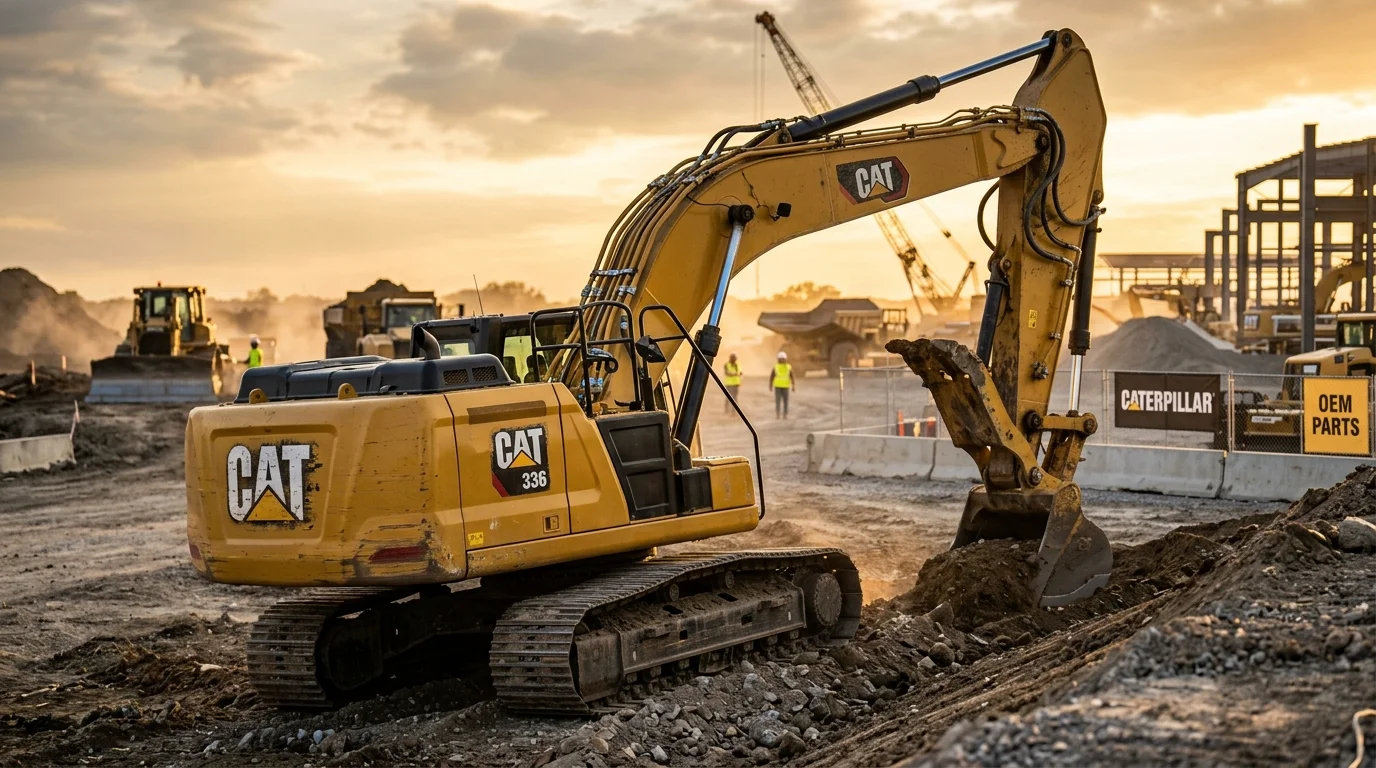
Pros and Cons of OEM vs. Aftermarket Caterpillar Parts
Pros
- Guaranteed fit: Genuine Cat parts are precision-matched to specific machine models, eliminating compatibility risk.
- Warranty protection: Using OEM components typically preserves your equipment's existing warranty coverage.
- Proven performance: Parts are validated against Caterpillar's own engineering standards before reaching the market.
- Broad availability: The Cat parts catalog includes more than 1.4 million new, used, remanufactured, and exchange components.
- Remanufactured options: Cat Reman parts offer OEM-grade performance at a lower price point, with core exchange programs reducing total cost.
Cons
- Higher upfront cost: Genuine Cat parts typically carry a price premium over aftermarket alternatives.
- Dealer dependency: Sourcing through authorized dealers can limit flexibility, particularly for operations in remote regions.
- Lead time variability: While many parts ship within 48 hours, specialized or low-volume components may require longer lead times.
- Availability gaps: Older or discontinued Cat models may have limited genuine parts availability, making quality aftermarket options a practical necessity.
Where to Buy OEM Standard Parts for Caterpillar
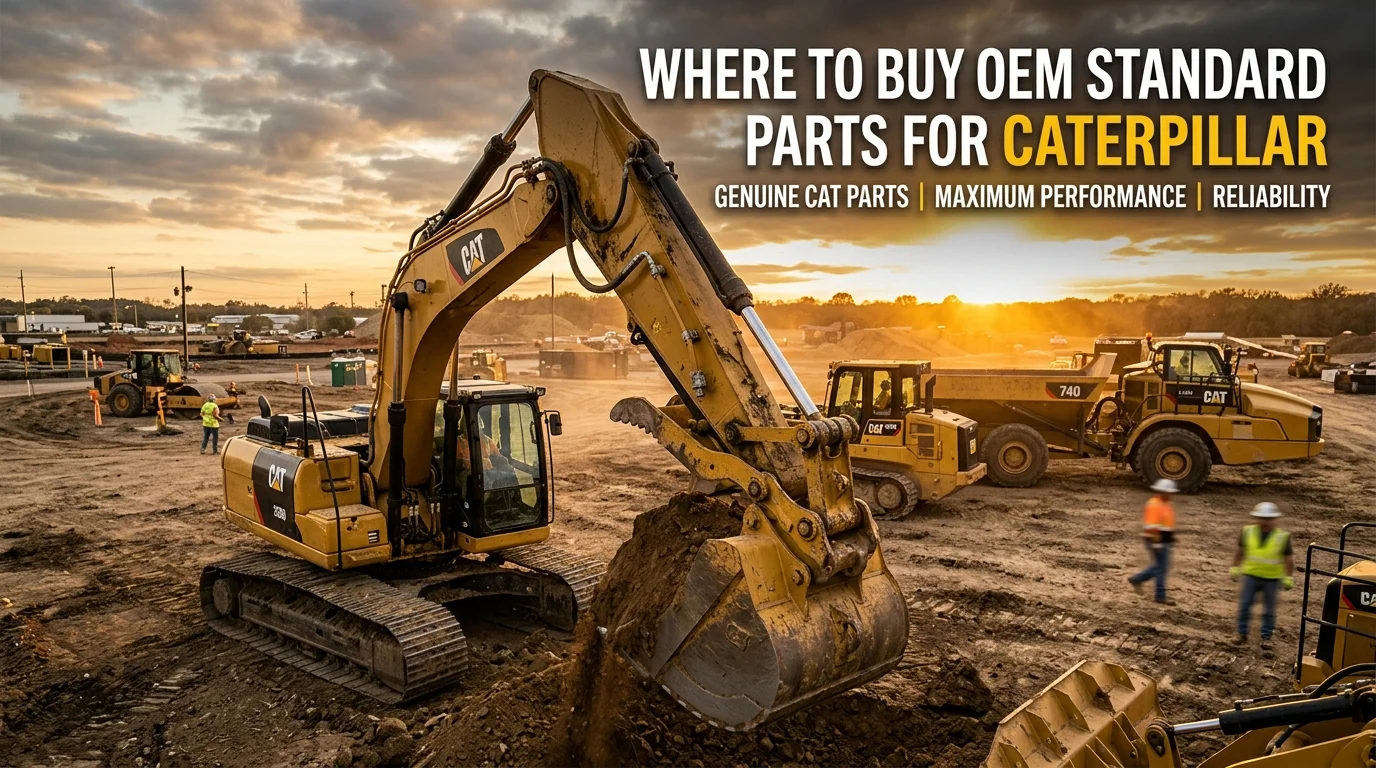
Sourcing the right Caterpillar parts comes down to three main channels, each with distinct advantages depending on your location, urgency, and budget.
Authorized Cat Dealers
Authorized dealers are the most direct source for genuine Cat components. MacAllister Machinery, for example, offers parts delivery in 48 hours or less across its service region, with a dedicated Mac-on-Site delivery system that brings parts directly to job sites. Dealers also provide access to exchange parts and remanufactured components for budget-sensitive procurement. You can order online at any time through Parts.Cat.Com, which gives immediate access to the full catalog.
Online Retailers and Global Suppliers
For procurement teams operating outside North America, global suppliers fill a critical gap. AGA Parts, for instance, delivers to over 140 countries through an established logistics network, with a quality control department that inspects every component before shipping. The Caterpillar Parts Store and KMP Brand both offer searchable digital catalogs where you can locate parts by Cat part number or engine serial number.
OEM Surplus and Specialty Sources
OEM surplus channels offer like-new genuine components at reduced prices. DPF Parts Direct, for example, lists OEM Cat parts including the CAT Outlet (part number 288-6771) at $150.00 and the CAT Inlet Module (part number 286-4441) at $300.00, both from surplus inventory. These are genuine Cat components, not aftermarket substitutes, making surplus sourcing a legitimate cost-reduction strategy for procurement managers.
Quality Aftermarket Alternatives
Not every procurement situation calls for a genuine OEM part. KMP Brand produces aftermarket replacement parts for more than 40 Cat engine series, from the D330 and D333 through to the C15, C16, and C18. Their parts are interchangeable with OEM components and require no modifications. KMP holds thousands of parts in stock across a global warehouse network, reducing lead times for international buyers. All KMP Brand parts carry an 18-month warranty.
What to Look For When Buying Caterpillar Parts
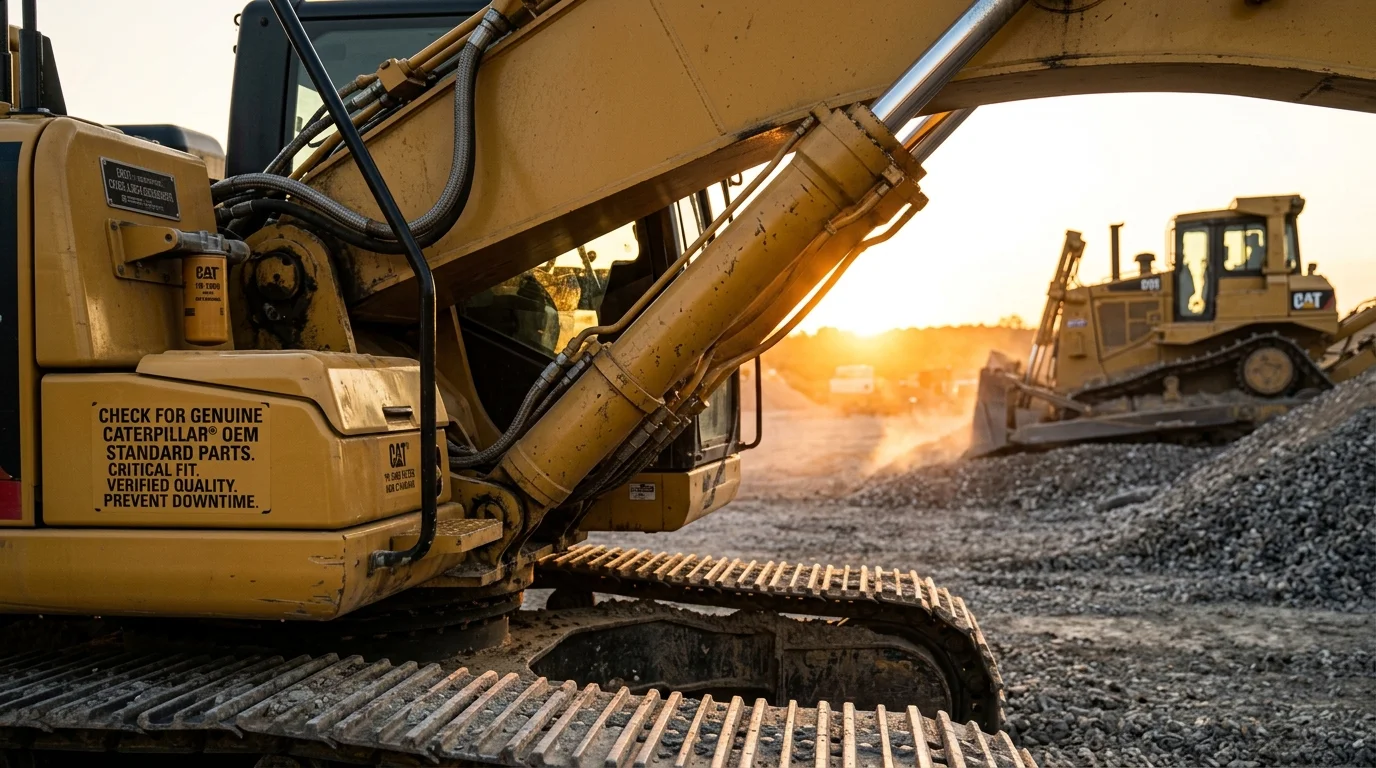
Evaluating a parts supplier requires more than checking the price. These are the criteria our procurement team applies on every order.
Material Quality and Manufacturing Standards
Parts used in heavy-duty Cat equipment must withstand extreme operating conditions: high heat, sustained vibration, and exposure to hydraulic pressure. Verify that any supplier, OEM or aftermarket, can document the material specifications and manufacturing process for the components you're ordering. Reputable aftermarket suppliers conduct rigorous product development cycles and test new materials before releasing parts to market.
Fit and Compatibility Verification
Always source parts using the Cat part number or the machine's serial number. This is the only reliable way to confirm compatibility with your specific model. KMP Brand's technical support team, for example, requires either the Cat part number or engine serial number before confirming a part match. Skipping this step is the most common cause of installation failures in the field.
Price Range and Total Cost of Ownership
Genuine Cat parts and quality aftermarket components both occupy a wide price range depending on complexity. OEM surplus listings show genuine Cat components priced from $150.00 to $965.44 for aftertreatment parts. For standard maintenance components, budget accordingly and factor in warranty coverage, lead time, and shipping cost as part of the total procurement cost, not just the unit price.
Supplier Warranty and Return Policy
A credible supplier stands behind what they sell. KMP Brand offers an 18-month warranty across their Cat replacement parts range. Always confirm the warranty terms and return policy before placing an order, particularly for high-value components where a no-return policy creates real financial risk.
Caterpillar Engine Series: Parts Coverage Reference
Knowing which engine series your equipment runs determines which parts catalog applies. The table below covers the major Cat engine families supported by both genuine and quality aftermarket suppliers as of 2026.
| Engine Series | Typical Application | Parts Availability |
|---|---|---|
| 3054 / 3056 / 3064 / 3066 | Compact construction equipment, skid steers | Genuine + aftermarket (KMP) |
| 3116 / 3126 / 3176 | Mid-range excavators, wheel loaders | Genuine + aftermarket (KMP) |
| 3406 / 3408 / 3412 | Heavy trucks, large generators, marine | Genuine + aftermarket (KMP) |
| 3508 / 3512 / 3516 | Mining equipment, large power systems | Genuine + aftermarket (KMP) |
| C7 / C9 / C13 / C15 / C18 | Current-generation excavators, dozers, trucks | Genuine + aftermarket (KMP) |
| C4.4 / C6.6 | Compact and mid-range construction equipment | Genuine + aftermarket (KMP) |
Comparison of OEM and Aftermarket Parts
The right choice between genuine and aftermarket depends on your machine, your timeline, and your budget. This table gives procurement managers a direct comparison.
| Feature | OEM Parts | Aftermarket Parts |
|---|---|---|
| Quality Assurance | Meets Caterpillar factory standards | Varies; leading brands match OEM specs |
| Compatibility | Guaranteed fit, no modification needed | Interchangeable when sourced from reputable suppliers |
| Warranty | Covered under equipment warranty | Varies; KMP Brand offers 18-month coverage |
| Price | Generally higher | Typically lower; surplus OEM bridges the gap |
| Availability | Through authorized Cat dealers globally | Through global distributors, often faster for remote regions |
| Lead Time | 48 hours from major dealers | Varies; global stock reduces wait for common parts |
Care and Maintenance of Caterpillar Parts
Proper maintenance extends the service life of every component in your Cat machine, whether it's a genuine OEM part or a quality aftermarket replacement.
Conduct Regular Inspections
Schedule inspections at the intervals specified in your Cat Operation and Maintenance Manual. Early identification of wear on seals, filters, belts, and undercarriage components prevents minor issues from becoming major failures. Procurement teams should track inspection data to anticipate parts demand and reduce emergency sourcing costs.
Follow Caterpillar's Maintenance Schedules
Caterpillar publishes detailed maintenance protocols for every machine in its lineup. These cover oil change intervals, filter replacement schedules, and component inspection checkpoints. Deviating from these schedules, even with quality parts installed, accelerates wear and can void warranty coverage.
Use Recommended Fluids and Lubricants
Always use fluids and lubricants specified in the Cat service documentation for your machine. Using non-approved fluids can degrade seals, contaminate hydraulic systems, and reduce the effective life of components you've just replaced. This applies equally to genuine and aftermarket parts.
Pro Tip: Track Part Numbers Across Your Fleet
Maintain a centralized parts register for your entire fleet, cross-referenced by machine serial number and Cat part number. This eliminates ordering errors, speeds up emergency sourcing, and gives your procurement team leverage when negotiating volume pricing with suppliers.
Where Can I Buy Used Caterpillar Parts Online?
Used and remanufactured Cat parts are a legitimate cost-reduction option for non-critical applications. The Cat Parts Store at Parts.Cat.Com lists used and Cat Reman components alongside new inventory, giving buyers access to more than 1.4 million parts in a single catalog. Cat Reman parts are remanufactured to OEM specifications and carry their own warranty, making them a reliable choice for budget-conscious fleet managers. Global suppliers like AGA Parts also carry used components with pre-shipment inspection.
Frequently Asked Questions
Where can I find a genuine Caterpillar parts supplier?
Genuine Cat parts are available through the official Caterpillar dealer network, accessible via Cat.com's dealer locator. For international procurement, global suppliers such as AGA Parts deliver to over 140 countries, and 3GEN Export ships OEM-quality components with 5-day global delivery. Always confirm the supplier is either an authorized Cat dealer or a verified distributor before placing a high-value order.
Are aftermarket parts a reliable alternative to genuine Cat components?
High-quality aftermarket parts from established suppliers are fully interchangeable with genuine Cat components and require no modifications. KMP Brand, for example, engineers its replacement parts to match OEM specifications and backs them with an 18-month warranty. The key is sourcing from suppliers with documented quality control processes, not simply choosing the lowest-priced option available.
How do I confirm a part is OEM or meets OEM standards?
Genuine OEM parts carry Caterpillar's branding and the original Cat part number. For aftermarket parts claiming OEM equivalence, request the supplier's quality documentation and confirm the part number cross-references to the Cat original. Reputable suppliers will provide this information without hesitation.
What is the typical cost range for Caterpillar replacement parts?
Costs vary significantly by component type and complexity. OEM surplus listings show genuine Cat aftertreatment parts priced from $150.00 to $965.44. Standard maintenance components such as filters, belts, and seals generally fall at the lower end of the range. Always factor in shipping, warranty terms, and lead time when comparing total procurement cost across suppliers.
How often should Caterpillar parts be replaced?
Replacement intervals depend on the component, the machine model, and operating conditions. Caterpillar's Operation and Maintenance Manuals specify service intervals for every part category. Regular inspections, conducted at the intervals Cat recommends, are the most reliable way to determine when a component needs replacement before it causes a failure.