OEM vs Aftermarket Parts for Bulldozers: Full Guide
OEM vs aftermarket parts for bulldozers: compare cost, warranty, and fit to make the right call for your fleet. Shop OEM-quality parts at 3genexport.com.
Loading article…
Article Not Found
The article you're looking for doesn't exist or may have been removed.
Back to BlogOEM vs aftermarket parts for bulldozers is a choice between guaranteed factory fit and cost-effective alternatives that can match or exceed OEM specs depending on the part type. The right call depends on machine age, component criticality, and warranty status.
Key Takeaways
- OEM parts guarantee exact fit and are often required for warranty coverage, but they cost more and can have longer lead times.
- Aftermarket undercarriage parts from reputable suppliers can meet or exceed OEM specifications, especially on steel weight and durable wear components.
- Critical engine and hydraulic components favor OEM parts, while high-wear undercarriage parts favor premium aftermarket options.
- Warranty, steel quality, and supplier transparency matter more than the OEM or aftermarket label alone.
- Best approach: Split the decision by part type, machine age, and warranty status rather than choosing one source for everything.
According to Pivot Equipment Parts, many myths about aftermarket parts - including claims of lower quality, shorter lifespan, and faster breakage - are false. In many cases, aftermarket undercarriages meet OEM standards and can even outperform the OEM.
According to RDO Equipment, OEM parts are often the preferred choice for essential or high-value equipment, especially when long-term reliability matters. For older machines or secondary units, aftermarket options may be more practical as long as quality is reliable.
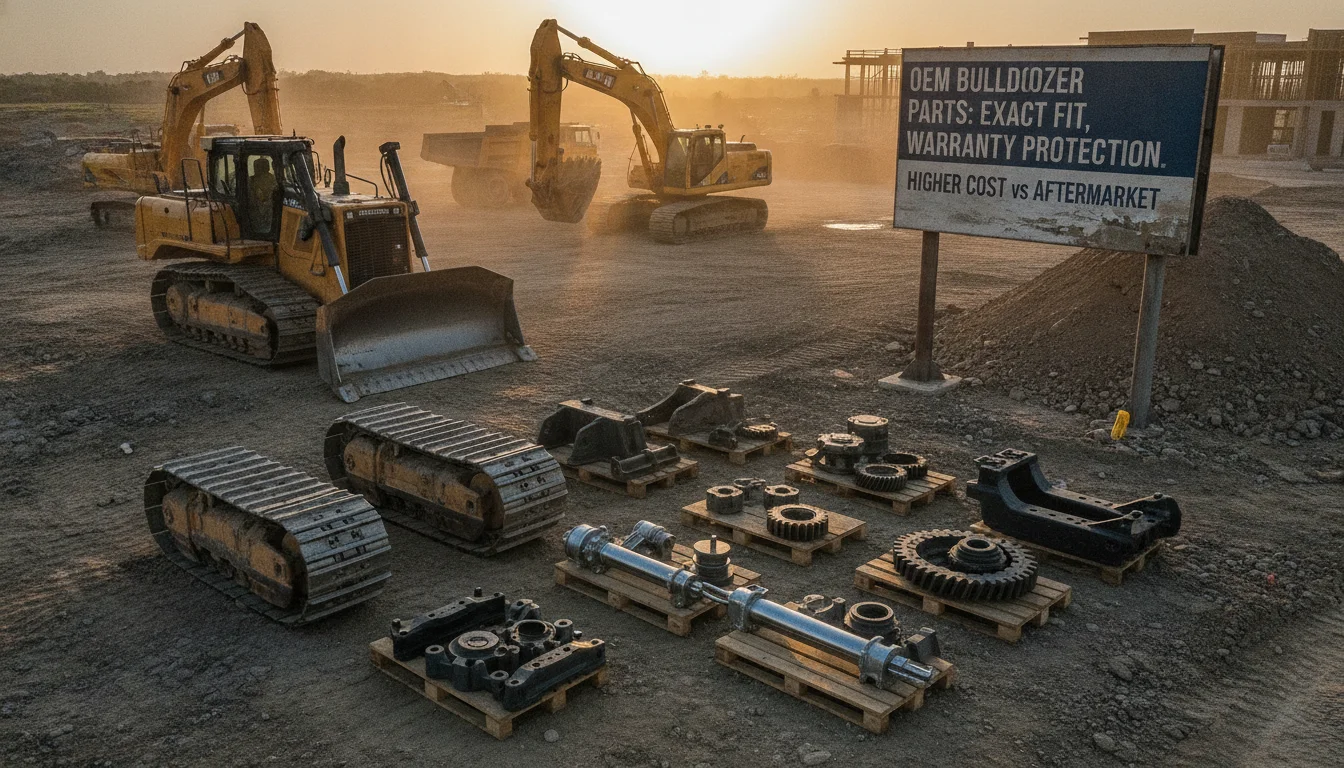
OEM Bulldozer Parts: Exact Fit, Warranty Protection, and Higher Cost
What Is an OEM Part?
An OEM part is a component produced by the same company that manufactured the original bulldozer. A genuine John Deere dozer component, for example, is an OEM part for a John Deere machine. These parts are built to the same specifications, materials, and performance criteria as the components installed at the factory.
According to EquipmentShare, OEM parts ensure compatibility and performance identical to the original parts. That exact-match quality is the core reason many procurement managers choose OEM for precision-critical machines.
Advantages of OEM Parts
- Guaranteed fit: OEM parts fit exactly without modification, reducing the risk of premature failures and installation errors.
- Warranty alignment: Many manufacturers require OEM parts to maintain warranty coverage, protecting the owner from denied claims.
- Consistent quality: OEM parts meet the original maker's precise design, materials, and performance criteria, which translates to predictable service life.
- Dealer support: Dealers like RDO Equipment back OEM parts with parts and service promises, giving access to returns and repair support.
Disadvantages of OEM Parts
- Higher price: OEM components typically cost more than aftermarket alternatives, sometimes by a wide margin.
- Longer lead times: Not every OEM dealer stocks a complete range of bulldozer parts, so ordering from the manufacturer can add days or weeks of downtime.
- Limited older-model support: OEM support for discontinued dozer models can be thin, expensive, or unavailable.
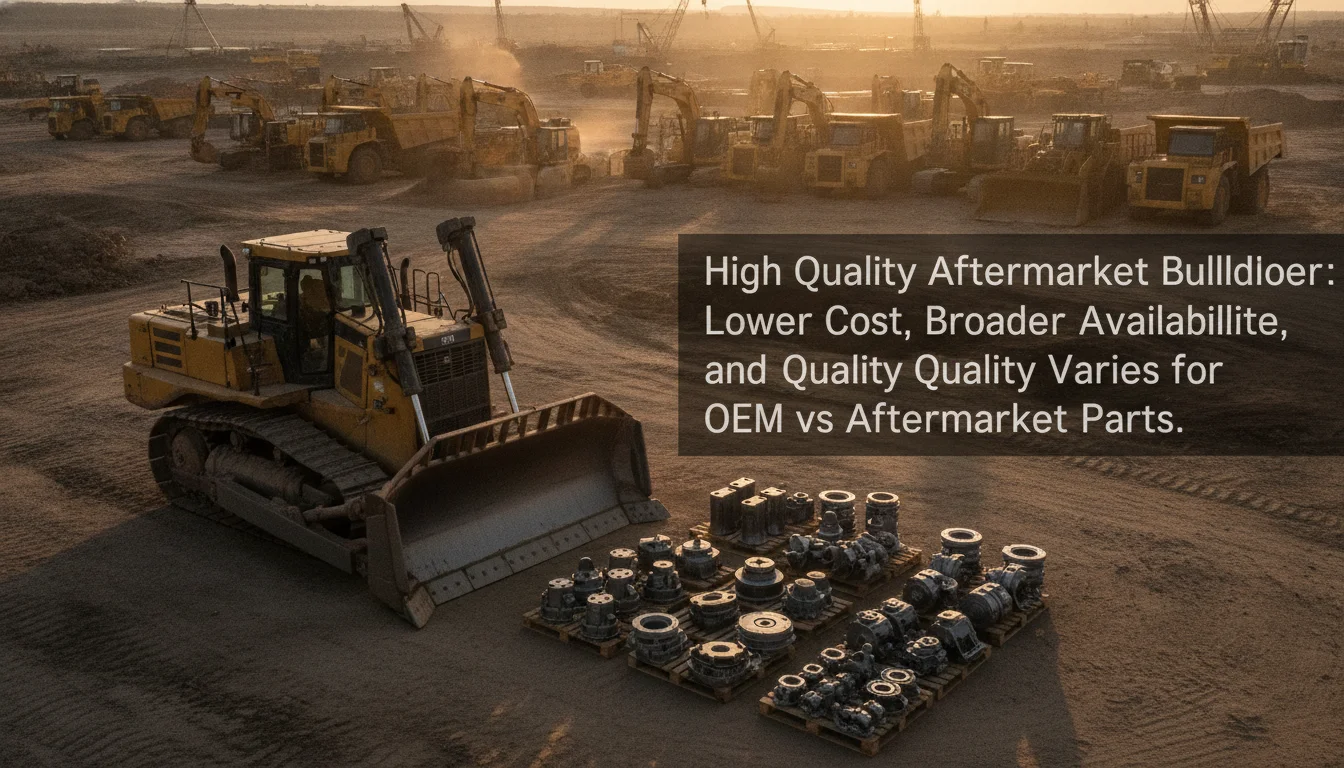
Aftermarket Bulldozer Parts: Lower Cost, Broader Availability, and Quality Variance
What Is an Aftermarket Part?
An aftermarket part is produced by a third-party manufacturer that is not the original equipment maker. These parts are designed to fit and function with specific bulldozer models, but they can vary widely in quality and price. Some aftermarket lines, such as John Deere's A&I brand, are actually owned by equipment manufacturers, which narrows the risk of buying unknown quality.
Advantages of Aftermarket Parts
- Lower upfront cost: Aftermarket parts are often less expensive than OEM, which helps manage maintenance budgets without sacrificing basic function.
- Ready availability: Suppliers like EquipXR stock aftermarket bulldozer parts across 12+ U.S. warehouse locations and offer free shipping on orders nationwide.
- Wide model coverage: Aftermarket suppliers cover nearly all dozer makes and models, including older units where OEM support has faded.
- Comparable or better performance: According to Pivot Equipment Parts, aftermarket undercarriages can meet or exceed OEM standards, especially when comparing steel weight and warranty terms.
Disadvantages of Aftermarket Parts
- Quality variance: Generic aftermarket parts may not match OEM compatibility or durability, so careful sourcing is required.
- Warranty uncertainty: Some aftermarket parts carry shorter or less comprehensive warranties than OEM, though premium suppliers are improving this.
- Potential warranty conflict: Using aftermarket parts on a newer machine could affect OEM warranty coverage if the part causes a failure.
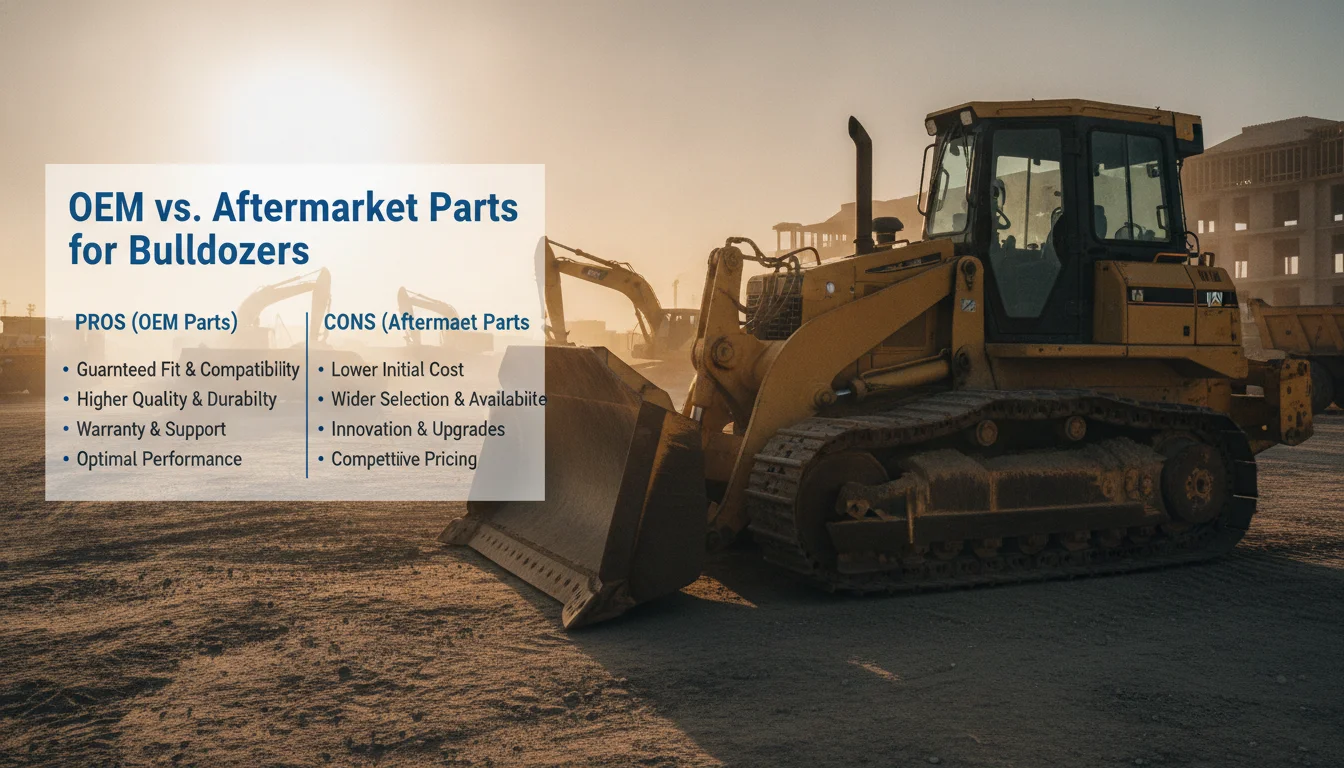
Pros and Cons of OEM vs Aftermarket Parts for Bulldozers
Pros
- OEM pros: Exact factory fit, consistent quality, warranty alignment, and full dealer support.
- Aftermarket pros: Lower upfront cost, faster availability, wide model coverage including older dozers, and comparable performance on wear parts.
- Aftermarket undercarriage pros: Premium suppliers like Pivot Equipment Parts warrant undercarriages for 3 years or 4,000 hours, matching many OEM policies.
- Split-strategy pros: Using OEM for precision components and aftermarket for wear parts optimizes both cost and reliability across your fleet.
Cons
- OEM cons: Higher price, longer lead times, and limited support for discontinued models.
- Aftermarket cons: Quality varies significantly by supplier, warranties can be shorter or less comprehensive, and using them on newer machines may affect OEM warranty coverage.
- Sourcing risk: Without proper vetting, generic aftermarket parts may underperform and increase total maintenance costs over time.
Cost, Warranty, and Availability Compared
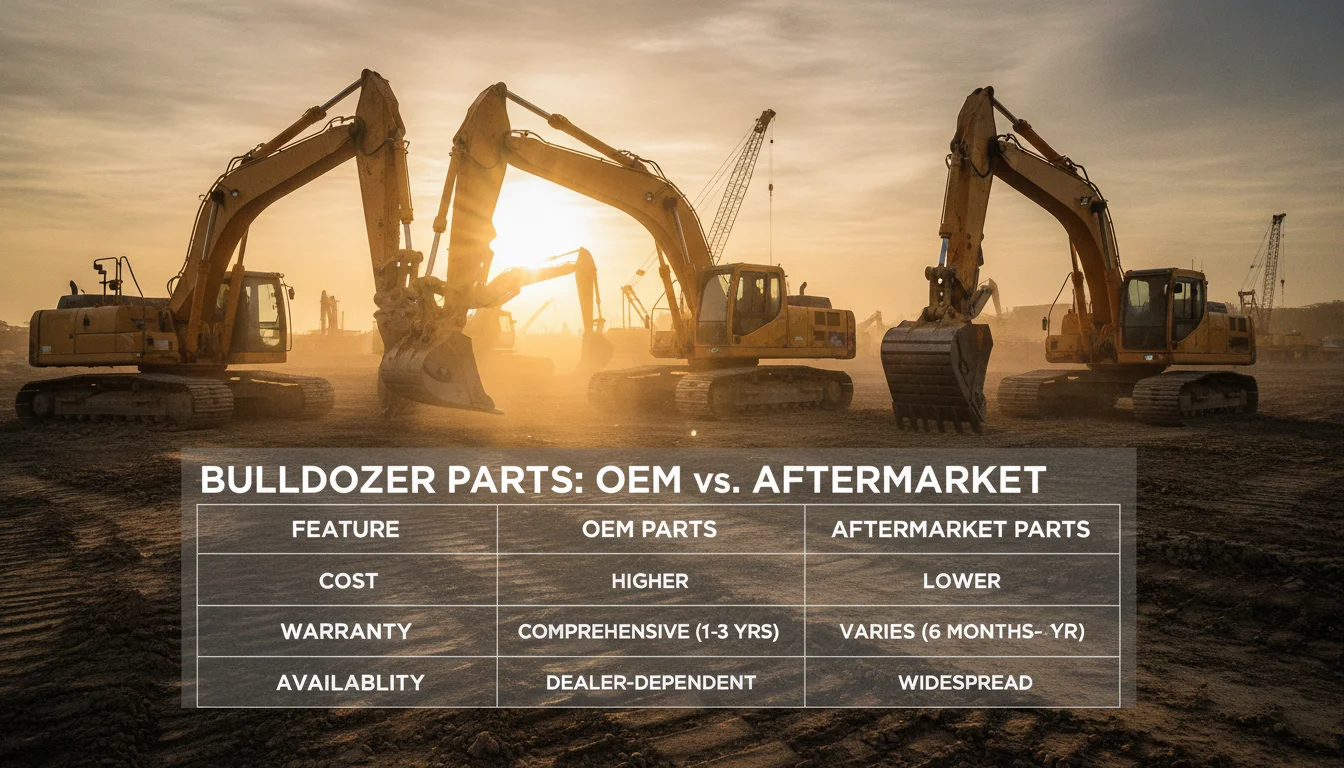
Side-by-Side Comparison
| Criterion | OEM Parts | Aftermarket Parts |
|---|---|---|
| Cost | Higher; reflects brand engineering and dealer margin | Usually lower; quality-tier dependent |
| Fit & Compatibility | Exact original specification | Varies; premium suppliers match OEM specs |
| Warranty | Manufacturer-backed; often required for machine warranty | Varies; Pivot offers 3 years or 4,000 hours on undercarriages |
| Lead Time | Can be longer if dealer does not stock part | Often in stock; EquipXR ships from 12+ US warehouses |
| Quality Variance | Low; consistent factory build | Medium to high; depends on supplier and steel quality |
| Best For | Engine, hydraulic, high-value precision parts | Undercarriage wear parts, older machines, budget-critical repairs |
What Drives the Price Difference?
OEM pricing includes the manufacturer's engineering, brand, and dealer support costs. Aftermarket suppliers compete on volume and often use comparable materials without the brand markup. A real-world example from a TractorByNet forum thread illustrates the gap clearly: an OEM recoil tensioner for a Case 350B dozer was priced at over $700, while an aftermarket equivalent from Tractor Stuff in Indiana came in at $360. That is a meaningful saving for the same functional component, and it reflects the kind of price spread procurement managers encounter regularly when evaluating oem vs aftermarket parts for bulldozers.
Warranty Realities
OEM warranties usually cover defects and align with the machine's original coverage. That is why RDO Equipment recommends OEM for essential or high-value equipment. Aftermarket warranties have improved significantly, though. Pivot Equipment Parts warrants its undercarriages against manufacturer defect for 3 years or 4,000 hours, which is comparable to many OEM policies. Before choosing, compare warranty duration, hour limits, and exactly what each policy covers.
When to Choose OEM vs Aftermarket Parts for Bulldozers
Use Cases Where OEM Is the Safer Choice
- Newer machines under warranty: OEM parts protect warranty coverage and resale value.
- Engine and hydraulic components: Precision tolerances and material specs matter most here.
- High-utilization, high-value dozers: Unplanned downtime costs far more than the part price difference.
- Dealer-supported fleets: If you already use dealer parts programs, OEM keeps service records consistent.
Use Cases Where Aftermarket Wins
- Older or secondary bulldozers: When OEM support fades, aftermarket parts keep machines running at a reasonable cost.
- Undercarriage wear parts: Idlers, track chains, rollers, sprockets, and final drive rebuild kits are common aftermarket strengths.
- Budget-tight operations: Lower upfront cost frees capital for other maintenance needs.
- Seasonal or backup machines: If the dozer works only part of the year, aftermarket makes more economic sense.
A Step-by-Step Decision Process
- Step 1: Classify the part. Is it a high-precision engine or hydraulic component, or a high-wear undercarriage part? The former leans OEM; the latter leans aftermarket.
- Step 2: Check the machine's warranty status. If the machine is under warranty, confirm whether aftermarket parts are permitted without voiding coverage. According to RDO Equipment, choosing aftermarket parts may affect warranty, so review the terms before purchase.
- Step 3: Compare steel weight, material specs, and part number cross-references. For undercarriage parts, heavier steel often means longer wear life. Pivot Equipment Parts identifies steel weight as an objective standard for comparing OEM and aftermarket durability.
- Step 4: Ask about warranty and support. Look for suppliers that offer clear defect warranties, such as 3 years or 4,000 hours, and are willing to discuss manufacturing quality honestly.
- Step 5: Evaluate total cost including downtime. If an OEM part has a two-week lead time and the machine is sitting idle, an in-stock aftermarket part with comparable specs may be cheaper overall despite a shorter warranty period.
How to Vet Aftermarket Suppliers Without Guesswork
Look for Full Disclosure and Honest Conversations
Not all aftermarket parts are equal, and the difference often comes down to the supplier. Pivot Equipment Parts describes itself as a full-disclosure company willing to discuss manufacturers, process, quality, warranty, support, and delivery times. A reputable supplier should answer questions about country of origin, steel grade, and heat treatment. If they only quote a low price and deflect technical questions, that is a red flag.
Check the Warranty Terms in Writing
Warranty is a signal of a supplier's confidence in their product. A supplier offering 3 years or 4,000 hours on undercarriage parts is putting real money behind that claim. Read the fine print: does it cover manufacturer defect only, or also premature wear? What is the claims process, and how fast do they respond?
Use Manufacturer-Owned Aftermarket Lines as a Middle Ground
Some OEMs operate their own aftermarket brands. John Deere's A&I line is a manufacturer-owned aftermarket option. According to RDO Equipment, these lines can meet quality standards comparable to OEM parts while offering lower prices. This middle ground suits owners who want OEM-backed quality without the full OEM price tag.
OEM vs Aftermarket Parts for Bulldozers: Our Verdict
For most bulldozer owners and fleet managers, the best answer is a split strategy. Use OEM parts for engine, hydraulic, and other precision components, especially on machines under warranty. Use premium aftermarket parts from reputable suppliers for undercarriage wear parts, older machines, and budget-sensitive replacements. The oem vs aftermarket parts for bulldozers decision is not about which is universally better. It is about matching part criticality, machine age, and warranty requirements to the right supply channel.
As of 2026, the aftermarket supply chain for heavy equipment has matured considerably. Premium suppliers now offer warranties, steel specifications, and technical support that close the gap with OEM offerings on many part categories. That makes the split strategy more viable than ever.
If you need a single recommendation: choose aftermarket undercarriage parts from a full-disclosure supplier with a strong warranty, and stay OEM for high-value engine and hydraulic components.
At 3GEN Export, we supply OEM-quality spare parts for Caterpillar, Komatsu, Volvo, and 40+ brands with global 5-day delivery. Whether you are sourcing undercarriage components, hydraulic parts, or engine assemblies, our team helps you find the right part at the right price. Browse our parts categories or shop by brand to get started.
Frequently Asked Questions
Is it better to buy OEM parts or aftermarket?
It depends on the part and the machine. OEM is the better choice for engine and hydraulic components on newer or high-value dozers. Aftermarket is often the better choice for undercarriage wear parts and older machines where cost and availability matter more than brand origin.
What are the disadvantages of OEM parts?
OEM parts cost more and can have longer lead times if the dealer does not stock them. OEM support for discontinued bulldozer models may also be limited or unavailable, making aftermarket the only practical option for older equipment.
Are OEM parts as good as genuine?
Yes. OEM parts are made by the original equipment manufacturer to the same specifications as the parts installed at the factory, so they are functionally identical to genuine original parts. The terms are often used interchangeably in the industry.
What is the difference between OEM and aftermarket parts?
An OEM part is produced by the bulldozer's original manufacturer to factory specifications. An aftermarket part is produced by a third-party company and may vary in quality, price, and warranty coverage depending on the supplier.
Will aftermarket parts void my bulldozer warranty?
Not automatically, but aftermarket parts can affect warranty coverage if the part causes a failure. According to RDO Equipment, review warranty terms with a parts specialist before choosing aftermarket options on a machine still under manufacturer coverage.
Can aftermarket undercarriage parts outperform OEM?
Yes, in some cases. Pivot Equipment Parts states that aftermarket undercarriages can meet or exceed OEM standards when comparing steel weight and durability. They warrant their undercarriages for 3 years or 4,000 hours, which is comparable to many OEM policies.