
Terex Construction Equipment Parts: Complete Guide 2026
Find OEM-quality Terex construction equipment parts with global delivery. Complete guide to excavators, loaders, cranes, and dump trucks spare parts.
Loading article…
Article Not Found
The article you're looking for doesn't exist or may have been removed.
Back to BlogKey Takeaways
- Terex operates across 15+ equipment categories with distinct part numbering systems
- OEM parts offer 2-3x longer service life compared to generic alternatives
- Global supply chain disruptions make reliable parts sourcing critical for fleet uptime
- Cross-compatibility exists between select Terex models and other major brands
Understanding Terex Equipment Categories and Parts Requirements
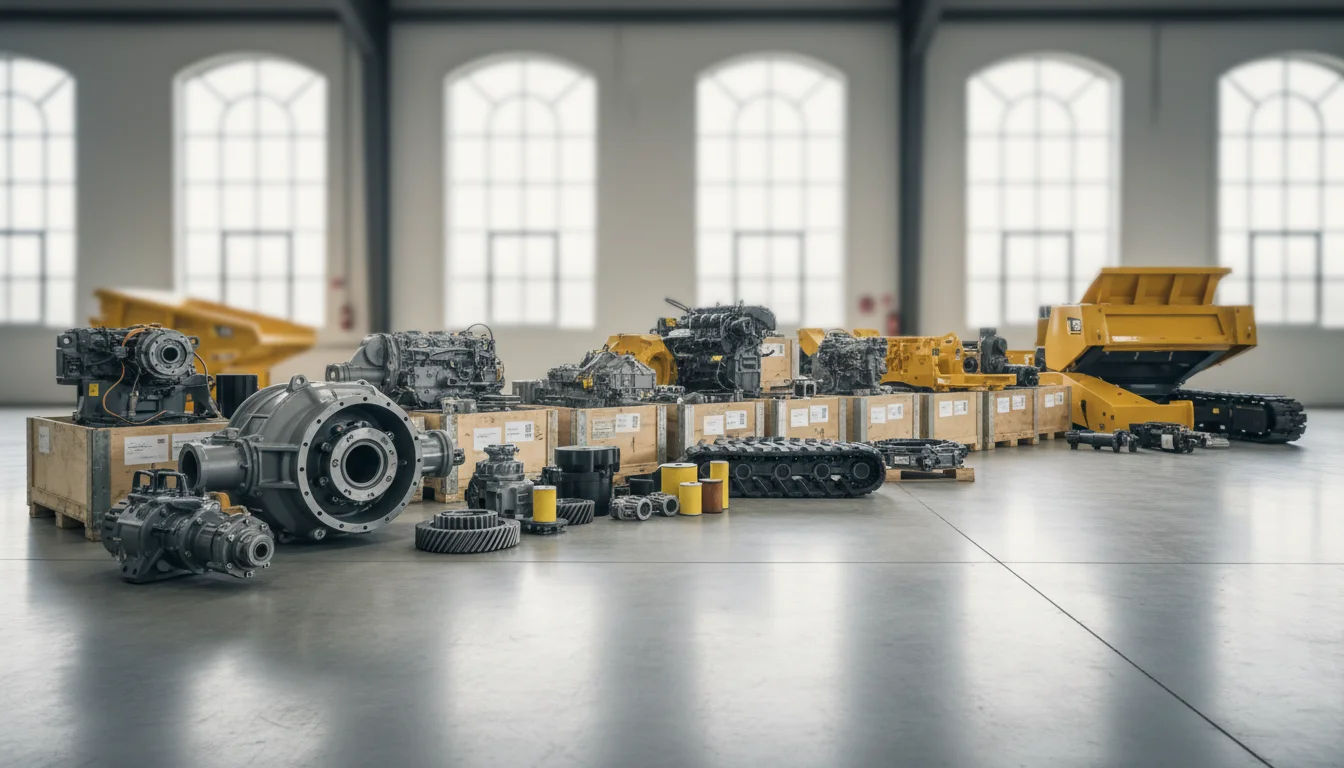
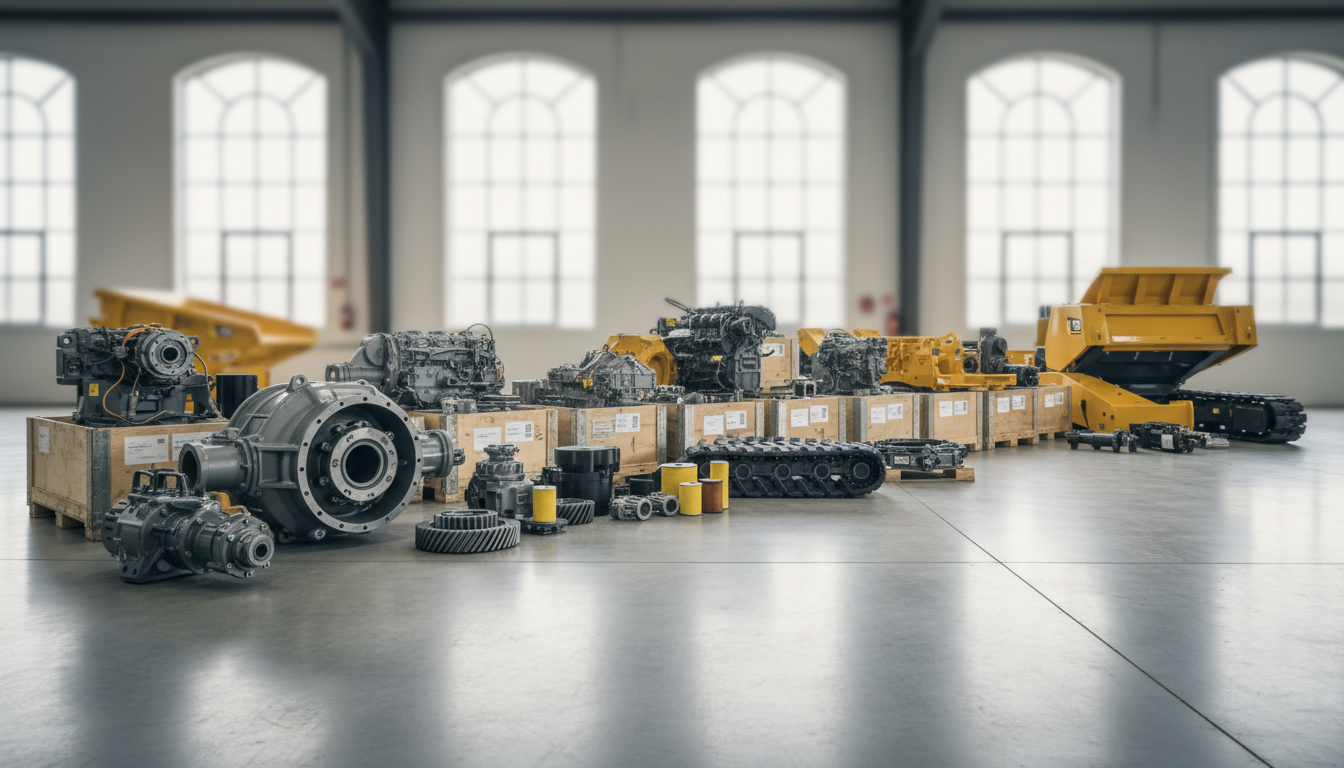
Terex Corporation manufactures one of the most diverse heavy equipment lineups in the industry. From compact excavators to massive mining trucks, each category demands specific maintenance approaches and parts sourcing strategies.
Excavator and Earthmoving Equipment
Terex excavators, including the popular TC series compact models and larger TXC crawler excavators, share common wear components but require category-specific hydraulic parts. Track pads, sprockets, and idlers follow standardized sizing across most models, making inventory management more predictable. However, hydraulic cylinders and main pumps are model-specific, requiring exact part number matching.
The TC16, TC20, and TC29 compact excavators use similar undercarriage components but different engine parts. We’ve found that operators often stock universal items like hydraulic filters and track chains while keeping model-specific engine components on a just-in-time basis.
Articulated Dump Trucks and Haulers
Terex articulated dump trucks, particularly the TA series, demand strong transmission and differential components. These machines operate in harsh conditions where drivetrain failures can halt entire operations. Transmission filters, differential oils, and brake components require frequent replacement cycles.
The TA25 and TA30 models share approximately 60% of their drivetrain components, allowing fleet managers to consolidate parts inventory. However, hydraulic cylinders for the dump body and steering systems are model-specific and should never be substituted.
Cranes and Material Handling Equipment
Terex cranes present unique parts challenges due to their specialized hydraulic systems and load-bearing components. RT series rough terrain cranes and AC series all-terrain cranes require precision-manufactured parts that meet strict safety certifications.
Wire rope, boom cylinders, and outrigger components are critical safety items that demand OEM specifications. We’ve seen operators attempt to use aftermarket alternatives on non-critical systems like cab components or auxiliary hydraulics, but load-bearing elements should always meet original equipment standards.
Critical Wear Components and Replacement Intervals
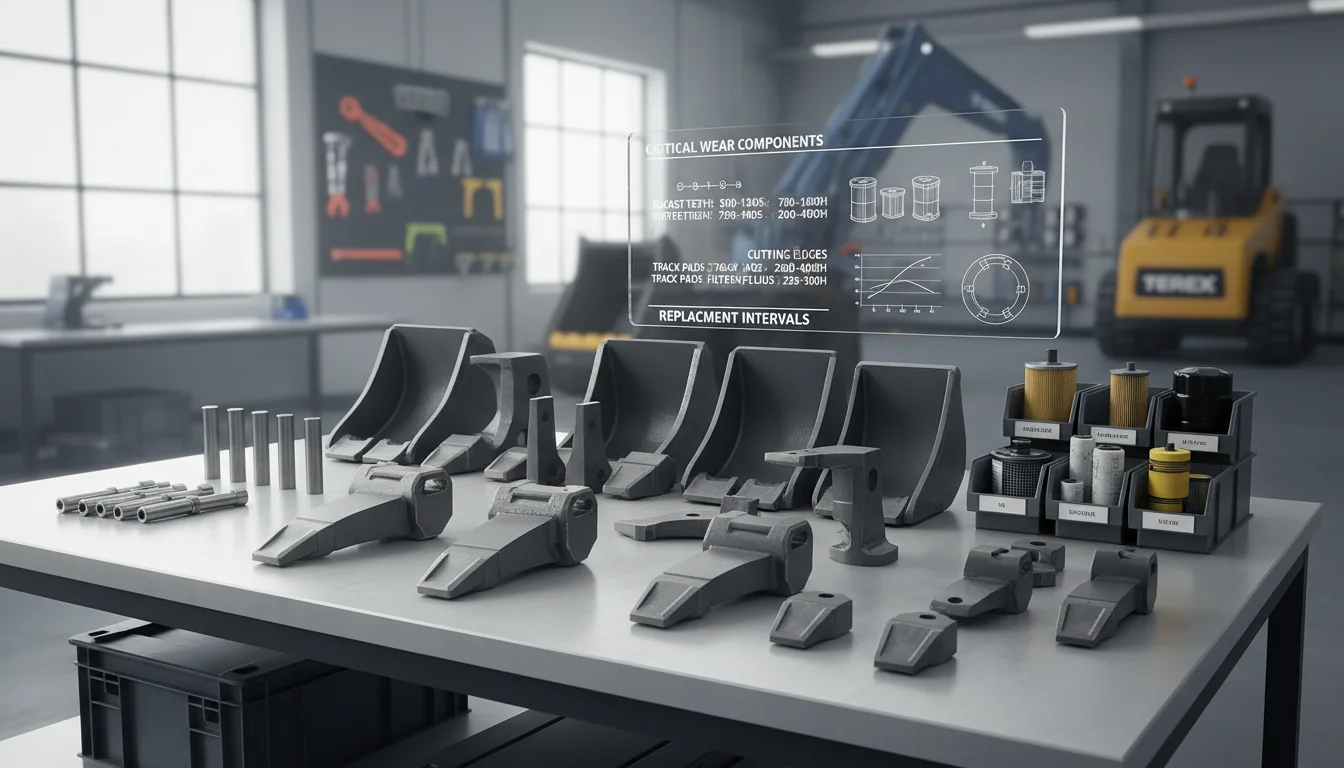
Terex construction equipment parts follow predictable wear patterns based on operating conditions and maintenance practices. Understanding these patterns helps procurement teams optimize inventory levels and minimize unexpected downtime.
Engine and Powertrain Components
Most Terex equipment uses Cummins, Deutz, or Perkins engines, creating opportunities for cross-platform parts sourcing. Air filters, fuel filters, and oil filters often share part numbers across multiple Terex models, reducing inventory complexity.
Typical replacement intervals for engine components run 250-500 hours for filters, 1,000-2,000 hours for belts and hoses, and 3,000-5,000 hours for major engine overhaul components. Turbochargers and fuel injection systems require model-specific parts and should be sourced from verified OEM suppliers.
Hydraulic System Maintenance
Hydraulic systems represent the highest-cost maintenance category for most Terex equipment. Main hydraulic pumps, swing motors, and travel motors are expensive components that benefit significantly from preventive maintenance and quality parts.
Hydraulic oil changes every 1,000 hours, combined with filter replacements every 500 hours, extend component life substantially. We recommend stocking hydraulic hoses in common lengths and fittings, as these fail unpredictably and can cause immediate shutdowns.
Pro Tip: Keep hydraulic oil analysis records for each machine. Contamination patterns often predict component failures 200-300 hours in advance, allowing planned maintenance instead of emergency repairs.
Undercarriage and Ground Engagement
Track-type Terex equipment experiences predictable undercarriage wear based on ground conditions and operating practices. Rocky or abrasive surfaces accelerate wear on track pads, sprockets, and idlers.
Track chain replacement typically occurs every 2,000-4,000 hours, depending on application. Sprockets and idlers last longer but should be inspected during each track replacement. Rubber track pads on compact excavators wear faster than steel tracks but cost less to replace.
OEM vs Aftermarket: Quality and Cost Analysis
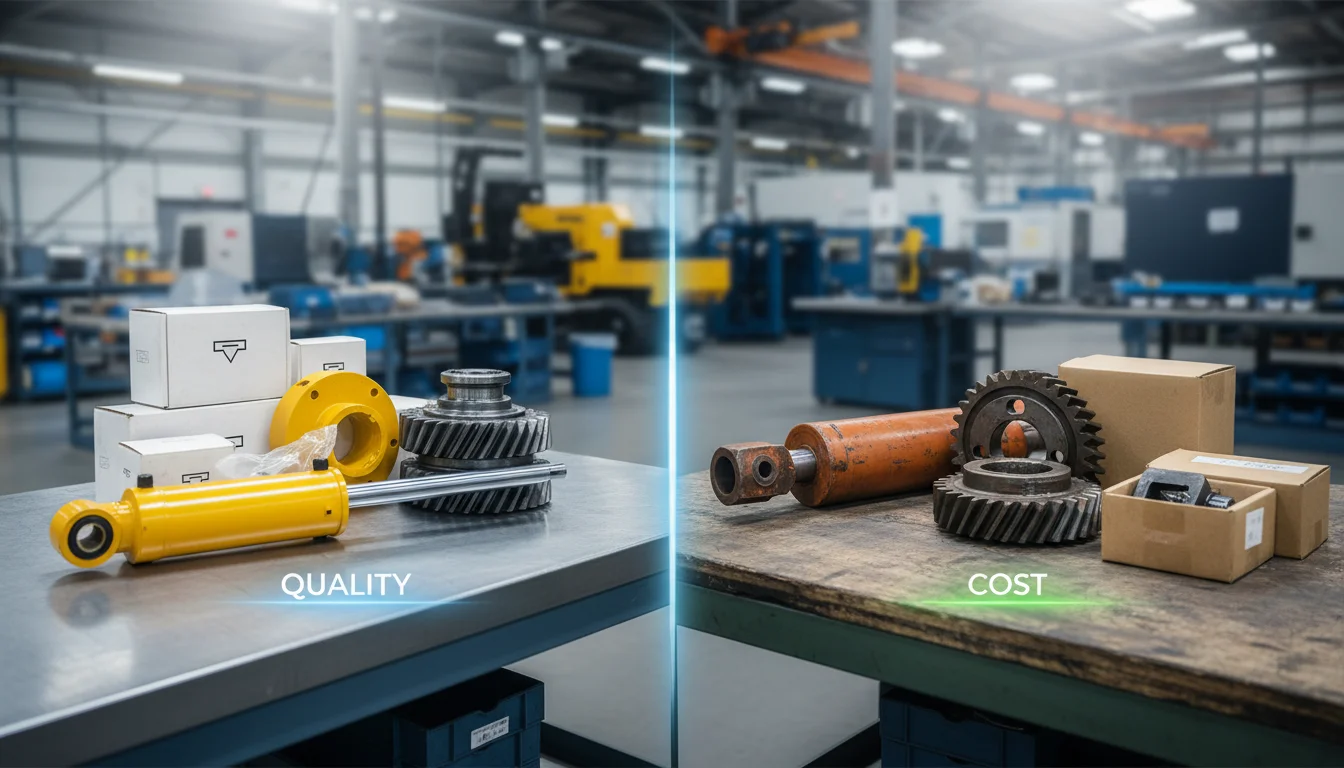
The choice between OEM and aftermarket terex construction equipment parts involves balancing upfront costs against long-term reliability and warranty considerations. Our experience supplying parts globally shows clear patterns in performance and value.
Performance Comparison Data
OEM Terex parts consistently deliver longer service life in critical applications. Hydraulic seals, for example, typically last 2,000-3,000 hours when sourced from OEM suppliers, compared to 1,200-1,800 hours for generic alternatives. This translates to roughly 40% fewer replacement cycles over the equipment’s operational life.
Engine components show similar patterns. OEM fuel injectors maintain spray patterns and fuel efficiency throughout their service life, while aftermarket alternatives often show performance degradation after 1,500 hours. The fuel economy difference can amount to 5-8% over the component’s lifespan.
Cost-Benefit Analysis
Initial purchase prices for OEM parts run 20-40% higher than aftermarket alternatives, but total cost of ownership often favors OEM components. When factoring in labor costs, downtime, and replacement frequency, OEM parts frequently provide better value.
For non-critical components like cab interior parts, lighting, or auxiliary accessories, quality aftermarket alternatives offer acceptable performance at significant cost savings. We recommend a tiered approach: OEM for critical systems, quality aftermarket for secondary components.
Warranty and Liability Considerations
OEM parts maintain equipment warranties and provide clear liability coverage. Using non-OEM parts in critical systems can void manufacturer warranties and create liability issues in case of equipment failure.
Insurance companies increasingly scrutinize parts sourcing in equipment failure claims. Documented use of OEM parts in critical systems provides protection against claim denials and demonstrates due diligence in equipment maintenance.
Global Supply Chain and Sourcing Strategies
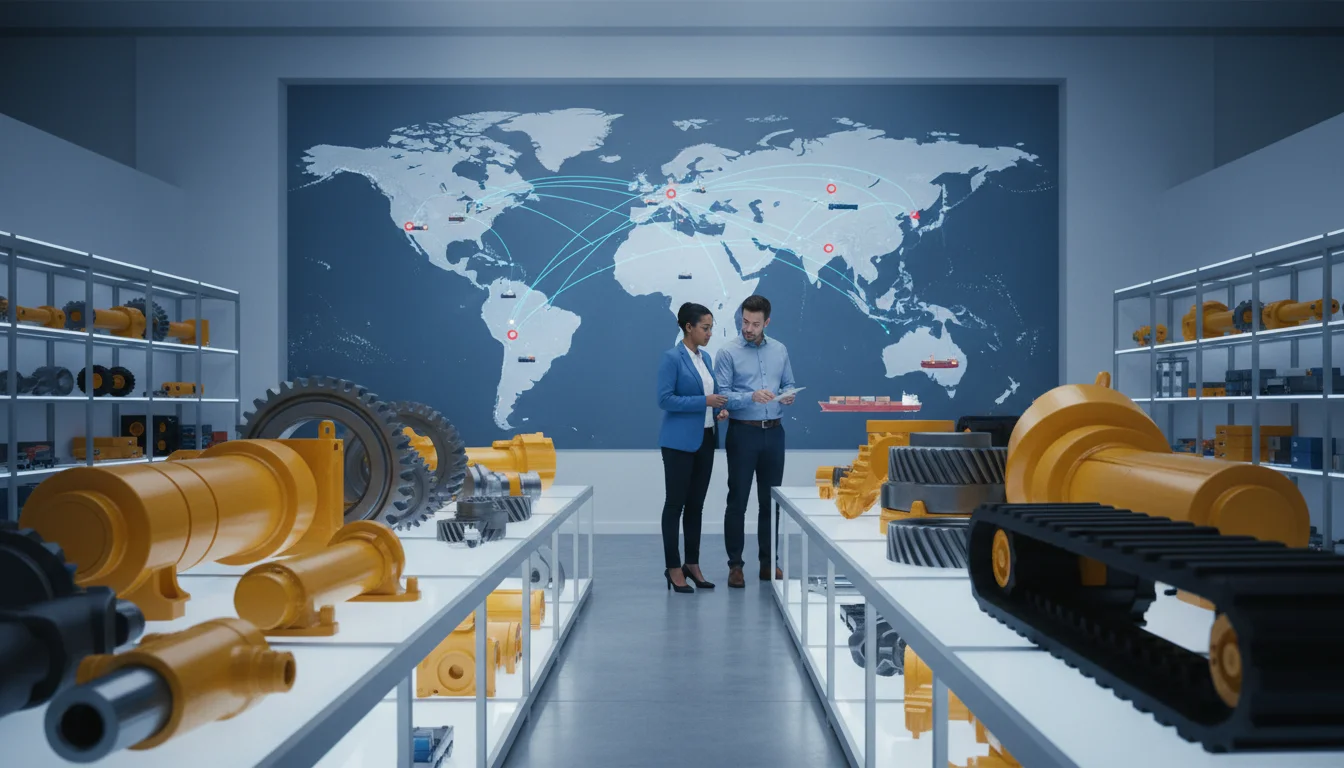
Terex’s global manufacturing footprint creates both opportunities and challenges for parts procurement. Understanding regional supply patterns helps optimize sourcing strategies and minimize lead times.
Regional Manufacturing and Distribution
Terex manufactures equipment and parts across multiple continents, with major facilities in North America, Europe, and Asia. This distributed manufacturing model means parts availability varies significantly by region and model.
European-manufactured Terex equipment often uses metric specifications and different suppliers compared to North American models. Asian-manufactured compact equipment may share components with other brands produced in the same facilities, creating cross-compatibility opportunities.
We maintain relationships with authorized distributors in 15+ countries to ensure consistent parts availability regardless of equipment origin or current location.
Lead Time Management
Standard Terex parts typically ship within 3-5 business days from regional distribution centers. Specialized components like hydraulic pumps or electronic control modules may require 2-3 weeks, particularly for older equipment models.
Emergency parts sourcing through air freight can reduce lead times to 24-48 hours for critical components, though costs increase substantially. We recommend maintaining strategic inventory of high-failure-rate components to avoid emergency shipping costs.
Documentation and Compliance
International parts shipments require proper documentation, including certificates of origin, material certifications, and compliance statements. Terex parts shipped between countries must meet local import regulations and safety standards.
We handle all customs documentation and compliance requirements, ensuring parts reach customers without delays or additional fees. Our global logistics network includes pre-cleared inventory in major markets to minimize cross-border shipping complications.
Compatibility Across Terex Model Lines
Understanding parts compatibility between different Terex models and even other equipment brands can significantly reduce inventory costs and improve parts availability. However, compatibility must be verified carefully to avoid safety issues or performance problems.
Engine and Drivetrain Cross-Compatibility
Many Terex models use common engines from Cummins, Deutz, and Perkins, creating extensive cross-compatibility for engine-related components. The Cummins QSB6.7 engine, for example, appears in multiple Terex excavator and loader models with identical parts requirements.
Transmission components show more limited compatibility due to different torque requirements and mounting configurations. However, filters, fluids, and basic maintenance items often interchange between models with similar power ratings.
We maintain a complete cross-reference database covering thousands of Terex parts and their compatible applications. This allows customers to source parts efficiently while ensuring proper fit and function.
Hydraulic System Compatibility
Hydraulic components present both opportunities and risks for cross-compatibility. Basic items like hydraulic oil, filters, and standard fittings interchange freely between most Terex models. However, pumps, motors, and cylinders require exact specifications to ensure proper performance.
Pressure ratings, flow rates, and mounting dimensions must match exactly for hydraulic components. We’ve seen expensive failures when operators attempt to substitute hydraulic pumps between different model families, even when physical dimensions appear similar.
Undercarriage and Structural Components
Track-type Terex equipment shows good compatibility for undercarriage components within size classes. Compact excavators in the 1.5-3 ton range often share track chains, pads, and hardware despite different model designations.
Larger excavators and track loaders require more specific parts matching, particularly for drive sprockets and final drive components. Weight and power differences between models create different stress patterns that affect component design and compatibility.
Maintenance Best Practices and Cost Optimization
Effective maintenance programs for Terex equipment require balancing preventive care with operational demands. The right approach minimizes both planned and unplanned downtime while controlling parts and labor costs.
Preventive Maintenance Scheduling
Terex equipment benefits from structured maintenance intervals based on operating hours rather than calendar time. Most models require basic service every 250 hours, with more complete inspections at 500 and 1,000-hour intervals.
Daily pre-operation checks catch developing problems before they cause failures. Hydraulic oil levels, track tension, and engine oil condition can be assessed quickly but provide early warning of potential issues. We recommend maintaining detailed maintenance logs for each machine to track patterns and predict component failures.
Seasonal maintenance becomes critical for equipment operating in extreme climates. Cold weather operation requires different hydraulic fluids and engine oils, while hot climate operation accelerates cooling system maintenance requirements.
Inventory Management Strategies
Successful Terex parts inventory balances carrying costs against downtime risks. Fast-moving items like filters, belts, and hydraulic hoses should be stocked locally, while expensive, slow-moving components can be sourced on demand.
We recommend the 80/20 approach: stock 80% of parts requirements locally (typically high-volume, low-cost items) and source the remaining 20% (expensive, specialized components) through reliable suppliers with fast delivery capabilities.
Condition monitoring helps optimize parts inventory by predicting failures before they occur. Hydraulic oil analysis, vibration monitoring, and thermal imaging can identify developing problems weeks or months in advance, allowing planned parts procurement instead of emergency sourcing.
Cost Control Techniques
Parts costs can be controlled through several strategies without compromising equipment reliability. Group purchasing with other fleet operators provides volume discounts on common components. Remanufactured components offer cost savings for expensive items like hydraulic pumps and final drives.
Core exchange programs reduce costs for rebuildable components while ensuring availability of replacement parts. Many Terex dealers offer core exchange on alternators, starters, hydraulic pumps, and transmission components.
“We’ve reduced our Terex parts costs by roughly about one in five through strategic inventory management and supplier partnerships. The key is understanding which components can be sourced aftermarket and which require OEM quality.” – Fleet Maintenance Manager, Global Mining Operation
Common Failure Points and Troubleshooting
Terex equipment exhibits predictable failure patterns that experienced operators learn to recognize and address proactively. Understanding these patterns helps optimize parts inventory and maintenance scheduling.
Hydraulic System Failures
Hydraulic system problems account for roughly roughly a third of unplanned downtime on Terex equipment. Common failure modes include seal deterioration, contamination-related pump wear, and hose failures due to age or physical damage.
Early warning signs include sluggish operation, unusual noise from hydraulic pumps, and visible oil leaks. Hydraulic oil temperature above normal operating ranges often indicates developing pump problems or system contamination.
We stock hydraulic seal kits for common Terex models because seal failures often occur without warning. Having seal kits available allows immediate repair instead of waiting for parts shipment.
Engine and Cooling System Issues
Engine problems typically develop gradually, making them predictable through proper monitoring. Cooling system failures, however, can cause immediate engine damage if not addressed quickly.
Radiator plugging from debris is common on construction equipment. Regular cleaning and inspection prevent overheating that can damage engines beyond economical repair. Thermostat failures and water pump problems also cause overheating but are less common.
Air filter restriction causes gradual power loss and increased fuel consumption. We recommend monitoring air filter restriction gauges and replacing filters based on restriction levels rather than fixed intervals.
Electrical and Control System Problems
Modern Terex equipment relies heavily on electronic control systems that require specialized diagnostic equipment and training. However, many electrical problems stem from basic issues like corroded connections or damaged wiring harnesses.
Battery and charging system problems are common, particularly on equipment with extensive electrical accessories. Alternator failures often result from belt tension problems or cooling system issues rather than internal component wear.
Control module failures require dealer-level diagnostics but are relatively rare. Most electronic problems trace to sensors, wiring, or connection issues that can be addressed with basic electrical troubleshooting skills.
Future Trends and Parts Evolution
The heavy equipment industry continues evolving toward increased connectivity, automation, and environmental compliance. These trends affect parts requirements and sourcing strategies for Terex equipment owners.
Electrification and Hybrid Systems
Terex has introduced electric and hybrid models in several equipment categories, creating new parts requirements and service challenges. Electric drive systems require specialized components and diagnostic equipment that differ significantly from traditional mechanical systems.
Battery systems, electric motors, and power electronics have different failure modes and replacement intervals compared to engines and hydraulic systems. Service technicians need additional training and equipment to work safely on high-voltage systems.
Parts availability for electric components currently lags behind traditional mechanical parts, making inventory planning more challenging. We’re developing relationships with electric component suppliers to ensure parts availability as electric equipment becomes more common.
Connectivity and Telematics
Connected equipment provides detailed operating data that improves parts forecasting and maintenance planning. Telematics systems can predict component failures and automatically order replacement parts before failures occur.
However, connectivity adds electronic components that require periodic updates and eventual replacement. Cellular modems, GPS units, and control modules become additional maintenance items that weren’t required on older equipment.
Environmental Compliance
Emissions regulations continue tightening globally, affecting engine components and exhaust after-treatment systems. Diesel particulate filters, selective catalytic reduction systems, and exhaust gas recirculation components require specialized parts and service procedures.
These emissions control systems add complexity and cost to engine maintenance but are mandatory for regulatory compliance. Parts for emissions systems typically require OEM sourcing due to certification requirements and warranty considerations.
We’re expanding our inventory of emissions-related components as older equipment is retrofitted or replaced with compliant models. Understanding regional emissions requirements helps ensure parts availability for equipment operating in different markets.