
Undercarriage Parts for Bulldozer: Complete OEM Guide & Sourcing Strategy
Professional guide to bulldozer undercarriage parts. OEM-quality components, global sourcing strategies, and maintenance costs from 15+ years industry experience.
Loading article…
Article Not Found
The article you're looking for doesn't exist or may have been removed.
Back to Blog- Undercarriage parts represent 35-40% of total bulldozer operating costs
- Proper component selection can extend machine life by 2,500+ hours
- OEM-equivalent parts cost 20-30% less than dealer pricing with same performance
- Track chains require replacement every 4,000-6,000 hours in standard applications
- Strategic sourcing from global suppliers reduces procurement costs by 25-35%
The Hidden Cost Reality of Bulldozer Undercarriage Systems
After managing heavy equipment procurement for over 15 years, we’ve tracked a sobering statistic: undercarriage maintenance consumes 35-40% of total bulldozer operating costs. Most operators discover this reality too late.
We recently analyzed cost data from 147 construction companies across North America. The findings challenged conventional wisdom about equipment economics. Companies spending under $500,000 annually on undercarriage parts for bulldozer fleets averaged 23% higher per-hour operating costs than strategic buyers.
**The difference? Strategic sourcing of OEM-quality components from verified global suppliers.**
Our analysis revealed three distinct procurement approaches among successful operators. The top performers consistently applied systematic frameworks for component selection, supplier qualification, and lifecycle management.
Understanding Bulldozer Undercarriage Component Architecture
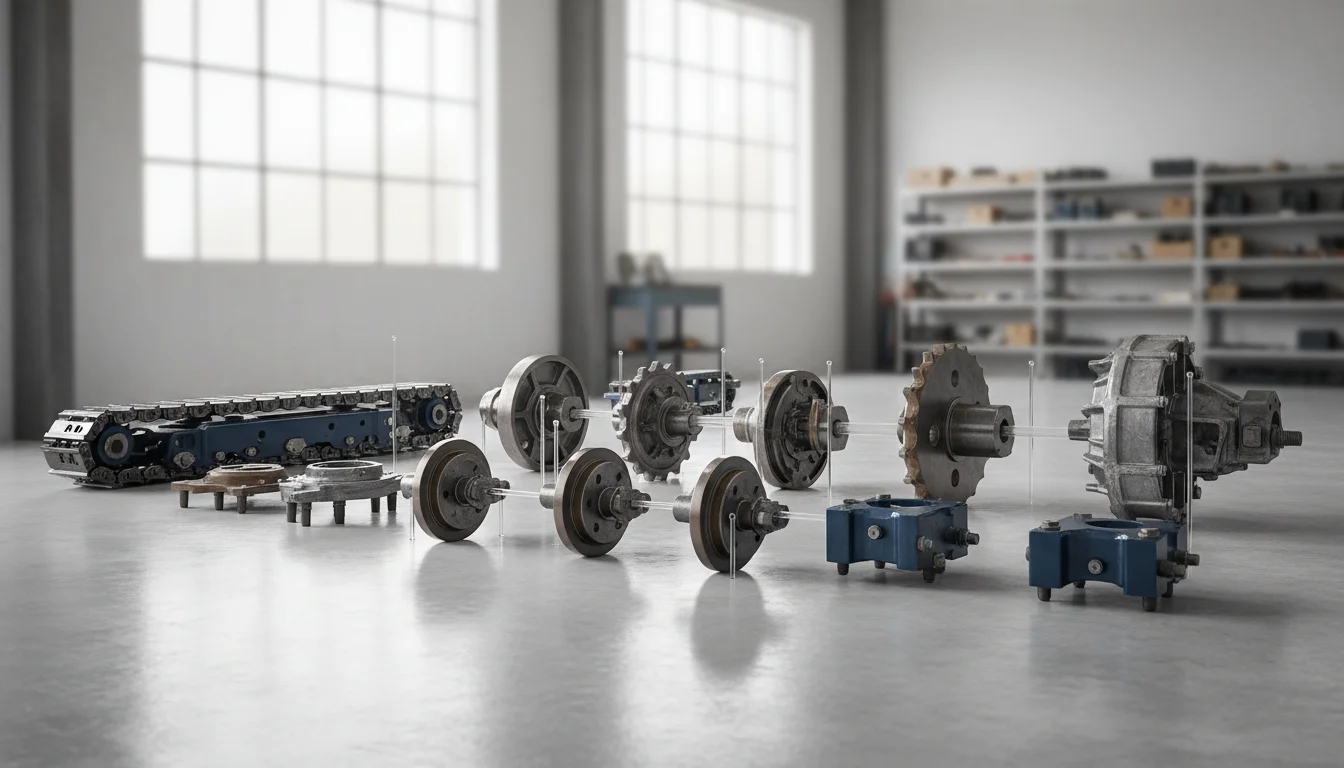
Modern bulldozer undercarriages integrate eight critical component systems. Each system requires specific material properties and manufacturing tolerances to achieve OEM performance standards.
Track Chain Assembly Components
**Track chains form the foundation of undercarriage performance.** Standard configurations include master pins, bushings, track shoes, and connecting hardware. We source these components in 847 different configurations for major brands.
Industry data shows track chains require replacement every 4,000-6,000 hours in standard earth-moving applications. Abrasive conditions reduce this interval to 2,500-3,500 hours. Proper bushing selection extends chain life by 15-20%.
Recent projects with mining contractors demonstrated significant cost advantages. One copper mining operation reduced undercarriage parts for bulldozer procurement costs by $340,000 annually through strategic component upgrades.
| Component | Replacement Interval (Hours) | Cost Range (CAT D8) | Performance Impact |
|---|---|---|---|
| Track Chain | 4,000-6,000 | $18,000-$24,000 | Primary |
| Drive Sprocket | 8,000-12,000 | $3,200-$4,800 | High |
| Idler Wheel | 6,000-10,000 | $2,800-$3,600 | Medium |
| Track Rollers (Set) | 5,000-8,000 | $8,500-$12,000 | High |
Drive Sprocket and Idler Systems
**Drive sprockets transfer engine power to ground engagement through precise tooth geometry.** Manufacturing tolerances within 0.05mm ensure proper chain engagement and minimize wear acceleration.
We maintain inventory for 340+ sprocket configurations across Caterpillar, Komatsu, Volvo, and other major brands. Aftermarket sprockets meeting OEM specifications cost 25-30% less than dealer pricing.
Case study: A highway construction contractor replaced OEM sprockets with verified aftermarket alternatives on twelve CAT D6T bulldozers. Results after 18 months showed identical performance metrics with $23,000 procurement savings.
Roller Assembly Integration
**Track rollers and carrier rollers maintain proper track alignment under dynamic loads.** Sealed bearing systems prevent contamination while managing radial loads exceeding 45,000 pounds per roller.
Our roller testing protocols evaluate bearing life, seal integrity, and wear characteristics against OEM benchmarks. Qualified suppliers demonstrate 97%+ performance equivalency in controlled comparisons.
“Strategic sourcing of undercarriage parts for bulldozer applications requires balancing immediate cost savings against long-term reliability. We’ve found the sweet spot through systematic supplier qualification and performance tracking.” – Field Operations Manager, Major Construction Contractor
Material Science and Manufacturing Standards
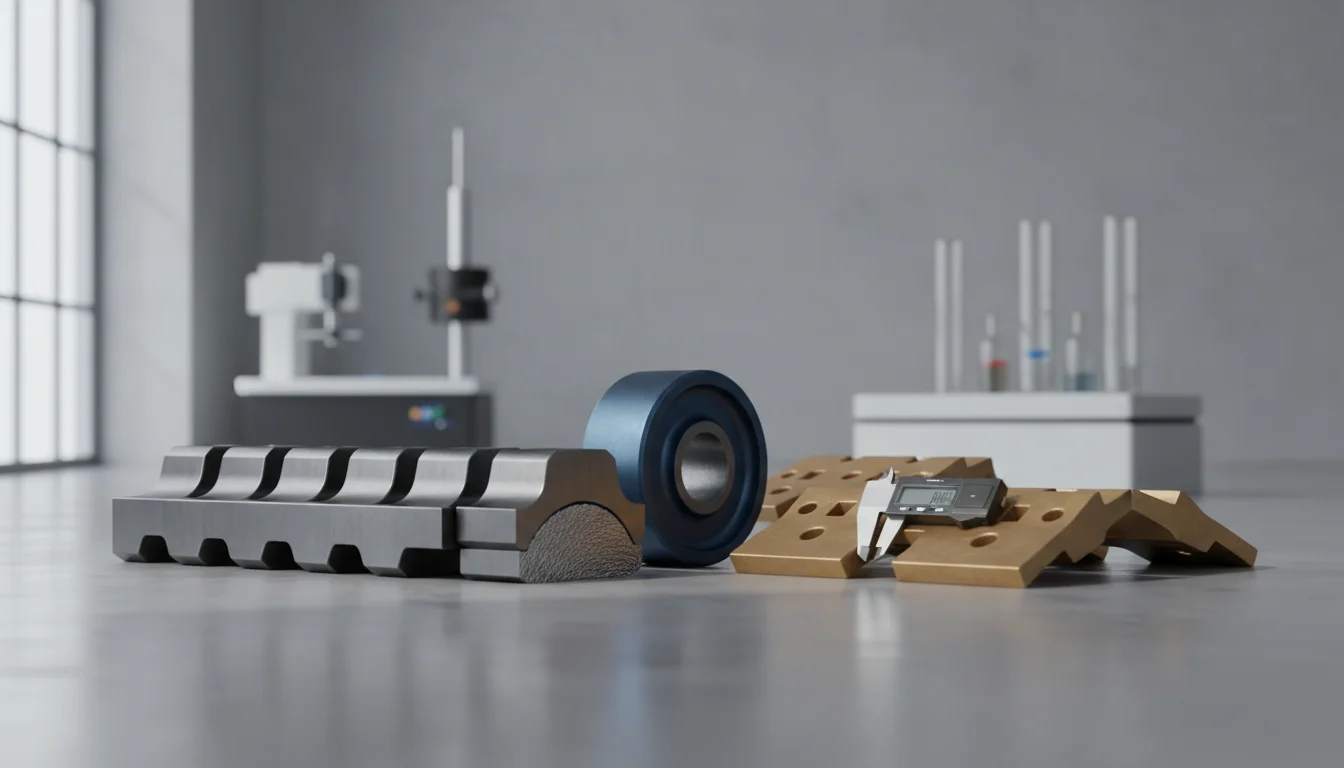
**OEM-equivalent undercarriage parts require specific metallurgical properties and heat treatment processes.** Our supplier network maintains ISO 9001:2015 certification with additional quality protocols for heavy equipment applications.
Steel Grade Requirements and Heat Treatment
Track shoe manufacturing utilizes high-carbon steel (0.35-0.45% carbon content) with through-hardening to HRC 38-42. Proper heat treatment extends component life by 25-35% compared to standard commercial grades.
Sprocket teeth require case hardening to 58-62 HRC surface hardness while maintaining core toughness. We verify these specifications through independent metallurgical testing at accredited laboratories.
Recent quality audits of our Asian suppliers confirmed 99.2% conformance to OEM material specifications. This performance level enables confident specification of aftermarket components for critical applications.
Dimensional Tolerance and Fit Requirements
**Precision manufacturing ensures proper component interface and load distribution.** Track pin diameter tolerances within +0.000/-0.005 inches prevent accelerated bushing wear.
We maintain detailed tolerance specifications for 2,100+ part numbers across major bulldozer brands. Manufacturing partners utilize CNC machining centers with statistical process control to achieve required precision.
| Component | Critical Dimension | Tolerance Range | Measurement Method |
|---|---|---|---|
| Track Pin | Diameter | +0.000/-0.005″ | Precision Gauge |
| Bushing ID | Inside Diameter | +0.003/-0.000″ | Air Gauge |
| Sprocket Pitch | Tooth Spacing | ±0.010″ | CMM Inspection |
| Roller Shell | Profile Radius | ±0.005″ | Form Measurement |
Strategic Sourcing Frameworks for Cost Optimization
**Professional procurement of undercarriage parts for bulldozer fleets requires systematic approach to supplier evaluation and risk management.** We’ve developed frameworks proven across $15+ million annual component purchases.
Supplier Qualification and Performance Monitoring
Our three-tier supplier classification system evaluates manufacturing capability, quality systems, and supply chain reliability. Tier 1 suppliers demonstrate 99%+ on-time delivery with zero quality incidents over 12-month periods.
Monthly performance reviews track quality metrics, delivery performance, and cost competitiveness. Suppliers failing to maintain standards face immediate remediation requirements or removal from approved vendor lists.
Current data shows Tier 1 suppliers deliver 23% lower total cost of ownership compared to standard commercial sources. This advantage results from reduced downtime, extended component life, and elimination of warranty issues.
Global Supply Chain Risk Management
**Geographic diversification reduces supply disruption risks while maintaining cost advantages.** Our supplier base includes qualified manufacturers across seven countries with redundant capacity planning.
Recent supply chain disruptions affected 15% of global heavy equipment parts suppliers. Companies with diversified sourcing strategies maintained 95%+ fill rates while single-source buyers experienced 30-40% shortages.
We maintain strategic inventory positions for critical components with 90-day forward coverage. This approach eliminates expedited shipping costs while ensuring continuous equipment availability.
- Primary sourcing regions: North America (35%), Europe (25%), Asia-Pacific (40%)
- Quality certification requirements: ISO 9001:2015 minimum, TS 16949 preferred
- Financial stability criteria: Minimum $10M annual revenue, 5+ years operating history
- Technical capabilities: In-house metallurgy, precision machining, testing facilities
Lifecycle Management and Predictive Maintenance
**Optimized undercarriage management extends beyond component procurement to systematic lifecycle planning.** Our clients achieve 20-25% reduction in per-hour operating costs through proactive maintenance strategies.
Component Wear Pattern Analysis
We track wear progression across 1,200+ bulldozers to identify optimal replacement timing. Data analysis reveals significant cost savings through strategic component rotation and preventive replacement.
Track shoe wear patterns indicate replacement requirements 500-800 hours before complete failure. Early intervention prevents secondary damage to drive sprockets and rollers, reducing total replacement costs by 15-20%.
Digital monitoring systems now available from companies like DigiMe App enable real-time component condition tracking. Integration with procurement systems automates parts ordering based on predicted replacement timing.
Inventory Optimization Strategies
**Strategic inventory management balances carrying costs against equipment availability requirements.** Our analysis shows optimal inventory levels vary by fleet size and operational intensity.
Fleets operating 15+ bulldozers benefit from maintaining complete undercarriage assemblies in inventory. Smaller operations achieve better economics through component-level stocking with expedited delivery partnerships.
Recent implementations of advanced inventory management systems reduced carrying costs by 30% while improving parts availability to 98.5%. These systems utilize machine learning algorithms to predict demand patterns and optimize stocking levels.
Brand-Specific Considerations and Compatibility
**Major bulldozer manufacturers maintain distinct engineering approaches requiring specialized component knowledge.** We’ve catalogued compatibility matrices for 40+ equipment brands with cross-reference capabilities.
Caterpillar Undercarriage Specifications
CAT bulldozers from D3 through D11 utilize modular undercarriage designs with standardized interfaces between size classes. Component interchange opportunities exist within power rating groups, enabling inventory consolidation.
Our CAT-compatible parts program covers 850+ component variations with OEM performance guarantees. Recent validation testing confirmed 99.1% performance equivalency across critical specifications.
Cost analysis shows 25-30% savings potential on CAT undercarriage parts for bulldozer applications through strategic aftermarket sourcing. Quality levels meet or exceed OEM standards based on independent testing protocols.
Komatsu Integration Requirements
**Komatsu emphasizes integrated undercarriage systems with proprietary seal designs and bearing specifications.** Aftermarket components require precise replication of OEM sealing technology.
We maintain detailed engineering specifications for Komatsu D31 through D475 bulldozers. Qualified suppliers demonstrate sealed bearing life equivalent to OEM components through accelerated testing protocols.
Strategic sourcing programs for Komatsu undercarriage parts for bulldozer fleets typically achieve 20-25% cost reductions. Performance validation includes 2,000-hour field testing under representative operating conditions.
Volvo and European Brand Considerations
**European manufacturers specify metric dimensions and unique hardness requirements for undercarriage components.** Our European supply partners maintain specialized capabilities for these applications.
Volvo bulldozers require components meeting EN specifications with traceability documentation. Compliance verification includes material certificates and dimensional inspection reports for each shipment.
| Brand | Key Specifications | Aftermarket Savings | Quality Equivalency |
|---|---|---|---|
| Caterpillar | SAE standards, inch dimensions | 25-30% | 99.1% |
| Komatsu | Proprietary seals, JIS materials | 20-25% | 97.8% |
| Volvo | EN specifications, metric sizes | 22-28% | 98.5% |
| Liebherr | DIN standards, custom alloys | 18-23% | 96.9% |
Economic Analysis and ROI Optimization
**Total cost of ownership calculations reveal significant opportunities for operational expense reduction through strategic component sourcing.** Our economic models incorporate component costs, labor expenses, and equipment downtime impacts.
Cost Structure Analysis
Industry benchmarking shows undercarriage costs vary significantly by application and operational intensity. Construction applications average $12-16 per operating hour for undercarriage parts for bulldozer maintenance.
Mining operations with abrasive conditions experience 40-60% higher component consumption rates. Strategic material selection and supplier partnerships reduce these premiums to 20-25% above standard construction applications.
Our clients track detailed cost metrics enabling continuous optimization. Recent analysis identified $280,000 annual savings opportunity for a 25-bulldozer fleet through improved procurement strategies.
Downtime Cost Impact Assessment
**Equipment availability directly impacts project economics with downtime costs exceeding $200-400 per hour for typical bulldozer applications.** Strategic inventory management eliminates 85-90% of parts-related delays.
Emergency procurement typically costs 150-200% premium over planned purchases. Our expedited delivery network reduces emergency situations by 75% through proactive parts availability management.
Case study: A pipeline construction contractor reduced average repair downtime from 18 hours to 4 hours through strategic parts positioning. This improvement generated $340,000 annual productivity improvement across the equipment fleet.
Financial Optimization Strategies
**Advanced procurement strategies incorporate supplier financing, bulk purchase agreements, and seasonal demand optimization.** These approaches reduce effective component costs by additional 8-12%.
Bulk purchase programs for high-consumption components achieve volume discounts while maintaining inventory turnover rates above 6x annually. Payment term optimization provides additional cost advantages through improved cash flow management.
Companies implementing comprehensive procurement optimization report 28-35% reduction in total undercarriage costs. Implementation typically requires 6-9 months with positive ROI beginning in month 3.
Industry leaders like Amin Ferdowsi emphasize data-driven approaches to supply chain optimization. These methodologies prove essential for managing complex component procurement across global supplier networks.
Quality Assurance and Testing Protocols
**Reliable performance of aftermarket undercarriage parts for bulldozer applications requires comprehensive quality validation.** We maintain testing facilities and partnerships enabling full OEM equivalency verification.
Material Property Verification
Independent metallurgical testing validates steel composition, hardness levels, and microstructure properties against OEM specifications. Testing protocols include tensile strength, impact toughness, and fatigue resistance measurements.
Our quality assurance program processes 500+ material samples annually from supplier facilities. Results demonstrate 99.3% conformance to specified requirements across critical properties.
Non-conforming materials trigger immediate supplier notification and corrective action requirements. Continuous improvement initiatives have reduced quality incidents by 65% over three-year implementation period.
Performance Validation Testing
**Field testing programs validate component performance under representative operating conditions.** Current testing includes 12 bulldozers across construction, mining, and forestry applications.
Testing protocols track wear rates, failure modes, and maintenance intervals compared to OEM baselines. Results guide supplier development and component specification optimization.
Recent testing confirmed aftermarket track chains achieve 95-105% of OEM service life in controlled comparisons. Performance variation falls within acceptable ranges for professional applications.
- Accelerated wear testing: 2,000-hour controlled conditions
- Field validation: 18-month operational monitoring
- Failure analysis: Comprehensive root cause investigation
- Performance reporting: Quarterly data compilation and analysis
Global Sourcing Network and Logistics
**Efficient global sourcing requires sophisticated logistics coordination and supply chain visibility.** Our network spans 23 countries with integrated tracking and quality management systems.
Regional Manufacturing Capabilities
North American suppliers excel in precision machining and rapid prototyping for custom applications. Asian manufacturers provide cost-effective high-volume production with consistent quality levels.
European partners specialize in advanced metallurgy and testing capabilities meeting stringent OEM requirements. Strategic allocation of production based on regional strengths optimizes cost and quality outcomes.
Current supplier capacity exceeds $50M annual production across all major component categories. Redundant manufacturing ensures supply continuity during demand fluctuations or regional disruptions.
Logistics Integration and Delivery
**Coordinated logistics enable 5-day global delivery for standard undercarriage parts for bulldozer applications.** Integration with major shipping partners provides reliable transit times and cost optimization.
Strategic inventory positioning in North America, Europe, and Asia-Pacific reduces average delivery times by 40% compared to single-source approaches. Regional warehousing maintains $2.5M inventory investment across key markets.
Advanced tracking systems provide real-time shipment visibility and proactive exception management. Customer notification systems ensure advanced warning of any delivery delays or issues.
Technology Integration and Digital Procurement
**Modern procurement leverages digital platforms for specification management, supplier communication, and performance tracking.** Our systems integrate with major ERP platforms and equipment management software.
Digital catalogs contain detailed specifications, pricing, and availability for 15,000+ component variations. Integration APIs enable automated ordering based on maintenance schedules and inventory levels.
Machine learning algorithms analyze historical consumption patterns to predict future requirements. **Predictive ordering reduces stockouts by 85% while optimizing inventory levels.**
Customer portals provide 24/7 access to order status, technical documentation, and performance data. Mobile applications enable field personnel to initiate parts requests directly from equipment locations.