Marketplace of Heavy Machinery Spare Parts

23A6352102, 23A-63-52102 CYLINDER ASSY KOMATSU


Categories: Hydraulic System, Cylinder
$3.480,00
90 in stock
- Our spare parts are engineered to seamlessly integrate with your machinery.
- Delivery anywhere in the world in max. 10 days
- 1 year manufacturer warranty
- Your transactions are protected by the most advanced security measures.
- Shipping fees are included in the prices of all our products.
Product Video
Product Description
23A6352102, 23A-63-52102 CYLINDER ASSY KOMATSU
The 23A6352102, 23A-63-52102 CYLINDER ASSY KOMATSU is a hydraulic leaning-cylinder assembly used in Komatsu motor grader applications. Public parts-catalog and parts-marketplace listings consistently place this part in the grader leaning-cylinder group, and current compatibility listings also connect it with a 35 mm rod, a 70 mm bore, and service kit 707-98-12470.
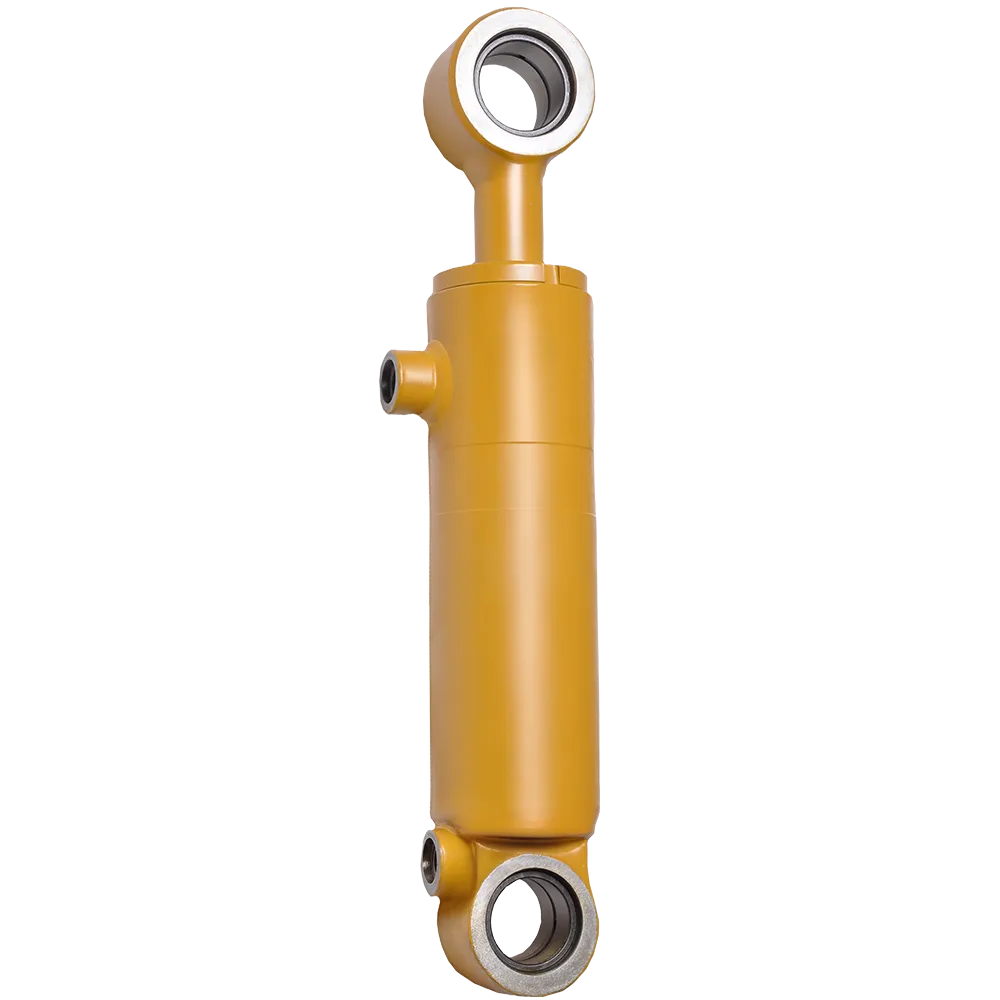
From the product image, this unit shows the compact, pin-mounted geometry expected from a grader hydraulic cylinder: eye-type mounting ends, a painted barrel, and a service-port layout designed for controlled articulation rather than general-purpose linear pushing. In practical terms, buyers searching 23A6352102 or 23A-63-52102 are usually looking for a replacement that restores stable leaning control, predictable blade behavior, and reliable hydraulic response during demanding grading work.
What the 23A-63-52102 cylinder assembly does
In a motor grader, the leaning-cylinder group plays a major role in how the machine reacts to uneven ground, side-slope work, and finish-grading corrections. The 23A-63-52102 cylinder assembly belongs to that control zone, which means it affects more than simple hydraulic movement. It influences how accurately the grader can hold line, how smoothly the machine can be corrected under load, and how confidently the operator can manage the moldboard when conditions shift across the jobsite. Public catalog entries specifically place this part inside Komatsu leaning-cylinder applications rather than a generic hydraulic category.
That matters because a grader depends on balance and precision. A machine can still move with a worn hydraulic part, but it may stop feeling exact. Small internal leakage, slower response, drifting under pressure, or reduced holding force can all turn a sharp, consistent grader into one that needs constant operator correction. On road shaping, shoulder maintenance, site leveling, and fine-finish passes, that loss of precision can quickly become visible in the finished surface.
The 23A6352102 assembly is therefore not just another hydraulic spare. It is part of a system that helps the machine maintain alignment and controlled lean while the operator works across changing material densities, crown transitions, and side-angle corrections. When this part performs correctly, the grader feels more stable, more predictable, and easier to keep on target during long operating hours.
Why this part is important in daily grading work
A hydraulic cylinder in the leaning circuit has to do more than extend and retract. It has to react cleanly to pressure changes, hold its position under working load, and keep the machine’s geometry under control while other hydraulic functions are also active. That is why the 23A-63-52102 cylinder assembly has real operational value. It supports the kind of fine hydraulic behavior that separates rough movement from controlled grading performance.
In field conditions, that difference shows up in operator confidence. A grader with healthy leaning-cylinder performance usually needs fewer repeated corrections, tracks more smoothly through angled work, and responds with less hesitation when the operator makes small adjustments. On busy fleets, that also affects productivity. Time lost to repeated corrections, inconsistent lean holding, or hydraulic drift can reduce daily output even before a cylinder fails completely.
Another reason the 23A6352102 unit matters is that hydraulic wear rarely stays isolated. When one cylinder starts behaving poorly, nearby pins, bushings, hoses, fittings, and related hydraulic components may experience extra stress because the system begins compensating for lost efficiency. Replacing a worn cylinder assembly at the right time can therefore protect adjacent components and reduce the likelihood of wider hydraulic-service costs.
Key technical details of 23A6352102
Current public listings describe the 23A-63-52102 cylinder assembly as a Komatsu hydraulic cylinder assembly for grader leaning applications. Across multiple listings, the most consistent dimensional data is a 35.00 mm rod and a 70.00 mm bore. Multiple sources also connect it with seal kit 707-98-12470, which is useful for future maintenance planning and overhaul support.
Specification summary
- Part number: 23A-63-52102
- Search format: 23A6352102
- Product type: Hydraulic cylinder assembly
- Application group: Leaning cylinder
- Rod diameter: 35.00 mm
- Bore diameter: 70.00 mm
- Service kit: 707-98-12470
Public service-kit breakdowns also show the assembly as a complete cylinder group made up of the cylinder body, bushings, head, piston rod, piston, wear and sealing elements, snap ring, nylon nut, and grease fittings. That parts breakdown supports the idea that the 23A6352102 is a complete functional cylinder assembly rather than a single bare tube or rod-only repair item.
Weight in KG
For ecommerce use, the safest supported weight figure is approximately 11 kg. One Komatsu-oriented catalog page lists the part at 11 kg, and another marketplace listing shows an item weight of 11.240 kg with a shipping weight of 11.577 kg. Some retail listings round the figure differently, so it is best to treat 11 kg as the practical net reference and confirm packed shipping weight separately before dispatch.
Compatible Komatsu models
Public catalog and compatibility listings associate the 23A6352102, 23A-63-52102 CYLINDER ASSY KOMATSU with serial-based grader applications, especially in the leaning-cylinder group. The most clearly documented applications include the following models and serial ranges.
Commonly listed Komatsu applications
- GD505A-3A
- GD505A-3
- GD510R-1
- GD511A-1
- GD521A-1E
- GD521A-1
- GD521R-1
- GD523A-1
- GD523R-1
- GD525A-1
- GD525A-1B
- GD525A-1C
Because Komatsu grader applications are often serial-sensitive, the safest ordering method is to verify the machine model, serial number, and the marking on the removed part before purchase. That matters especially for graders that sit near serial breaks or have had earlier hydraulic substitutions in service history. Compatibility lists are strong guidance, but serial confirmation remains the best workshop practice.
Visual construction and design characteristics
The image suggests that the 23A-63-52102 cylinder assembly was built for controlled, repetitive work under real hydraulic load. The barrel appears proportioned for grader-control duty rather than short-stroke attachment movement, and the end eyes indicate pin-mounted installation where alignment matters. The clean paint finish and defined mounting ends also make it suitable for stock presentation on a parts website, where buyers want a clear visual match against the unit they are replacing.
Another visible strength is the compact end geometry. On grader cylinders, that kind of end layout matters because mounting points must carry repeated side forces, vibration, and directional correction during work on roads, slopes, and compacted surfaces. Even when the machine is not in a dramatic articulation event, the cylinder still experiences continuous working stress as the operator trims blade attitude and compensates for surface changes.
The overall form of the 23A6352102 also points to a component meant for hydraulic control consistency. Buyers in this segment do not choose by appearance alone, but visual design still matters. Eye-end size, barrel proportions, and port positioning all help a professional customer judge whether the replacement part matches the mechanical logic of the original grader linkage. In ecommerce, that visual confidence often supports faster purchasing decisions.
How the 23A-63-52102 cylinder assembly supports machine performance
A strong replacement cylinder helps restore hydraulic confidence. On a grader, that usually means more stable line control, smoother response when adjusting lean, and less tendency for the machine to feel vague under sustained hydraulic demand. These improvements are difficult to reduce to one number, but operators notice them quickly because the machine becomes easier to guide and less tiring to correct throughout the shift.
That improvement can also help reduce wasted passes. When a grader holds its working attitude more accurately, the operator can shape and finish with less repeated adjustment. On large jobs, even small improvements in consistency can save time, reduce surface rework, and lower unnecessary machine movement. The 23A6352102 unit therefore adds value not only as a replacement part, but also as a contributor to daily operating efficiency.
Hydraulic consistency also matters for surrounding systems. When a leaning cylinder responds correctly, pressure behavior across the circuit is easier to manage, and the machine is less likely to show secondary symptoms caused by compensation elsewhere in the system. That is one reason maintenance teams often replace worn cylinders before complete failure. Restoring the function of the main component can prevent a chain of avoidable smaller problems.
Typical signs that replacement may be needed
A cylinder assembly like 23A-63-52102 is usually replaced when the grader begins to show hydraulic drift, external seal leakage, inconsistent lean holding, sluggish response, or a general loss of precision in the leaning function. These are common service triggers because operators notice them during actual machine behavior rather than during planned parts inspection.
In workshop conditions, technicians may also identify wear through oil contamination around sealing points, movement irregularity at the stroke ends, or looseness developing around related mounting hardware and bushings. When the issue is allowed to continue, the grader may still remain operable, but the machine becomes less accurate and less efficient. That often turns a manageable repair into a larger service event.
Another practical reason for replacement is service planning. Since seal kit 707-98-12470 is publicly tied to this cylinder size and application, buyers who already know the cylinder family can often anticipate repair strategy more easily. They can either service the unit with the correct kit where appropriate or move directly to assembly replacement when downtime, wear level, or site urgency make full replacement the smarter choice.
Installation and service notes
Before installing the 23A6352102 assembly, technicians should compare the old unit against the replacement for end style, pin dimensions, hose-port configuration, and general installed length. Public listings confirm the application family and dimensional basics, but fitment discipline at the workshop level is still essential. A careful comparison step helps avoid delays, especially on field service jobs where the machine must return to work quickly.
It is also wise to inspect surrounding hardware at the same time. Pins, bushings, grease points, hose condition, and bracket alignment should all be checked when the cylinder is out of the machine. If the old unit has worn because of misalignment or contamination, installing a fresh assembly without correcting those surrounding issues may reduce service life.
Clean hydraulic handling is equally important. Even a high-quality replacement cylinder can be compromised by dirt introduced during installation, contaminated hoses, or poor sealing practice at the ports. For that reason, the best results come from treating the 23A-63-52102 cylinder assembly as part of a complete hydraulic service task rather than as a single part swap.
Ecommerce and SEO value of exact part-number writing
For heavy machinery parts, buyers almost always search by number first. That is why writing both 23A6352102 and 23A-63-52102 naturally inside the product page matters so much. One customer may copy the compact number from an internal stock file, another may search the hyphenated form from a parts diagram, and another may simply enter “Komatsu leaning cylinder assembly” after reading a workshop note. A strong product page needs to capture all of those search patterns.
At the same time, natural writing matters just as much as part-number visibility. Search engines and AI-based product discovery systems increasingly reward pages that actually explain the function, application, and service logic of a part instead of repeating the same exact phrase unnaturally. For a listing like 23A6352102, the best SEO result comes from balancing exact-match discoverability with readable technical detail.
That balance is especially important for industrial ecommerce because the buyer is not usually browsing casually. They have a machine down, a job in progress, or a stock requirement to fill. When your product page clearly explains what the part is, where it fits, what dimensions are publicly associated with it, and which models it serves, the page becomes useful, not just searchable.
Why buy from 3GEN Export
3GEN Export presents itself publicly as a global OEM heavy machinery spare-parts supplier and says its logistics system supports worldwide delivery in 5 working days. For buyers of hydraulic parts such as the 23A-63-52102 cylinder assembly, that promise matters because grader downtime is expensive and many jobs cannot wait for long parts lead times.
This is also the kind of part where sourcing accuracy matters almost as much as shipping speed. A leaning-cylinder assembly has to match the machine family and serial logic correctly, and the buyer often needs support with part-number confirmation, cross-reference review, or model verification before ordering. When that support is paired with fast international delivery, it becomes more than a sales point; it becomes real operational value.
As an OEM supplier, 3GEN Export positions parts like 23A6352102 for professional buyers who want reliable fitment guidance, industrial-grade supply support, and fast global fulfillment. For fleets, traders, workshops, and independent owners, those are exactly the factors that usually decide where a hydraulic component is purchased.
Final product summary
The 23A6352102, 23A-63-52102 CYLINDER ASSY KOMATSU is a grader leaning-cylinder assembly publicly associated with multiple Komatsu GD-series applications. Current parts-catalog and compatibility sources tie it to a 35 mm rod, a 70 mm bore, seal kit 707-98-12470, and an approximate net weight of about 11 kg, with serial-based applications across several grader families.
For a product page, this makes the part strong from both a technical and commercial standpoint. It is a code-specific hydraulic component with a clear operational role, measurable service relevance, and proven search value across both compact and hyphenated number formats. When described well, it appeals to the exact audience that buys industrial spare parts: workshops, fleet buyers, machinery owners, and resellers who need confidence before they place the order.
Supplied by 3GEN Export as an OEM solution with worldwide delivery in 5 working days, the 23A-63-52102 cylinder assembly is a practical choice for buyers who want dependable sourcing, fast logistics, and a part built for demanding Komatsu grader service.
Manufactured in Turkey, these products are made using the latest technologies and built to meet the highest international standards. Each machine is a high-quality copy of the original, ensuring durability, precision, and performance that you can rely on for modern construction and metalworking projects.