Marketplace of Heavy Machinery Spare Parts

23B2711232, 23B-27-11232 ROD LEANING KOMATSU


Categories: Hydraulic System
$2.040,00
90 in stock
- Our spare parts are engineered to seamlessly integrate with your machinery.
- Delivery anywhere in the world in max. 10 days
- 1 year manufacturer warranty
- Your transactions are protected by the most advanced security measures.
- Shipping fees are included in the prices of all our products.
Product Video
Product Description
23B-27-11232 ROD LEANING KOMATSU
The 23B-27-11232 ROD LEANING KOMATSU is a grader-side linkage part associated with Komatsu motor graders. Public online listings consistently identify 23B2711232 and 23B-27-11232 as a “rod leaning” component, and seller-side catalog pages place it in grader spare-parts groupings tied to hydraulic or front-axle related systems. One recent market request also links this exact part number to the Komatsu GD655-3A, while another seller page markets the same number for a broader grader range including GD511, GD625, GD655, GD705, and GD825. Because those broader compatibility lists come from reseller pages rather than an openly accessible Komatsu factory catalog, serial-number verification is still the safest final check before purchase.
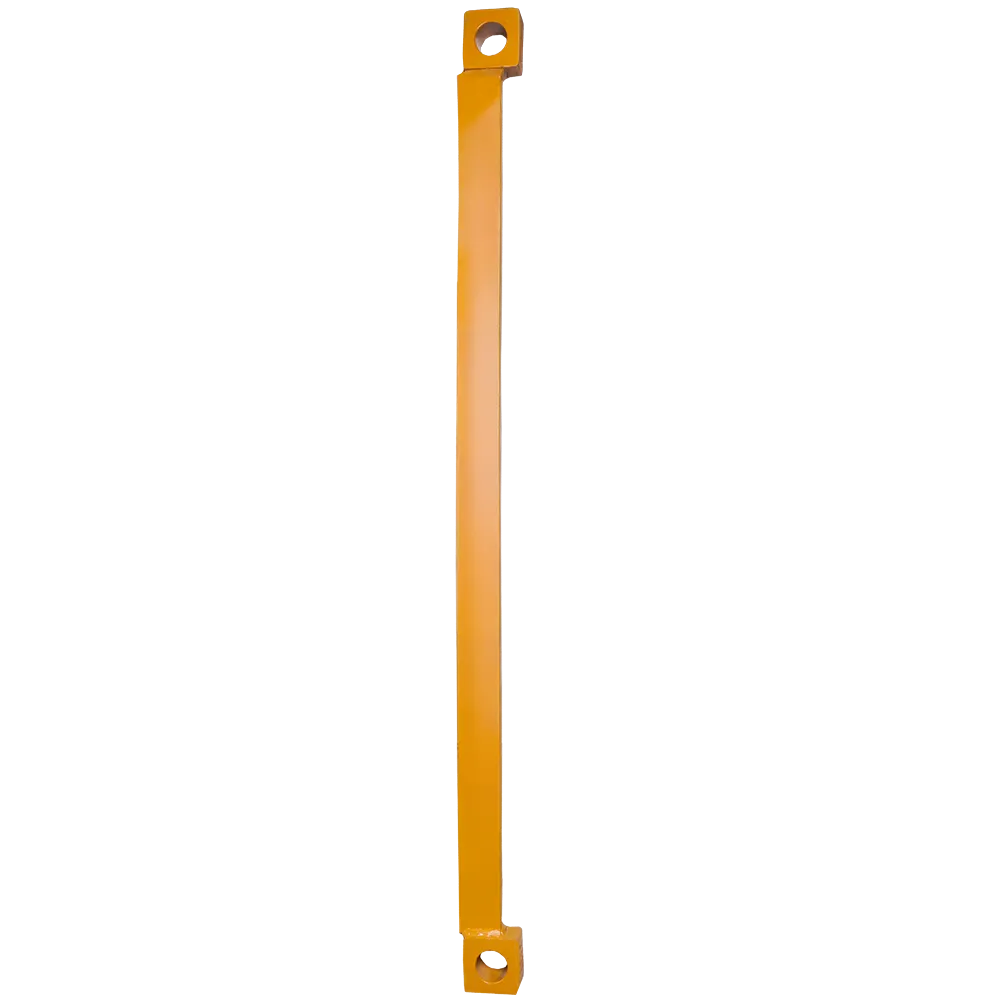
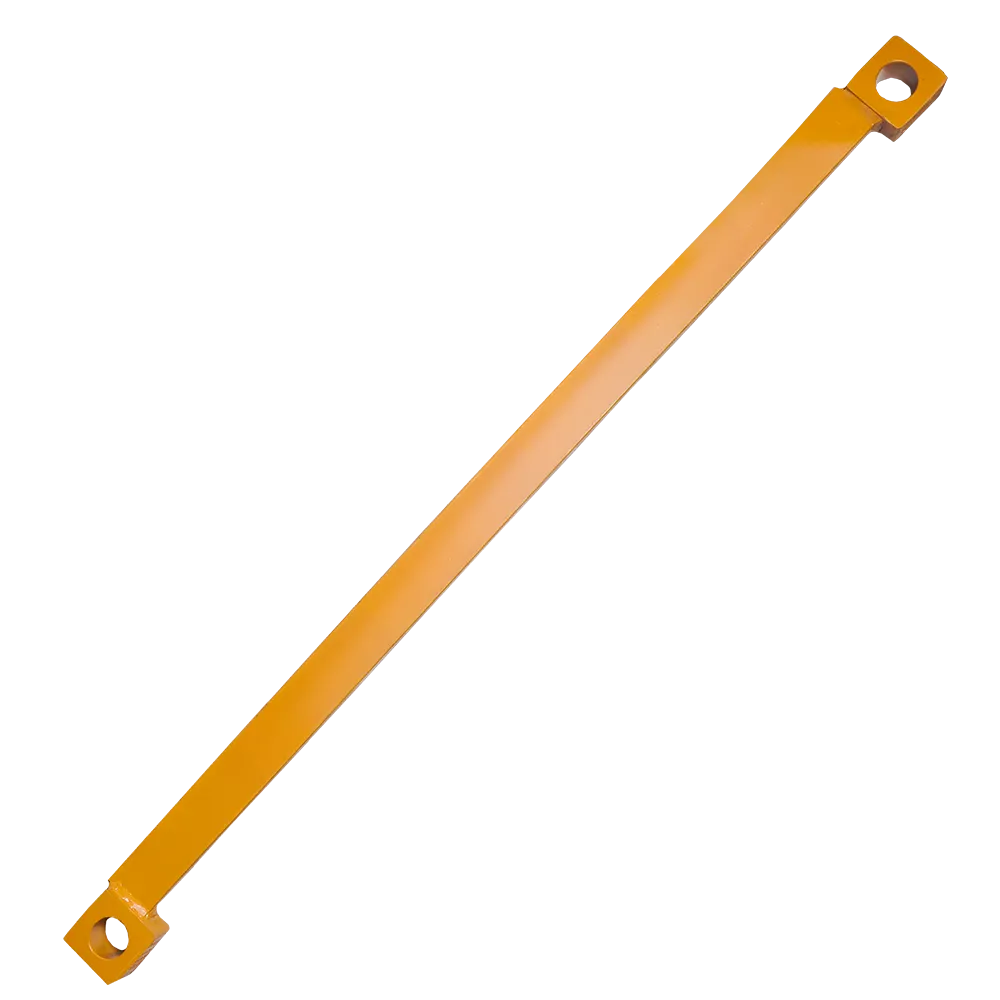
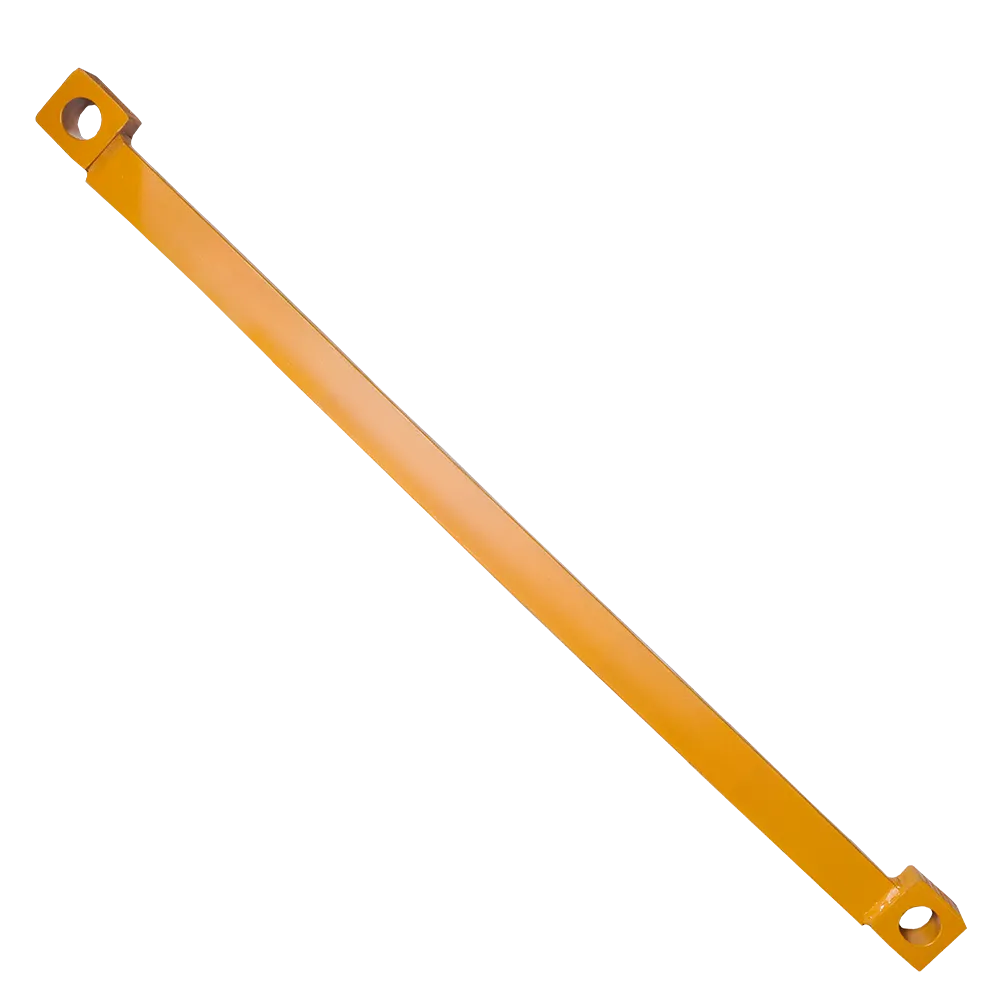
From the uploaded banner image, the 23B-27-11232 ROD LEANING KOMATSU appears to be a long, straight, coated steel link with a mounting hole at each end. That shape strongly suggests a control or support rod rather than a rotating shaft, piston, or hydraulic cylinder rod. In practical machine terms, parts built like this are usually used to transfer movement, hold geometry, or stabilize a leaning assembly under repeated load. So even before checking application references, the visual structure of the part supports the idea that the 23B-27-11232 ROD LEANING KOMATSU works as a positional or stabilizing link inside the grader’s leaning mechanism.
What the 23B-27-11232 ROD LEANING KOMATSU Does
The name itself gives an important clue. A “rod leaning” part on a grader is typically connected with the mechanism that helps control wheel lean, axle lean, or related front-end alignment geometry. Public reseller references place this number among Komatsu grader parts and front-axle related families, which makes that interpretation much more believable than treating it as a random structural bar. In other words, the 23B-27-11232 ROD LEANING KOMATSU is not simply a painted strip of steel. It is a geometry-control component that helps the machine maintain predictable alignment during grading work.
On a motor grader, leaning control matters because the machine must hold blade accuracy while also coping with uneven terrain, vibration, steering correction, and side-load transfer. If the lean-related linkage becomes loose, bent, worn, or misaligned, the grader can lose some of its precision. Operators may notice reduced consistency during fine grading, less predictable front-end behavior, or premature wear in nearby pins, bushings, and support points. That is why the 23B-27-11232 ROD LEANING KOMATSU should be treated as a functional precision part, not a simple fabricated bracket.
Why This Part Matters in Daily Grader Work
It helps preserve controlled machine geometry
A grader depends on controlled motion more than brute force alone. The front assembly must react accurately to steering input and ground conditions while keeping the machine stable enough for finish work, road shaping, shoulder maintenance, and leveling. A properly fitted 23B-27-11232 ROD LEANING KOMATSU contributes to that stability by supporting the intended relationship between connected components in the lean mechanism.
It supports precision under load
Heavy graders do not work in gentle conditions. They run through dust, vibration, shock loads, uneven traction, and repetitive directional changes. A long linkage member like the 23B-27-11232 ROD LEANING KOMATSU must resist bending, elongation around the bolt holes, coating damage, and progressive fatigue. If that part loses dimensional integrity, the whole connected system can start feeling vague or inconsistent.
It protects surrounding wear points
In many assemblies, a damaged rod becomes expensive not because the rod itself is complex, but because it starts transferring abnormal load into pins, bushings, brackets, and support housings. Replacing the 23B-27-11232 ROD LEANING KOMATSU at the right time can therefore help prevent a much broader front-end repair.
Visual and Physical Features of the 23B2711232 Rod
Based on the uploaded image, the 23B2711232 Rod has a clean straight body with slightly formed transitions near the eye sections. The end holes appear machined for secure mounting, and the body profile looks intentionally slim rather than overbuilt. That combination is typical of a linkage part that must stay strong while remaining dimensionally stable and easy to position within an assembly. The yellow outer coating also suggests the part is meant to resist surface corrosion during field service.
The part does not show the geometry of a hydraulic piston rod, tie rod with threaded ends, or articulated rod end. Instead, the visible design points to a fixed-length connecting member. That matters for buyers because it tells you what to inspect during replacement: hole wear, straightness, alignment, and installation position are likely more important than seal compatibility or thread condition.
Material Logic and Durability Expectations
Public seller descriptions present the 23B-27-11232 ROD LEANING KOMATSU as a high-strength steel grader component, and that makes practical sense for a part of this type. A leaning rod must be stiff enough to hold geometry, but also durable enough to absorb repeated working stress without cracking. One seller also lists a corrosion-resistant finish, which aligns with the coated surface visible in the uploaded image.
In real service, durability depends on more than just base metal. The 23B-27-11232 ROD LEANING KOMATSU also needs accurate hole spacing, good edge finishing around the mounting areas, and a shape that does not create unnecessary stress concentration. A poor-quality replacement can fit at first and still fail early if the holes deform, the part flexes too easily, or the coating traps poor surface preparation underneath. For that reason, professional buyers usually focus on machining quality and dimensional consistency as much as on the raw material itself.
Compatible Komatsu Models
Publicly available web sources do not show one openly accessible factory-fitment page for this exact number, so the most honest way to present compatibility is to separate firm public associations from broader reseller claims.
Strong public association
A 2025 supply request links the exact part number 23B-27-11232 to the Komatsu GD655-3A.
Broader seller-listed compatibility
One seller page markets the 23B-27-11232 ROD LEANING KOMATSU for the following grader models:
- Komatsu GD511
- Komatsu GD625
- Komatsu GD655
- Komatsu GD705
- Komatsu GD825
Because these broader model lists come from a commercial product page, the safest wording is this: the 23B-27-11232 ROD LEANING KOMATSU is publicly connected most clearly to Komatsu grader applications, especially GD655-3A, and may also fit additional Komatsu grader models promoted by aftermarket sellers. Final confirmation should always be made by part number, machine model, and serial number before ordering.
Technical Details and Specifications
Core identification
Part number formats used online include both 23B-27-11232 and 23B2711232. Public listings describe the item as “ROD LEANING” for Komatsu grader applications.
Product category
Seller pages place the 23B-27-11232 ROD LEANING KOMATSU in hydraulic-system or grader spare-parts groupings, while broader Komatsu grader parts pages also place the part number inside front axle parts lists. That combination suggests the part is best understood as a grader leaning/front-end linkage component rather than a main engine or transmission item.
Material
Public seller information describes the part as steel, which fits the visible form and expected working duty.
Finish
A seller page describes a corrosion-resistant finish, and the uploaded image shows a painted outer surface suited to field service exposure.
Weight in KG
One public seller listing gives the approximate weight of the 23B-27-11232 ROD LEANING KOMATSU as 7.5 kg. Since that figure comes from a single commercial listing rather than an open Komatsu factory specification sheet, it is best presented as an estimated catalog weight rather than an absolute factory shipping figure.
Common Reasons to Replace the 23B-27-11232 ROD LEANING KOMATSU
A buyer usually searches for the 23B-27-11232 ROD LEANING KOMATSU when one of several workshop issues appears. The first is visible bending or deformation after impact or extended overload. The second is elongation or wear around the mounting holes. The third is a front-end feeling of looseness during leaning or directional correction. The fourth is a broader rebuild where technicians are renewing multiple grader linkage parts at once.
Even if the rod is not visibly broken, replacement can still be justified when grading accuracy has dropped and inspection shows movement where the linkage should remain tight. In these situations, technicians should also inspect connected pins, bushings, brackets, retainers, and any nearby housings because a worn rod often leaves evidence in the surrounding parts.
Installation and Inspection Guidance
The 23B-27-11232 ROD LEANING KOMATSU should be installed only after confirming three basic conditions: the new rod matches the original hole spacing, the connected mounting points remain true, and the fastening hardware or pins are still serviceable. Installing a straight new part into a distorted assembly can create preload, side stress, and early wear.
Before installation, check the following:
- Hole roundness at both ends
- Surface cracks or impact marks
- Straightness across the rod body
- Condition of mating pins, bolts, or bushings
- Alignment of the connected mounting brackets
After installation, the grader should be checked for smooth movement through its intended lean-related travel. Any stiffness, noise, or binding usually points to a connected issue rather than the rod alone.
Why the 23B2711232 Rod Is Important for Long-Term Value
The 23B2711232 Rod is one of those parts that can look simple in a product photo yet play a major role in how the machine feels in service. Grader operators depend on consistency. They notice when the machine tracks properly, responds evenly, and holds alignment across long working hours. The 23B-27-11232 ROD LEANING KOMATSU contributes to that consistency by helping the connected assembly stay where it is supposed to stay.
For fleet managers and parts buyers, that translates into a simple business point: a properly matched 23B-27-11232 ROD LEANING KOMATSU can help reduce alignment-related wear, limit unplanned downtime, and protect nearby high-cost components. That makes it a smart replacement item during preventive maintenance as well as corrective repair.
Why Buy from 3GEN Export
At 3GEN Export, we supply the 23B-27-11232 ROD LEANING KOMATSU as an OEM supplier focused on heavy machinery spare parts for global buyers. Our goal is not just to list a part number, but to help you source the right component with clear communication, practical support, and dependable export service.
When you order the 23B-27-11232 ROD LEANING KOMATSU from 3GEN Export, you are working with a supplier that understands grader parts, serial-based verification, and the urgency of keeping equipment productive. We deliver worldwide in 5 working days, which is especially valuable when a machine is waiting on a front-end repair and downtime is already costing money.
For repair shops, fleet owners, distributors, and project buyers, 3GEN Export provides an OEM supply solution for the 23B-27-11232 ROD LEANING KOMATSU with global reach and fast response. That means fewer sourcing delays, better order clarity, and faster movement from quotation to delivery.
Final Evaluation
The 23B-27-11232 ROD LEANING KOMATSU is a grader linkage component publicly associated with Komatsu motor grader applications and most clearly connected online with the GD655-3A, while some reseller listings promote broader compatibility across GD511, GD625, GD655, GD705, and GD825. Public parts pages also place the part number among grader front axle and hydraulic-related product families, which supports the conclusion that this rod belongs to the grader leaning mechanism rather than an unrelated system.
From the uploaded image, the part’s straight, drilled, steel-link form confirms its role as a load-carrying positional member. In actual service, the 23B-27-11232 ROD LEANING KOMATSU helps preserve machine geometry, supports stable leaning movement, and protects surrounding linkage parts from abnormal stress. If you need a dependable source, 3GEN Export supplies the 23B-27-11232 ROD LEANING KOMATSU as an OEM supplier with worldwide delivery in 5 working days.
Manufactured in Turkey, these products are made using the latest technologies and built to meet the highest international standards. Each machine is a high-quality copy of the original, ensuring durability, precision, and performance that you can rely on for modern construction and metalworking projects.


