$224,00
90 in stock
In surface and underground drilling, the difference between smooth performance and premature wear often comes down to what you don’t see: the fine dust, abrasive cuttings, and moisture that creep into every interface. The 3216933914 / 3216 9339 14 DUST COVER ATLAS COPCO is built to stand between that harsh environment and the components that must stay clean, aligned, and protected.
This part is a compact elastomer protective disc with a centered opening. Its job is straightforward but critical: it helps block dust ingress, reduces contamination at sensitive contact points, and supports long-term reliability in drilling assemblies exposed to constant vibration and cyclic loads. In many Atlas Copco/Epiroc-style rock drill configurations, a dust cover like this is treated as a sacrificial shield, designed to take the abuse so the surrounding metal components can last longer.
As 3GEN Export, we supply this part as an OEM supplier and deliver worldwide in 5 working days.
The 3216933914 / 3216 9339 14 DUST COVER ATLAS COPCO is designed to protect interfaces where abrasion and contamination would otherwise accelerate wear. When installed correctly, it contributes to:
Reduced dust and fines entering cavities and contact zones
Cleaner mating surfaces around drill steel support-related areas
Less abrasive paste forming from oil + dust + moisture
More predictable wear patterns and longer service intervals
Lower risk of secondary damage caused by contamination migration
Think of it like a “storm door” for your drilling system. It doesn’t replace structural parts, but it prevents the environment from attacking them every hour of the shift.
Rock drilling creates continuous micro-particles that behave like grinding compound. Even tiny contamination at a contact surface can trigger a chain reaction:
Dust enters → friction rises
Friction rises → heat and micro-wear increase
Micro-wear increases → clearance grows
Clearance grows → vibration increases
Vibration increases → more contamination is pulled in
This is why small sealing and protective elements are often the first place experienced maintenance teams look when diagnosing unexplained wear or “roughness” in operation.
Replacing the 3216933914 / 3216 9339 14 DUST COVER ATLAS COPCO on schedule is one of the simplest ways to prevent that chain reaction from starting.
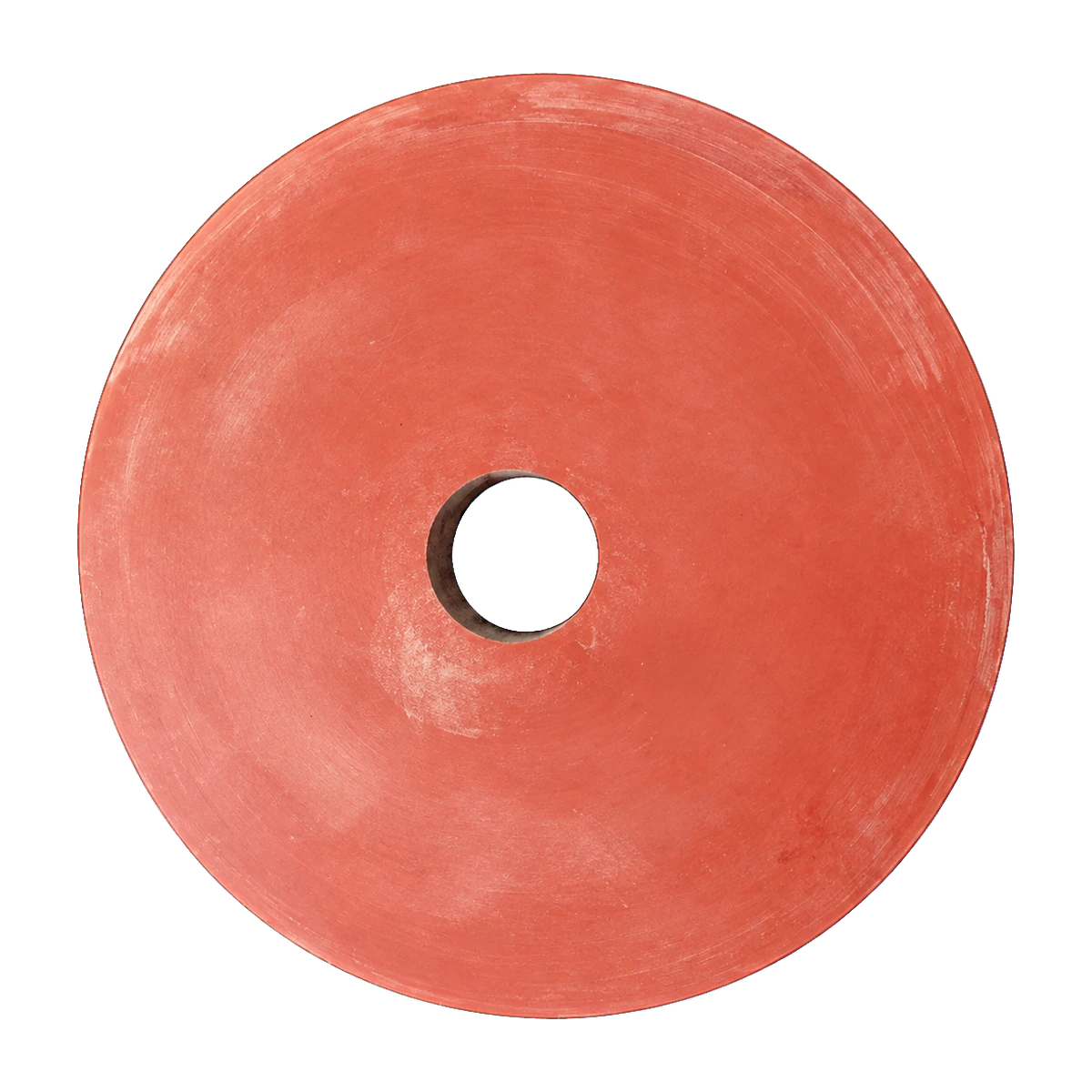
From the images, this part appears as a circular elastomer disc with a centered hole. That geometry is typical of dust covers used to protect rotating or moving interfaces while allowing the necessary clearance for a shaft, guide, or passing element.
A properly manufactured dust cover in this category should deliver:
Abrasion resistance against dust, cuttings, and slurry residue
Elastic memory so it keeps sealing pressure under vibration
Chemical resistance to oils and common service fluids
Temperature tolerance for demanding drilling conditions
Stable shape retention under compression and repeated loading
Even if the part looks simple, dimensional accuracy matters. A dust cover that is slightly off can seat poorly, twist, or create micro-gaps where dust can enter.
This part is commonly associated with drilling assemblies where the drill string, guide interfaces, and protective zones must be shielded from fine particles. In many setups, it sits where contamination naturally tries to travel, toward the “clean side” of the system.
Typical placement zones for parts of this type include:
Drill steel support and guidance areas
Protective interfaces near moving contact surfaces
Cavities or openings where dust would otherwise be pulled in by vibration and pressure changes
Zones exposed to mixed contamination: dry dust plus oil film plus moisture
If your machine runs in high-dust formations, wet drilling, or mixed abrasive environments, the dust cover becomes even more important because slurry can carry abrasives deeper into assemblies.
The 3216933914 / 3216 9339 14 DUST COVER ATLAS COPCO is commonly referenced in connection with SmartROC series refurbishment/maintenance contexts for T45-related configurations, including:
SmartROC T35
SmartROC T40
Important note for mixed fleets: many platforms can be configured with different drill steel standards (for example, T45 vs T51). Dust covers and protective gaskets often change with that configuration. Always confirm your machine’s setup and parts list by part number before ordering.
When you replace the dust cover at the right time and install it correctly, the operational benefits show up as less “hidden damage” over time. The most valuable outcomes are:
Dust covers reduce the rate at which abrasive particles reach sensitive surfaces. That usually means less polishing, scoring, and uneven wear in surrounding parts.
Contamination can increase friction and cause inconsistent movement in mechanical assemblies. A stable protective barrier supports smoother behavior during drilling cycles.
Many expensive failures are not caused by a single big event, but by slow contamination-driven wear. A small protective part can reduce the probability of those failures.
Wear parts that are inexpensive and fast to replace help turn emergency repairs into planned maintenance.
The 3216933914 / 3216 9339 14 DUST COVER ATLAS COPCO should be inspected as part of routine service, especially in abrasive, wet, or high-duty operations.
Replace the dust cover if you notice:
Cracking or visible splits on the face or edges
Hardening (loss of elasticity) or a “plastic” feel
Deformation around the center opening
Edges that curl or don’t sit flat
Dust trails or staining that suggest bypass paths
Increased contamination near the protected area
A worn dust cover may still “look okay” at first glance. The more reliable test is whether it holds shape, seats evenly, and maintains consistent contact.
Exact steps vary by machine and location in the assembly, but these best practices help ensure proper seating and long life.
Before installing the 3216933914 / 3216 9339 14 DUST COVER ATLAS COPCO, remove:
Dust and fines embedded in corners
Oil film mixed with abrasive particles
Slurry residue that can prevent even seating
If the surface is dirty, the dust cover may seat unevenly and create micro-gaps.
Look for:
Burrs or sharp edges that can cut the elastomer
Deep scratches that create leak paths
Deformation that prevents full contact
If sharp edges exist, correct them before installation. A new dust cover can fail early if it is pinched or cut during assembly.
Check that the dust cover:
Sits flat without twisting
Aligns properly with the center opening
Maintains even contact around the perimeter
A twisted dust cover is more likely to tear under vibration.
During installation:
Press evenly around the perimeter
Avoid forcing one side down first
Do not use sharp tools that can nick the surface
Confirm:
No pinched edges
No bulging near the center opening
No visible gaps between the part and the seating face
A correctly installed dust cover should look uniform, centered, and calm, no waves, no twists, no lifted edges.
Because small protective sealing parts often don’t publish detailed public spec sheets, the most useful specs are fit-and-function items you can verify quickly:
Part number: 3216933914
Alternate format: 3216 9339 14
Product type: Dust cover / protective gasket
Material: Industrial elastomer (application-grade compound)
Shape: Circular disc with center opening
Typical color (from images): Red/orange
Approximate catalog-referenced weight is about 1.3 kg. In real shipping, recorded weight can vary based on packaging and batch handling. If you need exact shipping weight, we can confirm it on the packing list when preparing your dispatch.
The true cost of a dust cover is not the price of the item, it’s the cost of not having it perform. When dust and slurry are allowed to migrate into interfaces, you can see:
Faster wear in contact zones
Increased maintenance frequency
Higher spare parts consumption over time
More downtime and unexpected failures
Reduced component life in adjacent assemblies
By keeping protective sealing elements in good condition, you reduce the rate at which the environment “eats” your machine from the inside out.
To avoid mismatches, confirm:
The exact part number format: 3216933914 or 3216 9339 14
Your machine model and drilling configuration
Whether your setup is T45 or another standard
The seating area dimensions and assembly location in your parts diagram
If you run a mixed fleet, two machines that look identical can still require different sealing parts due to configuration differences.
Procurement speed matters in drilling. When you’re waiting on a small wear item, the entire operation can slow down.
With 3GEN Export:
We supply as an OEM supplier
We deliver worldwide in 5 working days
We support part-number verification to reduce ordering mistakes
We can consolidate shipments when you’re ordering multiple drilling wear parts together
If you share your machine details (model and configuration), we can help double-check compatibility before dispatch.
Yes. These are two formatting styles for the same reference, commonly used across catalogs and parts lists.
You can, but wear rarely stays “a little.” Once elasticity is lost or a bypass path forms, contamination accelerates quickly. Replacing early is usually the cheaper choice.
Installing over a dirty surface or pinching the edge during assembly. Cleanliness and even seating are the two biggest factors that extend service life.
Manufactured in Turkey, these products are made using the latest technologies and built to meet the highest international standards. Each machine is a high-quality copy of the original, ensuring durability, precision, and performance that you can rely on for modern construction and metalworking projects.