$422,00
90 in stock
When a rock drill is doing real work, there’s a small set of parts that silently decide whether the day runs smoothly or turns into a stop-start struggle. The 152 723 68 CHUCK SANDVIK is one of those parts. It sits at the point where energy, rotation, and alignment become “usable power” at the tool end—helping the drill keep the shank/tube firmly controlled, correctly centered, and consistently repeatable through thousands of impact and rotation cycles.
The 152 723 68 CHUCK SANDVIK (also searched as 15272368) is commonly associated with Sandvik HL-series / Tamrock drilling setups and is also listed for underground drilling equipment such as Sandvik DD311 and Sandvik DD321.
At 3GEN Export, we supply this part as an OEM supplier alternative for operations that need dependable fit, stable performance, and predictable procurement. We ship worldwide in 5 working days, so you can replace downtime with momentum—fast.
A “chuck” in rock drilling is not a decorative name; it’s a job title.
The 152 723 68 CHUCK SANDVIK functions as a holding/locating interface that helps maintain the correct relationship between the moving tool component (such as a shank adapter or related interface assembly) and the surrounding structure. In practical terms, it helps:
Keep the tool end centered under load
Reduce unwanted play that turns energy into vibration
Stabilize contact surfaces so wear happens predictably, not chaotically
Support consistent drilling quality by maintaining alignment
Think of it like the difference between running a machine on rails versus running it on luck. A drill can be powerful, but without control at the interface, power becomes heat, noise, and broken schedules.
The 152 723 68 CHUCK SANDVIK is designed for repeat cycles: impact + rotation + flushing + dust + temperature change. That combination is brutal. A properly made chuck helps the system survive it.
If you’re reading this, you likely already know the pattern: performance issues rarely start with the “big obvious component.” They begin with a small tolerance change, a slight wobble, a surface that starts to polish when it should be carrying load, or a fit that becomes too relaxed under impact.
The 152 723 68 CHUCK SANDVIK supports the drill’s mechanical discipline. When it’s healthy, you get:
Cleaner energy transfer
More stable drilling feel
Better consistency in penetration behavior
Reduced risk of secondary wear on neighboring parts
When it’s worn or mismatched, you often see symptoms like:
Irregular rotation behavior or “hunting”
Increased vibration near the tool end
Accelerated wear marks on mating surfaces
Looser fit, noise, or heat where it shouldn’t be
Replacing the 152 723 68 CHUCK SANDVIK at the right time is not just “a spare part purchase.” It’s a decision to protect your entire interface stack.
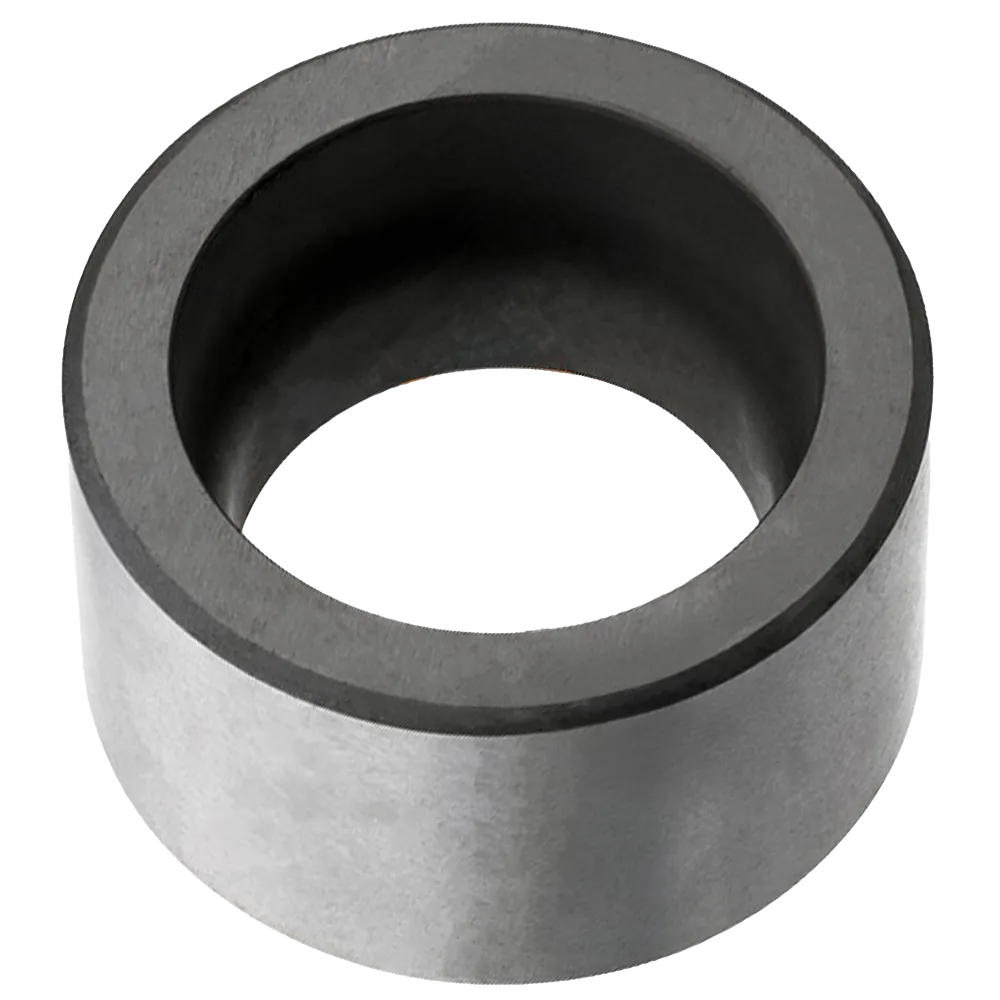
From the images provided, the part appears as a robust, ring-like/insert-style component with a smooth internal profile and a solid outer surface—typical of interface parts designed to seat and locate precisely while carrying load. The geometry suggests careful attention to roundness, concentricity, and stable contact edges, all of which influence how consistently the drill holds alignment under impact.
This is exactly why the 152 723 68 CHUCK SANDVIK must be produced with tight manufacturing discipline: small deviations here can multiply into noticeable operational issues.
The 152 723 68 CHUCK SANDVIK helps keep the interface controlled so the drill behaves predictably. Predictability is productivity—operators trust a machine that repeats the same response every time.
A good chuck encourages wear to occur where it’s expected, not across multiple surrounding parts. That means:
longer service life across the assembly
fewer unexpected stop events
easier planning for maintenance windows
When alignment is stable and play is minimized, energy transfer improves. Even small improvements add up across shifts and meters drilled.
One worn interface component can “teach” neighboring parts to fail sooner. Keeping the 152 723 68 CHUCK SANDVIKin good condition is a simple way to defend the rest of the system.
Because exact factory dimensions and metallurgy can vary by configuration and application, the most reliable way to confirm specs is to match the part number 15272368 / 152 723 68 to your equipment and, if available, compare measurements from the worn part.
That said, the 152 723 68 CHUCK SANDVIK is typically characterized by:
Precision-machined seating surfaces
Round, concentric geometry for consistent alignment
Load-bearing structure intended for repeated impact/rotation cycles
Surface finish designed to reduce galling and unstable friction behavior
Inner surface scoring or polishing beyond normal wear
Edge deformation (chips, dents, rolled edges)
Out-of-round conditions
Fit looseness relative to the mating component
If you want, you can share your machine model/serial and a quick measurement set (inner diameter, outer diameter, height). Then we can cross-check suitability more confidently before shipment.
Based on available listings, the 152 723 68 CHUCK SANDVIK is referenced for:
Sandvik Underground drilling DD311
Sandvik Underground drilling DD321
Sandvik HL Series (listed as “Chuck – Sandvik HL Series”)
Also marketed with references to Sandvik/Tamrock RDX5 in some catalogs
Important note: the safest approach is always to verify by machine configuration and serial range, especially on drilling equipment where variants exist. If you share the equipment details, we can help you confirm the correct fit before dispatch.
Below is a practical installation outline used by many maintenance teams. Always follow your site safety procedures and the machine’s service instructions.
Clean the work area and isolate the machine safely
Remove contamination from the interface zone (dust and fines matter here)
Inspect mating components for scoring, burrs, or deformation
Remove the existing chuck carefully to avoid damaging the seating surfaces
Note the orientation and seating behavior during removal (it can reveal misalignment causes)
Confirm the housing/seat is clean and free from raised burrs
If there is damage on the seat, replacing only the chuck may not solve the root issue
Install the 152 723 68 CHUCK SANDVIK with controlled pressure and correct alignment
Ensure it sits flush and does not rock
Reassemble the interface stack with attention to cleanliness and correct torque methods where applicable
Rotate/move the assembly (as applicable) to confirm smooth behavior
Listen for abnormal friction sounds
Monitor early operation for heat or vibration changes
Good installations look boring. That’s the goal.
To keep the 152 723 68 CHUCK SANDVIK performing longer:
Dust and fines behave like grinding paste under load. Cleanliness is not cosmetic—it’s life extension.
If you’re seeing repeated wear patterns, don’t just replace parts—trace the alignment cause. Chucks often wear faster when something else is pushing them off-axis.
If the chuck’s mating surface is heavily worn on the corresponding component, installing a new 152 723 68 CHUCK SANDVIK against a damaged mate can shorten the new part’s life.
If you record service intervals, you’ll spot early drift. When the interval suddenly shortens, something else has changed.
You’re not only purchasing a part number—you’re purchasing continuity.
With 3GEN Export, the 152 723 68 CHUCK SANDVIK is supplied through an OEM supplier channel approach focused on:
Consistent manufacturing standards
Reliable packaging and export handling
Fast international logistics
We deliver worldwide in 5 working days, because downtime has a cost that never waits politely.
For the 152 723 68 CHUCK SANDVIK, the estimated weight is:
Approx. 1.1 – 1.6 kg (typical range for this style/size of chuck component)
Final weight can vary slightly by exact manufacturing specification and batch. If you want a tighter estimate, share the part’s measured outer diameter, inner diameter, and height (or your shipping carton dimensions/target courier), and we can narrow it further.
Manufactured in Turkey, these products are made using the latest technologies and built to meet the highest international standards. Each machine is a high-quality copy of the original, ensuring durability, precision, and performance that you can rely on for modern construction and metalworking projects.