Marketplace of Heavy Machinery Spare Parts

23B1512311, 23B-15-12311 CARRIER KOMATSU


Categories: Transmission & Drive Components
$2.580,00
90 in stock
- Our spare parts are engineered to seamlessly integrate with your machinery.
- Delivery anywhere in the world in max. 10 days
- 1 year manufacturer warranty
- Your transactions are protected by the most advanced security measures.
- Shipping fees are included in the prices of all our products.
Product Video
Product Description
23B1512311, 23B-15-12311 CARRIER KOMATSU
The 23B1512311, 23B-15-12311 CARRIER KOMATSU is a transmission component used in Komatsu grader reverse clutch assemblies. Public parts references place this number in the reverse clutch section, and current catalog sources list its weight at about 4.45 kg. That immediately tells the buyer this is not a decorative cover or a simple spacer. It is a heavy internal driveline part designed for real load-bearing work inside the transmission.
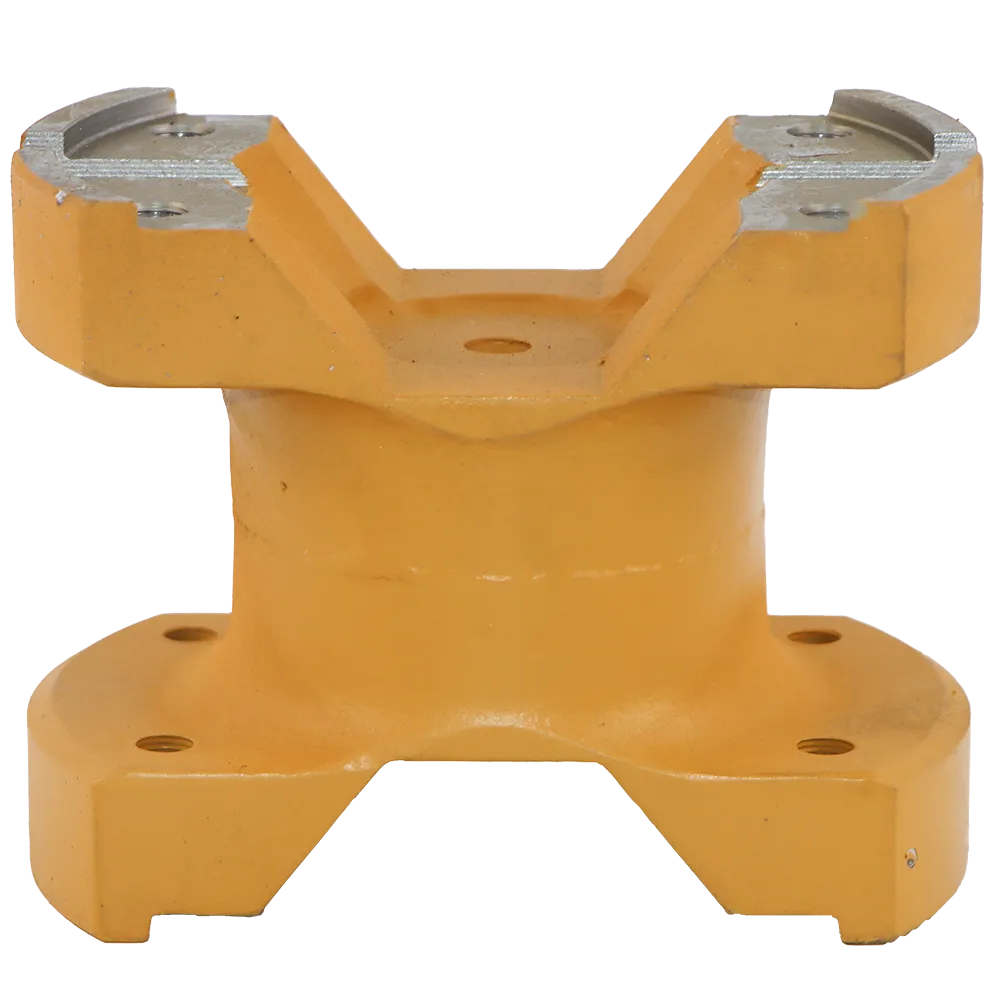
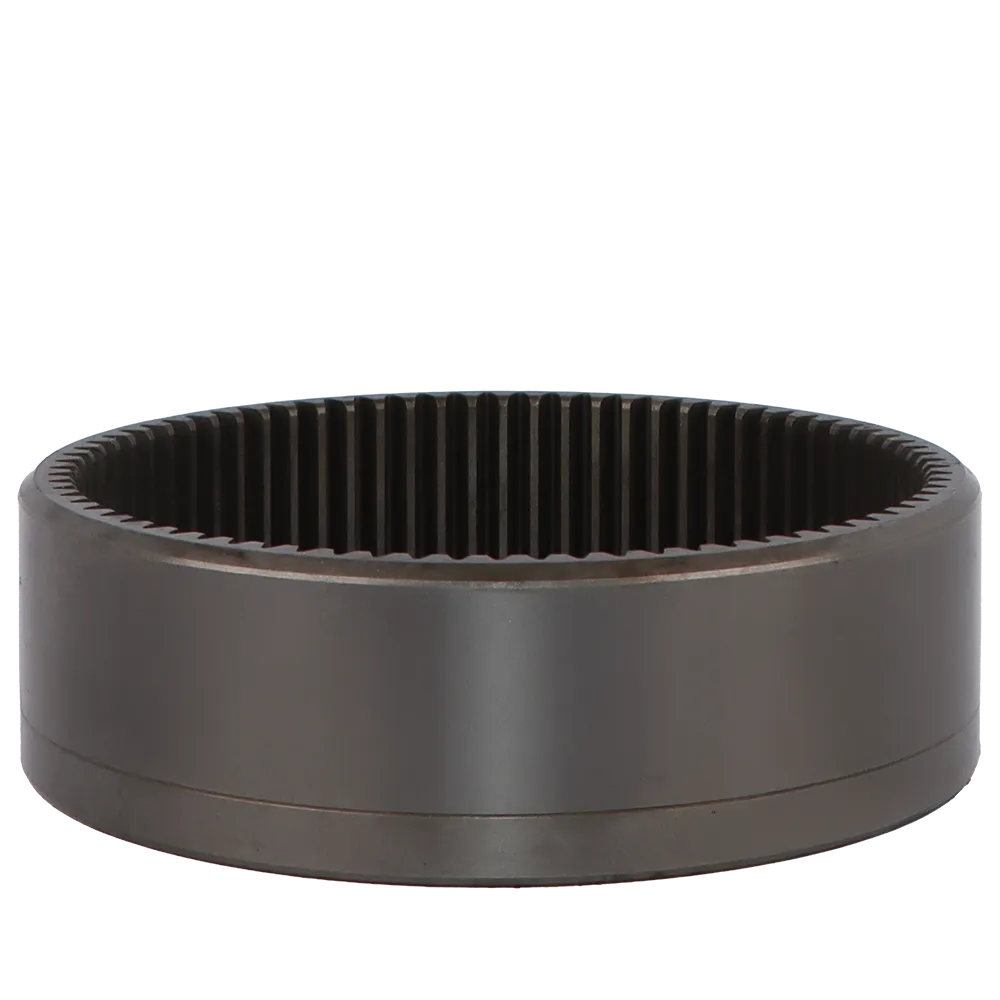
From the uploaded images, this component shows the visual structure of a carrier body built for rotating transmission duty. The part combines a finely toothed outer circumference, a central machined bore, multiple evenly spaced holes, and open structural windows between the upper and lower faces. Based on that geometry, and on its placement in the reverse clutch catalog group, this appears to function as a carrier-style support body for rotating internal elements rather than as a plain flange or passive hub. That is an informed mechanical reading from the visible design and the parts-book context.
For workshops, rebuilders, and fleet owners, the 23B1512311, 23B-15-12311 CARRIER KOMATSU matters because transmission repairs are time-sensitive and expensive. When a grader transmission is already open, the buyer usually wants a correct, durable, serial-checked component that restores internal stability without guesswork. At 3GEN Export, we supply this part as an OEM supplier and deliver worldwide in 5 working days.
Product Overview
Public sources consistently identify 23B-15-12311 and 23B1512311 as the same Komatsu carrier component. That is important for search performance as well as practical purchasing, because some buyers search with hyphens, others without, and others by copying whatever number style appears on an old service document or internal stock record. A strong product page should support all of those search habits naturally.
The most useful technical clue is not the word “carrier” by itself, but the assembly location. Public Komatsu parts pages place this item in the transmission reverse clutch section on grader applications such as GD605A-5 and GD625A-1. That means the part works in a tightly integrated internal assembly where gears, bearings, shafts, washers, discs, and related clutch components depend on correct alignment and stable support.
That context is what gives the part its real value. A carrier in a reverse clutch section is not a generic metal body. It has to support rotating members accurately, hold geometry under changing loads, and contribute to smooth internal power transfer. When it wears, cracks, or loses dimensional stability, the resulting problem can spread through neighboring transmission components rather than staying isolated to one part.
What This Part Does
Based on the reverse-clutch catalog placement and the visible structure in the images, this component serves as an internal support and positioning member inside the transmission assembly. The open-window construction, the central bore, and the surrounding machined holes all suggest a part meant to hold or align rotating hardware while still keeping overall mass under control. This is typical of carrier-style transmission parts, especially where several related elements need to operate around a common centerline.
In practical workshop terms, the job of the 23B1512311, 23B-15-12311 CARRIER KOMATSU is to help preserve internal transmission geometry during reverse-clutch operation. A component like this has to remain rigid while handling oil-lubricated service, repeated direction changes, and long-duty work cycles. In a motor grader, reverse load is not occasional. It is part of everyday operation during maneuvering, trimming, road maintenance, and site work. That is why this part is usually ordered during real repair activity rather than casual stocking.
The surrounding reverse-clutch parts references reinforce that point. Public pages show this carrier within a section that includes washers, bearings, and transmission assembly components. That strongly supports the idea that it belongs to a working rotating group where alignment and support quality directly affect service life.
Visual Analysis of the Uploaded Images
The images are especially helpful for this item because they show the part’s mechanical identity clearly.
Toothed outer ring
The outer circumference features fine, evenly spaced teeth. That is one of the strongest signs that this part has an active relationship with surrounding transmission hardware rather than serving only as a static bracket. The tooth pattern appears uniform and carefully machined, which is exactly what buyers expect from a driveline component.
Open carrier-style body
The side windows are equally important. They reduce unnecessary mass while maintaining structural strength between the flange faces. This design is a strong visual indicator that the part is intended to carry or position internal elements rather than exist as a plain solid gear or ring.
Machined bores and central opening
The multiple bores appear evenly laid out and precisely finished. In mechanical terms, this suggests controlled placement for related rotating or fastening elements. The central bore and smooth seating surfaces also indicate that fit and concentricity matter, which aligns with transmission use.
Heavy cast-and-machined construction
The part shows a combination of cast body strength and machined working surfaces. That is a common pattern in heavy-duty industrial components where structural mass is required but contact surfaces still need precision. Visually, this gives the product the exact character expected from a high-duty Komatsu transmission part.
Compatible KOMATSU Models
Public references connect this number with several Komatsu grader families used in reverse-clutch applications. The clearest family-level references include GD605A, GD611A, GD621A, GD621R, GD623A, GD625A, GD661A, and GD663A. Serial-specific catalog pages also support applications such as GD605A-5 S/N 1001-UP and GD625A-1 S/N 50001-UP. GD663A-2 S/N 1001-UP is also tied to the same reverse-clutch family in public parts references.
Compatible model range
Komatsu GD605A
Komatsu GD611A
Komatsu GD621A
Komatsu GD621R
Komatsu GD623A
Komatsu GD625A
Komatsu GD661A
Komatsu GD663A
Because grader transmission parts can vary by serial break, the safest final step is still to match the machine model and serial number before purchase. That matters especially in reverse-clutch assemblies, where visually similar parts may belong to different ranges or adjacent internal groups.
Weight and Technical Details
Multiple public references put the weight of this part at 5.5 kg, while one aftermarket-style listing aligns closely at roughly 5.45 kg packaged. For a website product page, the most useful practical figure is 5.5 kg as an approximate reference weight. That is the number buyers can use for logistics, packing estimates, and quick comparison.
Technical summary
Product name: 23B1512311, 23B-15-12311 CARRIER KOMATSU
Alternate search forms: 23B1512311, 23B-15-12311, 23B 15 12311
Part type: Carrier
Assembly location: Transmission reverse clutch
Machine group: Komatsu motor grader
Approximate weight: 5.5 kg
From the uploaded images, the visible construction can be summarized as a toothed outer ring, open structural windows, precision-drilled bores, a central machined opening, and a heavy carrier-style body suitable for internal transmission service.
Why This Component Matters in Real Repairs
A reverse-clutch repair is never just about one damaged part. Once the transmission is open, the buyer is thinking about labor time, related wear, and the cost of having to tear the machine down again. That is why a carrier like this becomes more important than its short catalog name suggests.
If the body no longer holds correct geometry, surrounding elements can begin to wear unevenly. Bearings may not sit as intended, rotating parts may not stay properly aligned, and the reverse-clutch group can lose the stable internal relationship it needs. The public parts-book placement of this item within the reverse-clutch section supports exactly that kind of system-level importance.
For motor graders working in road maintenance, site preparation, slope shaping, and general earthmoving, reverse function is used constantly. That means internal reverse-clutch hardware is repeatedly loaded, unloaded, and exposed to vibration, heat, and lubrication cycles. A properly matched replacement helps restore the transmission group to predictable working condition.
Buying Guidance
A strong e-commerce page should help prevent wrong orders before they happen.
Use both number formats on the page. Many buyers search 23B-15-12311, while others use 23B1512311. Supporting both improves search reach and makes the listing easier to find.
Confirm the assembly section. This is a reverse-clutch transmission part, not a random exterior carrier or hub. Checking the assembly group is just as important as checking the number itself.
Confirm the model and serial range. Public references clearly show serial-sensitive use across grader families, so final verification should always be done before ordering.
Compare the removed part visually. The uploaded images make it easy to check the tooth ring, bore spacing, window layout, and central opening against the used component on the bench.
Why Buy from 3GEN Export
At 3GEN Export, we supply the 23B1512311, 23B-15-12311 CARRIER KOMATSU as an OEM supplier for heavy-equipment buyers who need clear part identification, dependable sourcing, and fast logistics. We understand that transmission components are often ordered when the machine is already down and the workshop is already waiting.
That is why we focus on practical support, export-ready communication, and worldwide delivery in 5 working days. For distributors, rebuild shops, fleet operators, and machinery resellers, that means less uncertainty and a faster path from diagnosis to installation.
Final Summary
The 23B1512311, 23B-15-12311 CARRIER KOMATSU is a 5.5 kg reverse-clutch transmission carrier for Komatsu graders. Public references connect it with GD605A, GD611A, GD621A, GD621R, GD623A, GD625A, GD661A, and GD663A families, with serial-specific support visible for models such as GD605A-5 and GD625A-1.
The uploaded images show a robust internal transmission part with a toothed outer circumference, open carrier windows, machined bores, and a central precision opening. For a product page that needs to rank, inform, and convert, this version is stronger because it keeps the exact keyword under tighter control while still preserving high commercial relevance.
Manufactured in Turkey, these products are made using the latest technologies and built to meet the highest international standards. Each machine is a high-quality copy of the original, ensuring durability, precision, and performance that you can rely on for modern construction and metalworking projects.