3GEN Export

23B1512350 , 23B-15-12350 CAGE KOMATSU

Product Gallery

$468,00

90 in stock

Product Video

Product Description

23B1512350 / 23B-15-12350 CAGE KOMATSU

When a Komatsu motor grader is working at full load, the transmission lives in a world of heat, oil, pressure, and tight tolerances. Inside that environment, one compact component acts like a precise “alignment anchor” for the clutch pack: the 23B-15-12350 CAGE KOMATSU. If you are searching by 23B1512350 (no-hyphen format) or 23B-15-12350 (hyphenated format used in many catalog systems), this is the same part reference and it should be treated as a critical transmission component.

The 23B-15-12350 CAGE KOMATSU is listed under the transmission low and high clutch group for Komatsu grader platforms in parts catalogs.In simple terms, it helps keep clutch components centered and stable during engagement, while supporting the geometry that allows oil to lubricate and cool the assembly properly. When this cage is worn, distorted, or damaged, everything around it can start wearing faster, plates glaze unevenly, engagement quality changes, and heat rises where it shouldn’t.

At 3GEN Export, we supply OEM-grade heavy machinery spare parts worldwide, with global delivery in 5 working days. That means you can source 23B1512350 / 23B-15-12350 CAGE KOMATSU quickly, with consistent machining quality and export-ready packaging for professional installation.

What is the 23B-15-12350 CAGE KOMATSU and what does it do?

In Komatsu transmission terminology, “cage” commonly refers to a precision-machined ring or carrier-style component that locates, supports, and stabilizes parts inside a clutch or bearing zone. The 23B-15-12350 CAGE KOMATSU is associated with the transmission (low and high clutch) section, which is why ordering it correctly matters, there are many other “cage” part numbers in different transmission or driveline groups that may look similar but will not fit.

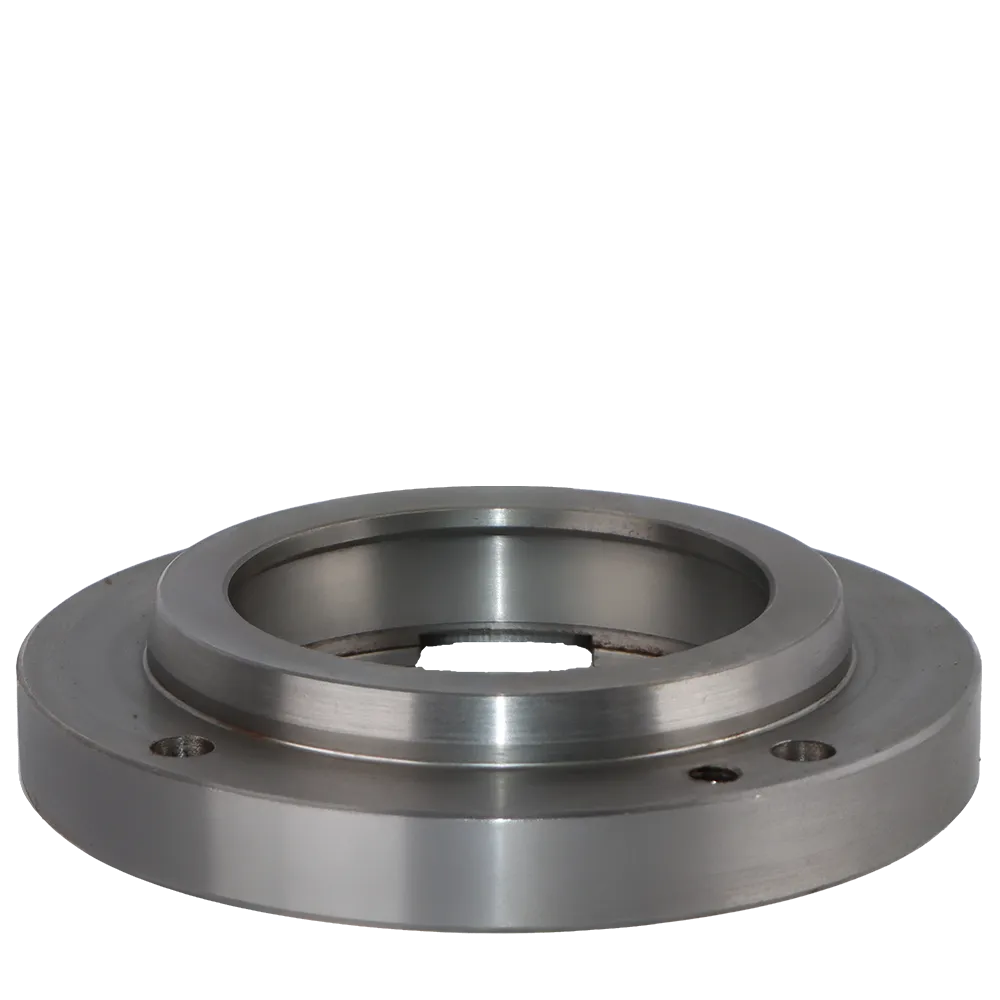
From the product photos, you can see a robust, machined ring design with a stepped inner bore, multiple bolt/fastener locations, and relief pockets that reduce weight without sacrificing rigidity. This geometry is typical of parts that must:

Maintain concentricity between mating components during rotation.

Hold alignment so clutch plates engage flat, not at a slight angle.

Provide consistent seating faces so clamp load is distributed evenly when assembled.

Support reliable oil clearance and oil movement in an oil-bathed clutch environment.

Because the low/high clutch cycles repeatedly during real work, grading, ripping, pushing, and long runs, this cage must resist deformation and keep its shape under temperature and load changes.

Where it fits: Transmission (Low and High Clutch)

Think of the low/high clutch as a controlled handshake between rotating members. Friction plates, steel separator plates, a piston and return system, hubs, rings, and bearings work together. The 23B-15-12350 CAGE KOMATSU acts as a structural reference part inside that handshake, helping the assembly stay square and centered when torque is transferred.

Catalog pages explicitly list 23B-15-12350 as “CAGE” under the transmission (low and high clutch) group for Komatsu grader configurations (including GD625A-1 and GD663A-2 listings).This is the best clue for correct application: you’re not buying a generic ring, you’re buying a clutch-group locating component.

Why the 23B-15-12350 CAGE KOMATSU is a critical wear-control part

A motor grader transmission doesn’t get gentle duty cycles. Shifts happen under variable load, oil temperature rises during sustained work, and tiny alignment errors become expensive quickly. When the 23B-15-12350 CAGE KOMATSU is within spec, clutch engagement stays predictable and wear patterns remain even. When it’s not, three common outcomes show up:

Engagement quality changes. You may feel delayed take-up, harsher transitions, or inconsistent response under load.

Heat increases. Misalignment creates drag and localized friction, which makes oil work harder.

Secondary parts wear faster. Slight runout or uneven clamp load can accelerate wear on hubs, rings, snap-ring grooves, and bearings.

Because this is a tolerance-sensitive component, it’s rarely worth “saving” during a rebuild if there’s any doubt. Downtime and repeat teardown costs usually exceed the price of replacing the cage while the assembly is open.

Construction details: built for stiffness, oil, and repeatable assembly

The 23B-15-12350 CAGE KOMATSU is designed to be stiff where it’s clamped and accurate where it locates. The form you see, a thick flange ring with a raised inner shoulder and purposeful relief pockets, typically delivers:

High stiffness around the fastener circle for stable clamp force.

Consistent locating surfaces at the stepped bore to keep parts concentric.

Weight reduction without weakening the clamping zones.

Controlled clearances so oil can lubricate and cool developed heat during operation.

Even when two parts look similar in photos, the real difference is the machining accuracy: a cage that seats perfectly and holds geometry through thermal cycling helps the entire clutch module live longer.

Material and surface treatment: what “OEM-grade” means in real life

Even though this component runs in oil, it still experiences contact stress, vibration, and the reality of oil-borne micro-particles. An OEM-grade 23B-15-12350 CAGE KOMATSU typically focuses on three core priorities:

Strength, so it resists deformation under clamp load and torque transfer.

Stability, so it maintains flatness and bore geometry across long-term heat cycles.

Surface quality, so seating faces support a stable oil film and resist scoring.

That’s why controlled machining and dimensional verification matter. Tiny deviations can translate into uneven plate wear and repeat complaints after overhaul.

Technical specifications (practical, workshop-friendly)

These are practical specs you can use for identification and workshop checks. Always verify against your removed part and your machine’s configuration.

Estimated weight: approximately 2.62 kg. 3GEN Export

Commonly referenced ring dimensions in industry listings for this part include values around D 240 mm, d 180 mm, and B 25 mm (often used as a size identifier for this ring-style component).

Mounting: multiple perimeter holes (a mix of threaded and non-threaded in many designs) for secure, repeatable assembly.

Locating features: stepped inner bore and machined relief/pocket sections that also serve as orientation references.

What these details mean on the bench:

If the seating shoulder is damaged, adjacent hubs may not sit flat.

If threads are stripped or holes show fretting, clamp load becomes uneven.

If faces are scored, metal debris can circulate and accelerate wear in the clutch module.

Compatibility: Komatsu models that use 23B1512350 / 23B-15-12350

Parts catalog references associate 23B-15-12350 CAGE KOMATSU with Komatsu motor grader transmission low/high clutch groups across multiple grader platforms. One catalog listing groups usage across: GD605A, GD611A, GD621A, GD621R, GD623A, GD625A, GD661A, and GD663A.

Supporting catalog pages also show 23B-15-12350 listed in the transmission low/high clutch section for specific machines and serial ranges, such as GD625A-1 (including North America ranges), GD621R-1, and GD663A-2.

Common Komatsu grader applications include (verify by serial and transmission arrangement):

Komatsu GD605A series

Komatsu GD611A series

Komatsu GD621A series

Komatsu GD621R series

Komatsu GD623A series

Komatsu GD625A series (including GD625A-1)

Komatsu GD661A series

Komatsu GD663A series (including GD663A-2)

Fitment note: Komatsu parts can vary by serial number, market configuration, and transmission arrangement. The safest confirmation is matching your removed part number (23B1512350 / 23B-15-12350) and confirming it belongs to the transmission low/high clutch group in your parts manual.

Common failure signs: when to suspect the 23B-15-12350 CAGE KOMATSU

Cage problems often look like “another part” failing first. Watch for patterns:

Shifting and engagement changes: inconsistent engagement feel, harshness under load, delayed take-up.

Oil and heat warnings: oil darkens quickly after rebuild, metallic shimmer in oil/filter media, higher-than-normal transmission temps.

Wear pattern clues: uneven wear bands on plates, hot spots on adjacent hubs/washers, scoring on seating faces, fretting around bolt holes.

A worn 23B-15-12350 CAGE KOMATSU can create small misalignment that becomes big trouble after operating hours accumulate, especially in hard-duty cycles.

Inspection checklist before reinstalling a used cage

If you are deciding whether to reuse a cage, inspect it like a precision part:

Check flatness of the seating face (straight edge + feeler gauge).

Measure bore roundness at multiple clock positions.

Inspect for scoring, pitting, and transfer marks on seating surfaces.

Verify thread integrity (gauge or careful thread chase).

Look for signs of overheating or micro-cracks near pockets/reliefs.

If any of these checks fail, it is usually safer to replace with a new 23B1512350 / 23B-15-12350 CAGE KOMATSU rather than risking a repeat teardown.

Installation guide: best practices for 23B1512350 replacement

Always follow the exact service procedure for your machine, but these practices reduce repeat failures.

1) Prepare parts and keep the work zone clean

Clean mating faces thoroughly.

Remove old residue and check for burrs/nicks.

Pre-lube contact surfaces with correct transmission oil.

Only use lint-free wipes; avoid fiber-shedding rags.

2) Check orientation and seating (never “pull it down” with bolts)

Dry-fit the 23B-15-12350 CAGE KOMATSU first.

Confirm the stepped bore seats without rocking.

Confirm relief pockets clear adjacent parts.

Ensure it sits flush before any torque is applied.

If it doesn’t seat flush, stop and diagnose. Pulling it down unevenly can introduce distortion and runout.

3) Torque in a cross pattern

Tighten gradually in a star/cross pattern to keep the cage square.

Use correct torque values for your fasteners.

Use thread compound only if specified by the service procedure.

4) Verify rotation and clearance

Rotate by hand (where possible) and feel for smooth movement.

Normal oil-film drag is fine; scraping is not.

Confirm related components move as intended in the clutch module.

5) Post-assembly oil discipline

If there was a prior failure, treat oil and filtration seriously. Debris from the old failure can damage new parts quickly. Use correct oil grade, level, filter condition, and warm-up practice.

Quality control checks we recommend for every 23B1512350 shipment

Even with professional packing, it’s smart to standardize quick incoming checks for a tolerance part like 23B-15-12350 CAGE KOMATSU:

Visual condition: no dents on seating faces, no burrs around holes.

Hole integrity: threads clean, through holes not ovalized.

Seating face: quick straight-edge check to catch shipping damage.

Bore condition: no nicks that could prevent full seating.

These checks take minutes and can prevent hours of rework and downtime.

Troubleshooting scenarios: how this cage connects to real-world complaints

Scenario A: “Rebuilt transmission, still shifts rough.”

If plates and seals are new, rough engagement can come from alignment issues. A cage that is worn or torqued down unevenly can introduce runout. Replacing the 23B-15-12350 CAGE KOMATSU and retorquing properly often restores consistent engagement feel.

Scenario B: “Oil keeps getting hot.”

Heat can come from clutch drag. Drag can come from plates not separating cleanly, sometimes caused by geometry issues. When the 23B-15-12350 CAGE KOMATSU is distorted, surfaces can begin to contact where they shouldn’t, creating continuous heat.

Scenario C: “Uneven wear on clutch steels.”

Uneven wear bands are a classic misalignment signature. Inspect the cage seating face and the hub interface carefully. Swapping to a fresh 23B1512350 / 23B-15-12350 CAGE KOMATSU is often the cleanest way to reset geometry during a rebuild.

Related parts to inspect while replacing the 23B-15-12350 CAGE KOMATSU

Parts lists commonly show this cage grouped with bolts, washers, a hub, snap rings, bearings, and sealing rings in the same low/high clutch section.

While replacing the cage, inspect:

Hub seating surfaces (fretting/scoring).

Snap ring grooves (wear/deformation).

Bearings (play, discoloration, roughness).

Sealing rings and O-rings in the module (cuts, hardening).

This prevents the “new cage + old weak link” rebuild outcome.

Why buy 23B-15-12350 CAGE KOMATSU from 3GEN Export

A cage is not just metal, it’s geometry. Your clutch module’s life depends on how accurately this part seats and stays seated under heat and load. With 3GEN Export, you get:

OEM-grade supply focus for critical transmission components.

Strict part-number control for 23B1512350 and 23B-15-12350 listings.

Export-ready packaging and documentation support.

Worldwide delivery in 5 working days.

Whether you’re a workshop rebuilding a Komatsu transmission, a fleet manager minimizing downtime, or a parts trader consolidating export orders, our goal is direct: deliver the correct 23B-15-12350 CAGE KOMATSU quickly and consistently.

Frequently asked questions

Is 23B1512350 the same as 23B-15-12350?

Yes. 23B1512350 is the no-hyphen format, and 23B-15-12350 is the hyphenated format commonly used in catalogs. Both refer to the same 23B-15-12350 CAGE KOMATSU reference.

What assembly is it used in?

It is listed under the transmission (low and high clutch) section in parts catalog references for Komatsu motor graders.

What is the weight?

Common listings show an approximate weight of about 2.62 kg for 23B-15-12350 CAGE KOMATSU. 3GEN Export

Order information

Product name: 23B1512350 , 23B-15-12350 CAGE KOMATSU

Estimated weight: ≈ 2.62 kg 3GEN Export

Supplier: 3GEN Export (OEM supplier)

Shipping: worldwide delivery in 5 working days

Manufactured in Turkey, these products are made using the latest technologies and built to meet the highest international standards. Each machine is a high-quality copy of the original, ensuring durability, precision, and performance that you can rely on for modern construction and metalworking projects.

Product Reviews