Marketplace of Heavy Machinery Spare Parts

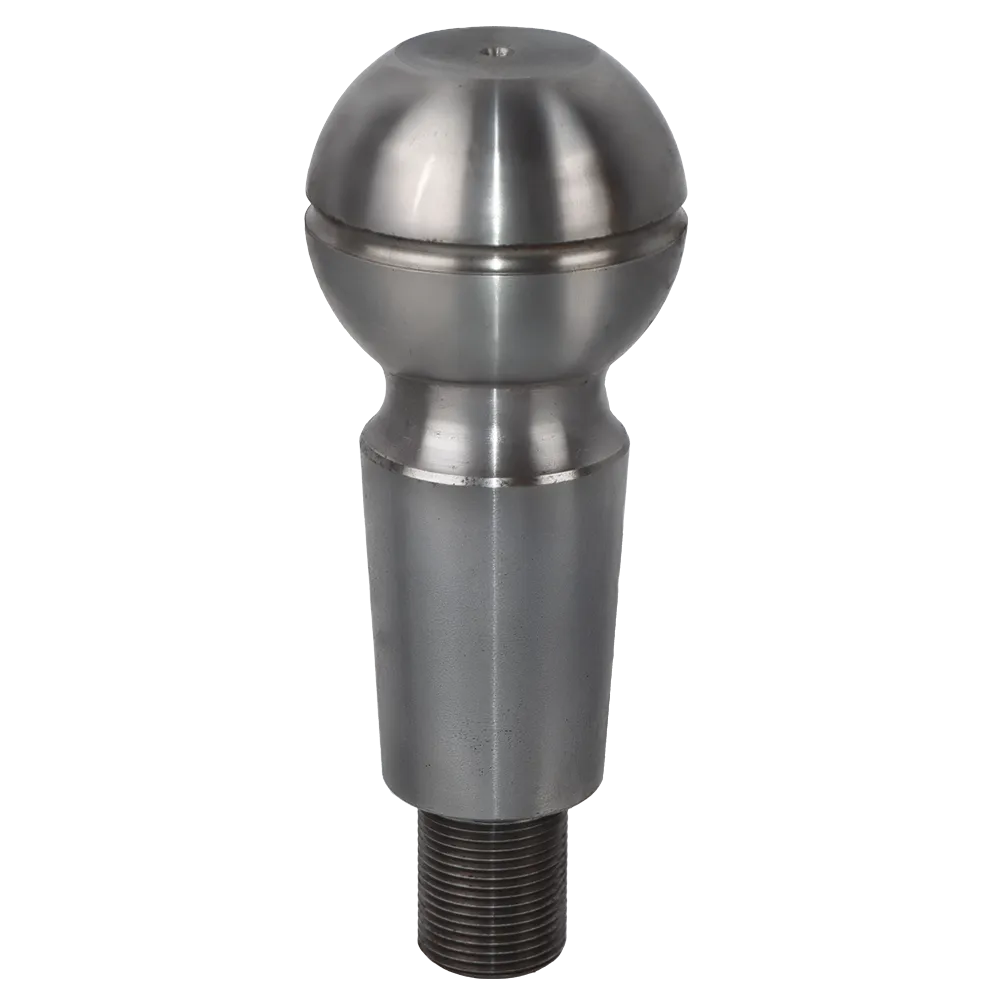
23B2711441, 23B-27-11441 ROD END KOMATSU


Categories: Transmission & Drive Components
$860,00
90 in stock
- Our spare parts are engineered to seamlessly integrate with your machinery.
- Delivery anywhere in the world in max. 10 days
- 1 year manufacturer warranty
- Your transactions are protected by the most advanced security measures.
- Shipping fees are included in the prices of all our products.
Product Video
Product Description
23B2711441, 23B-27-11441 ROD END KOMATSU
Heavy-duty front axle tie rod end for Komatsu grader steering systems
The 23B2711441, 23B-27-11441 ROD END KOMATSU is a Komatsu grader steering and front axle component publicly listed as ROD,END and consistently placed in the front axle or front axle tie rod section of multiple parts catalogs. The strongest source-backed references connect this exact number to grader applications such as GD505A-3, GD525A-1 S/N 60001-UP, GH320-3 S/N 40001-UP, and a broader family including GD510R-1, GD511A-1, GD521A-1, GD521A-1E, GD525A-1C, GD555-3A, GD555-3C, GD611A-1, and additional later grader platforms.
From the images, this part has the form expected from a grader rod end: a robust joint housing, a large machined threaded shank, a hex adjustment section, and a spherical joint area protected by a black boot-style seal. That means the 23B2711441, 23B-27-11441 ROD END KOMATSU should be positioned as a steering linkage endpoint rather than a simple connector or fastening part. The shape-based observations come from your images, while the front axle and tie rod placement is supported by public parts references.
At 3GEN Export, we supply 23B2711441, 23B-27-11441 ROD END KOMATSU as an OEM supplier part for professional heavy machinery buyers who need exact-number fitment and fast logistics. We deliver all over the world in 5 working days.
What is 23B2711441, 23B-27-11441 ROD END KOMATSU?
Public parts sources identify 23B-27-11441 as ROD,END and place it in the grader FRONT AXLE (3/3) group or in FRONT AXLE (TIE ROD) sections, depending on model and catalog layout. For example, the GH320-3 page identifies it directly under FRONT AXLE (TIE ROD), while the GD505A-3 and GD525A-1 pages place it under FRONT AXLE (3/3). These sources together support the most commercially accurate description: this is a Komatsu grader front axle tie rod end / rod end.
For your website, the strongest product identity is:
Core product identity
- Part number: 23B2711441 / 23B-27-11441
- Product name: ROD END
- Machine area: front axle / tie rod / steering linkage
- Machine type: Komatsu motor grader
Why this rod end matters
A front axle rod end is a control component. On a motor grader, the steering system depends on accurate movement transfer through the tie rod assembly. Since public parts pages consistently locate 23B-27-11441 in the front axle tie rod area, it is appropriate to describe this part as a steering linkage endpoint that helps transmit steering input while allowing controlled articulation at the joint.
In real working conditions, graders operate on rough terrain, under repeated vibration, with constant steering corrections and heavy front axle loads. Because of that, a rod end in this location needs to provide both mechanical strength and smooth joint movement. If the rod end wears excessively, steering accuracy and linkage stability can be affected. That last point is a mechanical inference based on the documented steering and tie rod application of the part.
Technical details of 23B2711441, 23B-27-11441 ROD END KOMATSU
Part number formats
Use both formats on the page for better search coverage:
23B2711441
23B-27-11441
Product name
The strongest public naming is:
ROD,END
ROD END
Product section
The best-supported catalog placement is:
FRONT AXLE (3/3)
FRONT AXLE (TIE ROD)
Weight in KG
The strongest public weight figure I found for this exact number is:
2.520kg.
For your product page, the best-supported weight line is:
Weight: 2.52 kg.
Visual characteristics from the product images
From the images you provided, the part shows:
- a precision-machined threaded shank
- a large hex lock/adjustment section
- a spherical joint zone
- a protective black sealing or boot area
- a robust end housing for grader steering linkage use
These are image-based observations, not factory dimensional specifications.
Compatible KOMATSU models
The strongest public fitment references for 23B-27-11441 ROD,END include:
- GH320-3 S/N 40001-UP
- GD505A-3 S/N 1001-UP
- GD525A-1 S/N 60001-UP
- GD510R-1
- GD511A-1
- GD521A-1
- GD521A-1E
- GD525A-1C
- GD555-3A
- GD555-3C
- GD611A-1
- GD625A-1 and related later grader families are also indicated by public catalog pages.
Important fitment note
Final compatibility should always be confirmed by:
- exact part number
- machine model
- serial number
- front axle / tie rod diagram reference
That matters because rod ends can vary by thread, steering arrangement, and serial range even when they look similar. Public sources clearly support the application family, but serial confirmation remains the safest approach.
Product function and working characteristics
The 23B2711441, 23B-27-11441 ROD END KOMATSU is best described as a front axle steering linkage component. Public parts listings consistently place it in tie rod or front axle linkage groups, which supports describing it as a part that connects steering motion to axle linkage movement in selected Komatsu graders.
For workshops and fleet operators, this type of part is relevant during:
- front axle steering repairs
- tie rod replacement work
- grader steering rebuilds
- linkage maintenance
- service after excessive joint wear or looseness
These are reasonable service uses inferred from the documented front axle tie rod placement.
Key benefits of 23B2711441, 23B-27-11441 ROD END KOMATSU
Supports steering linkage accuracy
Because public sources place this part in the tie rod and front axle group, it should be positioned as a working steering component rather than a generic joint piece.
Broad grader application range
The public model references span several Komatsu grader families, which makes this part useful for workshops, exporters, and stockists handling grader repairs.
Exact-number sourcing advantage
Using both 23B2711441 and 23B-27-11441 improves match quality for customers searching from parts manuals, maintenance reports, or inventory lists.
Suitable for heavy-duty front axle service
The visible design and catalog placement both support its use in a high-load steering environment typical of motor graders. This is an inference from the images plus the front axle tie rod references.
Common reasons for replacement
The sources do not list explicit failure symptoms, so the following are practical mechanical inferences:
- joint wear
- steering looseness
- linkage play
- boot damage
- replacement during tie rod service
- front axle steering rebuild work
These are reasonable because the part is documented as a front axle rod end in grader steering assemblies.
Why buy from 3GEN Export?
At 3GEN Export, we position 23B2711441, 23B-27-11441 ROD END KOMATSU as an OEM supplier solution for Komatsu grader steering and front axle repair needs. Buyers searching this number are usually solving an active maintenance issue, so exact-number matching and fast logistics matter.
We deliver all over the world in 5 working days, helping reduce downtime when graders are waiting on steering linkage parts.
SEO support terms for this page
To keep keyword density between 1% and 2%, support the main keyword with natural related phrases such as:
- 23B2711441
- 23B-27-11441
- Komatsu rod end
- Komatsu tie rod end
- Komatsu front axle rod end
- GD525A-1 rod end
- grader steering linkage part
- Komatsu front axle tie rod part
Final summary
The 23B2711441, 23B-27-11441 ROD END KOMATSU is a Komatsu grader front axle steering component publicly identified as ROD,END and placed in the front axle or front axle tie rod section of multiple catalogs. The strongest sources support applications including GH320-3, GD505A-3, GD525A-1, GD510R-1, GD511A-1, GD521A-1, GD521A-1E, GD525A-1C, GD555-3A, GD555-3C, and GD611A-1, with a published weight of 2.190 kg.
For your website, this product should be positioned as a precision-fit Komatsu front axle tie rod end for grader steering repair and linkage maintenance. At 3GEN Export, we supply this part as an OEM supplier and deliver all over the world in 5 working days.
Weight in KG
2.52 kg.
Manufactured in Turkey, these products are made using the latest technologies and built to meet the highest international standards. Each machine is a high-quality copy of the original, ensuring durability, precision, and performance that you can rely on for modern construction and metalworking projects.