$368,00
90 in stock
Some parts earn attention because they move fast. Others matter because they prevent movement where it should never exist. A collar in a drivetrain or pivot-related assembly lives in that second category. It is the quiet “boundary line” that helps components sit where they belong, keeps axial travel under control, and supports smooth rotation by managing spacing, load distribution, and alignment.
The 41L1-1052 COLLAR HYUNDAI is designed for Hyundai wheel loader applications where a reliable collar is needed to maintain correct positioning in a heavily loaded assembly. Many buyers search this item using either 41L11052 or 41L1-1052, so this page includes both formats to help you match quickly and avoid ordering errors.
As 3GEN Export, we supply this part as an OEM supplier and deliver worldwide in 5 working days, helping fleets reduce downtime and keep machines productive.
A collar is often misunderstood because it looks simple. In reality, it is a precision interface that helps protect much larger, more expensive components. In wheel loaders, collars are commonly used to:
Control axial movement on a shaft or pin
Maintain correct spacing between rotating or sliding components
Distribute compressive loads across a wider contact area
Support consistent alignment so wear occurs evenly, not in “hot spots”
Reduce the risk of metal-to-metal contact where a controlled gap is required
When a collar wears or deforms, the machine may not fail instantly. Instead, small changes begin to stack: slight misalignment, uneven bushing wear, abnormal noise under load, higher heat at contact points, and reduced service life in surrounding parts. Replacing the correct collar early is often a cost-saving decision.
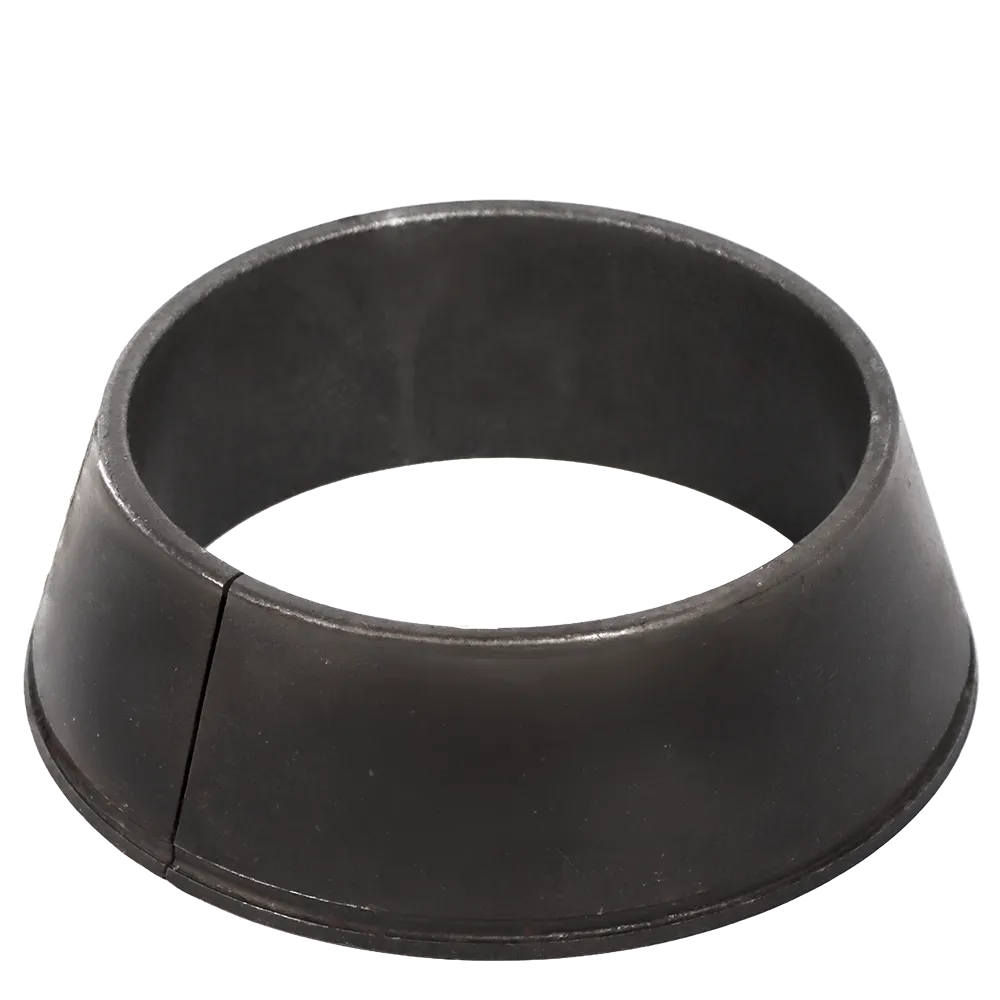
From the images you provided, this component is a split-style tapered collar (a ring with a seam), with a flanged lip. This geometry typically supports easier installation and stable seating, especially when the collar must locate tightly in a bore or work as a thrust or spacing element. The flanged edge helps define a stop surface, which can be critical when axial positioning is part of the design intent.
That practical design is why buyers look for the exact 41L1-1052 COLLAR HYUNDAI specification instead of “any ring that fits.”
Online compatibility references list this collar for Hyundai wheel loader models, including:
HL25C
HL35C
HL760
HL770
In Hyundai parts catalogue listings, 41L1-1052 appears as a collar item within wheel loader diagrams for models such as HL760 and HL770, indicating its place within a defined assembly group.
Because equipment can vary by serial range, configuration, and region, the safest method is to confirm with your machine model and serial number (or match the assembly diagram position) before final installation.
A collar is not only about diameter. In high-load assemblies, the thickness, taper, flange profile, and seating surface finish all influence performance. A mismatch can lead to:
Incorrect spacing (leading to binding or excessive end-play)
Uneven thrust loading (accelerating wear in adjacent surfaces)
Misalignment that transfers stress into bearings, bushings, or housings
Abnormal vibration and noise under load
When the correct collar is installed, the assembly behaves the way it was engineered to behave: stable, predictable, and balanced.
That is the real value of the 41L1-1052 COLLAR HYUNDAI. It restores intended geometry, not just “fills space.”
Below are buyer-friendly specifications you can present clearly on your product page:
Product name: 41L1-1052 COLLAR HYUNDAI
Alternate search format: 41L11052
Part type: Collar (split ring, flanged style)
Category fit (typical): Transmission & drive / pivot-related assemblies (application depends on diagram group)
Many marketplace listings show the collar weight around 1.2 kg (2.7 lb).
If you want perfect shipping accuracy, weigh the packaged item. For e-commerce, listing an approximate part weight is usually the most practical approach.
The 41L1-1052 COLLAR HYUNDAI is typically chosen to support stability in assemblies that see repeated load cycles. In real operation, it helps reduce risks such as:
Excessive axial play that causes knocking under direction change
Thrust surface wear that becomes uneven and accelerates failure
Misalignment that increases seal wear and contamination entry
Heat build-up from friction created by incorrect spacing
Progressive damage that starts small but ends as a major teardown
Think of the collar as an inexpensive “gatekeeper.” It keeps the expensive parts from being forced into positions they were never meant to occupy.
Collars rarely get the spotlight in diagnostics, so issues are often blamed on bearings, bushings, or pins first. A worn or deformed collar can contribute to symptoms such as:
Noticeable end-play in a shaft or joint that is supposed to feel tight
Clunking or clicking under load transitions
Uneven wear patterns on adjacent thrust faces
Shiny “polished” areas where contact is occurring incorrectly
Metal fines appearing in grease or oil (depending on assembly)
If your service team finds abnormal spacing, a collar inspection is a smart step before deeper replacements are ordered.
Because collar placement depends on the specific assembly, the exact procedure can vary. That said, good practice for a split collar with a flange typically includes:
Clean the bore/seat area and remove old debris or hardened lubricant
Inspect mating surfaces for scoring or deformation
Confirm the seam orientation and flange direction according to the assembly
Verify that the collar seats evenly and does not rock or tilt
Confirm the collar’s flange contacts the correct stop surface
Ensure the seam closes consistently (no forced distortion)
Reassemble adjacent components in the correct sequence
Apply lubrication where specified by the assembly (if applicable)
Rotate/move the assembly by hand to confirm smooth motion before returning the machine to work
If the collar is part of a stack-up with shims or additional spacers, confirm total end-play after installation.
A collar’s service life depends heavily on what happens around it. To help the 41L1-1052 COLLAR HYUNDAI last longer:
Maintain correct lubrication intervals for the assembly it supports
Prevent contamination (dust, grit, water) from entering through damaged seals
Avoid running with known end-play or looseness, which turns movement into impact
Inspect adjacent wear parts (bushings, washers, thrust faces) during service
Replace damaged retention hardware that can shift alignment under load
A collar works best when it is part of a healthy “system,” not a lone replacement dropped into a worn-out stack.
Commonly referenced compatible Hyundai wheel loader models include:
HL25C
HL35C
HL760
HL770
Note: Model/serial variations exist. Confirm with your parts manual or serial-based lookup before ordering for final fitment.
When a machine is down, time becomes the most expensive line item. The value of the 41L1-1052 COLLAR HYUNDAI is not only in the part itself, but in restoring correct assembly geometry quickly so the machine returns to work without secondary damage.
3GEN Export supplies this item as an OEM supplier and delivers worldwide in 5 working days. That logistics speed matters when:
A loader is needed for daily cycles and cannot sit idle
A small spacing component is blocking a full rebuild from completion
A preventive service window is short and must be used efficiently
Your customers want three things: correct identification, dependable fit, and fast delivery. This listing is built to support that decision.
Yes, 41L11052 is commonly used as an alternate search format for the same collar reference. Many catalog and marketplace listings display the part as 41L1-1052.
Some listings show the collar weight around 1.2 kg (2.7 lb).
If there is abnormal wear, you may also need to inspect adjacent thrust faces, bushings, washers, seals, or the mating bore. A collar replacement is most effective when the surrounding wear surfaces are still within tolerance.
If end-play remains, the cause is often elsewhere in the stack-up (worn thrust surfaces, bushings, or a damaged seat). The collar restores spacing only if the mating components are in acceptable condition.
The 41L1-1052 COLLAR HYUNDAI (41L11052) is a split, flanged collar designed to support stable spacing and alignment in Hyundai wheel loader assemblies. It helps control axial movement, distribute loads, and protect adjacent components from uneven wear. Common compatibility references include HL25C, HL35C, HL760, and HL770, depending on configuration and serial range.
As 3GEN Export, we supply this part as an OEM supplier and deliver worldwide in 5 working days, supporting faster repairs and more reliable uptime.
Manufactured in Turkey, these products are made using the latest technologies and built to meet the highest international standards. Each machine is a high-quality copy of the original, ensuring durability, precision, and performance that you can rely on for modern construction and metalworking projects.