Marketplace of Heavy Machinery Spare Parts

2386312320, 238-63-12320 ROD KOMATSU




Categories: Hydraulic System
$2.520,00
90 in stock
- Our spare parts are engineered to seamlessly integrate with your machinery.
- Delivery anywhere in the world in max. 10 days
- 1 year manufacturer warranty
- Your transactions are protected by the most advanced security measures.
- Shipping fees are included in the prices of all our products.
Product Video
Product Description
2386312320, 238-63-12320 ROD KOMATSU
The 2386312320, 238-63-12320 ROD KOMATSU is a grader hydraulic component that public sources consistently place in the hydraulic system category and, more specifically, inside blade lift cylinder groups on Komatsu GD-series graders. Market listings often shorten the name to simply “ROD,” but catalog-style sources identify this exact reference as ROD, PISTON, which is a more useful technical clue because it places the part inside the working heart of the hydraulic lift assembly rather than treating it like a generic straight shaft.
That distinction matters. A plain “rod” could be many things on a grader, but a rod, piston in a blade-lift-cylinder breakdown is a specific hydraulic working member. Public parts references tie 238-63-12320 to the same assembly family as 238-63-12340 CYLINDER and 707-29-80940 HEAD, CYLINDER, showing that this part belongs inside the blade-lift hydraulic structure used to raise and lower the moldboard on Komatsu graders.
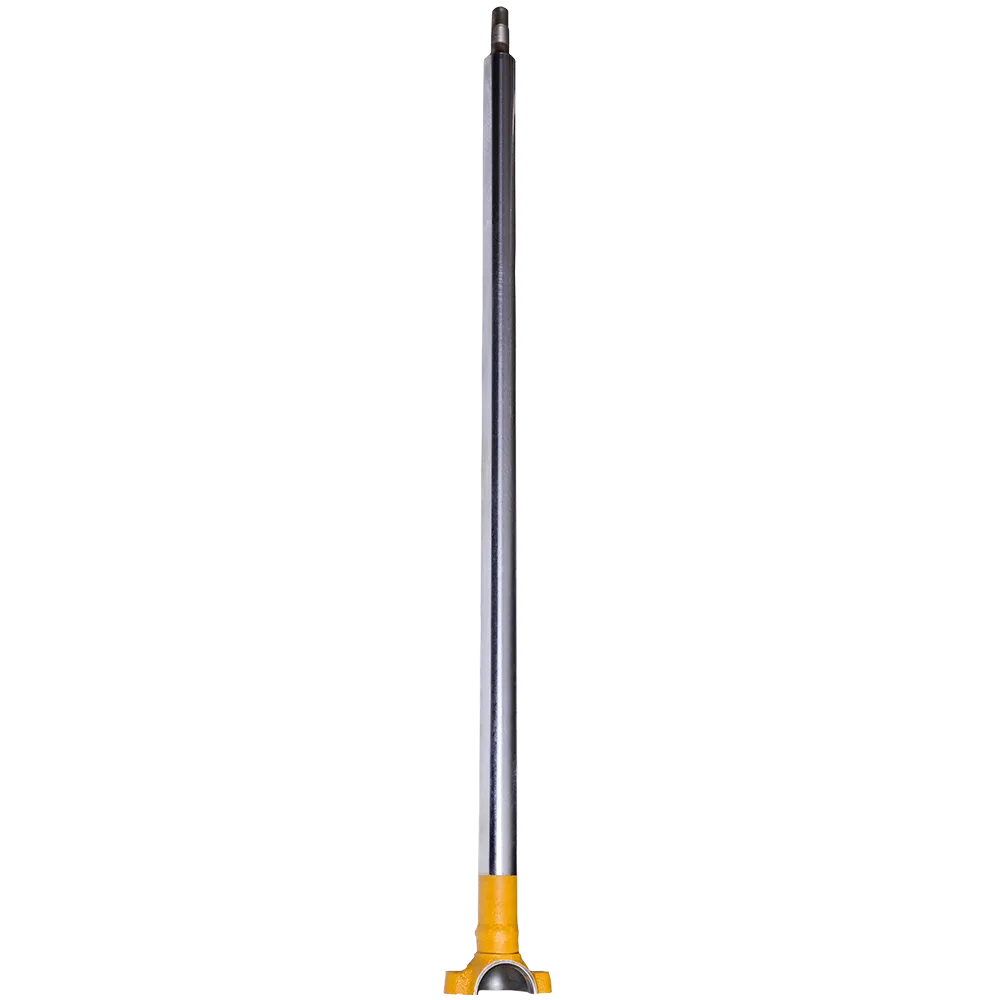
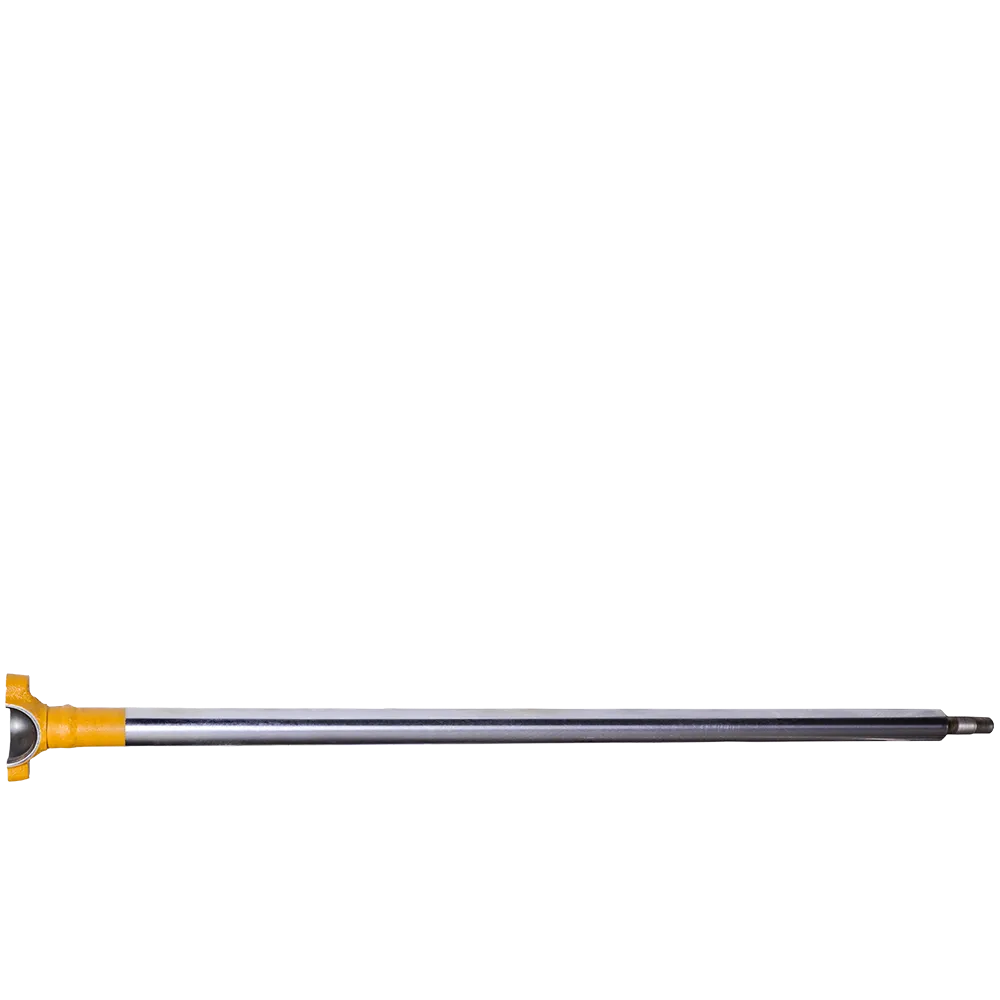
From the uploaded images, that interpretation fits perfectly. The part is a long polished rod with a machined end section and a forged or welded eye-style lower connection. The mirror-like working surface is exactly what buyers expect from a hydraulic piston rod designed to move through seals and carry repeated linear loads. This is not a loose linkage pin, not a leaning rod, and not a decorative support tube. Visually, it reads as a true hydraulic rod meant for controlled, high-cycle motion in heavy grader service.
What the 2386312320, 238-63-12320 ROD KOMATSU does
The 2386312320, 238-63-12320 ROD KOMATSU serves as the moving rod element inside a Komatsu grader blade-lift cylinder assembly. In hydraulic operation, the cylinder body contains pressure, while the piston rod converts that pressure into controlled mechanical movement. Public parts references that place this number inside blade lift cylinder groups make its role clear: this is a working hydraulic rod that helps transmit lifting force to the blade system.
On a grader, blade lift is not a secondary function. It is one of the most important motions on the machine. The operator uses it constantly to control cutting depth, maintain surface finish, adjust crown, trim shoulders, and react to changing ground conditions. That means the rod inside the lift cylinder must do more than simply move in and out. It must stay straight under load, protect its surface finish for seal life, and maintain precise movement through repeated hydraulic cycles. A worn or damaged rod can compromise the entire lift assembly, even when the cylinder barrel and seals are still serviceable. That is why the 2386312320, 238-63-12320 ROD KOMATSU has real mechanical and commercial importance.
Because public listings connect this exact number to grader hydraulic systems rather than generic steel stock, buyers can approach it as a code-specific replacement part instead of guessing based on dimensions alone. That saves time for workshops and reduces the risk of mismatched components during rebuilds. In real maintenance situations, that difference matters. A rod that is dimensionally off, poorly finished, or incorrectly matched can create seal wear, unstable movement, or shortened cylinder life.
Why this rod matters in grader performance
A motor grader is judged by precision. Whether the machine is cutting a haul road, maintaining a municipal street, shaping a shoulder, or leveling material on a construction site, the moldboard has to respond accurately to operator input. That response depends on hydraulic integrity. Since the 2386312320, 238-63-12320 ROD KOMATSU is publicly tied to blade-lift-cylinder groups, it should be understood as a part that directly affects how well the blade can be raised, lowered, and held in position.
When a hydraulic piston rod is in correct condition, the cylinder can stroke smoothly, maintain sealing integrity, and transfer force without introducing unwanted friction or side-loading. When the rod is pitted, bent, or poorly finished, the opposite happens. Seals wear faster, oil leakage becomes more likely, motion can feel less stable, and the operator loses confidence in precise blade control. In grading work, that shows up not only as maintenance cost but as lower quality in the finished surface.
For workshops, this means the 2386312320, 238-63-12320 ROD KOMATSU is a serious repair item, not a cosmetic one. Buyers normally search this number when a cylinder is already dismantled, when a rod is visibly damaged, or when the lift system no longer performs reliably and inspection has traced the problem to the internal moving member. Public seller and catalog references reinforce that hydraulic-service context by grouping the part with cylinder components and hydraulic-system inventory.
Reading the uploaded images carefully
The uploaded images reveal several useful details about the 2386312320, 238-63-12320 ROD KOMATSU.
Long polished working surface
The main shaft section is smooth and reflective, which is exactly what you want on a hydraulic rod that travels through seals. A polished surface reduces seal wear and supports smoother sliding motion. In real operation, that helps preserve hydraulic performance over time.
Machined tip section
The narrow machined end appears prepared for connection with internal piston hardware or a retention arrangement inside the cylinder group. This kind of finish is typical on hydraulic rods where dimensional accuracy matters for assembly integrity.
Eye-end lower connection
The larger yellow end section with an eye-style mount suggests the rod connects to a pivot point in the grader linkage. That makes sense for blade-lift work, where controlled angular movement and strong pinned connections are necessary at the working end of the cylinder assembly.
Heavy-duty proportions
The rod is long, slender, and clearly intended for a meaningful stroke length rather than a short auxiliary movement. That also fits the public blade-lift interpretation. Blade lift on graders needs travel, smooth response, and durability under repeated use.
Taken together, the images make the hydraulic identity of this part very convincing. Even without a factory drawing in front of you, the part reads as a dedicated piston rod for a grader lift cylinder.
Publicly linked KOMATSU models
The strongest broad public fitment source links 2386312320, 238-63-12320 ROD KOMATSU to the following Komatsu grader families:
Komatsu GD505A
Komatsu GD521A
Komatsu GD525A
Komatsu GD605A
Komatsu GD611A
Komatsu GD621A
Komatsu GD621R
Komatsu GD623A
Komatsu GD625A
Komatsu GD661A
That list is supported by more specific public references. A GD623A-1 parts page shows 238-63-12320 inside the BLADE LIFT CYLINDER group, and search results for GD661A-1 blade-lift-cylinder pages also surface the same part in the same functional context. This is important because it does more than show broad fitment. It shows where the part sits in the machine: not just “some hydraulic system,” but the blade-lift cylinder itself.
One seller page also markets the part specifically as 238-63-12320 ROD KOMATSU GRADER GD655, which may indicate an additional application or seller-specific model tagging. Since the catalog-style fitment sources emphasize the broader GD505A-to-GD661A family group, the safest professional approach is to use the wider publicly supported GD-series list and confirm final compatibility by serial number before sale.
Technical details and specifications
Official part formats
This reference is commonly searched and listed in both formats:
2386312320
238-63-12320
Public product naming
Public seller pages shorten the product to ROD, while catalog-style parts references identify it as ROD, PISTON. The longer name is technically more informative because it confirms the part belongs to a hydraulic cylinder assembly rather than a general rod or linkage component.
Product category
The strongest public category placement is hydraulic:
Hydraulic System
Hydraulic Cylinder Parts / Hydraulic Cylinder Components
Function
Public evidence supports describing this part as the piston rod used in a Komatsu grader blade-lift cylinder assembly. It works with the matching cylinder body and cylinder head in the same parts group.
Weight in KG
Public sources disagree on the weight:
3GEN Export lists the part at approximately 15 kilograms.
ÜÇASLAR lists the same part at 21.16 kg.
Because those figures are far apart, the safest way to publish the weight is:
Approximate product weight: 15 kg
Alternate seller-listed figure: 21.16 kg
For ecommerce and freight quotation, it is best to verify whether the figure being used refers to net part weight, catalog weight, or packed shipping weight. That is the most honest way to handle the public discrepancy.
Material and finish
3GEN’s product page describes the rod as made from high-strength steel and highlights durability-oriented construction. The polished shaft and robust eye end shown in the images are consistent with a heavy-duty hydraulic rod designed for repeated industrial use. Since the material statement comes from a seller page rather than a factory metallurgy sheet, it is best treated as seller-provided specification language.
Why buyers search both 2386312320 and 238-63-12320
Industrial buyers do not all search the same way. One parts manager may enter 2386312320 directly from ERP software, an invoice, or a warehouse list. A technician may search 238-63-12320 from a printed parts book or workshop note. A hydraulic repair specialist may search by function, using phrases like Komatsu blade-lift rod, grader piston rod, or GD623A blade lift cylinder rod. Public web results already show the same number appearing across seller pages, parts-group references, and hydraulic component catalogs, which reflects those real-world search habits.
That is why a strong product page should keep both number formats visible in the title, technical section, and fitment section, while using natural supporting phrases throughout the body. This captures search demand without turning the description into keyword stuffing.
Why this part is commercially valuable
The 2386312320, 238-63-12320 ROD KOMATSU is commercially valuable because it solves a real hydraulic rebuild problem. When a blade-lift cylinder is opened and the rod surface is worn, pitted, bent, or no longer fit for sealing duty, the entire rebuild can stall until the correct replacement rod is sourced. Public parts-group references make it clear that this is not a vague compatible shaft. It is a code-specific Komatsu hydraulic component that belongs in a documented blade-lift assembly.
For workshops, that means less guesswork and a cleaner repair process. For fleet owners, it means reducing downtime on a machine where blade control directly affects output and finish quality. For parts resellers, it means the item has strong B2B relevance because it is tied to exact part numbering, clear hydraulic function, and a broad range of GD-series grader applications.
3GEN Export supply advantage
At 3GEN Export, we supply the 2386312320, 238-63-12320 ROD KOMATSU as an OEM supplier for heavy machinery spare parts, and we deliver worldwide in 5 working days.
That makes this part especially suitable for urgent grader repairs, where the machine is already open and the buyer needs a code-matched hydraulic rod without delay.
Final summary
The 2386312320, 238-63-12320 ROD KOMATSU is best understood as the piston rod used in a Komatsu grader blade-lift cylinder assembly. Public sources place the exact number in hydraulic-system inventory, identify it as ROD or ROD, PISTON, and connect it to GD-series graders including GD505A, GD521A, GD525A, GD605A, GD611A, GD621A, GD621R, GD623A, GD625A, and GD661A. Model-specific references show it inside blade lift cylindergroups on GD623A-1 and GD661A-1-related pages, which gives the part a very clear functional identity.
From the uploaded images, the part clearly appears as a long polished hydraulic rod with a machined tip and eye-end connection, built for controlled heavy-duty movement in grader service. The strongest publicly listed weight is 15 kgfrom 3GEN Export, although another seller lists 21.16 kg, so packed weight should be checked before freight quotation.
Manufactured in Turkey, these products are made using the latest technologies and built to meet the highest international standards. Each machine is a high-quality copy of the original, ensuring durability, precision, and performance that you can rely on for modern construction and metalworking projects.