
Best Heavy Equipment Parts Supplier for B2B (2026)
Find the best heavy equipment parts supplier for b2b procurement. Compare OEM, aftermarket, and reman parts with global 5-day delivery at 3genexport.com.
Loading article…
Article Not Found
The article you're looking for doesn't exist or may have been removed.
Back to BlogThe best heavy equipment parts supplier for b2b is a verified source offering OEM, aftermarket, and remanufactured components with global logistics, deep inventory, and documented quality certifications.
Key Takeaways
- The for b2b must carry OEM, aftermarket, and remanufactured parts across dozens of major brands.
- Quality verification requires a Certificate of Conformance, catalog-matching part numbers, and ISO 9001 compliance.
- Global logistics with fast shipping and multilingual support directly reduce fleet downtime.
- Total cost of ownership, not unit price, drives real procurement value. Factor in uptime, warranty, and technical support.
- TVH, Machinery Parts Warehouse, Global Wholesale Parts, McGill Industries, and 3GEN Export are benchmarked in this guide.
- As of 2026, AI-powered procurement platforms and predictive replenishment are reshaping how B2B buyers source parts.
What Defines the Best Heavy Equipment Parts Supplier for B2B?
Selecting a parts partner is a strategic decision that directly affects fleet uptime, worker safety, and long-term maintenance costs. The this type of b2b combines broad brand coverage, rigorous quality controls, and responsive global logistics. Every procurement manager should evaluate three core pillars before signing a supplier agreement.
Inventory Breadth and Brand Coverage
A supplier's catalog depth determines how fast you can source any component, common or obscure. TVH stocks over 8 million known references covering all major construction equipment makes, from Caterpillar, JCB, and Volvo to Kubota, Genie, and JLG. According to TVH's own data, more than 30,000 businesses purchased construction parts from TVH last year alone. Machinery Parts Warehouse carries new, used, rebuilt, and aftermarket parts for a wide range of brands including Caterpillar, Komatsu, John Deere, Case, Terex, Liebherr, and Yanmar. When a single supplier covers both mainstream and niche brands, you eliminate multi-vendor logistics and simplify procurement significantly.
Quality and Certification Standards
Not all parts are equal, and the documentation gap between a quality component and a counterfeit one can cost you an entire machine. A competent supplier distinguishes between factory-direct, OEM replacement, aftermarket, and remanufactured components, and backs each with proper paperwork. According to McGill Industries' essential guide, high-quality parts always include a Certificate of Conformance and part numbers that match manufacturer catalogs. Look for suppliers who maintain ISO 9001 certification and can trace parts back to their production batch.
Logistics and Global Delivery
In heavy equipment operations, downtime is expensive. That's why logistics matter as much as inventory. The this kind of for b2b offers fast, worldwide delivery with transparent lead times. TVH ships most orders within 24 hours from its 90 worldwide branches, supported by over 5,000 employees and more than 50 years of industry experience. Suppliers with regional warehouses reduce transit times and customs friction, especially for fleets operating across multiple continents. Digital tracking, local currency billing, and multilingual customer service further smooth the global procurement process.
"We shop at TVH because you are a global supplier for a large number of brands. I can easily research and shop online, and most orders are shipped within 24 hours." - Rental company from Spain, via TVH customer testimonials
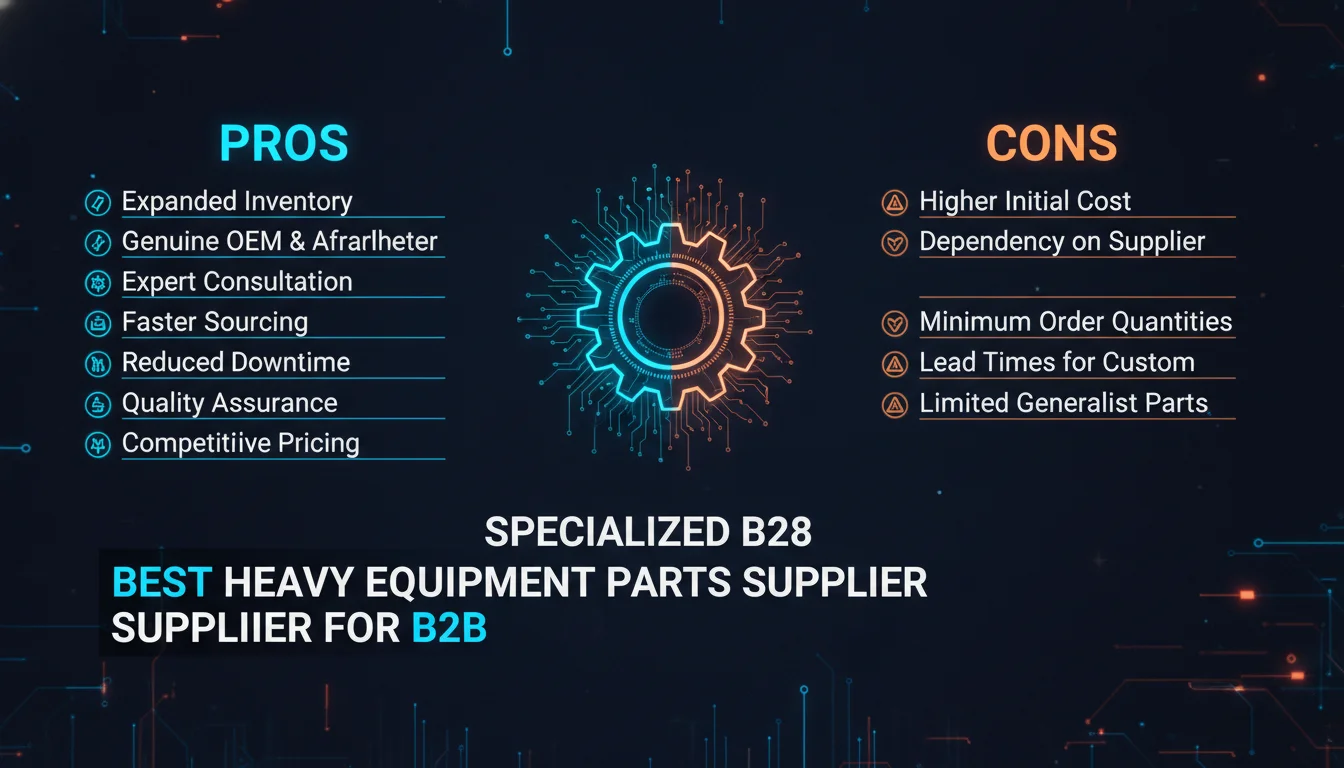
Pros and Cons of Using a Specialized B2B Heavy Equipment Parts Supplier
Pros
- Deep inventory: Specialized suppliers stock millions of references across dozens of brands, reducing sourcing dead-ends.
- Quality documentation: Reputable B2B suppliers provide Certificates of Conformance, traceability data, and ISO-backed quality assurance.
- Faster global delivery: Regional warehouse networks and optimized freight routes cut lead times versus general distributors.
- Technical expertise: In-house specialists help identify correct parts, reducing costly mis-orders and installation errors.
- TCO modeling: The best suppliers help you compare lifecycle costs across OEM, aftermarket, and remanufactured options, not just sticker price.
Cons
- Minimum order requirements: Some B2B-focused suppliers set volume thresholds that don't suit smaller fleets or one-off repairs.
- Aftermarket quality variance: Not all aftermarket parts meet OEM specs. Vetting each supplier's sourcing standards takes time and trial orders.
- Customs complexity: International shipments can face delays at border crossings, particularly for large or regulated components.
- Account setup friction: B2B portals often require business verification before you can access pricing or place orders.
Understanding Parts Types: OEM, Aftermarket, and Remanufactured
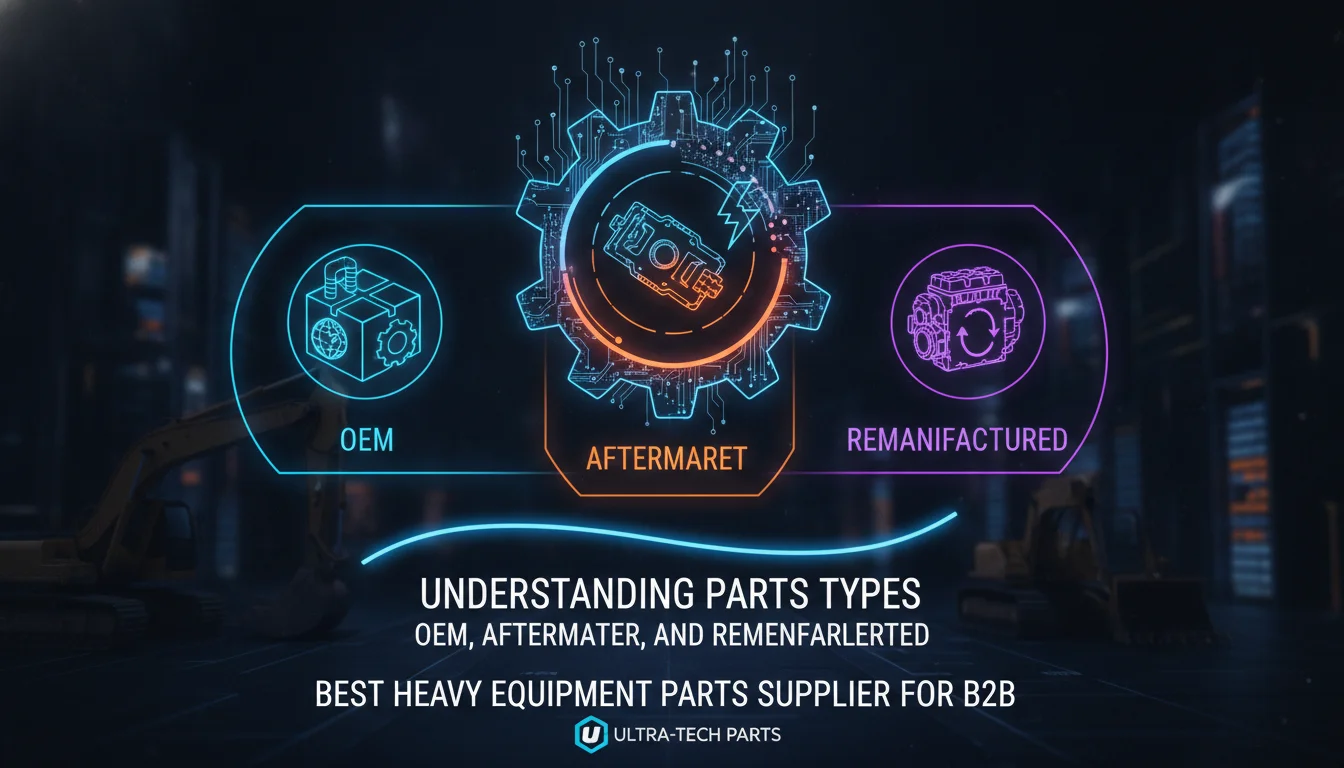
Procurement teams must speak the language of parts categories to avoid mismatched expectations and costly returns. The definitions below are drawn from McGill Industries' quality guide and standard industry practice.
OEM vs. Aftermarket vs. Remanufactured: Key Differences
- Factory-Direct Parts come straight from the machine's original manufacturer with full factory backing and warranty. They guarantee fit and performance but carry premium pricing.
- OEM Replacement Parts are produced by the same facilities that supply name-brand manufacturers but sold without the brand label. They deliver equivalent quality at a lower cost.
- Aftermarket Replacement Parts are third-party alternatives designed to function like OEM components. Quality varies widely, from near-factory spec to substandard, so supplier vetting is critical.
- Remanufactured Parts are worn components restored to like-new condition through teardown, inspection, and replacement of critical wear items. A properly remanufactured part follows strict quality protocols and often carries a warranty comparable to new, at a fraction of factory-direct cost.
When to Choose Each Type
Your selection depends on the application's criticality and your budget. For safety-critical systems such as steering and brakes, and for late-model machines still under warranty, factory-direct or OEM replacement parts are the right call. For non-safety wear items like bucket teeth, filters, and tracks on older equipment, high-quality aftermarket or remanufactured parts can cut costs without sacrificing performance. Many B2B fleets blend all three types. The the heavy equipment parts supplier for b2b supports that mixed approach with unified ordering, cross-reference tools, and consolidated invoicing.
How to Vet the Best Heavy Equipment Parts Supplier for B2B
Not every supplier that claims global reach can back it up. Use this step-by-step evaluation process to separate proven performers from risky vendors.
Step 1: Verify Inventory Depth and Brand Support
Send the supplier a sample RFQ with both common and long-tail part numbers. A capable supplier returns quotes for all items, not just the popular ones. Look for digital catalogs and cross-reference tools that let you confirm compatibility independently before committing to an order.
Step 2: Assess Quality Documentation and Certifications
Request proof of quality on your first order. A reliable partner provides a Certificate of Conformance, brand-matching part numbers, and traceability data. Ask whether they follow ISO 9001 or a comparable quality management system. For aftermarket and remanufactured parts, ask specifically about teardown reports and warranty terms.
Step 3: Test Logistics and Response Times
Place a small trial order to gauge real-world speed. Note whether the supplier offers expedited shipping, regional warehouses, and real-time tracking. Ask about inventory allocation: do they hold stock or drop-ship? A supplier holding its own inventory across multiple regions, like TVH's 90 branches, can ship same-day far more reliably than a virtual marketplace.
Step 4: Confirm After-Sale Support and Expertise
When a part fails or doesn't fit, you need immediate help. Check for in-house technical specialists who can troubleshoot by phone or video call. The b2b maintains dedicated B2B support channels and, ideally, training resources like TVH's Learning Hub, which offers blogs, expert interviews, and maintenance videos.
Step 5: Compare Total Cost of Ownership (TCO)
Beyond unit price, factor in freight, customs, downtime risk, and expected component lifespan. A cheaper aftermarket part that fails twice as fast as OEM can easily double your TCO. The best heavy equipment parts supplier for b2b will help you model lifecycle costs by providing warranty data and recommending the most cost-effective option for each asset class.
Supplier Comparison: Top Heavy Equipment Parts Providers
We've benchmarked several suppliers using the criteria above. The table below is a feature-by-feature comparison based on publicly available information and verified customer testimonials. It is not a ranking.
| Supplier | Inventory Scope | Brands Supported | Parts Types | Global Delivery | Notable Tools |
|---|---|---|---|---|---|
| TVH | 8 million+ references | All major construction brands | OEM, aftermarket, reman | 24-hour shipping from 90 branches | Learning Hub, online shop, in-house experts |
| Machinery Parts Warehouse | Extensive (new, used, rebuilt, aftermarket) | Caterpillar, Komatsu, Deere, Case, Volvo, and many more | New, used, rebuilt, aftermarket | U.S.-focused with international shipping | Multi-brand catalog, component reman services |
| Global Wholesale Parts | Engine, drivetrain, and critical components | Construction and mining brands | OEM and aftermarket | Global, with AI-powered platform | AI fleet management, OSAIQ 360 |
| McGill Industries | Industrial engine, compressor, gen-set parts | Multiple industrial brands | Factory-direct, OEM replacement, aftermarket, reman | USA-based with global quoting | Part quote tool, quality documentation |
| 3GEN Export | Heavy machinery spare parts marketplace | Caterpillar, Komatsu, Volvo, Atlas Copco, and 40+ brands | OEM and aftermarket | Global delivery, competitive pricing | Buyer's guides, B2B partner portal |
Note: Information sourced from TVH, Machinery Parts Warehouse, Global Wholesale Parts, McGill Industries, and 3GEN Export. Coverage may vary. Always verify current capabilities directly with each supplier.
Pricing and Value: What B2B Buyers Should Expect
Heavy equipment parts pricing falls into three broad tiers. Understanding where your needs land helps you negotiate, budget, and avoid overpaying or under-specifying.
- Budget Tier: Generic aftermarket parts for non-critical wearable items such as filters, seals, and bucket teeth. Prices run well below OEM, but you assume the risk of variable durability. Best suited for high-volume consumables with frequent replacement cycles.
- Mid-Range Tier: Brand-specific aftermarket or OEM replacement parts covering hydraulic hoses, alternators, and track chains. These offer a cost-quality balance, with quality often meeting OEM specs. Many B2B fleets standardize here for non-safety systems.
- Premium Tier: Factory-direct or certified OEM components for engine ECMs, precision hydraulic pumps, and safety-critical parts. You pay full manufacturer pricing but gain warranty, traceability, and exact fit. Required for warranty-protected equipment and high-liability applications.
The best heavy equipment parts supplier for b2b quotes across all three tiers and helps you model lifecycle costs, not just unit price. Ask for warranty length and failure-rate data to make an informed decision before committing to a bulk order.
"Nothing derails a project faster than equipment failure. Inferior parts can lead to prolonged downtime, compromise worker safety, shorten your equipment's lifespan, and cost your business in many other ways." - McGill Industries, Identifying High-Quality Heavy Equipment Parts
Navigating the Procurement Process: From RFQ to Delivery
Digital procurement is reshaping B2B parts buying. Global Wholesale Parts has integrated an AI-powered platform called OSAIQ 360 that unifies fleet management, inventory control, and customer engagement. This signals that leading suppliers are moving well beyond static catalogs.
Streamlining Your RFQ Workflow
- Prepare a clear RFQ with machine make, model, serial number, and part numbers when available. Include photos if the part is unlabeled or damaged.
- Distribute to 2-3 vetted suppliers who cover your brand mix globally. Use their digital portals for speed and auditability.
- Evaluate bids on TCO, not just price. Factor in shipping, customs, lead time, and warranty coverage.
- Place a trial order for high-wear parts to test quality and logistics before committing to a long-term agreement.
- Integrate the winning supplier into your ERP for automated reordering and inventory sync across your fleet.
Many modern platforms let you upload a spreadsheet of needed parts and receive consolidated quotes within hours. For large fleets, that capability alone cuts significant administrative overhead.
Maintenance and Support: After the Sale
A supplier's job doesn't end when the box ships. Look for partners that offer ongoing technical support, warranty handling, and training resources for your maintenance crews.
Warranty and Claims Management
Warranty terms vary by part type. OEM components typically carry a 12-month manufacturer warranty. Aftermarket and remanufactured parts often carry 6-12 months. Ensure the supplier has a straightforward claims process and doesn't require you to ship the failed part back before issuing a replacement, as that delay compounds your downtime.
Technical Expertise and Training
Suppliers like TVH staff in-house experts who can identify parts by phone or email, and provide online training through their Learning Hub. For B2B operations with high technician turnover, a supplier that offers installation guides, video walkthroughs, and diagnostic support reduces field errors and prevents equipment damage from incorrect installation.
Inventory Management and Predictive Replenishment
Some advanced suppliers connect their parts catalog directly to your fleet management system, enabling predictive replenishment based on usage data. This keeps critical spares in stock and prevents over-ordering. Ask whether your supplier provides API integration or periodic usage reports to fine-tune your on-hand inventory levels.
The Future of Heavy Equipment Parts Procurement
As of 2026, two trends are reshaping how B2B buyers source parts. First, electrification is accelerating across the construction sector. According to TVH's Learning Hub, industry experts are actively tracking the shift toward electric small earth-movers, mobile elevating work platforms, and telehandlers. Procurement teams should verify that their chosen supplier is already building inventory for electric drivetrain components, not just combustion-era parts.
Second, AI-powered platforms are compressing procurement cycles. Tools like OSAIQ 360 from Global Wholesale Parts unify fleet data, parts inventory, and supplier engagement in a single interface. For large fleets managing hundreds of assets, this kind of integration reduces manual RFQ work and improves parts availability forecasting. The best heavy equipment parts supplier for b2b will either offer these tools natively or integrate cleanly with your existing ERP and fleet management software.
For deeper sourcing guidance, see our articles on sourcing genuine Komatsu parts online and Atlas Copco drill parts: buyer's guide on the 3GEN Export blog.
Frequently Asked Questions
What is the difference between OEM and aftermarket heavy equipment parts?
OEM parts are made by the original manufacturer or its authorized production facilities, ensuring exact fit and warranty coverage. Aftermarket parts are third-party alternatives that may vary in quality. They cost less but require careful supplier vetting to confirm they meet the performance standards your equipment demands.
How can I verify the quality of a heavy equipment part before buying?
Request a Certificate of Conformance, part numbers that match manufacturer catalogs, and traceability data for the production batch. Per McGill Industries' quality guidelines, these documents are the baseline standard for any reputable supplier. Prioritize suppliers with ISO 9001 certification and a clear, written warranty policy.
Is it safe to use remanufactured parts in my excavator?
Yes, when sourced from a reputable supplier. Properly remanufactured parts undergo strict teardown, inspection, and testing protocols, and often carry warranties comparable to new components. They are a cost-effective choice for drivetrain and hydraulic components on equipment outside the original manufacturer warranty period.
How quickly can I get parts shipped internationally?
Leading suppliers like TVH ship most orders within 24 hours from their global warehouse network of 90 branches. With regional hubs and optimized freight routes, critical parts can reach most destinations in 2-5 business days, depending on customs clearance in the destination country.
What should I look for in a B2B parts supplier agreement?
Focus on net payment terms, volume discount tiers, return policies for incorrect or defective parts, and technical support commitments. A strong agreement also defines lead-time guarantees, after-hours support availability, and escalation procedures for urgent orders.
How does 3GEN Export compare to other parts suppliers?
3GEN Export operates as a global marketplace for OEM and aftermarket spare parts covering Caterpillar, Komatsu, Volvo, Atlas Copco, and more than 40 additional brands. Competitive pricing, worldwide delivery, and a dedicated B2B partner portal make it a practical sourcing option for procurement teams managing international fleets. Browse available parts and request a quote at 3genexport.com.
Shop OEM-Quality Parts with Global Delivery
Finding the best heavy equipment parts supplier for b2b comes down to inventory depth, verified quality, fast global logistics, and genuine after-sale support. Use the comparison table and vetting steps in this guide to shortlist candidates. The lowest unit price rarely delivers the best value. Prioritize partners who prove their worth through transparency, speed, and technical expertise. Those are the qualities that keep your machines running and your projects on schedule.
Shop OEM-quality spare parts with global 5-day delivery at 3genexport.com.