
Engine Parts for Mining Equipment: Buyer's Guide 2026
Source OEM-quality engine parts for mining equipment from trusted global suppliers. Compare types, brands, and specs to cut downtime. Fast 5-day delivery.
Loading article…
Article Not Found
The article you're looking for doesn't exist or may have been removed.
Back to BlogKey Takeaways
- Engine parts for mining equipment must withstand extreme heat, dust, vibration, and continuous heavy loads - material quality is non-negotiable.
- Always verify machine make, model, serial number, and existing part numbers before ordering to avoid costly compatibility errors.
- OEM, quality aftermarket, and remanufactured options each serve different budget and lead-time needs - know which fits your situation.
- Proactive maintenance and timely replacement of worn components directly reduces unplanned shutdowns and extends machine life.
- Supplier capability - inventory depth, logistics support, and technical assistance - matters as much as part price in a mining procurement decision.
- 3GEN Export ships OEM-quality engine parts for mining equipment to over 40 countries with a 5-day global delivery commitment.
Engine Parts for Mining Equipment: Buyer's Guide 2026
Engine parts for mining equipment are the mechanical components that keep haul trucks, excavators, loaders, and drills running under some of the harshest conditions on earth. Choosing the wrong part - or the wrong supplier - costs far more than the part itself.
Why Engine Parts for Mining Equipment Demand a Different Standard
mining equipment operate in conditions that would destroy standard industrial components within weeks. Underground mines expose machinery to constant vibration, impact loads, abrasive dust, and temperature swings that accelerate wear on every moving part. According to HDD Solutions, a leading mining spare parts supplier, proactive maintenance and timely replacement of mining equipment parts are essential to preventing minor issues from escalating into costly downtime, lost productivity, and expensive repairs. The financial stakes are real: when a haul truck or hydraulic shovel goes down, the entire production chain stops.
This is why procurement managers at serious mining operations treat engine part selection as an uptime strategy, not just a purchasing task. As Millennium Machinery puts it: in mining, the lowest price is not always the lowest cost.
"You need engine parts that last - parts that can handle heat, dust, vibration, and relentless operating hours." - KMP Brand®, Mining Machinery Engine Parts
Types of Engine Parts for Mining Equipment
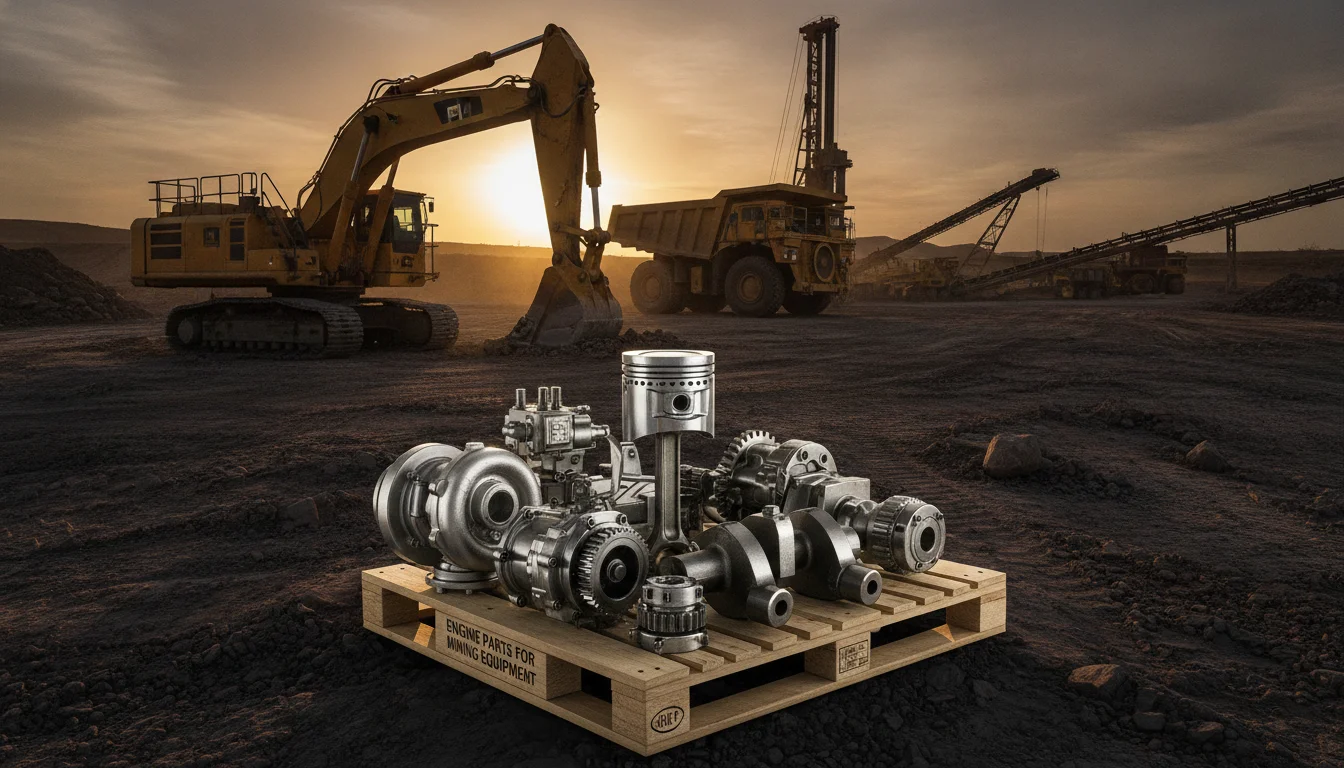
this type of equipment span a wide range of components, each with a specific function and failure mode. Understanding what each part does helps you prioritize replacements and plan maintenance schedules more effectively.
Core Engine Components
- Crankshafts: Precision-engineered to convert linear piston motion into rotational output. Crankshaft failure is catastrophic - always source from suppliers with dimensional accuracy verification.
- Pistons and Rings: Superior materials in pistons and rings reduce wear and maintain compression, directly affecting fuel efficiency and power output.
- Cylinder Heads and Blocks: Built for strength and long service life, these components house the combustion process and must seal reliably under sustained thermal stress.
- Camshafts and Valves: Precision-machined camshafts and valves control the timing of combustion events, affecting both power and emissions compliance.
- Gaskets and Seals: Provide critical sealing between engine surfaces. A failed gasket in a remote mining site means immediate shutdown - quality here is never optional.
- Fuel Injectors: Precision-crafted injectors ensure efficient fuel delivery and reduced emissions, which matters increasingly as mining operations face tighter environmental regulations.
Ancillary Engine Systems
- Oil Pumps: Ensure consistent lubrication for peak performance and reduced engine wear across long operating cycles.
- Turbos and After Coolers: High-quality turbochargers boost engine power; after coolers maintain ideal intake temperatures under heavy loads.
- Filters: Maximum filtration protects critical components from abrasive particulates - a first-line defense in dusty mining environments.
- Bearings: High-quality bearings designed for smooth operation and extended service life across the drivetrain.
- V Belts, Pulleys, and Tensioners: Essential for consistent power transmission; worn belts are a common cause of preventable breakdowns.
- Oil Coolers: Maintain engine temperature under sustained heavy loads, particularly critical in deep underground operations with limited airflow.
Compatible Engine Brands
The engine parts you need depend on the engine platform your equipment runs. The most common engines powering mining machinery include Cummins, Perkins, Caterpillar, Detroit Diesel, and Komatsu. These engines power everything from haul trucks to massive hydraulic shovels and underground loaders. At 3GEN Export, we supply OEM-quality this kind of mining equipment compatible with Caterpillar, Komatsu, Volvo, Atlas Copco, and 40+ additional brands.
OEM vs. Aftermarket vs. Remanufactured: Which Is Right for You?
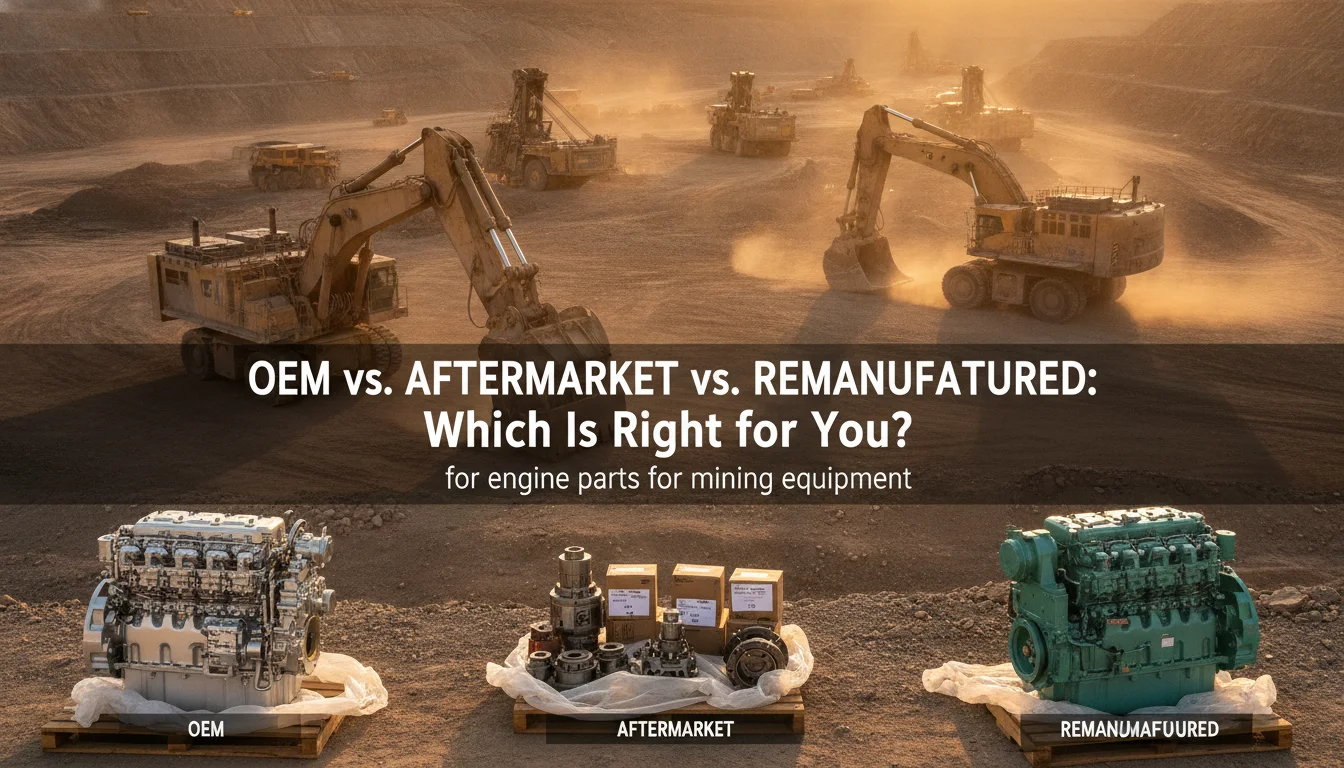
The right part type depends on your equipment's criticality, your budget, and your lead-time constraints. Each option has a legitimate place in a well-managed mining fleet.
| Part Type | Best For | Key Advantage | Typical Trade-off |
|---|---|---|---|
| OEM Parts | Critical systems, warranty requirements, high-value equipment | Exact fit, manufacturer-backed specifications | Higher cost, longer lead times |
| Quality Aftermarket | Cost-conscious procurement, non-critical systems | Meets or exceeds OEM specs at competitive pricing | Quality varies by supplier - vet carefully |
| Remanufactured | Major components (engines, turbos, hydraulic pumps) | Significant cost savings on expensive assemblies | Availability can be limited for older models |
According to Millennium Machinery, understanding these three options helps procurement teams make better decisions that balance budget, lead time, and operational risk. Quality aftermarket the parts for mining equipment - when sourced from ISO-certified suppliers - consistently meet OEM performance standards in field conditions.
"Low-quality or incorrect parts can create repeat failures, installation delays, and unnecessary downtime. Reliable parts help protect both production and equipment life." - Millennium Machinery, Mining Replacement Parts
Pros and Cons of Sourcing Engine Parts for Mining Equipment
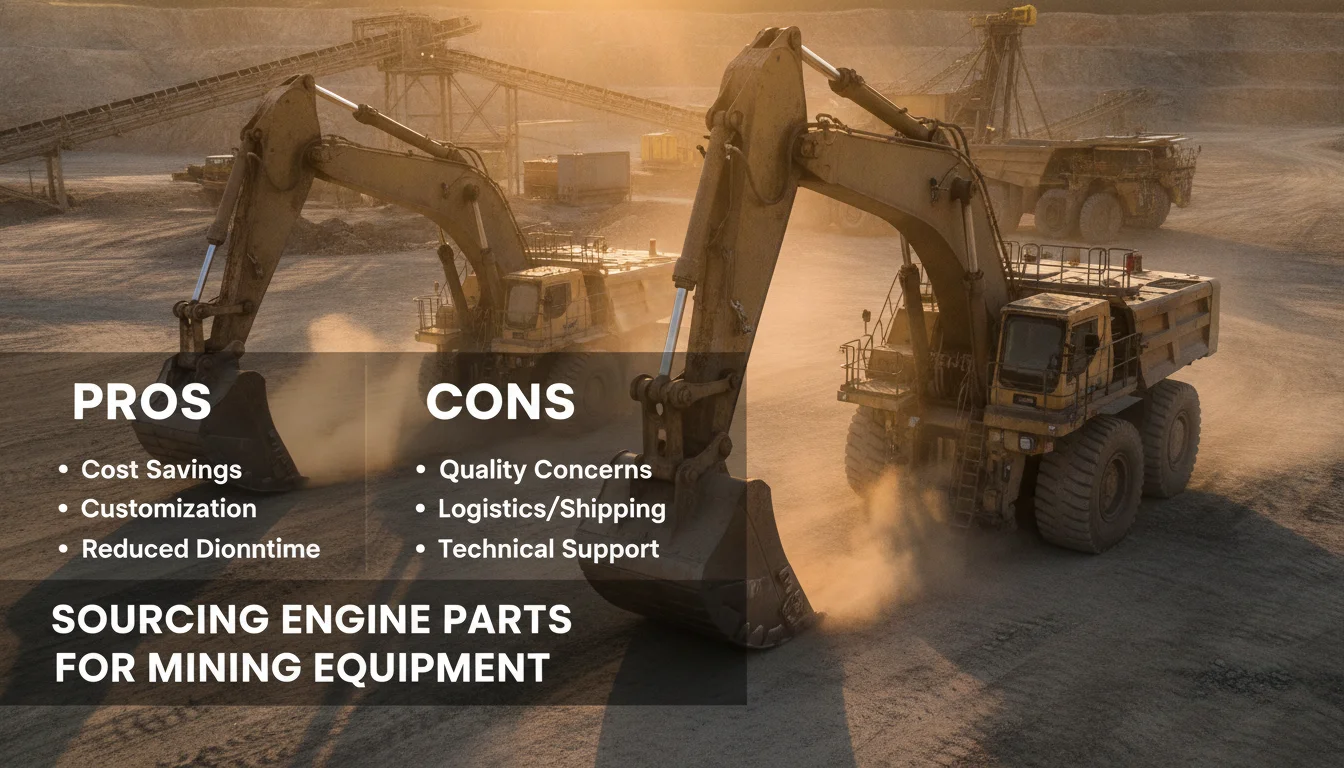
Pros
- Reduced unplanned shutdowns: Quality equipment with accurate tolerances and proven materials dramatically cut unexpected failures.
- Extended machine life: Timely replacement of worn components prevents secondary damage that turns a minor repair into a major rebuild.
- Lower total maintenance cost: Investing in durable parts reduces the frequency of repeat repairs over the equipment's service life.
- Improved operational safety: Faulty or worn engine components pose direct safety risks to personnel - quality parts mitigate that exposure.
- Faster return to production: Suppliers with strong inventory and logistics capability minimize the gap between failure and fix.
Cons
- Higher upfront cost for quality parts: OEM and premium aftermarket engine parts carry a price premium over low-grade alternatives.
- Compatibility complexity: Mining fleets often run multiple brands and models - managing part numbers across a diverse fleet requires disciplined inventory tracking.
- Lead time risk for rare components: Hard-to-find parts for older or specialized equipment can have extended lead times, even from well-stocked suppliers.
- Supplier vetting burden: Not all aftermarket suppliers deliver consistent quality - procurement teams must invest time in supplier qualification.
What to Verify Before Buying Engine Parts for Mining Equipment
Correct fit is the first requirement for any engine part purchase. Even small specification errors create major delays and can damage adjacent components during installation.
Compatibility Checklist
- Machine make and model
- Engine serial number
- Existing OEM part number
- Application and duty cycle (surface vs. underground, continuous vs. intermittent)
- Any previous modifications to the engine or drivetrain
Material and Build Quality Signals
Mining equipment works in dust, vibration, impact, and continuous load. mining equipment should be built specifically for those conditions. Look for suppliers who can demonstrate dimensional accuracy checks, chemical and mechanical material analysis, and ISO-certified quality control processes. KMP Brand, for example, uses strict reverse engineering methods and sophisticated technical laboratories to perform chemical, mechanical, and dimensional analysis on every part category they produce.
Price vs. Total Cost
Establish a budget, but evaluate total cost of ownership rather than unit price alone. A cheaper piston set that fails at 60% of its expected service life costs more than a quality part that runs full cycle. Factor in labor, downtime, and secondary damage when comparing options.
Step-by-Step Process for Purchasing Engine Parts for Mining Equipment
- Identify the failed or at-risk component: Use inspection data, operator reports, and OEM service bulletins to confirm which this type of equipment require replacement.
- Gather full equipment specifications: Collect machine make, model, engine serial number, and the existing OEM part number before contacting any supplier.
- Qualify your suppliers: Prioritize suppliers with documented quality assurance processes, global logistics capability, and technical support teams who can assist with cross-references and compatibility checks.
- Request detailed quotes: Provide accurate part numbers and specifications. Ask for lead times, shipping options, and confirmation of quality certifications.
- Compare on total value: Evaluate quotes across price, quality documentation, delivery speed, and after-sale support - not price alone.
- Confirm and track your order: Get written order confirmation with part numbers, quantities, and delivery commitments. For urgent situations, confirm urgent shipping options and customs documentation support.
Comparison of Engine Parts Suppliers for Mining Equipment
| Supplier | Part Types | Quality Assurance | Delivery Options | Price Range |
|---|---|---|---|---|
| 3GEN Export | Full engine component range: crankshafts, pistons, cylinder heads, gaskets, turbos, filters, and more | OEM-quality, multi-brand compatibility (CAT, Komatsu, Volvo, Atlas Copco, 40+ brands) | 5-day global delivery, export documentation support | Competitive across OEM and aftermarket tiers |
| KMP Brand | Crankshafts, pistons, bearings, gaskets, fuel injectors, turbos, filters | ISO-certified, dimensional and chemical analysis | Global distribution network (Europe, USA, Far East hubs) | Mid to High |
| DMC Wear Parts | Undercarriage, ground engaging tools, loader parts, conveyor components | OEM standards, aftermarket marketplace | Contact-based, wear parts specialists | Budget to Mid |
| Millennium Machinery | Spare parts, wear parts, rebuilt components across mining and quarrying sectors | Proven field performance, OEM and aftermarket options | Urgent shipping, export documentation, multi-country delivery | Mid to High |
| ARAMINE SmartParts | Underground loader and truck parts, axles, engines, gearboxes, hydraulic components | Genuine brand components (Deutz, Dana Spicer, Axletech, Kessler) | Ships to 88+ countries from central logistics hub in France | Competitive |
Maintenance Practices That Extend Engine Part Life
Regular maintenance of engine parts is the most cost-effective investment a mining operation can make. According to HDD Solutions, well-maintained equipment operates more reliably and efficiently, contributing to higher productivity and lower operating costs - while regular inspections prevent unexpected breakdowns and production delays.
Routine Inspections
Inspect engine components on a scheduled basis, not just when problems appear. Early detection of wear on pistons, seals, and bearings prevents the kind of cascading failures that turn a planned maintenance stop into a multi-day shutdown. Caterpillar's published 2,000-hour maintenance checklist is a useful benchmark for structuring inspection intervals on CAT-powered equipment.
"Faulty or worn-out equipment parts pose significant safety risks to workers and can lead to accidents, injuries, or even fatalities. Proper maintenance identifies potential hazards and mitigates risks associated with equipment failures." - HDD Solutions, Mining Machinery Parts Maintenance
Proper Lubrication
All moving engine components require adequate lubrication to reduce friction and wear. Follow OEM-specified lubricant grades and change intervals. In high-temperature underground environments, lubricant degradation accelerates - shorten intervals accordingly and monitor oil analysis results.
Timely Replacement
Replace worn or damaged this kind of mining equipment before they cause secondary damage. Keeping a small on-site inventory of high-wear items - filters, seals, belts, and bearings - eliminates the lead-time gap for the most common failure points. For major components, work with a supplier who can provide fast quotations and clear lead times.
Regulatory Compliance
Mining operations face strict safety and environmental regulations. Per HDD Solutions, regular maintenance and adherence to manufacturer recommendations ensure compliance with industry standards and regulatory requirements. Documented maintenance records also protect operations during audits and insurance reviews.
For more on maintaining heavy equipment in demanding environments, see our guides on heavy equipment maintenance best practices and OEM-quality spare parts by category.
Choosing the Right Supplier for Engine Parts for Mining Equipment
Supplier selection is as important as part selection. A capable supplier reduces procurement risk, speeds up emergency sourcing, and provides the technical support that prevents costly ordering mistakes.
What a Strong Supplier Provides
- Industry experience: Suppliers who understand real mining conditions - production pressure, equipment wear patterns, and the cost of downtime - provide better guidance than generalist distributors.
- Inventory depth and sourcing networks: Stocked items for common parts, combined with strong sourcing networks for hard-to-find components.
- Technical support: Part identification, cross-references, compatibility checks, and installation guidance - not just order processing.
- Logistics capability: For remote sites and international operations, export documentation, consolidated shipments, freight coordination, and customs preparation are essential services.
- Responsive communication: When production is stopped, you need answers in hours, not days.
As of 2026, 3GEN Export supplies the parts for mining equipment to procurement teams across more than 40 countries, with a 5-day global delivery commitment and full export documentation support. Browse our brand-specific parts catalog or explore parts by category to find what your fleet needs.
Frequently Asked Questions
What are the most common engine parts needed for mining equipment?
The most common equipment include crankshafts, pistons and rings, cylinder heads, gaskets and seals, fuel injectors, oil pumps, filters, and turbochargers. Each plays a direct role in engine performance and reliability. Wear rates vary by operating environment, with seals, filters, and belts typically requiring the most frequent replacement.
How do I know if an engine part needs replacement?
Warning signs include unusual engine noises, loss of power, increased fuel consumption, visible leaks, and elevated operating temperatures. Regular inspections - including oil analysis and dimensional checks on high-wear components - catch problems before they cause catastrophic failure. Follow OEM service bulletin intervals as a minimum standard.
Are aftermarket engine parts for mining equipment reliable?
Quality aftermarket engine parts are reliable when sourced from suppliers with documented ISO-certified quality control, dimensional accuracy verification, and material testing. KMP Brand, for example, manufactures aftermarket components to meet or exceed OEM specifications using chemical, mechanical, and dimensional analysis. The key is supplier qualification - not all aftermarket parts are equal.
What equipment is used in mines that requires engine parts?
Mining operations rely on haul trucks, hydraulic shovels, underground loaders, excavators, drills, motor graders, and conveyor systems - all of which run on engines requiring regular parts replacement. Surface and underground equipment face different wear profiles, so part specifications and replacement intervals vary by application.
How do I ensure I order the correct engine parts for my mining equipment?
Always collect the machine make, model, engine serial number, and existing OEM part number before placing an order. Provide these details to your supplier's technical team for cross-reference verification. Even small specification errors can cause installation delays and damage to adjacent components, so verification before purchase is essential.
What should I look for when comparing engine parts suppliers?
Evaluate suppliers on quality assurance processes, inventory depth, technical support capability, logistics reach, and communication speed. Price matters, but a supplier who can deliver the right part in 5 days with full export documentation is worth more to a mining operation than one who offers a lower price but uncertain lead times.