
How to Order OEM Construction Parts: 2026 Guide
Learn how to order oem construction parts the right way: identify specs, choose suppliers, avoid costly mistakes, and get OEM-quality parts delivered fast.
Loading article…
Article Not Found
The article you're looking for doesn't exist or may have been removed.
Back to BlogHow to order OEM construction parts is the process of identifying the correct manufacturer-specified components for your heavy equipment, then sourcing them from a verified supplier with the right compatibility, lead time, and quality assurance.
Key Takeaways
- Always gather your machine's make, model, and serial number before placing any order - this single step prevents the majority of wrong-part returns.
- Serial number breaks mean two machines with identical model numbers can require completely different parts. Never skip this check.
- OEM parts protect your warranty and deliver guaranteed fit; aftermarket parts can be a smart choice for older equipment or non-critical components when sourced from reputable suppliers.
- Remanufactured parts tested to OEM specifications offer a middle path: lower cost with documented quality standards and, in many cases, a warranty.
- Regular preventive maintenance reduces unplanned parts orders and keeps your fleet productive.
- A reliable global supplier with real inventory depth and fast shipping is as important as the part itself.
Understanding OEM Parts
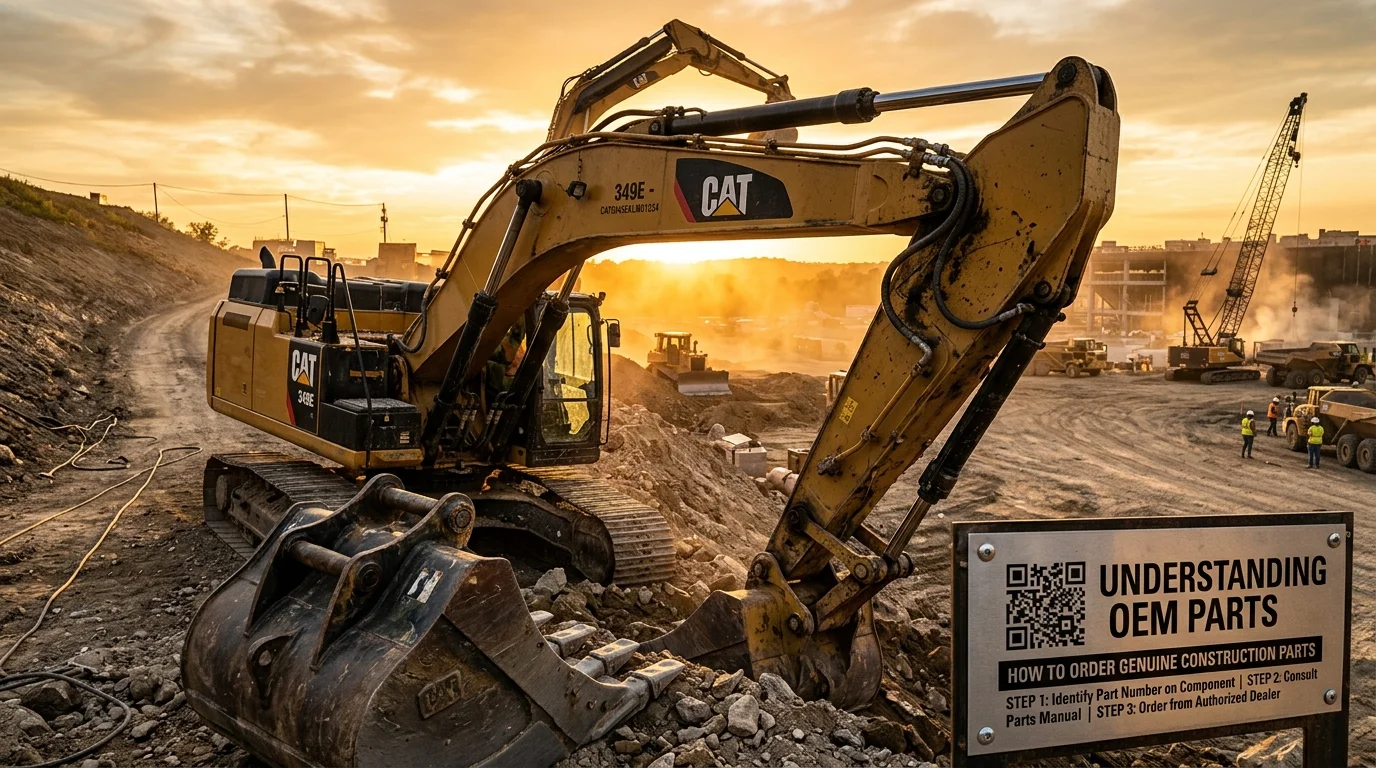
OEM (Original Equipment Manufacturer) parts are components produced by the same company that built your original equipment, engineered to meet the exact specifications and quality standards of the factory-installed parts.
Definition of OEM Parts
OEM parts come from the original manufacturer. If you operate a Caterpillar excavator, an OEM part is one engineered and released by Caterpillar for that specific model and serial number range. The part number on the box traces directly back to the OEM's engineering drawings and quality control process.
Benefits of Using OEM Parts
- Quality Assurance: OEM parts are tested to meet the manufacturer's performance and durability standards before they leave the factory.
- Compatibility: They are designed to fit your equipment precisely, reducing the risk of premature failure or system damage.
- Warranty Protection: Using OEM parts keeps your manufacturer warranty intact. Aftermarket substitutions can void coverage, depending on your warranty terms.
- Predictable Lead Times: Established OEM supply chains mean more consistent availability for high-demand part categories like filters, seals, and undercarriage components.
"We had a customer who bought a starter from an online seller. That part ended up shorting out, catching the machine on fire and causing a total loss." - Craig McMicken, District Support Manager, EquipmentShare / CASE Power & Equipment of Florida
Not every wrong-part purchase ends that dramatically. But the pattern is consistent: cutting corners on part sourcing creates downstream costs that far exceed any upfront savings.
When to Choose OEM Parts
Choose OEM parts when your machinery is under warranty, when the component is safety-critical (hydraulic cylinders, braking systems, electrical starters), or when long-term reliability matters more than short-term cost. For high-utilization fleets in mining, energy, or large-scale construction, OEM is almost always the right call.
Identifying the Right Parts
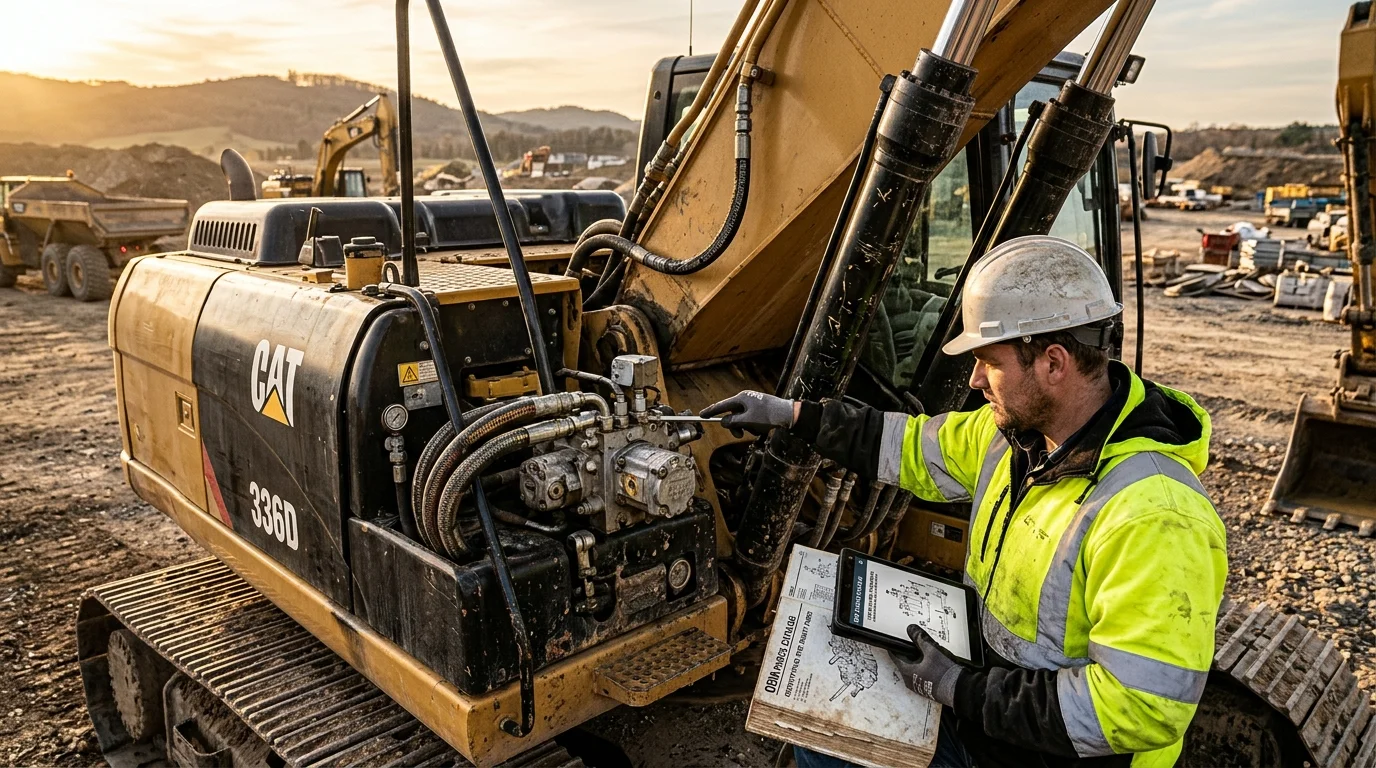
Identifying the correct part requires more than knowing the machine brand - you need the exact make, model, serial number, and an understanding of how manufacturers update designs mid-production.
Know Your Equipment
Gather your machine's make, model, and serial number before you contact any supplier. This information is your first line of defense in ensuring compatibility. Keep it recorded in your maintenance log and accessible to your procurement team.
Understanding Serial Number Breaks
Serial number breaks occur when a manufacturer updates a machine's design during a production run. Two machines with the same model designation but different serial numbers may require entirely different parts. According to best practices documented by CASE and EquipmentShare, understanding your machine's serial number break is essential to avoid ordering a part that physically won't fit or function correctly.
Using Parts Diagrams
Most major OEMs - Caterpillar, Komatsu, Volvo, CASE, John Deere - publish parts diagrams, either through dealer portals or printed service manuals. These diagrams show every component by position and part number, making it far easier to confirm you're ordering the right item. If you don't have access to a diagram, a qualified supplier's parts team can cross-reference your serial number against their catalog.
How the OEM Parts Supply Chain Works
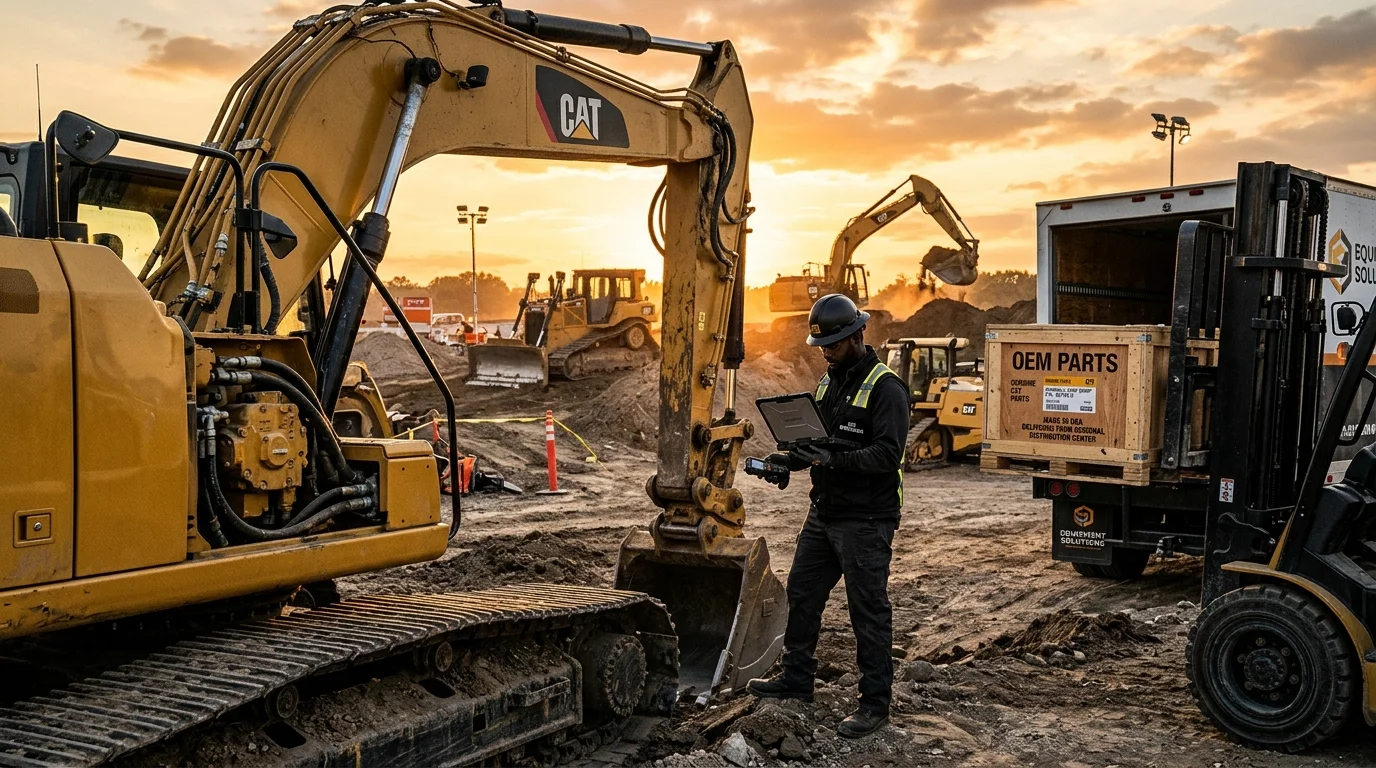
The OEM parts supply chain runs from the manufacturer's engineering and production teams through authorized distributors, regional dealers, and specialist global suppliers before reaching your job site.
Here's how the flow typically works for a procurement manager ordering internationally:
- OEM Production: The manufacturer produces parts to original engineering specifications. Quality control is performed at the factory level before parts enter the distribution network.
- Authorized Distribution: Parts move to regional distributors or authorized dealer networks. At this stage, parts carry OEM part numbers and are traceable to the original production batch.
- Specialist Global Suppliers: Companies like 3GEN Export source OEM-standard parts across multiple brands and ship globally, filling the gap when local dealers have limited inventory or long lead times.
- Procurement and Verification: The buyer provides machine specs, the supplier confirms compatibility, and the order is placed with a confirmed part number.
- Shipping and Delivery: Parts are packed, documented for customs where required, and shipped to the buyer's location. Tracking is provided throughout.
- Inspection and Installation: The buyer inspects parts on arrival, confirms part numbers match the order, and proceeds with installation or hands off to the maintenance team.
Understanding this chain matters because it tells you where delays happen and where quality risks enter. The further a part strays from the OEM's authorized network without documentation, the higher the risk of receiving a counterfeit or substandard component.
"Over 90% of sales are filled from our own inventory" - OEM Replacement Parts (source #4), a supplier with 28 years in the heavy equipment parts business. That inventory depth is what separates a reliable supplier from one that will leave you waiting.
Choosing Between OEM and Aftermarket Parts
The choice between OEM and aftermarket parts depends on your machine's age, warranty status, the criticality of the component, and your total cost of ownership calculation.
Definition of Aftermarket Parts
Aftermarket parts are produced by third-party companies rather than the original manufacturer. They are often priced lower than OEM equivalents. Quality varies significantly across suppliers - some aftermarket lines are manufactured to standards comparable to OEM; others are not.
Pros and Cons of OEM vs. Aftermarket Parts
Pros and Cons
Pros
- OEM - Guaranteed fit and function: Engineered to original specifications with full traceability.
- OEM - Warranty protection: Keeps manufacturer warranty intact; many OEM parts carry their own warranty coverage.
- OEM - Predictable performance: Reduces the risk of secondary damage caused by incompatible components.
- Aftermarket - Lower upfront cost: Can be a practical option for older equipment or non-critical components.
- Aftermarket - Wider availability: Some aftermarket parts are easier to source quickly in remote regions.
- Remanufactured - Cost-quality balance: Reman parts tested to OEM specs offer documented quality at a lower price point than new OEM.
Cons
- OEM - Higher price: OEM parts typically cost more upfront than aftermarket alternatives.
- OEM - Availability gaps: For older or discontinued models, OEM parts can be difficult to source through standard dealer channels.
- Aftermarket - Variable quality: Generic aftermarket options can fail earlier and cause secondary damage to connected systems.
- Aftermarket - Warranty risk: Using non-OEM parts on a machine under warranty may void coverage depending on the manufacturer's terms.
- Remanufactured - Limited range: Not every part category is available in reman form.
OEM vs. Aftermarket: Quick Comparison
| Factor | OEM Parts | Aftermarket Parts | Remanufactured Parts |
|---|---|---|---|
| Fit & Compatibility | Guaranteed | Varies by supplier | Tested to OEM spec |
| Price | Higher | Lower | Mid-range |
| Warranty Impact | Preserves warranty | May void warranty | Check manufacturer terms |
| Quality Consistency | High | Variable | High (when tested) |
| Availability (older models) | Can be limited | Often wider | Selective |
| Best Use Case | Warranty machines, critical systems | Older equipment, non-critical parts | High-cost components, budget-conscious fleets |
When to Use Aftermarket Parts
Consider aftermarket parts for older machinery where OEM sourcing is difficult, or for non-critical wear items where cost management is the priority. Always verify the supplier's reputation and confirm the parts meet relevant industry standards before ordering. As RDO Equipment notes, certain manufacturer-backed aftermarket lines - like John Deere's A&I - can meet quality standards comparable to OEM parts.
Finding Reliable Suppliers
A reliable supplier is the single most important variable in your parts ordering process - the right part from the wrong supplier can still cost you weeks of downtime.
Researching Suppliers
Look for suppliers with documented experience in heavy equipment parts, verifiable inventory depth, and clear customer support processes. Check whether they specialize in the brands you operate. A supplier that stocks over 220,000 CASE construction equipment parts (as RPM Machinery does) has a fundamentally different capability than a general industrial distributor.
Supplier Services
- Fast Shipping: Downtime costs real money. Confirm the supplier's standard lead times and whether they offer expedited options for critical orders.
- Customer Support: A qualified parts team should be able to cross-reference your serial number, confirm compatibility, and flag potential serial number break issues before you order.
- Inventory Availability: Suppliers with networked inventory across multiple locations can fulfill orders faster and handle out-of-stock situations more effectively.
- Return Policy: Understand the return and exchange process before you order. A clear policy protects you if a part arrives incorrect or damaged.
- Global Shipping Capability: For international procurement teams, confirm the supplier handles customs documentation, export compliance, and international freight.
Local vs. Online vs. Global Suppliers
Local dealers offer proximity and brand-specific expertise. Online suppliers can provide broader selection and competitive pricing. Global specialist suppliers like 3GEN Export bridge the gap for procurement teams that need OEM-quality parts across multiple brands with fast international delivery. As of 2026, the most effective procurement strategies combine all three: local dealers for routine maintenance items, global specialists for hard-to-source or multi-brand requirements.
The Ordering Process: Step-by-Step
The ordering process for OEM construction parts follows a clear sequence - skipping any step increases the risk of receiving the wrong part or facing avoidable delays.
Step-by-Step Ordering
- Gather Machine Information: Collect your machine's make, model, serial number, and the specific part numbers you need. If you don't have part numbers, note the component description and its location on the machine.
- Confirm Serial Number Break: Before contacting a supplier, verify whether your serial number falls within a specific production range that affects part compatibility.
- Contact Your Supplier: Reach out via phone or the supplier's online portal. Provide all machine details and confirm part availability, lead time, and pricing.
- Place Your Order: Confirm the part number, quantity, shipping address, and preferred delivery method. Request an order confirmation in writing.
- Track Your Shipment: Monitor your order through the supplier's tracking system. For international orders, confirm customs documentation is in order to avoid clearance delays.
- Inspect Parts on Arrival: Check every part against your order confirmation before signing off on delivery. Verify part numbers, condition, and quantity. Report discrepancies immediately.
- Document the Purchase: Record the part number, supplier, purchase date, and installation date in your maintenance log. This supports warranty claims and future reordering.
Payment Options
Most established suppliers offer multiple payment methods including wire transfer, credit card, and credit terms for regular buyers. Credit terms can be valuable for larger orders, allowing your procurement cycle to align with your project billing. Confirm payment terms before placing your first order with any new supplier.
Returns and Exchanges
Understand the supplier's return policy before you order. A professional supplier will have a clear process for returning incorrect or defective parts. Document the issue with photos and your original order confirmation to speed up the resolution.
Common Mistakes to Avoid
Most parts ordering problems trace back to a small set of avoidable errors. Knowing them in advance saves time, money, and frustration.
- Ordering by model number alone: Two machines with the same model designation can require different parts if they fall on different sides of a serial number break. Always include the full serial number.
- Choosing the cheapest option without vetting the supplier: Low price is not a quality signal. Verify the supplier's track record, return policy, and whether they carry genuine OEM or documented-quality aftermarket parts.
- Ignoring early wear signs: Operators who push through the first signs of hydraulic leaks, unusual noise, or reduced performance consistently face larger repair bills. Address wear early.
- Skipping the inspection on arrival: Parts can be mislabeled, damaged in transit, or simply wrong. Inspect every order before installation.
- Not documenting purchases: Without records, warranty claims become difficult and reordering the same part takes longer than it should.
- Assuming all aftermarket parts are equivalent: Quality varies widely. A low-cost starter from an unverified online seller caused a total machine loss in a documented case cited by CASE Power & Equipment of Florida. Vet your source.
- Overlooking international shipping requirements: For cross-border orders, missing customs documentation or incorrect HS codes can hold your shipment for days. Work with suppliers experienced in international freight.
A Realistic Procurement Scenario
Here's how a well-run procurement process looks in practice.
A fleet maintenance supervisor at a mid-size civil construction company is managing a Komatsu PC360 excavator that's showing reduced hydraulic pressure and sluggish boom response. The operator flagged it on a Monday morning. The supervisor pulls the machine's service record, confirms the serial number, and identifies the likely cause: a worn hydraulic pump seal kit.
Rather than waiting for a local dealer to check stock - which could take two to three business days - the supervisor contacts 3GEN Export directly. The parts team cross-references the Komatsu serial number, confirms the correct seal kit part number for that production range, and verifies stock availability. The order is placed Monday afternoon with expedited international shipping.
The seal kit arrives Thursday. The supervisor's team inspects the parts against the order confirmation, confirms the part numbers match, and the machine is back in service Friday morning. Total downtime: four days instead of the two-week wait that a standard dealer back-order would have required.
The supervisor documents the purchase in the maintenance log, including the part number and supplier. When the same machine needs the same kit six months later, the reorder takes less than ten minutes.
This is what efficient OEM parts procurement looks like: fast identification, verified compatibility, reliable sourcing, and documented records.
Maintaining Your Equipment to Reduce Parts Orders
Regular maintenance is the most cost-effective way to reduce unplanned parts replacement and keep your fleet productive.
Routine Maintenance Tasks
- Regular Inspections: Check critical components for wear, leaks, and damage during every service interval. Catching a failing seal early costs a fraction of what a full hydraulic pump replacement does.
- Fluid Changes: Change engine oils, hydraulic fluid, and coolants on schedule. Contaminated fluids accelerate wear across multiple systems simultaneously.
- Filter Replacements: Replace hydraulic, fuel, and air filters as specified by the OEM service manual. For excavators and loaders, this is one of the highest-impact routine tasks for preventing contamination-related failures.
- Undercarriage Checks: For tracked equipment, inspect track tension, sprockets, and rollers regularly. Undercarriage wear is gradual but cumulative - and undercarriage components are among the more expensive replacement items on any tracked machine.
Benefits of Preventive Maintenance
Preventive maintenance catches issues before they cascade. A damaged hydraulic hose, left unaddressed, doesn't just affect the hose - it can reduce hydraulic pressure, damage the pump, and cause sluggish performance across the entire system. Addressing it early keeps the repair contained and the machine productive.
Keeping Records
Maintain detailed records of every maintenance task, parts order, and repair performed on each machine. These records support warranty claims, inform resale value, and make future procurement faster. A well-maintained service log is one of the most practical tools a fleet supervisor has.
2026 Outlook: What's Changing in OEM Parts Procurement
As of 2026, several shifts are reshaping how procurement teams source heavy equipment parts.
Online parts portals have matured significantly. Major OEMs now offer direct-order platforms - CASE's MyCNH Store, for example, allows buyers to research, identify, and order parts for pickup or shipping on their own schedule, without waiting for a dealer call-back. This self-service capability is becoming the baseline expectation for B2B buyers.
Global supply chain resilience is a higher priority than it was three years ago. Procurement managers are increasingly maintaining relationships with multiple suppliers across different geographies to reduce exposure to single-source delays. Specialist global exporters with deep multi-brand inventory are playing a larger role in fleet maintenance strategies for international operations.
Remanufactured parts are gaining ground. CASE's reman program, for instance, backs reman parts with a 24-month warranty - making them a credible alternative to new OEM for high-cost components like hydraulic pumps and transmissions. This year, more procurement teams are building reman options into their standard sourcing process rather than treating them as a last resort.
The fundamentals haven't changed: know your machine, verify compatibility, source from reputable suppliers, and document everything. But the tools available to do all of that faster and more reliably have improved considerably.
Frequently Asked Questions
How do I order OEM parts?
Identify your equipment's make, model, and serial number, then locate the correct part number using a parts diagram or your supplier's catalog. Contact a verified supplier, confirm availability and lead time, and place your order with the part number in writing. Inspect the parts on arrival before installation.
What is better, OE or OEM?
OEM parts are manufactured by the original equipment maker and carry full traceability to the manufacturer's engineering specifications. OE (Original Equipment) is sometimes used interchangeably, but can also refer to parts sourced through different channels. For guaranteed compatibility and warranty protection, OEM from an authorized source is the safest choice.
What is an OEM in construction?
In construction, OEM refers to the original manufacturer of your equipment - Caterpillar, Komatsu, Volvo, CASE, John Deere, and others. OEM parts are those produced or released by that manufacturer to the same specifications as the factory-installed components.
Is OEM Parts Online a legit website?
To verify any online parts supplier, check independent customer reviews, confirm their contact information and physical address, review their return policy, and ensure they offer secure payment processing. A legitimate supplier will be transparent about part sourcing, provide order confirmations, and have a clear process for handling incorrect or defective parts.
How can I ensure the parts I order are compatible?
Compatibility starts with your machine's full serial number, not just the model number. Serial number breaks mean parts can differ between machines of the same model. Use OEM parts diagrams, cross-reference with your supplier's catalog, and ask your supplier's parts team to confirm compatibility before placing the order.
What should I do if the part I ordered is incorrect?
Contact your supplier immediately with your order confirmation and photos of the incorrect part. A reputable supplier will initiate a return or exchange promptly. Document everything in writing and update your maintenance log to reflect the delay. This is also a signal to review your ordering process and confirm you're providing complete serial number information at the time of order.
Are remanufactured parts a good alternative to new OEM?
Remanufactured parts can be an excellent alternative, particularly for high-cost components like hydraulic pumps, transmissions, and starters. Quality reman programs test components to OEM specifications and back them with a warranty - CASE's reman program, for example, offers a 24-month warranty on reman parts. Verify the reman program's testing standards and warranty terms before ordering.
Ready to source OEM-quality spare parts for your fleet? Shop at 3genexport.com - global delivery in as few as 5 days, across Caterpillar, Komatsu, Volvo, Atlas Copco, and 40+ brands.