
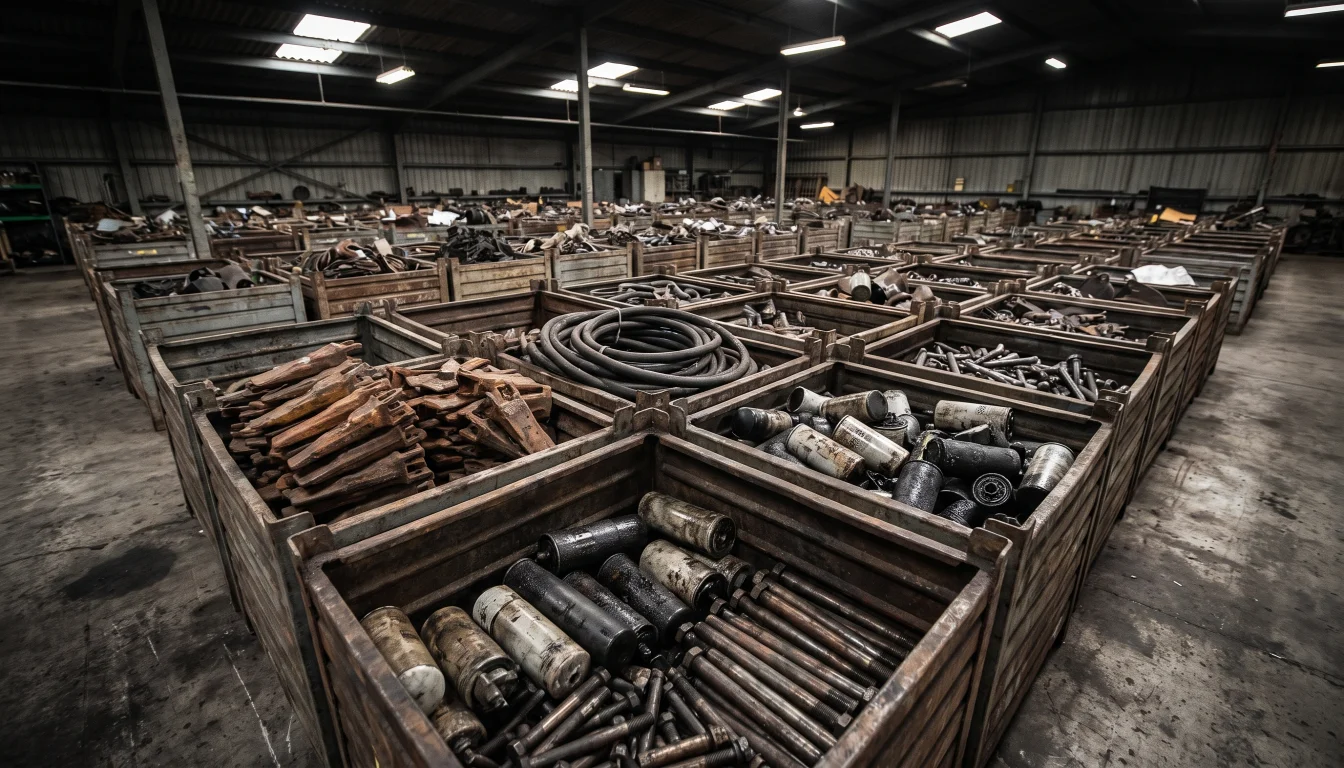
Mining Machinery Spare Parts List: 2026 Buyer's Guide
Build a reliable mining machinery spare parts list with our 2026 guide covering OEM sourcing, pricing benchmarks, supplier comparisons, and inventory tips.
Loading article…
Article Not Found
The article you're looking for doesn't exist or may have been removed.
Back to BlogKey Takeaways
- A mining machinery spare parts list should cover wear parts, critical mechanical components, and consumables tailored to your fleet.
- Prioritize OEM or certified aftermarket parts from suppliers like FLSmidth, Metso, and Sandvik to ensure compatibility and durability.
- Compare suppliers based on catalogue breadth, stock availability, and value-added services like inventory management.
- Regularly audit and update your list to adapt to changing site conditions and equipment age.
- Factor in rebuild programs and technical audits, not just new-part purchases, when planning your parts budget.
A mining machinery spare parts list is a detailed catalogue of components needed to maintain, repair, and overhaul equipment such as crushers, excavators, and haul trucks. It typically includes wear parts, mechanical parts, and critical spares from brands like Metso, Sandvik, and Caterpillar.
Why a Comprehensive Mining Machinery Spare Parts List Matters
A comprehensive parts list matters because unplanned equipment failure can halt production and erode margins within hours. It serves as a blueprint for inventory planning, making sure high-wear items and critical components are on hand before a breakdown happens, not after.
According to FLSmidth, equipment as old as 60 years can still be supported with OEM-spec parts when the right list and supply chain are in place. That's a meaningful data point for mine operators running legacy fleets who assume replacement parts simply won't exist anymore. Critical spare parts, by definition, are components whose failure could cause immediate safety hazards or significant production stoppages. Without a carefully curated list, mines risk either overcapitalizing on slow-moving inventory or facing extended downtime, a balance that ABB describes as central to maintaining productivity.
"A this type of list is your insurance against operational paralysis. The key is balancing inventory investment with the cost of downtime." - Industry Analyst
"The most expensive spare part is the one you didn't stock when the machine went down. Everything else is a rounding error against lost production hours." - 3GEN Export Team
Modern suppliers like Specialist parts supplier maintain over 130,000 catalogue positions and 53,000 items in stock, working with 288 manufacturers and 8 certified dealers. That scale reflects just how complex mining equipment sourcing has become, and why a systematic approach to spares beats ad hoc ordering. A precise this kind of parts list for a specific component, such as a 740L loader bucket, may include 26 individual line items, from bucket shell and lip to suspension forks and teeth, each specified with material grades like G25CrMo4+QT or 16MnCr5.
What to Look for When Buying from a Mining Machinery Spare Parts List
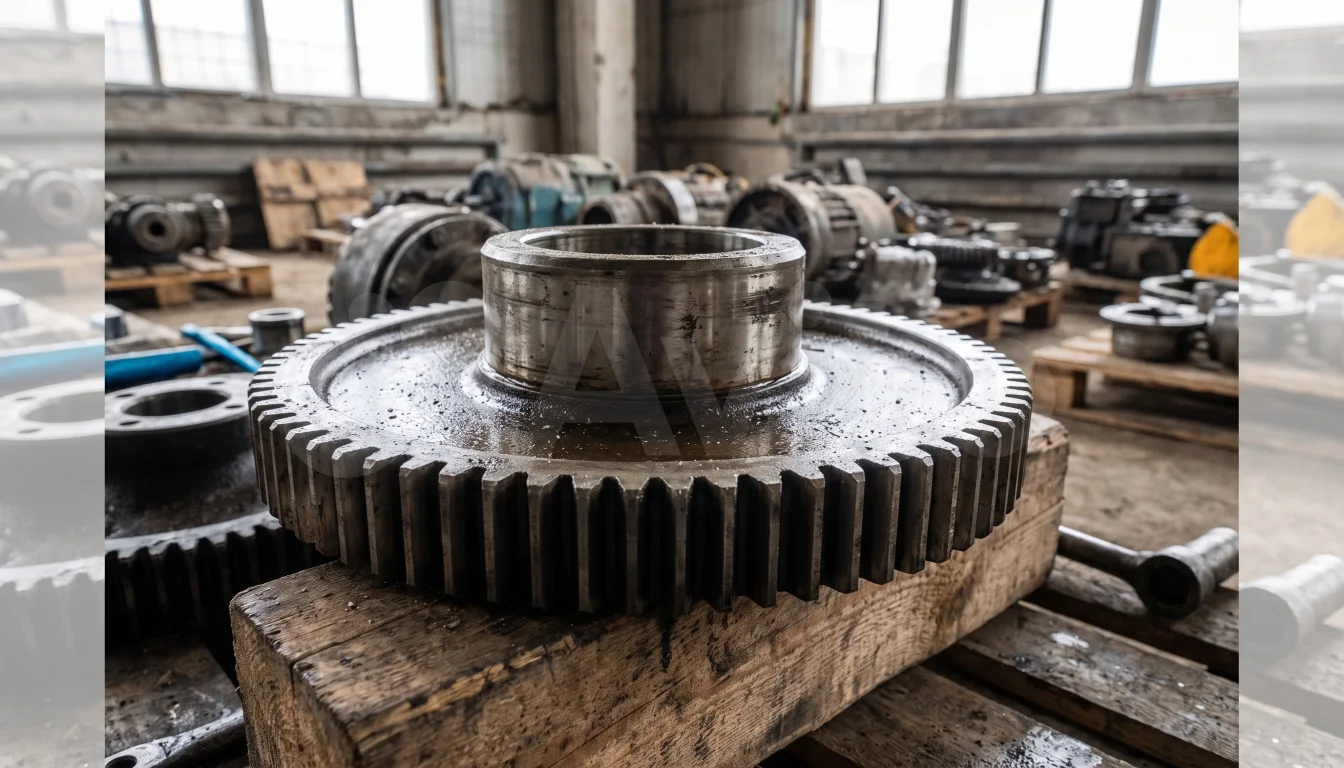
The most important factors when buying from a spare parts list are OEM certification, verified compatibility, supplier lead times, and total lifecycle cost rather than sticker price alone. Each of these affects your uptime and your bottom line differently.
Material Quality and OEM Standards
OEM (Original Equipment Manufacturer) parts are produced by the same company that built the original machinery, ensuring exact fit and performance. Haladjian Minerals Solutions, for example, distributes official Metso and Sandvik parts, including distributor cones, fixed jaws, and movable jaws for crushers. Aftermarket parts are manufactured by third-party companies and can offer cost savings but may vary in quality depending on the manufacturer. Always verify material certifications, such as high-manganese steel for jaw plates, and request traceability documentation before committing to a bulk order.
Compatibility and Part Numbering
Cross-referencing part numbers across brands is a non-negotiable step in any procurement process. Many specialist suppliers, offer auto-search functions by part number to quickly locate compatible replacements across multiple OEMs. Keep a unified numbering system that maps OEM numbers to your internal inventory codes, which reduces the risk of misordered parts and costly reshipping delays.
Supplier Reliability and Lead Times
Evaluate suppliers on their global logistics networks before you evaluate them on price. FLSmidth operates a localized supply chain to keep parts close to mine sites, while specialist suppliers ship to any country worldwide and processes orders around the clock. Ask about average lead times for critical items; some suppliers stock parts ready for immediate dispatch, while made-to-order components may take several weeks to arrive.
Price vs. Value Considerations
Prices for common spare parts vary widely across the market: axles typically range from $1,650 to $1,700, hydraulic cylinders from $100 to $300, and air filters as low as $5 to $10, per pricing published by Chinese supplier Xuzhou Shangheng. However, the true cost includes freight, duties, and the downtime risk if a cheaper part fails prematurely. In mining, the cheapest part is rarely the most economical choice over the equipment's full lifecycle.
Rebuilt and Used Parts as an Option
Rebuilt components can be a smart middle ground between full OEM pricing and unverified used parts. Programs like Haladjian's machine rebuild service restore worn assemblies, such as crusher frames or drive units, to OEM-spec tolerances at a fraction of new-unit cost. If you're considering used or rebuilt parts, insist on documented inspection reports and a clear warranty period before purchase; a part with no traceability is a liability, not a bargain.
Matching Parts to Your Mining Equipment Fleet
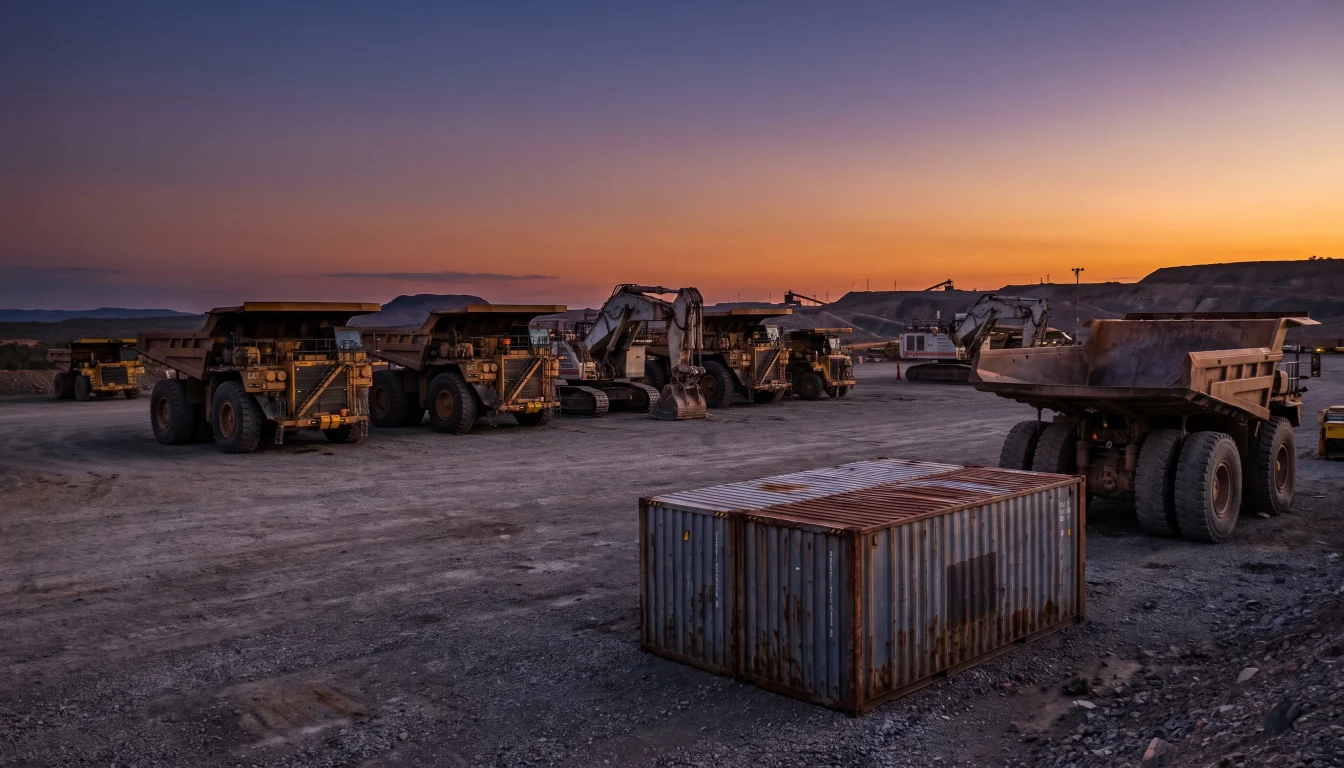
Matching parts to your fleet starts with grouping equipment by function, crushing, hauling, drilling, and loading, since each category has a distinct wear profile and spare parts cadence.
Crushing and Screening Spares
Crushers consume a high volume of wear parts relative to their overall part count. For cone crushers like the Metso HP 100 or Sandvik CH430, the spare parts list should include mantle liners, bowl liners, distributor cones, and head nuts. Jaw crushers such as the Metso C116 or Sandvik CJ412 require fixed and movable jaws, cheek plates, and toggle seats. Screens need shock screens, tension rails, and vibration dampers to keep production consistent.
Excavator and Loader Components
Heavy loaders and excavators demand robust undercarriage parts (track chains, idlers, sprockets), hydraulic components (cylinders, pumps, valves), and wear edges (bucket teeth, lip shrouds). For a 740L loader bucket, a complete parts list might contain 26 items, including bucket shell weights and suspension forks, as documented in OEM parts manuals. Explore our undercarriage parts category for compatible components across major brands.
Drilling and Underground Equipment
Underground self-propelled machines require specialized spares like drill rods, bits, and carrier rollers. Leading suppliers support brands such as Epiroc and Sandvik for these applications, offering drop-in compatibility for aging fleets. If you're sourcing drilling consumables at scale, check our guide on hydraulic cylinder seal kit selection, since drill rigs share many of the same hydraulic wear patterns as excavators.
Comparison of Leading Mining Machinery Spare Parts Suppliers
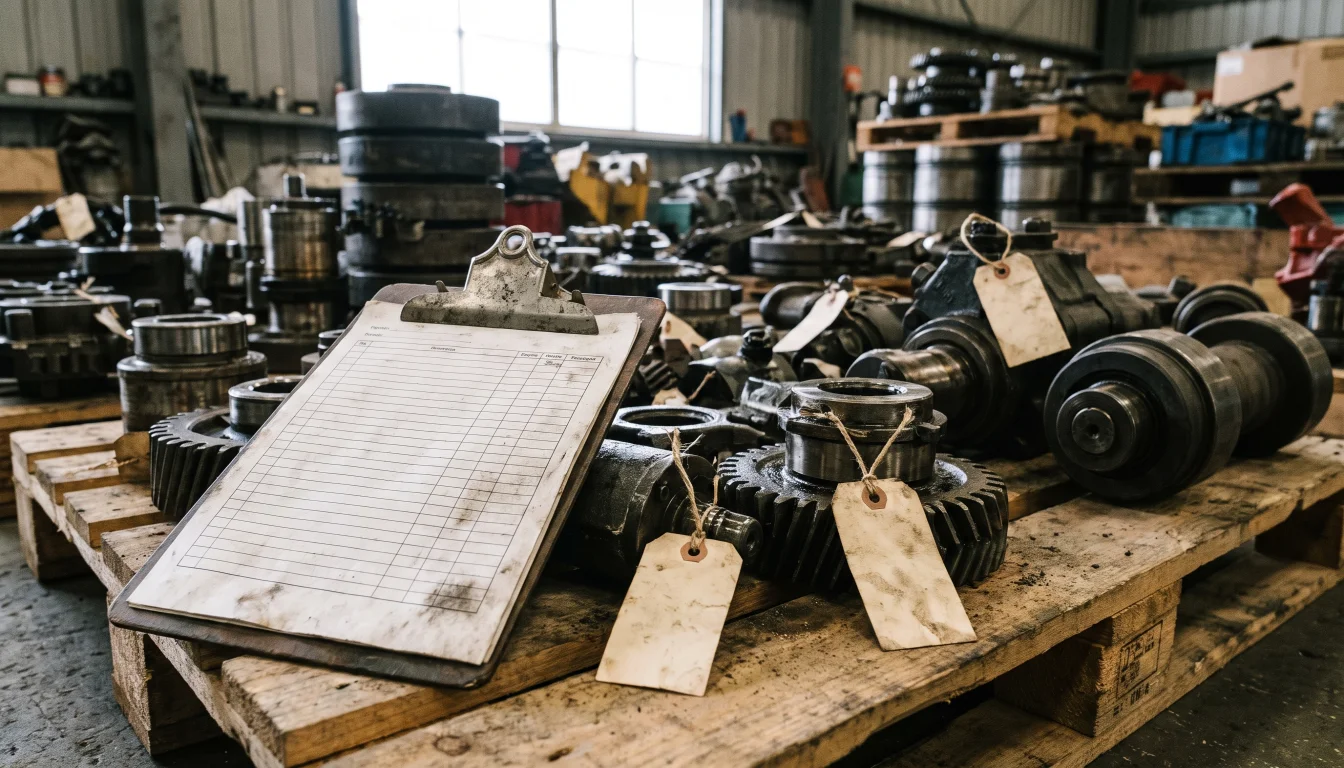
The leading suppliers differ mainly in catalogue depth, brand coverage, and how fast they can get a part to your site. Here's how five major names in the space compare.
| Supplier | Catalogue Size | Brands Supported | Key Service | Price Level |
|---|---|---|---|---|
| FLSmidth | Full flowsheet | FLS, Fuller, Dorr-Oliver, Eimco | OEM precision, tailored kits, global network | Premium |
| Haladjian Minerals | Extensive | Metso, Sandvik | Multi-brand stock, rebuild programs, expert maintenance | Mid-to-Premium |
| Specialist parts supplier | 130,000+ positions | Metso, Sandvik, Epiroc, FLSmidth, Warman | Large inventory, technical audits | Mid-Range |
| Specialist parts supplier | Online catalog | Atlas Copco, Cat, Hitachi, Komatsu, Liebherr, Volvo | Fast global shipping, competitive pricing | Competitive/Budget |
| ABB | Specialized | ABB | Spares management for control systems, grinding drives, mine hoists | Premium |
How to Build Your Own Mining Machinery Spare Parts List
Building your own the machinery spare parts list requires auditing your fleet, consulting OEM documentation, analyzing failure history, and setting data-driven reorder points. Here's the process broken into five actionable steps.
- Audit your fleet. Catalog every machine, noting manufacturer, model, and serial number. Identify which components are operational spares versus critical spares for each unit.
- Consult OEM recommendations. Obtain official spare parts manuals for each machine. FLSmidth, for instance, provides first-time spares information with all new equipment purchases.
- Analyze failure modes. Review maintenance records to rank parts by failure frequency and consequence. Focus your budget on high-wear items and long-lead-time components first.
- Classify by lead time. Source long-lead items from suppliers with regional stock; keep fast-moving, frequently replaced parts on-site at all times.
- Set reorder points. Use inventory management software or partner with suppliers like ABB, who offer technical audits to optimize reorder triggers based on actual usage data.
Care and Maintenance of Your Spare Parts Inventory
Proper care of your spare parts inventory means controlled storage conditions, regular audits, and digital lifecycle tracking, not just shelving parts and forgetting about them.
Proper Storage Conditions
Store parts in a clean, dry environment away from temperature swings. Sensitive components like seals and electronic cards require climate control to prevent premature degradation. Label shelves clearly with part numbers and barcodes for quick retrieval during emergency repairs.
Regular Inventory Audits
Conduct cycle counts quarterly and full inventories annually. Cross-check physical stock against your list to identify discrepancies and remove obsolete items before they tie up capital. a leading supplier's network of 288 manufacturer relationships means obsolete parts can often be sourced or upgraded rather than written off entirely.
Lifecycle Tracking
Integrate your list with a CMMS (Computerized Maintenance Management System) to track part usage and predict future needs. This reduces emergency purchases and stabilizes cash flow across the fiscal year. As of 2026, more mid-size mining operations are adopting CMMS platforms specifically to cut reactive purchasing, a trend we've seen accelerate among our own clients over the past two years.
Pros and Cons of Maintaining a Formal Spare Parts List
Pros
- Reduces unplanned downtime by ensuring critical spares are always available on-site or on short lead time.
- Improves budget forecasting since parts spend becomes predictable rather than reactive.
- Strengthens negotiating position with suppliers when ordering in planned batches rather than emergency single units.
- Extends equipment lifespan through timely wear-part replacement instead of run-to-failure maintenance.
Cons
- Requires upfront capital investment in inventory that may sit unused for months.
- Demands ongoing administrative effort to audit, update, and cross-reference part numbers.
- Risk of overstocking slow-moving items if failure data isn't reviewed regularly.
- Obsolescence risk on older equipment if suppliers discontinue certain OEM lines.
HS Codes and Import Compliance for Spare Parts
The correct HS code for mining machinery spares depends on the specific component, but many parts for crushing and screening equipment fall under heading 8474.90. Getting this wrong at customs can delay a shipment for days, which defeats the purpose of stocking a spare parts list in the first place.
Always verify the exact classification with a licensed customs broker in your destination country, since sub-codes and duty rates vary by component type, material, and country of origin. For mining operations importing across multiple countries, it's worth maintaining a reference table of HS codes alongside your spare parts list so procurement teams aren't researching classifications under time pressure during a breakdown.
Frequently Asked Questions
What is a mining machinery spare parts list?
A mining machinery spare parts list is a structured document enumerating all replaceable components for mining equipment, categorized by criticality and including part numbers, descriptions, and recommended quantities. It functions as both a procurement tool and an inventory management reference.
What is a recommended spare parts list?
A recommended spare parts list is the OEM's own guidance on which components to stock based on expected wear rates and failure risk for a specific machine model. Manufacturers like FLSmidth typically provide this list with new equipment purchases as a starting baseline.
How often should I update my spare parts list?
Review your list at least semi-annually or whenever your fleet changes. Equipment aging, process modifications, and supplier availability all warrant revisions to keep the list current and accurate.
What is the difference between critical and operational spare parts?
Critical spare parts cause immediate safety risks or production halts if they fail, such as a crusher main shaft. Operational parts, like filters and belts, are necessary for routine function but allow scheduled replacement without stopping production.
What is the HS code for mining equipment spares?
The Harmonized System (HS) code for mining machinery parts often falls under heading 8474.90 for parts of sorting, screening, or crushing machines. Always verify with a customs broker, since codes vary by specific component and country of import.
How can I reduce spare parts inventory costs?
Implement a vendor-managed inventory program, consolidate suppliers, and standardize equipment models across sites where possible. ABB's spare parts management services, for example, help balance stock levels to free up working capital without compromising availability.
Building a reliable mining machinery spare parts list is a continuous process, not a one-time project. By combining OEM specifications, real-world failure data, and strategic supplier partnerships, mining operations can meaningfully cut downtime and extend equipment life. Start with your fleet audit, compare suppliers using the table above, and refine your list as site conditions evolve. Shop OEM-quality spare parts with global 5-day delivery at 3genexport.com.