$892,00
90 in stock
A rock drill doesn’t forgive small weaknesses. When drilling cycles are repetitive, shock loads are constant, and dust is everywhere, the parts that “look simple” are often the ones that decide whether the machine stays stable or starts bleeding efficiency through leakage, misalignment, contamination, and premature wear. The 15394888, 153 948 88 COVER SANDVIK is a precision-machined interface component designed to protect critical internal areas, hold alignment under vibration, and support tight sealing where the assembly needs it most.
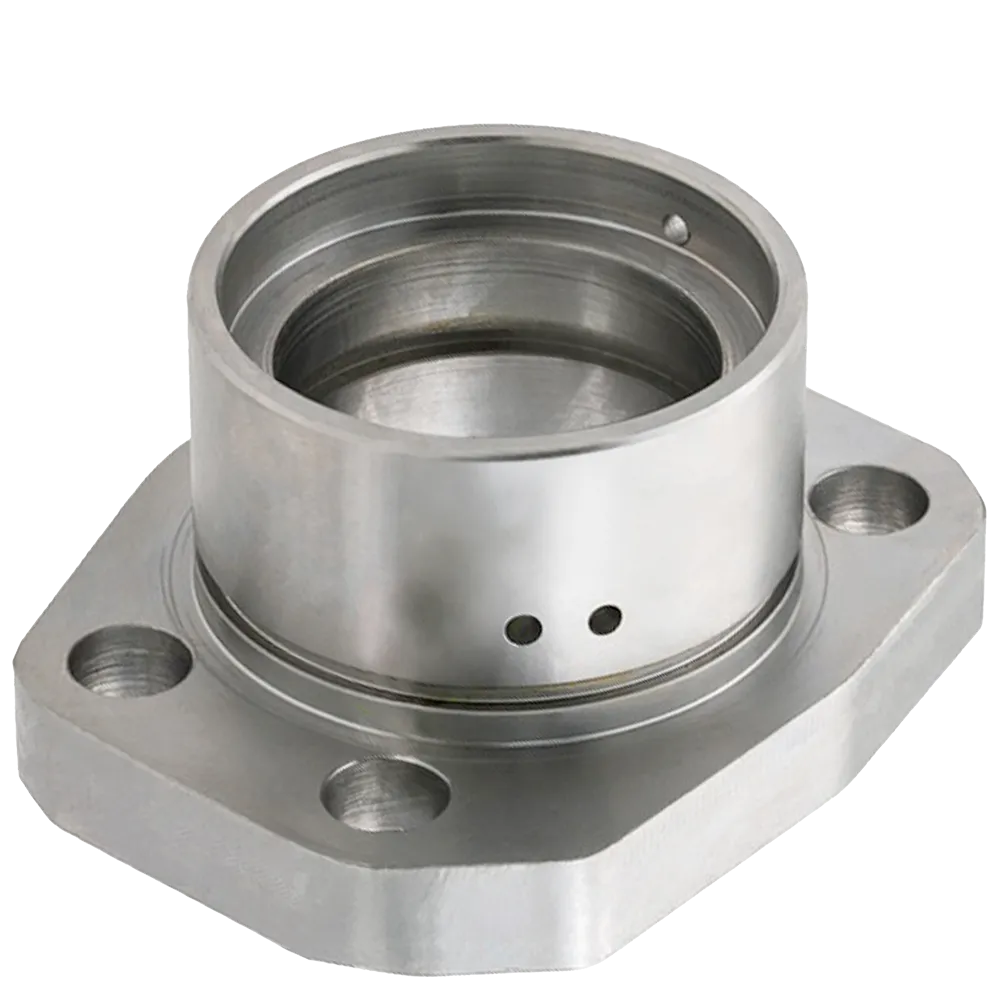
From the images, this component has a robust cylindrical body seated on a flanged base with multiple bolt holes. The internal bore shows careful machining, and the body includes small ports/holes that typically relate to lubrication, pressure equalization, or controlled flow paths (depending on the exact assembly location). This is not a decorative cap , it is a structural and functional cover that helps the drilling system remain consistent under pressure and temperature changes.
At 3GEN Export, we supply this part as an OEM-standard replacement solution for heavy-duty drilling applications. We support global customers with worldwide delivery in 5 working days, helping maintenance teams reduce downtime risk and keep rigs producing.
A cover like PN 15394888 / 153 948 88 commonly works as a boundary and control interface. In drilling equipment, boundary parts do more than “close a space.” They stabilize, protect, and maintain the correct working environment for moving or pressurized components.
The flange and bolt pattern show that this cover is built to mount rigidly to a mating surface. That rigid mounting:
Maintains concentric alignment between interacting components
Prevents micro-movement under impact vibration
Reduces uneven wear caused by offset loading
Even small deviations in alignment can accelerate wear on adjacent components and trigger repeated seal failures. A correctly manufactured 15394888, 153 948 88 COVER SANDVIK helps keep the assembly square and stable.
Rock drills often rely on stable pressure delivery (hydraulic, pneumatic, or flushing media). Sealing surfaces and grooves are critical because:
Pressure loss reduces drilling efficiency
Heat builds up when systems work harder to compensate
Contamination enters through weak seal points
Lubrication performance drops when sealing integrity is compromised
This cover’s internal machining suggests intentional seating surfaces that support reliable sealing when paired with the correct seals and torque procedure.
Dust is not just “dirt” in drilling. Fine abrasive particles behave like grinding compound. A functional cover protects internal surfaces from:
Dust ingress
Moisture and slurry contamination
Corrosion initiation on precision surfaces
A healthy cover helps extend service life of surrounding parts that cost far more to replace.
Most operators don’t replace covers because “the cover failed.” They replace covers because the cover caused other parts to fail repeatedly.
If the cover face distorts, if bolt loads become uneven, or if sealing edges develop micro damage, the system may show:
Persistent seepage or leakage after seal replacement
Pressure instability (performance dropping under load)
Vibration that feels “new” or unusual
Abnormal wear on mating surfaces
Frequent retightening or bolt loosening
Replacing the 15394888, 153 948 88 COVER SANDVIK at the right time is often the most cost-effective decision because it restores the boundary conditions the assembly depends on.
Based on the images you provided, the component presents several typical features of a high-duty cover/housing interface:
This indicates:
A rigid mounting interface
Even load distribution
Stable clamp force for sealing
Better resistance to vibration loosening when torqued correctly
The internal surfaces appear machined to support:
Accurate seating into a mating bore
Seal positioning and compression consistency
Controlled internal clearances (reducing misalignment wear)
These are often used for:
Lubrication access
Pressure equalization
Flow guidance or bleed functionality
Assembly referencing depending on the system design
Exact function depends on where the part sits in the drill or drifter assembly, but the presence of these holes signals this cover is more than a simple cap.
When customers buy a cover part, what they really buy is machining quality. The success of this component depends on manufacturing fundamentals.
In heavy-duty drilling environments, cover/housing parts are typically produced from engineered metals suitable for:
High clamp forces
Long fatigue exposure
Thermal cycling
Vibration and impact conditions
Durability is not only about hardness; it’s also about stability. A part that is “hard” but not dimensionally stable can still cause sealing issues and uneven seating.
Key manufacturing areas include:
Flange face flatness
Bolt-hole positioning and perpendicularity
Bore roundness and concentricity
Groove dimensional accuracy (if applicable)
Surface finish on sealing and seating faces
If these are correct, the cover installs smoothly, seals predictably, and resists loosening.
Even small imperfections on sealing faces can create:
Micro leak paths
Seal abrasion
Rapid seal hardening due to heat and friction
A properly finished 15394888, 153 948 88 COVER SANDVIK helps the sealing system do its job without overworking.
Below is a practical, workshop-friendly approach. Always prioritize your machine’s service manual and site procedures.
Lock out the machine and depressurize the system
Clean the external area to prevent dust falling into the assembly
Prepare the correct seals, fasteners, and tools
Loosen fasteners in a cross pattern to avoid flange distortion
Avoid prying on sealing faces
Inspect fasteners for stretch or damaged threads
Before installing the new cover:
Confirm flange mating face is clean and flat
Remove burrs and embedded debris
Inspect the bore for scoring or oval wear
Check that seal grooves (if present) are not damaged
Use the correct seal type and size
Apply only the recommended lubricant (if required)
Ensure seals are seated evenly without twist
Seat the cover evenly by hand
Hand-tighten bolts first in a cross pattern
Torque in stages (example: 30% → 60% → 100%)
Repeat cross pattern for final torque consistency
Bring the system to working condition gradually
Monitor for seepage
Confirm pressure consistency under load
Recheck torque after initial run-in if your procedure recommends it
Good installation discipline often extends the service life of the cover and the adjacent components significantly.
To keep the cover performing longer:
Maintain clean flushing media and correct filters
Replace seals on schedule instead of waiting for failure
Prevent dry-running conditions that elevate heat
Address vibration sources early (misalignment, worn bushings)
Avoid over-torque that can warp the flange
A cover lasts longer when the system around it is stable and clean.
Customers typically order PN 15394888 / 153 948 88 when they encounter one or more of these issues:
Seals fail repeatedly even after correct replacement
The assembly shows recurring seepage at the interface
Bolt torque won’t hold due to flange deformation
The cover shows scoring on seating surfaces
The bore shows wear patterns that suggest misalignment
Maintenance teams want preventive replacement before a major downtime event
Because this part sits at a critical boundary, replacing it can restore system stability quickly.
The part number 15394888 (also written as 153 948 88) appears in spare-parts documents for rock drilling/drifter systems where it is listed as a “cover.”
Some supplier catalogs group drilling families (including HL and COP ecosystem references), suggesting this part is used within those drilling/drifter environments depending on the specific assembly configuration.
Important note for your product page (recommended wording):
Because Sandvik drilling platforms can vary by configuration and revision, the safest way to confirm fitment is to match:
If you share the machine/drifter details, 3GEN Export can verify fitment before shipment.
Exact weight varies slightly by production revision, but based on the visible flange + cylindrical body geometry and typical material density, the estimated weight is 2.2 kg (common range 1.8–2.8 kg depending on specification).
For your website, you can publish:
Net Weight (estimated): 2.2 kg
Packing Weight (estimated): 2.6–3.2 kg (depending on carton and protective packing)
When drilling stops, time becomes the most expensive variable. 3GEN Export is structured to reduce lead time risk while maintaining OEM-standard expectations:
OEM-standard manufacturing for dependable fit and performance
Global supply capability for drilling spare parts
Worldwide delivery in 5 working days
Professional support for fitment verification and export documentation
Manufactured in Turkey, these products are made using the latest technologies and built to meet the highest international standards. Each machine is a high-quality copy of the original, ensuring durability, precision, and performance that you can rely on for modern construction and metalworking projects.