3GEN Export

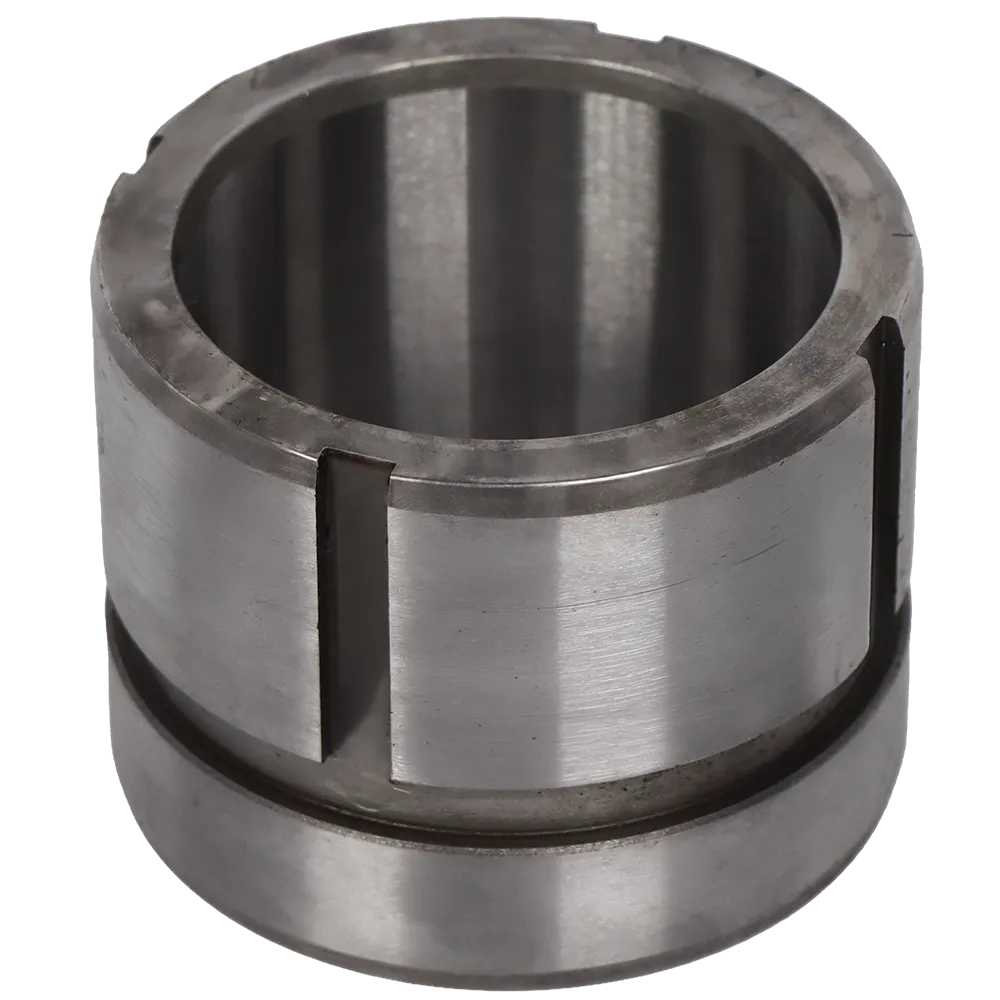
4084021190, 40840-21190 BUSHING KAWASAKI

Product Gallery

$218,00

90 in stock

Product Video

Product Description

4084021190 / 40840-21190 BUSHING KAWASAKI

If your Kawasaki loader is starting to feel “loose” at the pivot points, or you’re hearing that dry, metallic knock when the boom cycles under load, the bushing is often where the story begins. 40840-21190 BUSHING KAWASAKI is a precision-machined, heavy-duty sleeve designed to sit between a pin and a moving joint, so the expensive components (arms, bosses, housings, and pins) don’t sacrifice themselves to friction and shock.

Based on the images you provided, this part is a flanged, split-style bushing with machined slots and a seating shoulder—built for press-fit stability, controlled lubrication flow, and reliable alignment in high-load pivot applications.

As 3GEN Export, we supply this component as an OEM-standard replacement and deliver worldwide in 5 working days, so your machine returns to production instead of waiting on long lead-times.


What 40840-21190 BUSHING KAWASAKI does in your machine

A bushing is the quiet hero of heavy equipment. It does not create power, but it protects power—by preventing direct metal-to-metal contact. In a loader’s working life, pivot areas endure a constant cycle:

  • Heavy static load while holding material

  • Dynamic shock when the bucket hits resistance

  • Vibration from travel and uneven terrain

  • Contamination (dust, grit, moisture) trying to invade every gap

40840-21190 BUSHING KAWASAKI acts as a wear interface. The pin rotates or oscillates against the bushing surface, not against the loader arm itself. That means when wear finally occurs, you replace a bushing—not a lift arm, not a boss, and not the entire joint set.


Key design features you can see in the product photos

From the geometry shown in your images, 40840-21190 BUSHING KAWASAKI is designed to handle real-world field loads, not laboratory conditions.

Split-body structure (installation and retention)

The bushing is split along the body, allowing:

  • Controlled compression during press fitting

  • Better seating in the bore

  • Reduced risk of distortion compared to thin-wall sleeves

This split design also helps manage thermal expansion and shock load behavior—important on machines that move from cold mornings to high-heat operating cycles.

Flanged shoulder (axial control)

The flange works like an anchor point. It prevents axial migration and helps keep the joint aligned when the arm cycles repeatedly. In loader pivot assemblies, that flange can be the difference between “tight and tracked” versus “walking and wearing.”

Machined slots and lubrication behavior

The slotting pattern supports lubrication distribution and debris management. While lubrication methods vary by machine, the overall purpose is consistent: keep the working surface protected, and reduce localized heat and scoring.


Where this bushing is used

In parts catalogs, 40840-21190 BUSHING KAWASAKI appears in lift arm group assemblies—exactly the kind of high-load articulation point that benefits from a flanged, split bushing design.

In common Kawasaki wheel loader references, the part is associated with the ZV-2 loader family.

Commonly referenced compatible Kawasaki models (confirm by serial/manual)

  • Kawasaki 70ZV-2

  • Kawasaki 80ZV-2

  • Kawasaki 90ZV-2

  • Kawasaki 85ZV-2 (lift arm / high-lift arm sections)

Because heavy machinery configurations vary (standard arm vs high-lift arm, region specs, serial breaks), treat the list above as model-family guidance. The safest verification method is matching part number 4084021190 / 40840-21190against your machine’s serial range or service manual callout.


Why bushings fail (and how to spot it early)

When a bushing begins to lose its working geometry, the machine usually tells you—first softly, then loudly.

Early symptoms

  • Slight play at the joint (movement you can feel before it becomes obvious)

  • Dry squeak or light knock when cycling the arm

  • Grease consumption increases (or grease escapes too quickly)

  • Uneven wear patterns on pins

Late-stage symptoms

  • Visible ovaling in the bushing ID

  • Metallic clunk under load

  • Scoring on pins

  • Misalignment marks around the flange area

  • Accelerated wear of seals and dust protection components

At late stage, a bushing replacement can turn into a pin-and-bore restoration job. Replacing 40840-21190 BUSHING KAWASAKI on time is often the cheapest way to protect the entire joint ecosystem.


Technical overview of 4084021190 / 40840-21190 BUSHING KAWASAKI

Exact dimensions depend on the machine group and catalog callout, but this part class is typically manufactured to tight tolerances because “almost right” in a bushing is the same as “wrong” once load, vibration, and heat arrive.

Typical engineering expectations for this bushing type

  • Material: hardened alloy steel or equivalent wear-grade specification (application dependent)

  • Construction: flanged, split sleeve with machined slots (as shown in images)

  • Fitment: press-fit into housing/bore with controlled interference

  • Operating mode: oscillating rotation / pivot articulation

  • Lubrication: grease-based systems depending on joint design

3GEN Export supplies 40840-21190 BUSHING KAWASAKI as an OEM-standard replacement, intended to match the performance requirements of high-load loader articulation points.


Approximate weight (KG)

Public catalogs commonly list quantity and assembly placement, but they do not always publish the individual component weight for bushings.

Based on the part’s visible geometry (flanged, thick-wall steel bushing), a realistic handling range is:

  • Estimated weight: ~1.8–2.6 kg

If you want, share the bore ID/OD or the joint pin diameter and bushing length (even rough measurements), and I’ll tighten this estimate into a more precise single-number working weight for your listing.


Installation guide for 40840-21190 BUSHING KAWASAKI

Correct installation matters as much as part quality. A bushing can be “perfect” and still fail early if it’s installed with damage, misalignment, or contaminated seating surfaces.

Tools you should use

  • Hydraulic press (preferred)

  • Correct size bushing drivers/sleeves

  • Caliper/micrometer for verification

  • Cleaning tools (solvent, lint-free cloth)

  • Proper grease for your joint spec

Step-by-step installation

1) Inspect the bore and seating face

  • Check the bore for ovaling, scoring, or raised burrs

  • Ensure the flange seat area is flat and clean

  • Remove rust, paint, debris, and hardened grease

2) Check alignment and press direction

  • Confirm which side the flange should sit on

  • Align the bushing so it enters straight—no tilt

  • Press slowly and evenly

3) Press-fit the bushing correctly

  • Use a driver that contacts the correct areas (avoid deforming the split edges)

  • Press until the flange seats fully against the face

  • Do not hammer the bushing in—impact installation often creates micro-distortion

4) Verify pin fit and movement

  • Insert the pin and ensure smooth articulation

  • Check for binding, tight spots, or unexpected clearance

  • Grease and cycle the joint to distribute lubrication


Maintenance tips to extend service life

The best bushing is the one you don’t have to replace often. With 40840-21190 BUSHING KAWASAKI, longevity depends on contamination control and lubrication discipline.

  • Grease at correct intervals (more often in wet or abrasive conditions)

  • Inspect dust seals and replace them before they fail

  • Watch for “dry joint” noise—often a lubrication warning

  • Replace bushings in pairs when the joint design uses symmetrical sleeves (common in lift arm areas)


Why buy from 3GEN Export

When equipment downtime costs more than the part, supply speed and consistency matter.

With 3GEN Export, you get:

  • OEM-standard manufacturing approach for heavy-duty fit and wear performance

  • Global shipping with delivery in 5 working days

  • A supplier focused on heavy machinery spare parts, not generic inventory

This is exactly the type of part that should arrive ready to install—clean machining, stable geometry, and correct seating behavior—so your machine goes back to work without repeat teardown.


Quick ordering reference

  • Part Number: 4084021190

  • Alternate Format: 40840-21190

  • Product Name / Focus Keyword: 40840-21190 BUSHING KAWASAKI


Manufactured in Turkey, these products are made using the latest technologies and built to meet the highest international standards. Each machine is a high-quality copy of the original, ensuring durability, precision, and performance that you can rely on for modern construction and metalworking projects.

Product Reviews